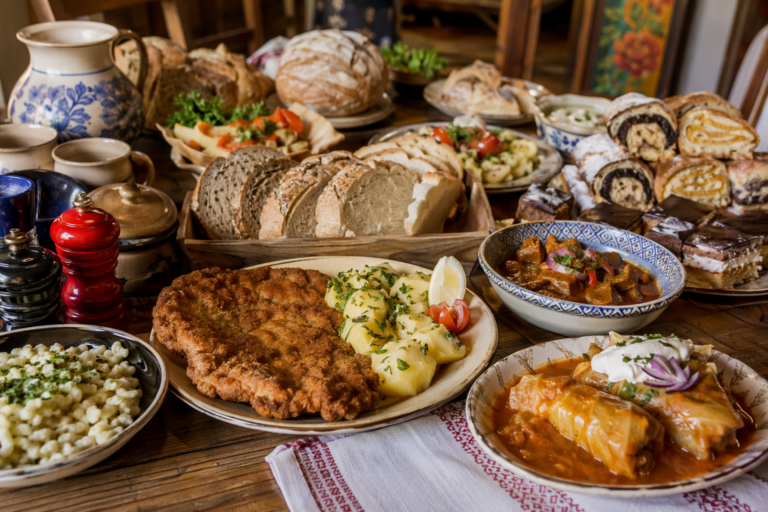
Key Highlights
-
Central European food brings together old customs from central European countries, shaped by what is easy to find, how people make dishes, and what foods are in season at the time.
-
You will find main dishes that are full and filling with lots of roast meats, cabbage, dumplings, and other ways of cooking that feel warm and comforting.
-
Sweet treats are enjoyed just as much as the main dishes. There is a big love for things like strudel, pies, pancakes, and sweet dumplings which show the region really likes baking.
-
The Czech Republic, Austria, Hungary, Slovakia, and other places close by all share these delicious recipes and the food moves from one border to the next.
-
Australians might notice the food in this region is rich, useful, fits in with the time of year, and is close to local culture.
Introduction
If you like good food that has a story, central Europe is a great place to visit. Central European food shows the roots of people from Czech lands, Austria, Hungary, Slovakia, Bavaria, and the areas near them. The food is filling and made with things from the area. It changes with the seasons and what is fresh. You can taste flavours that came by trade, movements of people, and the old empires. For Australians, central European cooking can feel close but also new in its own way. You still get comfort, skill, and a sense of history in every meal.
Understanding Central European Cuisine
Central europe is more than just a spot on a map. In food, it is a shared food world shaped by local land, tied histories, and dishes that move across borders in this part of europe.
That is why central european countries often have food that overlaps. The cuisine stands out because of seasonality, old ways of cooking, and a strong link to the place it comes from. Australians might find it easier to look at this food as a connected regional style, not just one national menu. The next parts talk about what makes it special and which countries in central europe shape it.
Defining Features and Key Characteristics
One of the main things about central European cuisine is the close link to where the food comes from. It is shaped by the land, what is grown there, the old recipes, and the skill that goes into making it. All of this makes the food feel down-to-earth, which is something many Australians will spot right away.
You will see a lot of meat in those classic dishes along with cabbage, dumplings, grains, and fresh produce from the season. The food is rich in flavour because of this smart cooking. It is filling food that helps people get through cold winters and tough seasons when there may not be much to go around.
But the aspects of the topics go beyond just heavy food or big meals. The cuisine also brings in sweet treats, baking for special seasons, preserved foods, and fine dishes from courts, towns, or the country. So even though comfort matters, there is also a lot of variety and local style in central European food.
Countries Shaping the Culinary Landscape
When people talk about central european countries in food terms, the culinary core usually includes the Czech Republic, Austria, Hungary, Slovakia, and Bavaria in Germany. The Cracow region in Poland and Upper Silesia are also part of the wider picture, even if polish cuisine keeps its own distinct identity.
Researchers linked to Czech food education often describe this shared space as Danube cuisine. Recipes do not stop at political borders, so ideas moved between Prague, Vienna, Budapest, and nearby regions for centuries.
|
Country or Region |
Key dishes or shared food traditions |
|---|---|
|
Czech Republic |
Dumplings, Prague ham, pancakes, puddings, pies, blackened carp |
|
Austria |
Vienna-linked Danube cooking, roast meat with cabbage and dumplings, strudel |
|
Hungary |
Goulash, pancakes, strudel influences, paprika-led special taste |
|
Slovakia |
Traditional Slovak dishes that later inspired Czech cuisine |
|
Poland |
Cracow region links and some borderland overlap with central european food |
Historical Influences Behind Hearty Central European Food
The story of this cuisine shows why it feels both common to many and also so varied. Central Europe has long been a place where people meet and share. Neighbours here passed around ingredients, ways of cooking, and new ideas when they sat down for the food.
Over time, all these things changed because of the Habsburgs, the old Austro-Hungarian days, travel, trade, and people moving across the Danube area. This made the food full of rich habits and tastes you still find in central Europe and Hungarian cuisine now. When you want to know the flavour of the food here, it helps to see how outside tastes mixed with old ways people had for years.
Cultural Crossroads and Evolution of Traditions
Central Europe has long been a place where different cultures mix. This part of Europe joins German-speaking areas, the Czech lands, Hungary, Slovakia, and to the south as well. Because of this, the food in central Europe shows a lot of sharing between cooks, but each person still keeps their own way of doing things.
As time went on, the food and cooking ways moved across regions and became part of daily life and special holidays. A dish often started in one place but would change a bit as it made its way into new homes. Things like dumplings, strudel, pancakes, and roast foods are great examples of this.
The evolution of the food in central Europe is interesting because it’s all about balance—the mix of sharing and holding on to traditions. Cooks didn’t just make a copy of a dish. They would swap out ingredients, change the spices, or serve it in a different way, based on what people like to eat, what they could get, and how meals are enjoyed where they live.
Impact of Empires, Trade, and Migration
The large empires had a big impact. The Habsburg monarchy, and later the Austro-Hungarian Empire, brought people together, especially near Vienna. Different types of food, from courtly, upper class, city, and country homes, all mixed in this area. Those food styles spread to other places too.
Trade and people moving around carried new ways of cooking and new things to eat. Chefs, housekeepers, and good cooks went between towns and cities, bringing recipes with them. Czech cooks, for example, made their mark in Vienna. Old cookbooks show how close the kitchens of these places really were.
That’s why modern dishes there often have a special taste. The food gets its flavour from local produce and from the many different ways of cooking shared over time. And this is also why central european food, including hungarian and czech dishes, can taste home-style but still have a touch of something fine, all at the same time.
Signature Ingredients Used in Central European Cooking
In central european cooking, the main part comes from what people use to make the food. The cuisine has a lot to do with what you can find nearby, what you can store for a long time, and what works best for family food. You will find meats, grains, cabbage, and things that grow during the year in many classic dishes.
There is also a clear link between where things come from and what people eat. Root vegetables and wild mushrooms fit this bigger picture for the area. But, people also point out how local produce, foods for special days, and what is in season are important. The next parts will show more about the main foods, things that add flavour, and foods people keep for later.
Essential Flavours: Meats, Grains, and Root Vegetables
If you ask what’s usually found in central european cooking, you find it’s all about the basics for good, hearty food. In many countries of europe, people use food that fills you up, is easy to get with the season, and mixes well with meat, starch, and sauce.
Here are some common things you’ll see:
-
Cabbage, which you often eat with roast meat and dumplings
-
Grains and other types of starchy foods to help make meals more filling
-
Pork cuts, including what you might think of as pork knuckle dishes, found in lots of central european spots
-
Fresh food from the season, like root vegetables and wild mushrooms, which fit well in the central europe kitchen
The time of year plays a big part in this food. In the czech style and also across central europe, people use calendars for what’s growing and for festive dishes. It’s not just about how things taste. It’s about when you get them, where they come from, and how that all lines up with the year.
Important Herbs, Spices, and Preserved Foods
Flavour in this part of the world is often simple and straight to the point, not showy. Paprika has a strong link to hungarian cuisine and is used in classic dishes like goulash. Other kitchens in this area add deep taste to their food by using good base ingredients, slow cooking, and careful seasoning.
Preserved foods are important as they help make the most of what’s in season. In many central european food traditions, you’ll often hear Australians talk about things like sauerkraut, pickles, and other foods that can be stored for a while. These foods help families get through the cold months and they also bring some sharpness that works well with the richness of dishes.
If you want quick flavour for your food, think how paprika can really bring a stew to life. Cabbage and foods that have been preserved are great with roasted meat, cutting through the fat. Herbs like dill can make a creamy or sour dish taste fresh. These flavour pairings give central european food both a warm, comforting feel and a special local taste.
Starters and Soups to Kick Off Your Central European Feast
A central european meal usually starts with food that is quite filling on its own. Things like dumplings, pancakes, and small plates show the same down-to-earth, generous style that you later see in bigger parts of the meal.
Soup is another big part of central european food. Across the region, people like a warm bowl that brings comfort and feels familiar. These soups are good for the wallet and carry lots of old family ways of cooking. You often hear names like pierogi, knedlíky, goulash, or even borscht when talking about this food. But the main thing is how these foods get you ready for the rest of the meal, which will be even richer.
Pierogi, Knedlíky, and Other Opening Delights
Many opening dishes in central european food are all about dough, starch, and food that feels good to eat. Dumplings play a big part in these meals, and when you think of the Czech way of cooking, knedlíky come to mind right away. You will find them as side dishes, but they also help set the scene for the whole meal.
Popular opening dishes and related ideas include:
-
Knedlíky, which are Czech dumplings that often go with roast meals
-
Pierogi, which people talk about when they mean dumplings found all over central europe
-
Pancakes and puddings that are common in the Czech lands
-
Many pies and sweet dumplings that can be served for both savoury and sweet moments
These foods have meaning for people, not just because of the recipe. You see them on family tables, at special dinners, and during the holiday season. If you live in Australia, you should try these first. They show how central european cooking and delicious recipes use simple things and turn them into meals that show where they come from.
Classic Soups: Goulash, Borscht, and Broths
Soup is a real comfort food in central europe. It can be light, but many times it is so filling that it makes up a big part of the meal. This fits well in a place where the weather changes and filling food is needed.
Goulash, from hungary, is the best-known type in europe. People like it because it is slow-cooked, tastes rich, and has that warm paprika flavour. Some europe soups use broth and taste much lighter, but are still good as a meal. Borscht is also a soup people in central europe talk about a lot.
The way soup is made can be different from country to country. Some are thick, some are light, and some depend on what is in the cupboard at the time. All of them from central europe try to do the same thing: A soup needs to make you feel good, warm you up, and get you ready for the next dishes.
Hearty Main Dishes You’ll Find Across Central Europe
Main dishes are a big part of central european food. These meals stand out and show what this region is known for. In many homes, people serve up plates that fill you up. It’s about eating with your family and sticking to food that matches the time of year.
Most of the main dishes have roast meats, dumplings, cabbage, and stews. But today, you can find a wider range of choices on the table. Australians who like food that is tasty and comforting will feel right at home with these meals. First, we will talk about the best meat-based main dishes. Then, we will look at new vegetarian and plant-based meals that are still true to their central european roots.
Schnitzel, Roasts, and Slow-Cooked Comforts
If you want to get a good idea of what mains are like in central Europe, start by looking at different roast combos. In Bavaria, the Czech lands, and Austria, you will see roast meat, cabbage, and dumplings often coming together. This food is simple, keeps you full, and is an important part of what people eat in this part of the world.
There is also a long line of slow-cooked food here. In Hungary, goulash shows everyone how a stew can be the pride of the country. People like these meals because they bring a lot of meat and foods that fill you up, like dumplings or cabbage, instead of focusing on only how the plate looks.
When people talk about classic foods, schnitzel always comes up with Austria. But if you look deeper, you see even more focus on roasts, dumplings, Prague ham, and things like blackened carp. What brings all these foods together in the Czech lands, Hungary, and Austria, is the idea of comfort food. It’s slow-cooked or carefully made to give you that full, satisfied feeling, and usually comes with a sauce, cabbage, or other rich sides like starch or dumplings.
Vegetarian and Modern Main Course Adaptations
Traditional central european food uses a lot of meat, and it’s good to say that up front. But now, there is a new trend. People are taking the old ways of cooking and changing them with the seasons. They use local vegetables and try new things, instead of always sticking to the old recipes.
This new way makes room for more vegetarian and vegan dishes. A modern kitchen can make plant-based meals with seasonal vegetables, grains, dumplings, and fresh local food. You still get that central european feel, just without the meat. This idea fits with what you see in New Nordic and New Alpine styles. They show that you do not have to toss away old food traditions, you can refresh them.
For people in Australia who are cooking at home, this can help a lot. You can cook healthy, modern central european food if you use less meat. Try more vegetables that are in season, and keep the basic ways of cooking and the main flavours. What you make still feels true to central european food, but it is a bit lighter and updated for today.
Central European Sweets and Desserts You Need to Try
Desserts are a big part of the food culture in this region. In Central Europe, sweets show how home baking fits in with special events and café style. All these things come together and don’t feel out of place.
In this material, strudel, pancakes, pies, puddings, and sweet dumplings stand out as good examples. These treats often use flaky layers, pastries, and family methods that get passed down over time. In the next parts, you will see why baked goods matter so much here, and how celebrations each year help keep these sweet traditions going strong.
Strudel, Nalesniki, and Family-Favourite Cakes
Sweet dishes really tell you a lot about central european food. They show how good people there are with dough, batter, and layered pastry. Strudel is a real stand out. You see it in Austria, Hungary, and all through the Danube region as one of the most well-known desserts.
Dessert highlights include:
-
Strudel, which is known for its flaky layers and a homely but special feel
-
Pancakes, which the czech lands have added to Danube cuisine
-
Pies and puddings that come from Bohemia, Moravia, and Silesia
-
Sweet dumplings and other family-style cakes or sweet breads that stay close to old traditions
These desserts are best when you serve them in a simple way. The focus is more on technique, timing, and what they remind you of, instead of fancy decoration. For Australians, this makes these desserts easy to try. You do not need a special event to enjoy them, but when you bring them to the table, they still feel special.
Holiday Treats and Seasonal Baking Traditions
Holiday baking means a lot in central europe. The food we make there follows the seasons and the big days of the year. People cook what is good at that time, not just anything. This way, recipes stay close to the weather and to old memories.
At christmas, easter, and other family times, sweet treats are a big part of the day. Baking old favourites turns into a family moment. The same recipes turn up because they join all of us to people from the past and give us a feel of our town or our part of europe. These sweet treats are not things you add last, they stand for a lot more.
What is special about this kind of baking is doing it right when the year calls for it. Some food comes out only because the date says it should. That makes us look forward to it and remember these moments with more feeling. In australia, this might make sense too, but over in central europe the tie between holiday, the season, and the table is a big part of life.
Drinks and Beverages Pairing with Central European Meals
Drinks are a key part of dining in central Europe. Even though most people focus on the food, what you drink also matters. At shared tables you may have something warm, something cold, or a drink that feels right for a special time.
Beer, wine, spirits, and a cup of coffee are main pairings in central europe. These drinks fit with the way people come together in europe, whether it’s a big event, a relaxed hang out, or a normal day. Drinks with meals help set the tone for what the moment means. In the next bit, we look at both well-known alcoholic drinks and some standout non-alcoholic choices.
Local Beers, Wines, and Traditional Spirits
Across Europe, you will often see central European meals served with local beer, wine, or spirits. The main focus is on food, but these drinks still show how food and drink can bring people together through culture, being friendly, and old ways of doing things.
The type of drink people choose depends on things like the place, who is around, or if there is a big event. A meal with family, a party, or going to your go-to place in the city might change what you want to drink. So, it is not really about following hard rules. It is more about picking what goes with the food and how the people there feel at the time.
For Australians, there is a good and simple point to think about. If you try dishes like roast meats, goulash, dumplings, or pastries, make sure to try the local drinks too. Beer, wine, or spirits are not just add-ons. They help show how the food is social, local to that part of Europe, and links back to ways people have done things for years.
Unique Non-Alcoholic Refreshments
Non-alcoholic drinks belong at the table too. Even when the main dishes are rich, you need to have something that adds balance to the meal or fits a calm moment in the day.
The outline gives you a few choices like apple cider, teas, kvass, and a cup of coffee. The main thing to know is that these drinks work well for different meal settings. A cup of coffee goes well with pastries and baked sweets from the region and fits any time when people just want to relax together.
If you want to try this at home, match non-alcoholic drinks with the mood of the meal. A cup of coffee pairs well with strudel or cakes. Lighter drinks are a good pick for dumplings, soups, and savoury main dishes. The focus is not on being fancy. It is about getting balance, feeling comfortable, and having a good time.
Food, Culture, and Festivities in Central Europe
Food in central Europe is not just about eating. It means something for community, links houses to the past, and helps households make sense of their celebrations using recipes, habits, and what people expect to share together.
This is why festivals, family holidays, and even simple get-togethers are a big deal in europe. Eating together makes people feel at peace because it brings them close to the place and to each other. The next parts show how important holidays are at the table and why being good hosts is still so important to dining in central europe.
How Holidays Are Celebrated at the Table
Holidays in central europe are often built around the table. People eat with the season, by the calendar, and through their family customs. It’s not just what sounds good at the time. The festive food calendar means these meals come from a deep place of tradition.
When people sit down for these meals, the table brings everyone together. The same meals come back each year during times like christmas and easter. These foods are not just about taste, they hold meaning. That makes them have a special taste, because each bite carries a memory or a feeling from other years.
Parts of central europe have their own favourite dishes for these moments. One area may pick baked foods. Another might go for dumplings or roasts served for special reasons. Still, the main thing is the same in all of europe. Holidays link to familiar foods that make people feel they belong, are still part of something, and that eating together matters.
Community Dining and Shared Meals
Sharing the food is a big part of eating together in this part of Europe. The compiled information shows that cuisine is tied to who people are at home, with the family, and in the local area. This means the food here is made for sharing, not just for one person’s taste.
Family tables, times of celebration, and public meals all go with this idea. You might see a roast with cabbage and dumplings, a tray of baked sweets, or a big pot of stew. These foods get the people to come together. They help with talking and going back for more.
Hospitality is a big part of how people see the food. People in the region care about local growers, fresh seasons, and recipes from their family. By sharing meals, they show that they care about others. For Australians, sharing like this could be one of the most enjoyable things about central European food.
Central European Specialties for Australians to Cook at Home
You do not have to go to Prague or Vienna to enjoy central european food. Many of these meals are easy to cook at home, especially if you like roasts, dumplings, pancakes or baked sweets.
The hard part is finding the right ingredients and getting the method down, not the level of complexity. People in Australia can cook real recipes if they stick to what is in season, use local produce, and make a smart substitute when needed. The next sections will share meals you can try, and tell you where some ingredients may be easier to get in Australia.
Authentic Recipes for Everyday Feasts
If you want to make real, delicious recipes at home, it’s best to choose dishes well backed by the knowledge found here. You can get started with things like goulash, roast meat with cabbage and dumplings, pancakes, strudel, pies, puddings, and sweet dumplings. These foods are full of flavour and have a strong link to the region they come from. They also work well at home.
These ways of cooking work well in Australian homes. The steps include roasting, slow simmering, baking, and pan-cooking. You do not need fancy tools for this cuisine. Just bring some patience, stick to the right time, and treat each dish the right way.
You can swap in local produce if you can’t find every ingredient. The best thing you can do is use what Australian growers have in season. That keeps the recipes true. It is best to serve clear flavours and big portions. Use steady ways of cooking, and you will come close to the real taste.
Where to Find Ingredients in Australia
Finding the right ingredients in Australia is not as hard as some people think. Many central european recipes use basic items like cabbage, flour, some fruit, meat, and a few pantry staples. So, you can start cooking without needing every hard-to-find ingredient.
You can look for what you need in these places:
-
Large supermarkets in Australia for basics like cabbage, flour, meat, and what’s in season
-
Local farmers markets to get good fruit and vegetables for when you want to cook with what’s fresh
-
European grocers, if you want something from that part of the world for your shelf
-
Online specialty stores for the products you can’t find near you, if you want less need for a substitute
For general information purposes, it is good to think in steps. First, make sure you get the main part of your recipe sorted. Then, check if anything must be exact. Most of the time, a good substitute works well, as long as you use what’s in season and handle the food the way it should be done.
Modern Twists and Trends in Central European Cuisine
Central European cuisine is always changing. People work hard to keep it fresh, clear, and strong. They do this by teaching others about it, doing research, making seasonal calendars, and working with other countries.
This brings in new ways of doing things. Chefs mix old styles with new ideas in the kitchen. They care more now about health, local food, and using more plants in their dishes. This makes the cuisine easier for Australians to try. You can still enjoy the rich flavours, but you are not stuck with heavy meals all the time.
Fusion Dishes and New Culinary Innovations
The idea behind fusion dishes is closely tied to the history of central europe. When you look at Danube cuisine, you can see it as a type of fusion. It mixes court, noble, middle-class, and country cooking styles from the old monarchy.
These days, new ideas build on this shared cooking base. Chefs travel, read old cookbooks, try out recipes, and use today’s standards to give old traditions a new feel. They are not trying to get rid of the past. They want to know it well so they can show it in a fresh way.
People in Australia might really like this idea because it is open and not strict. A new central european dish can stay true to its local and old roots but still have an international feel. The mix of history and new ideas is one of the best things about the cuisine from this part of europe.
Embracing Health, Sustainability, and Plant-Based Options
There is a clear change happening in central european food. People are going back to using what is in season and what local producers make. The information shows that you need to have local ingredients, strong suppliers, and to know the natural seasons. This gives the cuisine a way to be more sustainable.
Health is now important too. Cooks change old recipes so they are a bit better for you, instead of stopping making them. A modern cook can use smaller amounts, add more vegetables, and choose good quality food instead of making big, heavy meals, but still make dishes that are clearly central european. This is good for both restaurants and at home.
Plant-based or vegan options for central european food are also growing as long as they follow what is local. Foods like dumplings, local grains, and fresh produce can be made the main part of the meal if you pick the right veggies. The new way of cooking in this area does not lose its old traditions, but uses them in a smarter way.
Conclusion
Central European food brings together many amazing tastes and old traditions. You get big, tasty meals like schnitzel and goulash, and sure, there’s strudel, too. All of these show how rich and different the cuisine in this part of the world can be. When you try these dishes, you’re not just eating good food—you also get a touch of the culture. People here like to come together and share their meals.
It doesn’t matter if you want to cook these at home or have the real thing made for you. Every dish helps you get to know the place better. Jump in and enjoy this great central european food. There’s a lot to try, and it’s time to get started cooking!
Frequently Asked Questions
Which Central European dishes should I try first as an Australian?
A good place to start with central european food is with things like goulash, roast meat, cabbage, dumplings, and strudel. If you want to try even more main dishes, you can add pierogi and schnitzel too. These main dishes are classics that show the region’s comfort, richness, and how people share their food traditions.
How does Central European cuisine differ from other European regions?
Central European cuisine stands out in Europe because it follows the seasons, connects people across borders, and brings you a lot of practical comfort food. Some key aspects of the topics in this cuisine are that there is a lot of meat in classic dishes, plus dumplings, cabbage, and pastries. You will find a mix of good household cooking and the old imperial richness in the food here.
Are there vegetarian-friendly options in Central European food?
Yes, Central European cuisine has many options for people who like to eat vegetables. Dishes in this style often use things like potatoes, cabbage, and mushrooms. You can also get pierogi or vegetable goulash, and these are good for anyone who does not eat meat. This way, everyone can try and enjoy these rich food traditions.