

Quick answer: To send a large amount of money to Mexico for a property purchase, first confirm the payment instructions with the professionals handling your purchase. Then compare your bank and international transfer providers based on the required currency, total cost, transfer limits, documentation, and delivery estimate. Remitly may be an option if your transfer amount and recipient account are supported and the payment meets your closing requirements.
You’ve found a property in Mexico — maybe a retirement home near the coast, a vacation condo, or a family house in the city where you grew up. Now comes the part that makes most buyers pause: moving a large sum of money across the border.
Choosing a transfer service is only one piece of this process. You’ll also need to confirm the payment currency, verify who is authorized to receive the funds, gather the right documentation, and meet your closing deadline. Getting any of these details wrong can delay your purchase or, worse, put your money at risk.
This guide walks through what to confirm before you send a payment, how to compare your transfer options, and where a provider like Remitly might fit into your plan.

What should you confirm before sending money for a property in Mexico?
Before requesting any quotes, build a practical checklist with the professionals handling your purchase — your real estate agent, your notario público, and, if applicable, your attorney.
The amount and currency you need to pay
Confirm the following with your purchase agreement in hand:
- The deposit amount and the remaining purchase balance.
- Whether payment must arrive in Mexican pesos or U.S. dollars.
- How currency conversion is calculated under your purchase agreement.
- Whether taxes, professional fees, and other closing costs require separate payments.
Don’t assume that a property advertised in U.S. dollars must be paid in dollars, or that every Mexican property purchase settles in pesos. The contract governs this detail, not the listing price. Confirm the requirement directly before you move money.

Who is authorized to receive the funds?
Obtain written instructions identifying the account holder and their role in the transaction. Ask whether payment goes to the seller, to your own Mexican bank account, or to another account expressly approved for the closing. An agent’s personal account is not automatically an appropriate destination for your funds — verify this in writing before sending anything.
The closing process and payment deadline
A notario público plays a formal legal role in Mexican property transactions. Mexico’s consumer protection agency, Profeco, describes the notary’s role in a Mexican property purchase, including preparing the public deed and notifying the Public Registry of Property once the transaction proceeds. This source is published in Spanish, and its documentation checklist reflects a general used-home purchase — it isn’t necessarily exhaustive for every transaction type.
Ask your closing team:
- When must funds be available?
- What proof of payment is required?
- Who confirms that payment conditions have been met?
- What happens if a payment is delayed or returned?

What are your options for transferring a large amount to Mexico?
There’s no single transfer method that’s universally cheapest, fastest, or safest for every buyer. The right choice depends on your closing instructions, your recipient’s account, and the amount you’re sending. Use this comparison to guide your questions, not as a ranking.
| Option | When to explore it | What to confirm |
| International bank wire | Your closing instructions call for a bank wire or a particular receiving account | Currency, beneficiary details, fees, exchange rate, and delivery estimate |
| International money transfer provider, including Remitly | The provider supports the required amount, recipient, and delivery method | Personal limit, payout limits, account eligibility, documentation, and amount delivered |
| Specialist foreign exchange provider | You need to discuss a substantial currency conversion or scheduled payments | Regulation, account support, pricing, funding process, and available services |
| Transfer to your own Mexican bank account, followed by the purchase payment | Your closing professionals approve this payment route | Incoming limits, onward-payment requirements, records, timing, and additional costs |
Keep in mind that adding an extra transfer step — like moving money to your own account first, then paying the seller separately — can introduce additional costs and timing requirements. It’s also worth distinguishing a transfer provider from a separate escrow or property-closing service; these serve different functions, and one doesn’t replace the other.

How do you compare the total cost of a property payment?
Compare the amount delivered, not just the transfer fee
A low fee doesn’t always mean the best deal. When you request quotes, compare:
- The amount paid in U.S. dollars.
- The exchange rate applied.
- Transfer or payment-method fees.
- Any intermediary or receiving-bank charges.
- The amount expected to reach the designated account.
Use the same amount, currency, and receiving arrangement across every quote you compare. Even small differences in how a quote is structured can make two offers look different when they aren’t.
Small exchange-rate differences can matter on large transfers
Here’s a hypothetical to illustrate the arithmetic: if you’re exchanging $100,000, a difference of MXN 0.10 per U.S. dollar changes the converted amount by MXN 10,000 before fees. This example is purely illustrative — it isn’t a current rate, a provider quote, or a savings claim. Always check the live rate shown in your account before confirming any transfer.

Check how promotional pricing applies
Promotional exchange rates often come with caps and eligibility rules — for example, a boosted rate might apply only to the first $1,000 sent, with the standard rate applying beyond that. Review these terms carefully before assuming a promotional rate applies to your entire property payment.
Could Remitly work for your property payment to Mexico?
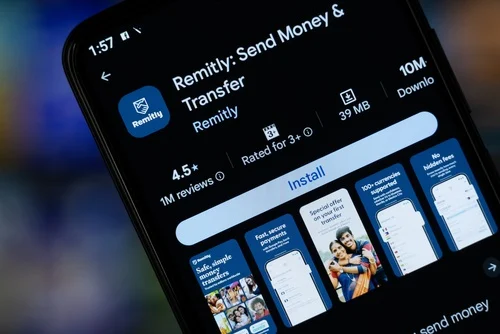
With Remitly, you can explore sending money from the U.S. to Mexico via debit card, credit card, Apple Pay, or bank account. Before using it for a property payment, check that your amount, recipient account, and payment currency fit the options available to you, and that the payment route meets your closing instructions.
Remitly offers bank deposit among its U.S. to Mexico delivery options, alongside cash pickup and mobile wallet. That availability alone doesn’t establish that a particular property-closing account or your full purchase amount is supported — you’ll need to confirm both before relying on it for closing.
Check your available sending limit
Remitly’s sending limits depend on factors including your verification level, the destination country, and your chosen delivery method. As of November 2026, Remitly’s maximum sending limit from the United States is 300,000 USD, though your personal limit may be lower. Check the limit shown in your account and confirm any receiving-partner restrictions before you rely on a general maximum — your actual available amount for a Mexico transfer could differ. You can check your available sending limit directly in your Remitly account.
Review pricing, delivery estimates, and verification requirements
Before confirming a large transfer, review your quote for the actual amount you intend to send, and check the estimated delivery time. Sending a large amount with Remitly typically involves providing information about the purpose of your transfer and your source of funds, along with a government-issued photo ID. In some cases, Remitly may request additional supporting documents, such as a utility bill or bank statement.
Delivery times vary based on payment method, delivery method, and transaction review. Build in time for funding and verification before your deadline, not against it.
How to explore your large transfer options with Remitly
- Sign in or create an account.
- Choose Mexico and enter the amount.
- Check available bank-deposit options.
- Confirm that the intended recipient and account type are supported.
- Enter the verified bank details requested.
- Complete any additional verification.
- Review the rate, fees, recipient amount, and estimated delivery time.
- Confirm only after checking your closing instructions, then save the receipt.
Check your available options for sending money to Mexico.
What documents and bank details might you need?
It helps to separate what your transfer provider needs from what your closing professionals need — these are two different checklists.
Potential transfer-verification information
- Identification.
- Information about the source of funds.
- Supporting financial records, if requested.
- The purpose of the payment.
Information to confirm for the purchase payment
- Purchase agreement and payment schedule.
- The authorized beneficiary’s legal name.
- Receiving bank and account details.
- Payment reference and required currency.
- Proof of payment needed for closing.
Mexico uses a standardized 18-digit CLABE (Clave Bancaria Estandarizada) to identify bank accounts. Still, follow your provider’s exact instructions for entering recipient details — requirements can vary by provider and delivery method. Treat these lists as preparation prompts, not universal requirements or a guarantee that any particular transfer will be approved.

How can you reduce the risk of property-payment fraud?
Large real estate payments are a common target for scammers, who often impersonate a seller, agent, or notary to redirect funds at the last minute. It’s worth building verification habits before you send anything significant:
- Verify payment instructions through an independently confirmed contact — not a phone number or email provided in the instructions themselves.
- Confirm the beneficiary name, bank details, currency, and payment reference.
- Treat unexpected last-minute account changes as a reason to pause, not proceed.
- Use a previously verified phone number to confirm, rather than contact details supplied along with the changed instructions.
- Confirm receipt of funds through a trusted contact after sending.
- Contact your bank or transfer provider immediately if you suspect fraud.
These verification habits align with general guidance from the Consumer Financial Protection Bureau on closing-payment scams. That guidance addresses U.S. mortgage closings specifically, so apply the underlying fraud-prevention principles to your Mexican purchase rather than assuming the same rules govern both transactions.
Do foreign buyers need to consider a fideicomiso?
If you’re a foreign buyer purchasing residential property in Mexico’s restricted zone, you’ll likely need a bank trust called a fideicomiso. Mexico’s restricted zone extends 100 kilometers from international borders and 50 kilometers from the coastline — a rule that captures many of the country’s most popular property markets, including beach towns and border cities.
A fideicomiso is a legal ownership structure, not a payment escrow service, so it doesn’t replace the transfer-verification steps above. Not every buyer or every property requires one — confirm the applicable ownership structure with your Mexican legal advisers before sending any purchase funds, since this affects how and to whom your payment should be directed.

Frequently asked questions (FAQs)
Can I use Remitly to send the full purchase price?
It depends. You’ll need to confirm your available sending limit, recipient-account eligibility, any payout restrictions, the required currency, and your closing requirements before assuming your full purchase price can go through in one transfer.
Should I send U.S. dollars or Mexican pesos?
Follow your purchase agreement and verified closing instructions first. Once you know the required currency, compare transfer options that support it.
How far ahead of closing should I arrange the transfer?
There’s no universal number of days that works for every purchase. Funding time, identity verification, banking schedules, receiving-bank processing, and your specific closing requirements all affect timing — build in extra time rather than cutting it close.
Do I need a Mexican bank account?
This depends on the payment arrangement your closing professionals approve. Ask whether payment can go directly to the authorized beneficiary, or whether routing funds through your own Mexican account is required or preferred.
Should I split the payment into smaller transfers?
Coordinate any legitimate staged payments with your provider and closing professionals. Don’t split payments specifically to bypass sending limits, identity verification, or reporting obligations — this can create delays or compliance issues rather than avoiding them.
Does sending money complete the property purchase?
No. A transfer receipt documents that payment was made, but it doesn’t complete your purchase on its own. You’ll still need to complete the legal and closing steps confirmed by your notario público and other advisers.
Confirm, verify, compare, document
Buying property in Mexico from the United States involves more moving pieces than a typical domestic purchase, but a large transfer doesn’t have to be the stressful part. Confirm your purchase instructions with your closing professionals, verify the recipient independently, compare the full cost of your transfer options (not just the advertised fee), complete identity verification early, and keep your payment records.
Remitly is one option worth exploring if its available transfer features — amount, currency, recipient account, and delivery method — meet your specific purchase requirements.
This article is for general information and does not constitute legal, tax, or financial advice. Property-purchase requirements vary. Consult qualified professionals about your transaction. Transfer availability, limits, fees, exchange rates, documentation requirements, and delivery times vary; review the details shown before confirming.
Last Updated: November 2026


