

Key Highlights
-
Filipino weddings bring together old wedding traditions and new ideas. These weddings show the heart of Filipino culture.
-
Important Filipino wedding traditions have roles for principal sponsors, also called Ninongs and Ninangs. There is also the Arrhae coins ceremony, plus the veil and cord ritual.
-
The unity candle stands for two families joining as one. It is not just about the couple, but their families too.
-
People love the party after Filipino weddings. The money dance and good, old-style Filipino foods help make the night fun for all.
-
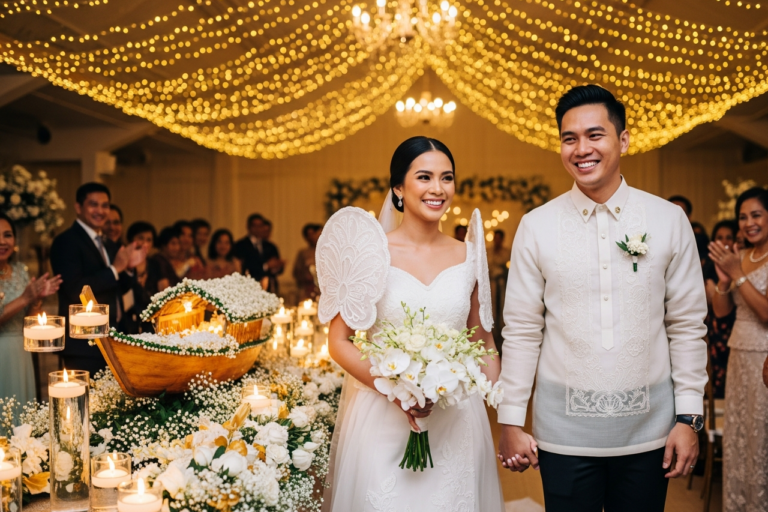
What people wear has meaning. The groom gets to wear the Barong Tagalog, while the bride often goes for a gown inspired by Filipiniana styles.
-
Many Filipino wedding traditions are about the people around the new couple. Family, working as a team, and wishing the pair good fortune, matter the most.
Introduction
Filipino weddings are full of history and meaning. These weddings mix old and new, blending Filipino wedding traditions with some modern touches. You will see some American influence, but many wedding traditions in the Philippines have been around since the 1500s. They also have a strong Spanish colonial past.
What makes Filipino weddings so special is that family is at the heart of it all. A Filipino wedding is not only about the couple becoming one. It is also about both families joining together. The wedding ceremony is usually serious and full of deep meaning. After that, the family throws a fun celebration for the new couple. This reception is a big, happy event to welcome them and honor both families.
Wedding Traditions in the Philippines You Should Know
Filipino wedding traditions are an important part of the wedding day. They add meaning and show the special ways of Filipino culture. From things people do before the wedding to fun times at the reception, every custom says something about family, hopes for good fortune, and what matters to people in the Philippines. When you understand these wedding traditions, it can help make going to or planning a Filipino wedding more special for you.
It does not matter if you are in the wedding party or going as a guest. Knowing about these customs gives you a better way to enjoy the wedding ceremony. Let’s look at some of the most loved Filipino wedding traditions you may see.
1. The Role of Principal Sponsors (Ninongs and Ninangs)
In Filipino culture, principal sponsors are called Ninongs (godfathers) and Ninangs (godmothers). They have a big role in the wedding ceremony. These wedding sponsors are not just there to watch. The couple picks them because they have wisdom and know a lot about married life. Many times, they are the couple’s grandparents, godparents, or older people who are well respected. They help guide the couple in their new life together.
At the wedding ceremony, the principal sponsors stand close to the bride and groom. They act like a best man or maid of honor and serve as the official witnesses to the union. Having them there shows that the community is giving support to the couple.
Their part does not end after the wedding ceremony. Later on, the wedding sponsors still help the couple. They give advice, share what they know, and support the newlyweds as they go through life. This whole tradition shows how important family and the community are in Filipino culture. It makes sure the couple always have people in their corner as they work through married life.
2. The Arrhae Coins Ceremony
The Arrhae coins ceremony, also called Las Arras, is an important part of a Filipino wedding. In this special moment, the groom gives the bride 13 wedding coins. These wedding coins, which have been blessed by the priest, are handed over by the groom. This act is a clear promise that he will take care of her and their family in the future.
Each coin stands for wealth, good fortune, and hope for every month of the year. There is also one extra coin for more abundance. The coin ceremony is a real, easy-to-see way to show that both the bride and groom will work together and keep their promise to each other. It highlights the groom’s role, plus how the couple plans to live and build a better future side by side.
Many modern couples today have changed this tradition to fit their lives. Sometimes, both the bride and groom now exchange the wedding coins. They do this to show that they both plan to be responsible at home and work together for their life ahead. This update keeps their Filipino roots strong and makes the coin ceremony one of the most touching moments in their wedding day.
3. The Veil and Cord Ritual
The veil and cord ritual is a special Filipino wedding custom. It looks pretty and carries deep meaning. After the couple exchanges vows and rings, they kneel. Then the secondary sponsors start this tradition. The ritual has two main parts to show the couple’s unity.
First is the veil ceremony. A white veil is placed over the bride’s head and put over the groom’s shoulder. This shows they are now together as one. It also means the groom should look after and care for his wife.
Next is the cord ceremony. A wedding cord—sometimes made from a silky rope, a string of flowers, or even links of coins—is placed around the couple in a figure-eight.
-
The Cord: Shows the couple’s bond can’t be broken.
-
The Figure-Eight Shape: Means infinity, forever love, and their promise to always walk through life as equals.
These moments are made extra special by the secondary sponsors, the veil ceremony, and the cord ceremony. The use of a wedding cord, the links of coins, and the veil over the bride’s head and shoulder of the groom are easy to notice.
4. The Candle Lighting Ceremony
The candle ceremony is a touching part of many Filipino weddings. The unity candle might be found in Western weddings, but in Filipino culture, it means more. It is not just about the bride and groom. The unity candle shows that the two families will join together as one.
During this part, the secondary sponsors, or candle sponsors, light two candles. The priest blesses these candles first. These two candles stay lit for much of the service. Filipino culture is deeply focused on family, and you can really see that in this tradition.
Then, near the end of the wedding day, the Filipino couple each takes one candle. They bring them together and use the flames to light a single big unity candle. This action on their wedding day means that the families are now one. They promise to stand together behind the new couple.
5. The Money Dance
One part of a Filipino wedding reception that a lot of people like is the money dance. The money dance happens near the start of the evening to help get the party going and bring people out on the dance floor. People at the wedding take turns to dance with the couple, and while they dance, guests put money on the bride and groom’s clothes.
The money dance is not just for fun. It is a way for guests to wish the new couple good fortune in their new life. The money the couple gets helps them start their new life and the wedding guests feel they are taking part in that. This is a happy and useful way for everyone to show their support at the wedding reception.
For many, the money dance is a big moment of the Filipino wedding reception for these reasons:
-
It helps get the guests up to dance.
-
It is a good way to get great photos.
-
It is a kind way to send the married couple off with hopes for a good future.
6. The Barong Tagalog and Filipiniana Attire
Filipino wedding clothes are beautiful and show a lot of Filipino culture. The groom often wears a Barong Tagalog. This is a white shirt with long sleeves that you do not have to tuck in. It is made from fine pineapple fibers and feels light because you can see through it a little. He puts this over a white shirt and wears it with black pants. This look is formal and very much a part of the Filipino style.
The bride usually wears what they call a Filipiniana. This wedding dress is also lovely. It comes in two pieces and has big butterfly sleeves. Many brides today may choose a white wedding gown, but they still add parts of the Filipiniana, like the famous sleeves, to show respect for their roots. Some might also wear a baro’t saya, which is an embroidered blouse.
Wearing these clothes is a nice way for people to honor Filipino wedding customs.
-
Barong Tagalog: Shows Filipino pride and strong skills in making clothing.
-
Filipiniana Dress: Famous for its butterfly sleeves and fancy embroidery.
-
Modern Adaptations: Couples now like to bring together classic styles and new trends.
7. Traditional Filipino Wedding Foods
No Filipino wedding reception is complete without lots of good food. Food is a big part of Filipino culture, and a wedding is the right time for a big meal. At the reception, people get to enjoy a sit-down meal or a buffet that looks like it will never end. This way, all the guests can eat as much as they want and no one leaves hungry.
One of the main stars at a Filipino wedding reception is Lechón. It is a whole pig that is roasted until the skin is crisp and the meat is soft. This dish is often put in the middle of the celebration. It can be served during the main meal, or as a snack when it gets late and people want to eat again.
But it is not just about Lechón. There are a lot of flavors and traditional Filipino dishes to try.
-
Sinangag: This is Filipino fried garlic rice and it is always on the table.
-
Chicken Inasal: This is grilled chicken, full of taste from spices and flavor.
-
Kamayan Style: Some modern couples like to choose a kamayan feast. All the food goes right on banana leaves and people get to eat with their hands.
Filipino wedding receptions are a great way for people to learn about real Filipino culture through what is served at the table.
8. The Pamamanhikan (Formal Courtship Visit)
Before the wedding happens, there is something called Pamamanhikan. This is an old Filipino wedding tradition. In this event, the groom and his parents go to the bride’s house. They ask the bride’s family if he can marry her. This shows respect and is the right way to tell everyone about the couple’s plan to get married.
Pamamanhikan is not just a way to propose. It is a time when the two families meet each other. Both families talk, spend time together, and start to discuss the wedding plans. In filipino culture, marriage is about two families coming together, not just two people.
This tradition builds a stronger tie between both families before the couple starts their married life. It is a way to celebrate filipino roots, showing that family approval and unity are very important. With this practice, the couple gets a strong start for their future together.
9. Bayanihan: Community Involvement in Weddings
The idea of Bayanihan is all about people helping each other, and it is a big part of Filipino culture. You can really see this during Filipino weddings. Everyone works together. This shows the importance of community, with people giving their time and effort so the day can be a good one for all.
Many people, like family, friends, and neighbors, will pitch in. They come to help with things like putting up decorations at the wedding venue or cooking food for the party. When everyone helps out, it makes things much easier for the bride, groom, and their close families. It also turns the day into a big, happy get-together for everyone from the community.
In Filipino weddings, Bayanihan shows:
-
How Filipino culture values community.
-
That the people you love want to help with time and hard work.
-
That it really does take a group to celebrate a wedding, and that makes the day even more special.
10. Blending Filipino and Western Wedding Traditions
Many modern Filipino couples, especially those living outside the Philippines, find beautiful ways to blend Filipino wedding traditions with Western customs. The influence of American culture has led to creative fusions that honor both heritages. This creates a unique and personalized wedding ceremony that feels both traditional and contemporary.
For example, a bride might wear a white wedding gown that incorporates the butterfly sleeves of a Filipiniana dress. Or a couple might include the veil and cord ceremony within a non-religious service. The key is to select the cultural elements that are most meaningful to you and your families.
Blending traditions allows you to tell your unique story as a couple. Here’s how some common traditions can be combined:
|
Filipino Tradition |
Western Counterpart/Blend |
|---|---|
|
Ninongs & Ninangs (Principal Sponsors) |
Can be blended with the roles of Best Man and Maid of Honor. |
|
Barong Tagalog & Filipiniana Gown |
Groom wears a Barong, while the bride may wear a white gown with Filipiniana elements. |
|
Veil & Cord Ceremony |
Can be incorporated into a standard Western ceremony script. |
|
Filipino Money Dance |
Can be added to the reception alongside the first dance and bouquet toss. |
Customizing Filipino Wedding Traditions for Modern Couples
For modern couples, adding Filipino wedding traditions to your wedding plans is a great way to honor where you come from. It also shows your special love story. You do not need to follow every single tradition the exact way people did in the past. You can change these wonderful wedding traditions to match your own style. This works whether you want a traditional, modern, or a special mix in your ceremony.
Many Filipino couples feel happy when they add their own twist to these customs. The nice thing about Filipino wedding traditions is that they are open to change. This lets you create a day that feels real and matters to you. In the next parts, you will find ideas on how you can bring these wedding traditions into all types of modern weddings.
Modern Twists on Classic Filipino Wedding Customs
Modern couples find fun ways to show their Filipino roots. They make the old traditions fit who they are. It helps to work with your wedding planner to mix these customs with a modern touch. The most important thing is to keep the meaning and change the steps so they feel right for you.
For example, instead of the traditional Arrhae with 13 coins, you might choose one coin that has a special engraving. For the cord, you can use a material that matters to you. Some use a braid made from fabrics from both families. These small changes keep the tradition alive and let you add your own style.
Here are a few more ideas for giving traditions a modern twist:
-
Attire: Have your wedding party wear modern barongs or barong dresses.
-
Favors: Give each guest something small that shows Filipino culture, like mini woven baskets or tasty treats.
-
Music: Make a playlist with both classic Filipino love songs and modern music.
These choices help bring filipino culture into your day and make it special for all. You will see the mix of the old and new. Your wedding party and guests will remember it for a long time.
Including Filipino Traditions in Multicultural Ceremonies
For Filipino couples who are in a mixed-culture relationship, getting married is a good chance to show both your backgrounds. Including Filipino wedding traditions in your big day is a nice way to share Filipino culture with your partner’s family and friends. This can make everyone feel closer and let all enjoy a special time together.
One good way is to let both cultures be seen at your wedding. You can have food from each side during the party or include readings in both languages at the ceremony. If you tell the meaning of each wedding tradition in your program, it helps people from different backgrounds understand and enjoy them more.
Here are some simple ideas to mix wedding traditions when people from more than one culture get married:
-
Ceremony: Put in both the Filipino veil and cord ceremony and one thing from your partner’s culture.
-
Food: Make a menu that brings flavors from each group, such as dishes from Filipino, Québécois, and Vietnamese backgrounds.
-
Music: Play songs from both cultures at the party so everyone can get up and dance.
By doing this, you show both love and respect for your roots and make others who may not know Filipino wedding traditions feel ready to join in the fun.
Filipino Wedding Traditions for Non-Traditional Couples
You can still add Filipino wedding traditions to your day, even if you have a small or non-traditional wedding. The important thing is to use these customs in a way that works for you and shows your love story. You do not need a big or fancy party to celebrate your roots. The true meaning comes from the action itself.
For example, you can use the veil, cord, and coin rituals during your wedding, even without a religious setting. Let your officiant explain the meaning of each in their own words. If you do not want a priest, a friend or family member can help with the traditions. The money dance can be changed too. Instead of giving money, guests can write good wishes for you and your partner.
Here’s how non-traditional couples can use these customs:
-
Intimate Ceremonies: Pick one or two things, like the cord ceremony, that matter most to you.
-
Gender-Neutral Roles: Change the wedding party and rituals so that everyone can join in, no matter who they are.
-
Personalized Rituals: Make your own version of a tradition. For example, trade something meaningful to you both instead of coins.
What to Expect at a Filipino Wedding Ceremony
If you ever go to a Filipino wedding, get ready for a happy day with a lot of feeling, tradition, and lots of joy. Filipino wedding ceremonies are warm and full of meaning. Most of the time, they are a bit longer than some folks expect—especially when there is a full Catholic mass. You will see that the space is filled with a deep respect, and people come together as a big group.
After the wedding is done, there will be a wedding reception that is bright and fun. There will be plenty of food to eat, music to enjoy, and everyone will get up to dance. The party at a Filipino wedding reception often keeps going late into the night. If you’re going, here are some big moments and simple tips that will let you relax so you can have a good time at the event.
Key Moments During the Ceremony
A traditional Filipino wedding ceremony has many important moments. Right away, you will see a long processional. The wedding party and the primary and secondary sponsors walk in. There can be from 20 to 50 people in this part of the wedding.
The center of the wedding ceremony shows some special Filipino wedding practices. You will see the blessing and the giving of the Arrhae coins. This is where the groom gives coins to the bride to show that he will take care of his family. After this, there are three main things done by the secondary sponsors. There is the unity candle, the veil, and the cord. These all show the new couple and their families coming together.
There are some key moments you should watch for:
-
The Processional: All the people in the wedding walk in and it is a big, special entrance.
-
Symbolic Rituals: People light the unity candle, put the veil over the couple, and put the cord on them.
-
The Exchanging of Rings: The couple gives each other rings at the same time as the other rituals. After this, they are officially made husband and wife.
Etiquette and Guest Participation
If you go to a Filipino wedding, knowing a bit of wedding manners can make the day better for you. The ceremony is mostly in a Catholic church, so it’s good to wear something a bit nice. You can dress semi-formal or formal. When you are in the church, cover your shoulders to show respect.
There is a lot to join in at the wedding reception. People love when guests join the fun. Be ready to eat, drink, and dance. Filipino weddings are full of joy and color. It’s fine if you are not Catholic. You are welcome to be there for the service, but you should not join in the communion. The couple is happy just to see you are there.
Here are some tips for guests:
-
Gifts: Stay away from giving sharp objects like knives because these are said to bring bad luck. But you can always give money as a gift. The money dance is part of the wedding too, and money is welcome there.
-
Participation: Do not hold back. Get up and dance. Take part in all parts of the day with the new couple.
-
Enjoy the Food: There will be a lot of food. This is all about Filipino culture. Try different foods at the wedding reception. Good food means good hosting.
More than anything, filipino weddings about sharing joy, making memories, and coming together as family and friends.
Conclusion
In the end, wedding traditions in the Philippines have lots of meaning. These customs show how much people value their family and community. The important roles of principal sponsors and the fun Money Dance help make these events special for everyone. Filipino wedding traditions give couples a way to show their love for heritage.
Modern couples can add their own style to these traditions. This lets the day feel new and personal while keeping what matters from the past. When you plan your wedding, knowing about these wedding traditions will make the event better. It does not matter if you want a classic ceremony or to mix cultures, you should learn about what makes these traditions stand out.
If you have anything you want to say, or you have any questions about Filipino wedding traditions, share it here. Let us enjoy and celebrate love together.
Frequently Asked Questions
What is the significance of the veil and cord in Filipino weddings?
In Filipino wedding traditions, there is a veil ceremony. In this part of the wedding ceremony, the couple is covered together to show they are now “clothed as one.” There is also a cord ceremony. In this, a cord is placed around the couple to show their tie is strong and has no end. Both of these wedding traditions are important in Filipino culture. The veil ceremony and cord ceremony help people see the love and promise the couple are making on their wedding day.
How are Filipino wedding traditions different from Western customs?
Filipino wedding traditions are not the same as Western customs. In the Philippines, family and community play a big part. While Western weddings often focus on the bride and groom, Filipino culture is about bringing two families together. You can see this in some traditions, like the unity candle. The wedding party is also larger, and there are many sponsors who take part.
Which Filipino wedding traditions remain popular today?
Many Filipino wedding traditions are still very common. These Filipino wedding customs show the deep ties to their culture. Some of the most well-known traditions happen at the wedding ceremony. These include having sponsors called Ninongs and Ninangs. There is also the veil and cord ceremony. Couples take part in the Arrhae coin exchange. The money dance is also a lively part of the wedding and takes place at the party. All these wedding traditions help make the day even more special.



