

Key Highlights
-
Omani wedding traditions in Oman go back a long way and are a big part of the culture. These customs start well before the wedding day, beginning with things like the formal proposal.
-
The Malka ceremony is the time when the couple gets officially engaged. At this event, they sign the marriage contract, and an Imam is often there.
-
Family is at the heart of it all. Both the groom’s family and the bride’s family take part in planning and getting ready for the traditional wedding.
-
During Omani weddings, there are special parties for male guests and female guests. This way, each group has its own kind of fun.
-
The whole process of the wedding day follows Islamic rules. There are Quran readings and certain steps that must be done during the ceremony.
-
Many people in Oman now mix old omani wedding traditions with some new ideas, showing how the country changes but still values its past.
Introduction
Welcome to the colorful and special world of Omani weddings. Oman is on the southeast coast of the Arabian Peninsula. This place has a deep history, and you can see it come alive in the way people hold Omani weddings. These events are full of the Islamic faith, close family ties, and a lot of happiness. Many Omanis might add some Western things now, but the old customs are still at the center of the wedding. Are you wondering what makes Omani weddings so interesting? Come, let’s look at some of the customs that people in Oman love to follow.
Pre-Wedding Traditions in Oman
The way to an Omani wedding has many steps. These steps help the groom’s family and the bride’s family come together. Before anyone thinks about a wedding planner, both families talk with each other. They follow old ways and show much respect. At this time, they set up a good start for the couple.
In Oman, these early customs need everyone to be part of them. Both the bride’s family and the groom’s family work together. They do this to make sure the wedding is right for their culture and faith. This process starts when the groom and his family say they want to get married. After that, real plans and promises begin.
Engagement Rituals and the Malka Ceremony
In Omani weddings, things start with the engagement rituals. The groom’s family goes to see the bride’s family. They ask for her hand in marriage in a respectful way. This meeting is an important step. It brings both families closer and helps begin the union.
After that, the Malka ceremony happens. This is when the couple is officially engaged. The marriage contract is agreed on and signed, with an Imam often there to help. The contract lists the roles of both the groom and the bride. It also has the terms of the dowry. This event shows their promise to each other in front of everyone and in their faith.
The Malka is an important pre-wedding event. It includes:
-
The groom’s family making a formal proposal.
-
Both sides talk and agree on the dowry.
-
The marriage contract is signed.
-
The Imam gives blessings and helpful advice.
Family Involvement and Preparations
In Omani culture, getting ready for a wedding is something that brings the whole community together. Even when a wedding planner helps with things like setting up the event, close family still has the biggest part. Family members from both the bride’s and the groom’s side are very involved. They make sure the wedding goes well, is full of good luck, and follows tradition.
Elders in the family offer their help by giving advice and sharing what they know. This helps the couple do all the customs the right way. People see their role as very important for a happy marriage. Female relatives also play a big role, mainly so on the bride’s side. They help the bride get ready for her new life and are very active in setting up pre-wedding parties.
Everyone working together is what makes this process stand out. The groom’s family usually starts by making the proposal and may pay for many big wedding needs. The bride’s family mostly hosts parties before the wedding day and makes sure the bride has everything she needs. Both families help pick guest lists, choose the place for the wedding, and plan the menus together.
Key Moments of the Omani Wedding Ceremony
The Omani wedding ceremony is made up of many important and lovely moments. The wedding day starts with the signing of the marriage contract. This is an important ritual in Islam. People call this event the ‘Aqd Nikah.’ It can happen in a mosque, at home, or even at the wedding hall. This is the step that brings the couple together by law and faith.
Once this part is done, other well-loved Omani wedding traditions begin on the wedding day. These moments are full of meaning and happiness. They help mark how the couple moves from being single into their new life together. The mix of religious and cultural parts in each ceremony makes it special to Omani people.
Religious and Cultural Rituals During the Ceremony
Religious principles are the bedrock of Omani wedding traditions. The entire ceremony is guided by Islam, ensuring the union receives blessings and recognition within the faith. The most critical part is the ‘Aqd Nikah,’ or the signing of the marriage contract, which formalizes the marriage under Islamic law.
An Imam often presides over this ritual, starting with a speech on marital responsibilities as outlined in the Quran. The bride’s father or a male guardian formally accepts the groom’s proposal on her behalf before witnesses. This process highlights the cultural values of family honor, consent, and spiritual guidance.
The ceremony is filled with religious significance. Key elements of the ‘Aqd Nikah’ include:
|
Ritual Element |
Significance |
|---|---|
|
Reading of the Fatiha |
The first chapter of the Quran is recited to bless the union and seek divine approval. |
|
Imam’s Speech |
Provides religious guidance and reminds the couple of their marital duties and rights in Islam. |
|
The Proposal and Acceptance |
A formal, verbal agreement between the groom and the bride’s guardian, making the contract valid. |
|
Signing the Contract |
The legal documentation of the marriage, signed by the couple and two male witnesses. |
Traditional Attire and Symbolic Accessories
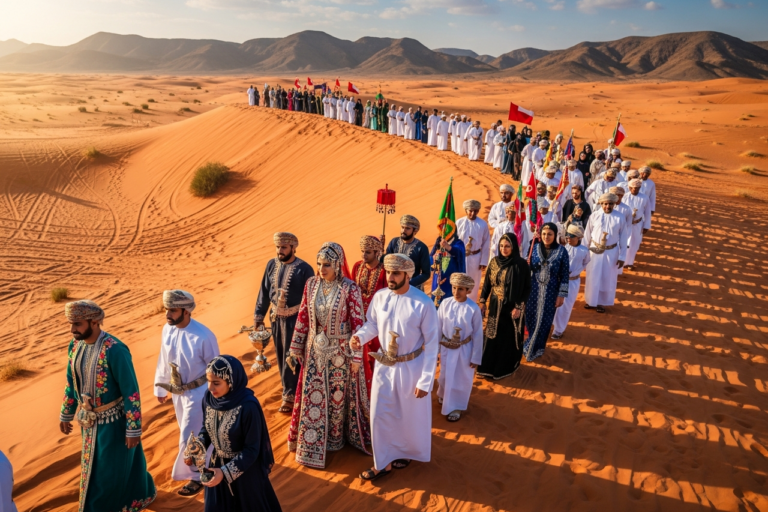
At Omani weddings, what people wear shows off their rich culture and style. The bride will put on a dress that is very bright and full of pretty designs. This dress is often red. She puts on the dress with a lot of gold jewelry, usually passed down in her family. Before the ceremony, the bride’s hands and feet are painted with henna designs. These designs mean beauty and good wishes for her.
The groom likes to wear clothes that also stand out. He puts on a clean white dishdasha. This robe looks neat and long. He also wears a fancy turban called a wizar, and he carries a special dagger known as a khanjar. These are not just for style, they show who he is and where he comes from.
Key elements of traditional attire include:
-
The bride’s heavily embroidered dress and gold jewelry.
-
Elaborate henna designs on the bride’s hands and feet.
-
The groom’s white dishdasha, wizar, and khanjar.
Conclusion
To sum up, Omani wedding traditions are made up of many things from culture, family, and religion. Everything starts with deep and caring engagement customs. The main wedding day is big and full of meaning. Bright clothes and great food show the pride and past of the Omani people. When we learn about these traditions, we see how important family and community are at weddings. If you plan a wedding or just want to know about Omani culture, being part of these customs can make your time better. If you want to know more about Omani wedding traditions, reach out to us for more ideas!
Frequently Asked Questions
How do modern Omani weddings differ from traditional customs?
Many Omani weddings today, especially in places like Muscat, mix traditional wedding customs with some Western styles. Families in Oman might get a wedding planner, pick new kinds of venues, or try modern trends. Even with these new ideas, important customs still stay in every ceremony. This shows how much people across all parts of Oman respect their heritage.
What are the most distinctive foods served at Omani weddings?
An Omani wedding feast is special. One of the best things you will find on this day is “shuwa.” This is a lamb that gets cooked slowly, so it is very soft and full of taste. Omani halwa is very important too. It is a sweet treat and is usually eaten with coffee. Both of these foods are a big part of a wedding day in Oman and make people happy who come to the wedding.
Are there notable regional variations in Omani wedding traditions?
Yes, Omani wedding traditions can change from one part of Oman to another. The main Islamic rituals stay the same, but things like what people wear, and how they celebrate, can be different. For example, in some old areas, the wedding is held at the bride’s house. In cities, people often use a large wedding hall for the event.



