

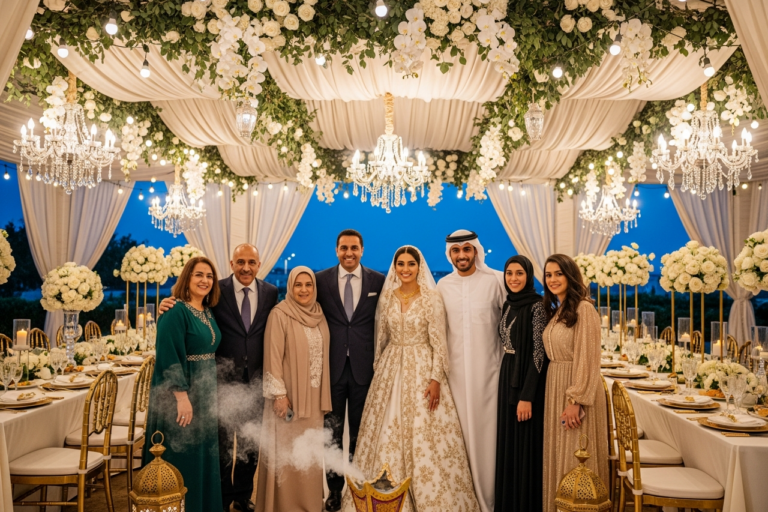
Key Highlights
-
Kuwaiti wedding traditions are full of life and involve the whole community and their extended family from start to finish.
-
The legal and religious side of the ceremony is the signing of the marriage contract. This important moment is also called the Al-Melcha.
-
A big part of the fun is in the pre-wedding celebrations like the colorful henna night, where the bride and her female relatives get together.
-
You will see big displays of gold jewelry at kuwaiti weddings. This jewelry is a key part of what the bride wears and receives as gifts. Gold jewelry stands for wealth and love at these events.
-
Traditional music and dance play a big role, bringing lots of joy and happiness to the wedding.
-
Modern Kuwaiti weddings still honor traditional customs, but now often mix these with new ideas, especially in places across Kuwait City.
Introduction
Welcome to the bright and happy world of Kuwaiti weddings! These are not just about two people coming together. They are a big show of culture, family, and community. At a Kuwaiti wedding, you will see the formal signing of the marriage contract and lots of fun after that. Kuwaiti wedding traditions mix old customs with something new. Are you ready to find out about the steps and rituals that make Kuwaiti weddings stand out?
The Cultural Significance of Weddings in Kuwait
In Kuwait, a wedding is not just for the two people getting married. It brings everyone together. The whole community comes out to celebrate and show pride in their culture. Kuwaiti weddings are a big part of social life. They show an important step for the kuwaiti newlyweds and their families.
The big role of the extended family shows how important these kuwaiti weddings are. From the time someone asks the other to get married, all the way to the end of the wedding, the family is with you. They help make sure the old ways and customs stay strong. This way, you see how much people in Kuwait care about their family and helping each other. Now, let’s see how the family and the past make these kuwaiti traditions what they are.
The Role of Family and Community in Kuwaiti Wedding Traditions
The family is at the center of Kuwaiti weddings. Having the extended family there is not just something people do out of tradition. It is a big part of how everything gets done. The groom’s father and the bride’s father often do the leading. They look after many of the plans and important talks, and they give a lot of support and advice to the bride, groom, and all the loved ones.
These fathers are part of every step, from saying yes to the marriage to being hands-on with the big day itself. There is more—that is, a whole community gets in on it, too. Neighbors and friends come to the parties, they give their time and care, and they share in the fun. It is what turns a Kuwaiti wedding into something big that brings everyone together.
Having lots of family and friends involved makes the wedding show what really matters to Kuwaiti people. Everyone feels happy together, and you see that marriage is not just joining a bride and groom, but their families too. That is what helps the newlyweds start their lives with many people ready to back them up.
Historical Influences on Kuwaiti Marital Customs
The way people get married in Kuwait has a deep history. It comes from Islamic law and old Bedouin ways. In the past, these rules shaped every part of getting married, from how people asked for someone to marry them to how the wedding ceremony went. Traditional Kuwaiti weddings were tied to the ideas of honor, family, and everyone being together.
As time went on, some things changed with these customs. For example, there is still a dowry in kuwaiti weddings. But, how people give it and what it means have changed over the years. The main ideas still stay the same. In kuwaiti, it is still important that the family agrees and that a lot of people from the community join the wedding ceremony. This way, traditional kuwaiti weddings help people feel connected with both the past and the now.
These days, you can find a mix of old and new in kuwaiti weddings. Some couples keep old traditions. At the same time, they bring in new trends and fresh ideas. This mix helps kuwaiti weddings grow and show both respect for what came before and a look toward what will come next. Every wedding ceremony becomes special and shows the time that it is in.
Engagement Traditions and Pre-Wedding Celebrations
Before the main wedding day, there are many fun pre-wedding parties in Kuwaiti culture. These bring excitement for the couple and all who join. The time before the wedding is full of special customs. These rituals help share the couple’s plan to be together for life in front of their family and close friends. People feel happy and use this time to get ready for the big day.
One of the most loved parts is the henna night. This event is bright and lively, and it is only for the bride. These pre-wedding events are a big piece of kuwaiti wedding traditions. People give gifts like gold jewelry, and the bride gets pretty and intricate henna designs on her hands. Many look forward to the gold jewelry and the designs made with henna.
Let’s now look at how the engagement is celebrated and what the customs are for the proposal in kuwaiti culture.
Engagement Rituals and Ceremonies
In Kuwaiti culture, the engagement is a big moment that starts the wedding journey. This often happens with both families coming together for a formal meeting. Here, they give their blessings to the couple. This meeting helps the couple and all of their extended family get closer and shows everyone is serious about the marriage.
One main event before the wedding is the colorful henna night. At this women-only party, the bride gets beautiful henna designs put on her hands and feet. The night is full of music, dancing, and food. The bride sits on a special seat and she is the highlight of the whole event.
Key things you might see at these ceremonies are:
-
The bride wearing a green silk scarf, showing hope for growth and good things to come.
-
Female relatives and friends singing and dancing to give their best wishes to the bride-to-be.
-
The groom’s family giving gifts to the bride.
Traditional Marriage Proposals in Kuwaiti Culture
In Kuwait, people see marriage proposals as something the whole family does together. Usually, the groom’s family starts by looking for a good match for the groom. The groom’s mother and her older female relatives are very important in this part, as they talk to people in their social group to find someone.
When they find a good match, the groom’s mother and sisters set up a meeting at the bride’s house. They meet the bride and her family at home. This time is for the women from both families to spend time together and see if there is a good fit.
If the meeting goes well and both families are happy, the groom’s father will talk with the bride’s father to ask for the marriage. This step is done to show respect. It also means the official start of the engagement, and the way is open for wedding celebrations in Kuwait.
Planning a Kuwaiti Wedding: Customs and Expectations
Planning Kuwaiti weddings is no small task. It is shaped by customs and what families want. Today, some couples do hire wedding planners, but families still play the biggest part in putting together traditional Kuwaiti weddings. There is a lot of work to balance the old customs with the needs of a modern event. All this work helps make a day to remember.
Every single part of this big day counts. The families spend a lot of time picking the guest list and what food will be served. Every choice is made to show respect for the families and to celebrate the couple. People want this event to be warm, big, and fun. It should show both the value and the kindness of the people hosting. In the next part, you will see how families in Kuwait split the work and handle money for these big parties.
Family Involvement and Responsibilities
Family plays a big part in planning a Kuwaiti wedding. Even if wedding planners help, the extended family stays very involved. The parents usually have a lot of say, too. The groom’s father and the bride’s father often take charge when it comes to big money choices and working out details for the wedding.
In most cases, different family members have their own jobs. This way of working together helps make sure the workload is not too much for one person. It also makes everyone feel included and happy about the big event. Being part of the wedding planning shows how important the extended family is in Kuwaiti life.
Here’s how helping out can look:
-
The mothers often look after everything about the bride’s party and arrange pre-wedding ceremonies, like the henna night.
-
Fathers usually fix the venue, handle the money talk, and keep track of who to invite as guests.
-
Siblings and cousins can help run smaller events, meet guests, and be there for the bride and groom on the wedding day.
Budgeting and Organizing the Wedding Festivities
Budgeting for Kuwaiti weddings is very important. These weddings are big and grand. The bride’s and the groom’s families work together on how to pay for the event. The costs can be high. The budget usually covers many things. This includes the place you rent in Kuwait City, food, music, and what people will wear.
To set up the event, there has to be a lot of planning. Families often use wedding planners to help. The party can be huge, so it is good to have help with all the details. This means working with many local vendors, making a list of all the guests, and making sure every tradition is done right.
If you get an invite to one of these kuwaiti weddings, be ready for an amazing party. People in Kuwait show a lot of kindness to their guests. There will be a lot of food and fun music and dancing. The event is big because the family is so happy. They want to share this happiness with friends and others in their community. It is a day that both families and their guests will remember for a long time.
Key Stages of the Kuwaiti Wedding Ceremony
The Kuwaiti wedding ceremony happens in a few clear steps, and each one has its own meaning. The journey from being engaged to being married has it all—there are important legal steps, and there are also happy events. The signing of the marriage contract—called the “Melcha”—is the most important legal part.
After this step, the couple celebrates with family and friends. During these celebrations, they say their vows to each other. These steps mix together things from religion, the law, and local customs, so Kuwaiti weddings are special and full of life. Let’s look closer at how the signing of the marriage contract works, and all the fun events around it.
The Al-Melcha: Legal and Religious Formalities
The Al-Melcha is the official, legally binding part of a Kuwaiti wedding. This ceremony involves the religious signing of the Islamic marriage contract, making the union official in the eyes of the law and faith. It is a formal event that usually takes place at the bride’s home or a courthouse and is attended by close family members.
During the Melcha, the groom, the bride’s father (acting as her guardian), and two male witnesses sign the official papers. This act formalizes the marriage and is a requirement in Kuwait. Once the marriage contract is signed, the couple is legally married, though the large public celebration often happens later.
Here are the key components of the Al-Melcha:
|
Element |
Description |
|---|---|
|
Marriage Contract |
The legal document that outlines the terms of the marriage, which is signed by the groom and the bride’s representative. |
|
Witnesses |
Two male witnesses are required to be present to validate the signing of the contract. |
|
Location |
Typically held at the Ministry of Justice, a court, or the bride’s family home. |
|
Legal Status |
Upon signing, the couple is officially and legally married in Kuwait. |
Celebratory Events Before, During, and After the Wedding
The excitement of a Kuwaiti wedding is about more than the signing of the marriage contract. Before the big day, there are many happy moments. One key event is the henna party. At this party, the bride, her friends, and her relatives gather. They listen to music, dance, and put beautiful, intricate henna designs on their hands.
The main wedding reception is usually a big gathering. There, you will see lots of music, people eating together, and more ways to celebrate. Sometimes, a procession will let the guests know when the groom comes in. The “Daza” is another big part of the day. This is when the bride’s dowry and gifts from the groom’s family are shown.
But the fun doesn’t stop after the main event. The families keep the party going, and here are some parts you might see:
-
A grand reception. It is often a big meal with lots of entertainment, and men and women might celebrate in different areas.
-
The “Zaffa,” where you will see a lively, music-filled procession as the bride or the groom comes in.
-
More get-togethers after the wedding. Both families may host these to enjoy more time together.
Attire and Dress Code at Kuwaiti Weddings
Attire plays a big part in the look and mood of kuwaiti weddings. It shows both the old ways and the new styles people like now. The bride’s dress is usually detailed and eye-catching. There is often a lot of embroidery, and she wears plenty of gold jewelry. The groom will wear classic clothes that show his place and role on this special day.
If you are a guest at a kuwaiti wedding, knowing how to dress is important. This shows that you respect the hosts and the meaning of the event. People usually dress up in fancy and modest clothes. Everyone aims to look their best for the bride and groom on this day. Now, let us talk more about what the couple wears and what is expected of guests at kuwaiti weddings.
Traditional Bridal and Groom Outfits
The bride’s outfit is one of the things people look forward to most at a Kuwaiti wedding. It is very fancy and bright. She picks a green or red dress that has gold thread stitched into it. The bride always wears a lot of gold jewelry. She puts on necklaces, bracelets, and earrings to show everyone her new life and standing.
The groom wears what people call a “Bisht.” This is a nice cloak that goes over a white robe called a “Dishdasha.” This robe is long and simple. The Bisht often has gold on its edges, which means it is for a special or formal time. He looks good and his style is more low-key when you compare it to the bride’s. The bride wears lots of decorations and the groom keeps it simple.
The Daza is the name for the bride’s dowry and the gifts she gets for her new home. The Daza can have things like:
-
Fine rolls of cloth that she can use to make new clothes.
-
Bed covers and linens that feel soft and rich.
-
A special box that has more gold jewelry, nice perfumes, and incense.
The necklaces, earrings, gold jewelry, bracelets, bed covers, and rolls of cloth show how much her family wants her to feel welcome in the new home she is going to.
Dress Code Etiquette for Wedding Guests
When you go to Kuwaiti weddings, people expect you to wear nice, formal clothes. Women often wear a lovely evening gown or a simple, modest dress. Even though parties in Kuwait City can look very grand, you should still dress in a way that shows respect for the culture and be careful to show modesty.
Men usually wear a suit with a tie or the traditional Dishdasha with a “Ghutra” headdress. The idea is to celebrate and show respect, so you have to look your best to honor the couple and their families. You can wear bright colors, as these help make the event in Kuwait more lively and fun.
Here are a few tips for guest clothes:
-
Women should choose long dresses or evening gowns and might want to bring a shawl or a wrap.
-
Men need to go with formal wear. You can go with a Western suit or the usual Kuwaiti dress.
-
Try not to wear white. This is because white is a color for the bride in Kuwait, just like it is in other places.
These ideas can help you fit in at kuwaiti weddings in kuwait, especially those held in kuwait city or other parts of kuwait.
Unique Celebrations: Music, Dance, and Wedding Feasts
Music, dance, and food are the heart of Kuwaiti wedding traditions. They make the event full of happiness and bring people together. From the time guests come in, they hear traditional music and smell great food. These things make the whole night an experience for everyone.
During a Kuwaiti wedding, people often play traditional songs and watch traditional dances. These are done to honor the couple, tell stories about love, and share Kuwaiti heritage. The food is a big part, too. There is always a big meal that shows true Kuwaiti hospitality. Let’s talk about the tasty dishes and lively music that help make these Kuwaiti wedding traditions special and unforgettable.
Time-Honored Dishes Served at Kuwaiti Weddings
The wedding feasts at Kuwaiti weddings are famous for being big and having many choices. These large buffet meals show the strong Kuwaiti hospitality. The food list has a mix of old favorites, so almost everyone finds something they like. These meals are all about tasty and rich food, and you will see a lot for everyone.
At the center of the party, there are a lot of rice and meat meals. Whole lambs, roasted and set on big rice platters, are common and stand out at kuwaiti weddings. Along with these, there are many salads, small bites, and stews. All these together make the food at a kuwaiti wedding feel as big as the celebration itself.
The feasting is not just on one night. For the first week after the wedding, it is always kuwaiti tradition for family to send food to the newlyweds at their new home. Some of the most loved meals you will find at these times are:
-
Machboos: This is tasty rice with spiced meat or chicken.
-
Ghouzi: A whole roasted lamb, which is filled with rice, nuts, and spices.
-
Harees: Wheat and meat cooked together slowly until it gets soft like porridge.
These dishes show how much kuwaiti people care for one another and how the first week in a new home matters for newlyweds.
Musical Performances and Traditional Entertainment
Music plays a big part at Kuwaiti weddings. There are live bands that play traditional music all evening. The sound of the oud, tabla, and other classic instruments fills the air, making people want to clap and join in the fun.
People often hear traditional songs at these weddings. The songs talk about the couple and also about their families. There are dancers as well. You may see a sword dance or the famous “Zaffa,” which is a music-filled parade for announcing the groom or bride’s arrival. All of this shows how proud people are of Kuwaiti art and tradition.
Key music moments at Kuwaiti weddings include:
-
Live bands that play folk and classical Arabic music.
-
A “Zaffa” procession, with drummers and other musicians, that gives the groom or bride a grand entrance.
-
Old traditional songs, the kind sung by families for many years.
Conclusion
To sum up, Kuwaiti wedding traditions are bright and full of life. They show the values, love for family, and old customs that matter in Kuwaiti culture. Every step, from the engagement to the fun parties, tells us about the strong heritage of the community. When you join in or plan a Kuwaiti wedding, knowing about these kuwaiti wedding traditions can make the experience better for everyone. You will also feel more connected to this happy time of love and togetherness. If you want to add these kuwaiti wedding traditions to your own day or want to find out more, you can reach out for a free talk with our team of experts!
Frequently Asked Questions
How have Kuwaiti wedding traditions evolved in modern times?
Modern Kuwaiti weddings bring together old rituals and new ideas. People keep main Kuwaiti wedding traditions, like having the family involved and holding the Melcha. But now, many couples also follow Western trends. They get wedding planners to help, and they pick fancy hotel halls for the event. This way, modern Kuwaiti weddings mix their roots with new styles.
What are popular gifts given at Kuwaiti weddings?
Gold jewelry is a big part of Kuwaiti weddings. It is often the most popular wedding gift. At a Kuwaiti wedding, the groom’s family gives the bride a set of necklaces, earrings, and bracelets. This is included in her dowry. Guests at the wedding may also give money or other valuable gifts to the newlyweds.
How is marriage legally formalized in Kuwait?
Marriage in Kuwait becomes legal when the Al-Melcha ceremony takes place. At this event, the marriage contract is signed by the groom, the bride’s guardian, and two witnesses. When these official papers are signed, the couple is then married under the law. The signing of the marriage contract is key to this process.



