

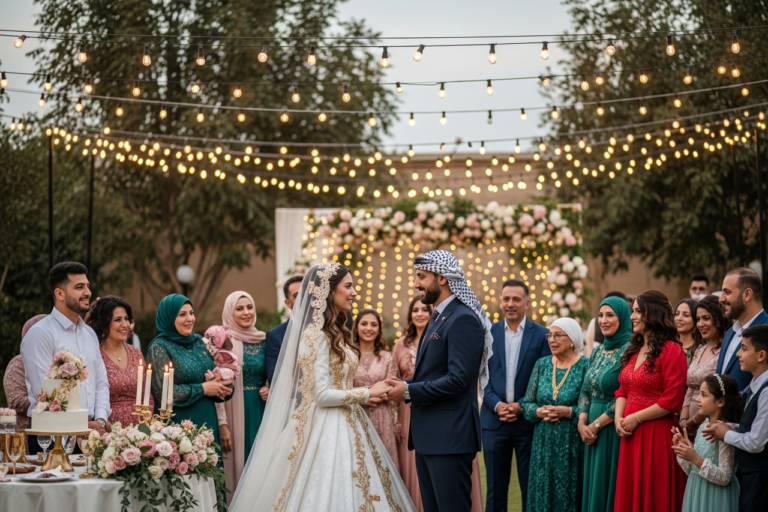
Key Highlights
-
An Iraqi wedding is a set of nice parties and events that happen before and on the wedding day.
-
Family members from both the groom’s and bride’s sides help out and join in all the steps.
-
The henna party comes before the wedding and it is a happy, colorful get-together for women, filled with fun and deep traditions.
-
The main wedding ceremony includes signing the marriage contract, sometimes with a beautiful Sofreh Al Aghd display.
-
Iraqi wedding traditions end with a big wedding reception. There is music, dance, and food for everyone to enjoy.
-
Iraqi marriage is held up by the help from the community and the strong customs that are shared by all.
Introduction
Step into the world of Iraqi wedding traditions. In Iraq, getting married is not just about two people joining as one. It is a big event that brings both the groom’s and bride’s families together. The whole process has many steps, from the first proposal to the wedding ceremony and the signing of the marriage contract. Each step means a lot to those involved. These wedding traditions are often shown in the Arabic language. They also show how rich and deep Iraqi culture is.
Foundations of Iraqi Wedding Traditions
In Iraq, marriage is a big part of family and community life. Wedding traditions are very important in society, especially for muslim families. The marriage is not only about the couple but about joining two families. The groom’s family and the bride’s family both have important parts to play, right from the start. This shows how weddings are a group event in Iraqi culture.
The lead-up to the wedding day in Iraq is full of special customs. These weddings are not just for the couple. They bring everyone together to celebrate and give blessings. When we look at these basics, we can see what values matter in an iraqi marriage. Now, let’s look at how family members and religion shape these weddings.
Role of Family and Community in Marriage Arrangements
Family is at the heart of an Iraqi marriage. Most of the time, it all starts when the groom’s family goes to the bride’s family and asks for her hand. This first step shows respect. It also helps set how things will go with the families and later plans. The community is also close. They stand with the family to help and cheer at every stage.
When both families agree, they start to work on the plans together. They get ready for all the events, from the engagement party to the wedding day. This brings both families closer and helps them form a stronger bond. Everyone wants the couple’s new life to begin with love and support. The families often help the couple set up their new house, too.
The whole process comes together when the marriage contract is signed. This joins not just the couple but both families and the community. It’s a special moment that shows how everyone works together in an Iraqi marriage. People believe it takes many people to make a wedding a happy time. They want the couple to start out with a strong support system around them.
Religious and Regional Influences on Ceremonies
Religious customs are a big part of Iraqi wedding traditions, especially for Muslim families. The holy Quran is always there, and people see it as a sign of blessing from God. An Imam leads the way when the marriage contract is signed. He reads verses from the Quran and helps the couple with the steps they need to take for their faith. This shows how important religion is in an Iraqi wedding.
Iraq is a large country with a lot of different people and places. So, you can see wedding traditions change from one area to another. In big cities, things might be done a little differently than in rural areas. The Kurdish people, who live in Iraq, have their own style for weddings. Their ceremonies are full of music, dance, and unique clothes. Weddings in Kurdish families often include many people and may go on for days.
Both Shia and Sunni Muslims in Iraq share many core wedding traditions, but there can be small differences. Some use different prayers, or change the order of the events, or have different roles for religious leaders, like the Imam. Still, there are a few things all Iraqi weddings have in common, like family support, faith, and a big sense of joy and togetherness. These things bring people from all over Iraq and all areas together no matter their background.
Engagement Customs and Pre-Wedding Rituals
The time before the wedding day is full of fun customs and special events. These moments help build excitement and give the families a chance to spend time together. Usually, everything starts with an engagement party. At this event, the groom’s family brings gifts to the bride. This gift-giving shows their promise and is a way to welcome her into their family.
These celebrations play a big role in Iraqi wedding traditions. Female family members come together for events like the henna party. Each ritual helps get the bride and groom ready for their new life. During these times, people give the couple blessings, share joy, and wish them well. Now, let’s take a closer look at some important pre-wedding events in an Iraqi wedding.
Mashaiya – The First Family Gathering
The Mashaiya is one of the first steps in the engagement process. It means “the walk.” At this time, family members from the groom’s family make an official visit to the bride’s family. They do this to ask the bride’s family for her hand in marriage. It is a big moment. There is a lot of respect, and it shows that the two families will unite soon. This is the start of things becoming public.
After Mashaiya goes well, the families start getting ready for the engagement party. This party is a happy time. Both families get together and celebrate the couple. At these meetings, there are some things people do that have meaning. For example:
-
The groom’s family will bring gifts for the bride and her family.
-
A tray of bread might be offered. This stands for hope for a good life and how their lives will be shared together.
This first real meeting makes a base of respect and teamwork for both the groom’s family and the bride’s family. This is an important step before the real engagement party. It helps both sides feel like one big family and sets the tone for all the plans to come.
Nishan and Henna Night Celebrations
The Nishan is also known as the official engagement party. It is a big event where the couple shares the news of their engagement. The engagement party is usually a fancy gathering. The groom gives the bride some jewelry. The families give each other gifts. This party is full of music, food, and dancing. It is an important time that leads up to the wedding night.
A few days before the wedding, there is the henna party. This well-loved event is often just for women. The bride’s female family members and her friends come together to celebrate. They draw beautiful henna patterns on the bride’s hands and feet. The henna stands for beauty, luck, and good wishes for her marriage.
The mood at the henna party is pure happiness and togetherness. There is singing, dancing, and story sharing. At this event, all the focus is on wishing the bride well and bringing sweetness into her life. This makes her ready for what comes next—the wedding.
Key Rituals of the Traditional Iraqi Wedding Ceremony
The Iraqi wedding ceremony is a very important event. It is full of meaning and old traditions. On the wedding day, the most important legal and religious part is when the marriage contract, called the “Aqid,” is signed. This is when the groom and the bride are officially joined by law and faith. This moment is often filled with strong feelings for the couple and their families. It marks the true start of their life as one.
Around the signing of the marriage contract, there are many wonderful events. At the center of these is a table called the Sofreh Al Aghd. This table has many things on it that stand for good wishes and blessings for the couple’s future. These customs make an Iraqi wedding different from any other, and they help create good memories on the wedding day that last long after the wedding night. Let’s look at the main parts and signs found on this special day.
Main Events of the Wedding Day
The wedding day is a flurry of activity and emotion, culminating in the wedding ceremony. A key moment is the “Aqid,” the signing of the marriage contract. The bride and groom are typically in separate rooms, with the Imam or Sayed moving between them to read the contract and receive their consent.
During the ceremony, the bride is often seated facing a mirror, with a canopy held over her head. While the marriage contract is being read, several rituals take place. Someone will walk in front of the bride holding burning incense to ward off the evil eye. Once she gives her consent, the groom enters the room to see his bride, and they are officially declared husband and wife.
The ceremony involves several beautiful traditions, each with its own significance.
|
Ritual |
Description |
|---|---|
|
Canopy Held Over Bride |
A cloth is held over the bride’s head by unmarried female relatives, symbolizing the hope they will be next to marry. |
|
Grinding Sugar Cones |
A happily married family member grinds sugar cones over the canopy, showering the bride with “sweetness” for her new life. |
|
Groom’s Entrance |
After the contract is signed, the groom enters to see his bride, often for the first time without her hijab, and they sit together. |
Sofreh Al Aghd and Its Symbolism
The Sofreh Al Aghd is a table or cloth that looks nice and stands at the center of the wedding ceremony. It holds more than just good looks. Every piece on it means something. Each one shows what families wish and hope for in the couple’s new life together. The bride’s mother often prepares the Sofreh, and it is loved by everyone who takes part.
The most important part of the Sofreh is the holy Quran. People open it to a part about marriage to bring good luck to the pair. There are also a mirror and candlesticks. These show a bright future that both will look at together. On the Sofreh, there is also a tray of bread, and it stands for growing wealth. People put sugar there too, to give the couple sweetness in their shared life.
People add fruit to wish for a life that is full of joy and good days. Decorated eggs and nuts stand for hopes of kids in the future. Flowers on the table stand for how life or marriage can be good and lovely. Burning incense helps keep away bad thoughts and protects the couple from harm. All these things come together to make a strong and beautiful sign of good wishes for the new married couple.
Elements of the Wedding Reception
After the main wedding ceremony, the real fun starts at the wedding reception. This is a big party where family and close friends get together to celebrate the newlyweds. The venue is full of life, with happy music and lots of dancing going on all night. The bride walks in wearing her beautiful white dress, and the groom shows up in his new suit. They are the main focus, and everyone is excited for them.
The wedding reception is all about a great time for the senses. People want to make it a day that everyone will remember, with so much joy and celebration for the new team, as these two become husband and wife. Everything is set up to give guests a good time, from the music and dancing to the clothes people wear. All of these things come together to make an Iraqi wedding such a wonderful event.
Let’s look at some music, dance, and fashion that make an Iraqi wedding reception stand out.
Music, Dance, and Celebration Customs
Music and dance are a big part of an Iraqi wedding. From the start of the reception, the venue fills with both traditional and new Iraqi music. Some people hire live bands or DJs so the dance floor stays busy, and the energy stays up through the night. The idea is to make a party that the couple and their close friends will not forget.
Traditional dances play a big role in the event. The “Chobi” is a much-loved line dance. People hold hands, make a circle, and a dancer with a handkerchief leads the way, turning as they go. This is a fun dance that brings everyone in, from children to older people in the family.
The wedding reception is always a time to be with close friends and family. There are usually:
-
A big entrance for the groom and his bride.
-
Group dances such as the Chobi and Khigga.
-
Both old and new Iraqi pop songs that people know and like.
An Iraqi wedding is full of joy and music, making the day special at the venue for all the guests.
Traditional Clothing for Brides and Grooms
On the wedding day, what the bride and groom wear is the center of attention. Many modern Iraqi brides choose a white dress in the Western style. The dress is often very detailed and pretty, which stands for purity and a fresh start. During the wedding party, the bride might change into a few other dresses that are bright and full of details. Each dress is more eye-catching than the last.
The groom usually wears a new suit or a tuxedo that fits well and looks great on him. The clothes he picks are meant to go with what the bride is wearing. When you see them together, they show off style and joy. This style of modern formal wear is what most people use now for Iraqi wedding celebrations, especially in big cities like Baghdad.
Still, some people wear the old traditional clothes, more so in different rural areas of Iraq or for special events before the wedding day. For example, some Kurds and those in the countryside might wear special dresses that show their family’s past. These clothes are often very bright in color and have lots of embroidered patterns. This shows how many kinds of cultures come together in an Iraqi wedding.
Conclusion
Iraqi wedding traditions show us the many ways people celebrate love, family, and community. The wedding is much more than two people coming together. It brings families and friends together in every step. Each part, from how a marriage is planned to how the day is celebrated, means a lot.
Many rituals in an Iraqi wedding stand for love and joining two lives. During the Mashaiya gathering, the families get to know each other and this is an important custom. The Sofreh Al Aghd table has many small things that have big meanings about unity and good wishes.
When we learn about these wedding traditions, we start to see why keeping our culture strong matters. These customs help people feel close and proud of where they come from. If you are planning your own iraqi wedding, or you just want to know more about iraqi customs, feel free to ask for help or information.
Frequently Asked Questions
How do Kurdish and Arab Iraqi wedding traditions differ?
Kurdish traditions stand out in an Iraqi wedding. These weddings are usually bigger and last longer. Sometimes, they go on for several days. You will see special music and bright folk dances. There is also traditional clothing that is not often seen in Arabic weddings, especially in cities. There are some things that both types of weddings share, but Kurdish weddings in Iraq have their own unique ways.
What are some unique customs found in Shia or Sunni Iraqi weddings?
Both Shia and Sunni Iraqi wedding traditions show respect for the Quran and usually have an Imam take part. Still, there are some small differences. For example, they might use different prayers or words during the wedding. The order of how things happen, like when the contract is signed, can also change a bit based on the family and their religious sect.
wedding traditions, iraqi wedding, iraqi, quran, imam
How have Iraqi wedding traditions evolved over time?
For a long time, wedding traditions in Iraq have changed. The most important things, like family and community, are still here. But today, you can see some new ideas as well. Now, many Iraqi weddings are more formal than before. The receptions are bigger and take place in large venues. Still, people keep many old customs at their weddings. So in Iraq, you will find wedding traditions that mix the old ways with new ones.



