

Key Highlights
Here are the key things to know about Iranian wedding traditions:
-
Persian wedding traditions start from Zoroastrian beliefs. They focus on family coming together and using symbols.
-
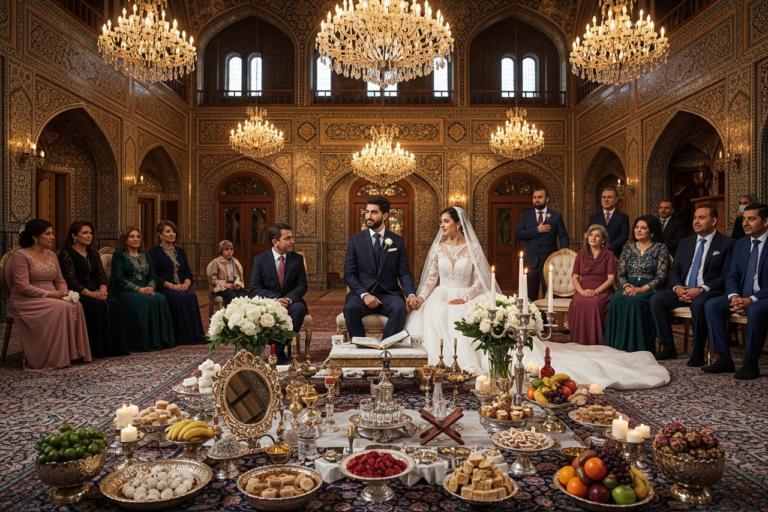
The Sofreh Aghd, or wedding spread, is at the heart of the wedding ceremony. It shows symbolic items that stand for a happy and rich life.
-
There are pre-wedding rituals like Khastegari, which means courtship, and Baleh Boroon, which means a formal engagement. In these, both families take part in starting the marriage.
-
The Henna Night, or Hanā Bandān, is a fun party held before the wedding. People gather to wish the couple good luck.
-
At the Aghd ceremony, couples sign the marriage contract. There are special rituals done too, such as grinding sugar cones over the couple’s heads to bring happiness for them.
-
At the reception, people enjoy the Raghseh Chagoo or knife dance, dance to traditional music, and there is a lot of dancing and fun.
These wedding traditions, the big wedding ceremony, the henna night, sugar cones, wedding spread, marriage contract, and symbolic items—all bring something special to the Persian wedding. Everyone hopes for good luck and joy for the new couple.
Introduction
Have you ever been asked to go to an Iranian wedding and did not know what you would see there? Iranian weddings are full of rich traditions, happiness, and meaning. These events show a lot about Persian culture. The Persian wedding ceremony is not just one big event. There are many steps, and each says something special about love and family. You will see the pre-wedding customs, then the ceremony itself, and at last, a lively party. Every part connects families and has strong roots in Persian wedding traditions. This guide will help you learn about the world of Iranian weddings, from start to finish.
Foundations of Iranian Wedding Traditions
The roots of Iranian wedding traditions come from a deep and long history. Many things you see at a wedding today come from old customs. These have been around for thousands of years. They carry strong meaning, as people have passed them from one generation to the next.
These cultural traditions in an Iranian wedding are more than just things people do at a celebration. They show what the community believes about marriage, family, and togetherness. Now, let’s look at where these wedding traditions first started and the ideas that make them so meaningful.
The Historical Roots of Persian Marriage Ceremonies
The Persian wedding has a long history that goes back to Zoroastrianism. This was the main religion in what is now Iran before Islam came. Because of this, many of the things people do in a Persian wedding show signs of light, being pure, and wishing for plenty. You can see many old customs in the wedding traditions people use now.
As Persian culture changed over the years, the way people have weddings changed, too. The important parts of the wedding stayed, but people added some things from other religions, like Islam, Judaism, and Christianity. This mix of ideas shows how the middle east has so many different kinds of people and a rich background.
This big and interesting history helps make every Persian wedding more than just an event. No matter if it is a religious service or not, each wedding brings together the couple, their families, and everyone else. It is a way for people to feel close to tradition, and to show the wisdom and love that have been handed down for many years through Persian culture and wedding traditions.
Core Values and Beliefs in Iranian Weddings
In Iranian weddings, family, community, and the importance of marriage are at the center. Each wedding tradition has a deep meaning. These are meant to give blessings to the couple and also bring their families together. Family members and close relatives are not just there—they are a big part of the whole wedding.
People believe that a wedding is not just about two people. It’s also about uniting two families. The celebrations show this bond in a joyful and loving way. Families give each other support and respect. Some core values in Iranian weddings are:
-
Family Unity: Two families come together. Elders have an important role.
-
Hospitality: All guests feel welcome. The hosts show warmth and kindness, which highlights how much community matters.
-
Respect for Tradition: Long-time customs are important. They help the couple stay connected to their culture.
The focus on shared experience brings everyone together. That is what makes these wedding traditions strong and long-lasting. Love is not just about the couple. In these weddings, it reaches out and includes all family members, close relatives, and everyone who comes.
Engagement and Pre-Wedding Customs
Before the big day, there are many engagement and pre-wedding traditions that help the couple get ready for their future together. The persian wedding journey usually starts well before the main event. There are some customs where both families meet and get to know each other. These moments are full of happiness, talk, and a sense of fun.
One event is when the groom’s family comes for a first formal visit to the bride’s home. Later, there is the lively henna night, where people gather, sing, and often dance together. At every stage, relatives of the bride and groom are very important. They make sure the couple feels loved and supported as they step into a new part of life.
Khastegari – The Traditional Courtship Process
The Khastegari is the first step in a Persian courtship. In this tradition, the groom’s family goes to the bride’s home to ask her family for her hand in marriage. This meeting is seen as a sign of respect. It shows that the groom is serious about marriage.
At this visit, the two families sit together and talk over tea and sweets. It’s a time for both families and family members to get to know each other. They see if the couple will be a good match. The mood is formal, but the families also want to feel welcome and set the right tone for the future.
If things go well, this meeting is the start of the engagement. The Khastegari helps make sure family members are involved from the first step of the process. This way, both families work to build trust and respect in the union.
Baleh Boroon – Formal Engagement Rituals
After a good Khastegari, the Baleh Boroon takes place. This is the official engagement ceremony. Here, the bride gives her “Baleh” or “yes” to the marriage request. Their close relatives and family members from both sides join in. People come together and feel happy at this event.
During the Baleh Boroon, the groom’s family gives wedding gifts to the bride. These can be things like jewelry to show how serious they are about the marriage. The couple may also exchange sweets to start their sweet life together. This event makes the engagement real and moves their relationship from dating to a formal betrothal.
This ceremony also helps in many ways. The families talk about the wedding day and who will be in charge of what money-wise. It’s a time for everyone to celebrate and for both families to get closer, as they share the news that the couple will get married.
Hanā Bandān – Celebrating with Henna Night
The Henna Night, or Hanā Bandān, is a lively and fun event. It happens one or two days before the wedding day. The bride’s family usually hosts this party. It is a special time for the couple, as they come together with their close friends and family before the wedding. The main focus of the night is the henna.
A close friend of the bride will bring dry henna to the party. This dry henna is mixed and then put on. The bride’s hands and feet are covered with beautiful henna patterns. These patterns are a sign of joy, beauty, and good luck. People at the party often get henna too, joining in the fun. The important parts of the night are:
-
Putting henna on the bride’s hands and feet.
-
Singing and dancing to old songs.
-
Eating sweets and drinking with others.
-
The groom’s family giving gifts to the bride.
This happy night is a great way for people to wish the couple a good and lucky future. It also makes everyone feel more excited as the wedding day gets close.
Wedding Preparations and Customs
As the wedding day gets closer, everyone works hard to get things ready. In iranian weddings, this time is full of traditions. Some are symbolic, but some are practical. All of them help make sure the day will be great. The wedding party and close friends and family also help a lot.
These chores are more than simple planning. They are a part of the good old customs. These add a special touch to the wedding for all. When people share sweets or bring the dowry, each tradition is an important part of the journey to the wedding day.
Shirini Khoran – Sharing Sweets as a Symbolic Gesture
Shirini Khoran means “eating sweets.” It is a lovely part of the wedding day, and it stands for a sweet life ahead for the couple. After the couple gets engaged, the groom’s family brings sweets, pastries, and other treats to the bride’s home. They share these with her family and the guests. This is one way to celebrate the good news and bring happiness to all.
On the wedding day, people also put out many kinds of delicious sweets for guests to enjoy. These are not just any desserts. Many are old and loved Persian treats, and each one can mean something special. The sweet table often looks like a piece of art. It is set up with care and filled with tasty treats.
Some well-known sweets you might see are:
-
Specially baked bread: Like Noon-e Sangak, and “Mubarak Bad” (congratulations) written across it.
-
Rice flour cookies (Nan-e Berenji): Soft cookies that break apart and melt in your mouth.
-
Light doughnut balls (Bamieh): Little doughnuts that are so sweet. They are dipped in syrup and very good.
-
Noghl: Almonds with sugar all around them. These show a wish for a sweet life.
Jahaz Baran – Presenting the Bridal Dowry
Jahaz Baran is when the bride’s family gives her dowry in a special way. The family gets everything needed for the couple’s new home. This event is not only about giving things. It is also a happy gathering where the items are set up for family and friends to look at.
The dowry, called Jahaz, can have many things. It has furniture, items for the kitchen, things to decorate the house, and sometimes gold jewelry. This shows how much the bride’s family cares and the love they put into starting her new life. People come together to show their support for the couple as they start out.
In modern times, this tradition has changed in some ways. Some families still have a big celebration, while others might give the dowry in private. Either way, Jahaz Baran is about the bride stepping into her new home and how everyone supports the couple in this new start.
Shopping for Traditional Wedding Attire and Accessories
Shopping for wedding clothes is a big part of the fun before the wedding day. In many families, the groom’s family goes with the bride when she buys her wedding dress and accessories. This is a special time and makes the bond between the bride and her new family even stronger. People are happy and excited during these shopping trips.
The bride’s wedding dress is the main focus. Many brides now pick a Western-style white gown, but they often add something Persian. It might have fine embroidery, a thin veil, and gold jewelry. Giving gold jewelry to the bride is a big part of the gifts from the groom’s family.
Shopping for the wedding day often involves:
-
The Wedding Dress: Picking out the main dress the bride will wear.
-
Gold Jewelry: Deciding on necklaces, bracelets, or earrings that go with the dress.
-
Accessories: Buying the veil, shoes, and other things to finish the look.
This part of the wedding happens across many provinces of Iran, and people see it as a treasured time that gets everyone looking forward to the big day.
Wedding Attire and Fashion Traditions
The clothing at a Persian wedding is known for its beauty and style. The bride and groom pick their outfits with care. They often show their personal taste while still honoring their roots. You will see both classic dresses and newer suits at these events. Fashion is always a big part of a Persian wedding.
If you travel through different provinces of Iran, you will notice many styles of wedding clothes. Each area has its own special way of dressing and adds unique touches to what they wear. Let’s take a closer look at what the couple usually wears and how it can change from one place to another.
Traditional Iranian Bridal Dresses and Groom Outfits
Traditional Iranian bridal dresses are known for their elegance and intricate details. While many modern brides choose a white Western-style gown, they often incorporate Persian elements like elaborate embroidery or a long, sheer veil. Gold jewelry is a must, symbolizing wealth and prosperity for the new couple.
Groom outfits have also evolved. While a modern suit is common, some grooms draw inspiration from Persian royalty, opting for an embroidered jacket or a sash to add a traditional touch to their attire. The groom’s outfit is chosen to reflect dignity and respect.
Here’s a quick look at the typical elements of their wedding attire:
|
For the Bride |
For the Groom |
|---|---|
|
White or ivory gown |
Suit or tuxedo |
|
Intricate embroidery |
Embroidered jacket or sash |
|
Sheer veil |
Polished dress shoes |
|
Gold jewelry |
A tie or bow tie |
This blend of modern and traditional fashion makes the couple’s appearance at the Persian wedding ceremony truly memorable.
Regional Variations in Wedding Attire Across Iran
Iran is a country full of different cultures. You can see this in wedding clothes from the provinces of iran. When you travel to each part of this country, you will find every place has its own way of showing wedding traditions. Most places use bright colors, special patterns, and eye-catching accessories in their local dress.
People feel proud of the way they dress on this big day. Most wedding outfits use fine fabric. A lot of the details are made by hand and given from one family to the next. For example, wedding traditions in the Kurdish or Qashqai groups have their own dress, and the clothes are often colorful and easy to spot.
Some things they have in common are:
-
Vibrant Colors: Most of these dresses have bold and rich shades.
-
Intricate Embroidery: You will see a lot of hand-sewn patterns on them.
-
Layering: People wear clothes in layers which gives a special look.
-
Headpieces: Bright headdresses or long veils are a must for many.
The different wedding outfits are an important part of iran’s culture. They help make every wedding one people will always remember.
The Persian Wedding Ceremony – Aghd
The Aghd is at the center of a Persian wedding. It is both a legal and a special joining for the couple. This wedding ceremony is full of meaning and old ways. At the center of the Aghd is the Sofreh Aghd. It is a beautiful wedding spread with many symbolic items. Each one stands for joy and blessings for the couple’s new life.
During the wedding ceremony, the couple sits in front of the Sofreh Aghd. The officiant leads them through the steps. At the end, they both sign the marriage contract. This is a big moment. Their family and friends are there to see it happen.
Sofreh Aghd – The Symbolic Wedding Spread
The Sofreh Aghd is at the heart of a Persian wedding ceremony. This wedding spread or table is set up with care. It has many symbolic items. Every one of them stands for a wish for the couple’s future together. The Sofreh sits on cloth on the floor and is always placed to face east, toward where the sun rises. This shows the hope for a bright start.
Each item on this wedding spread has its own meaning. All of them make up blessings for the couple’s marriage. The Sofreh Aghd is more than something that looks nice. It is a special place where both people sign their marriage contract and become one.
Common symbolic items on the Sofreh include:
-
Mirror of Fate (Ayeneh): This shows a clear and bright future for the couple.
-
Candles (Shamdoon): These stand for warmth, energy, and light.
-
A Holy Book: This may be a Quran, Bible, or Avesta. It gives guidance from above.
-
Bread (Noon-e Sangak): This shows hope for a good life and plenty for both.
These details are a big part of each Persian wedding ceremony. Some people come to see the sofreh aghd just for its beauty and meaning. The symbolic items show family wishes, and the holy book is there when vows are made and the marriage contract is signed, making this moment special.
Key Rituals During the Marriage Ceremony (Aghd)
The Persian wedding ceremony, called Aghd, is full of beautiful and important steps. One part of the wedding ceremony that people remember is when female relatives of the bride and groom hold a fine fabric or shawl above their heads. While they do this, some other women who are happy in their marriages take sugar cones and grind them together. This is to shower the couple with sweetness for their new life together.
Another big part of a Persian wedding is about consent. First, the officiant asks the groom if he agrees, and he says yes. Then, the bride is asked. The bride does not answer the first two times. Her family laughs and makes jokes, like, “She went out to pick flowers!” The third time, she says “Baleh” (yes), and everyone cheers to celebrate.
Here are some key rituals during the Persian wedding ceremony, or Aghd:
-
Grinding Sugar Cones: This means people want the new couple to have a sweet life.
-
The Consent: The bride playfully waits before saying “yes.”
-
Reading from a Holy Book: This is done to bring spiritual blessings to the marriage.
-
Signing the Marriage Contract: This part makes the marriage legal.
After the vows, another part of the ceremony is when the bride and groom both share honey. They each dip their pinky finger into a jar and feed each other honey. This shows the promise to take care of each other for years to come.
Symbolic Items Used in the Ceremony
The Sofreh Aghd has many symbolic items on the wedding spread. Each one means something special for the couple’s future. These are not just simple decorations. They stand for all the good wishes and blessings people give the couple.
People put sugar cones on the spread to hope that life will be sweet for the couple. There is also a holy book to give spiritual help for the days ahead. In the center, you will find a prayer rug or an old family cloth called Termeh. This is there to remind the couple about faith and family roots.
Here are some of the main symbolic items you will see:
-
Mirror and Candelabras: These are for a bright and happy path for the couple.
-
Decorated Eggs and Nuts: The couple may get more blessings, kids, and a bigger family with these items.
-
Gold Coins (Seekeh): People use these to wish them wealth and a good life.
-
Rose Water (Golaab): It gives a sweet smell and helps people feel calm.
-
Wild Rue Incense (Esfand): This one is burned to keep away bad things and the evil eye.
Music, Dance, and Celebration at Iranian Weddings
No Persian wedding would be complete without lively music and active dancing. At a Persian wedding, you can see people of all ages coming together to enjoy the wedding day. The music helps make the wedding celebration feel full of life, and you can feel the happiness from the time people start to arrive.
You will hear both folk songs and new Persian pop music at the wedding. The songs pick up the energy and help get people out on the dance floor. This day is about happiness, and both the music and the dancing make sure that everyone has a good time together at the wedding celebration.
The Significance of Music in Persian Weddings
Music plays a big part in a Persian wedding. It is not just something you hear in the background, but it helps make the wedding day special. The music connects people to the cultural traditions of Iran. At these events, a live band or a DJ will give people lots of kinds of music, so everyone can enjoy the night.
At a Persian wedding, you will hear many types of music. Some songs are old classic Persian songs, while some are lively folk songs. There is also modern pop music with lots of energy. All of this comes together to bring the past and present into one moment. The music is often about love, happiness, and starting a new life together.
The purpose of the music is to make everyone feel close and happy. It gets people up to dance and have fun. People celebrate and enjoy their time together. The music helps make the wedding day one to remember for all who are there.
Traditional Wedding Dances and Cultural Performances
Dancing is a big part of the wedding celebration. There are many traditional wedding dances that stand out. These dances show different cultural traditions and give everyone more chances to have fun and be part of the event. One of the most well-known dances is Raghseh Chagoo, also called the knife dance.
Before the couple can cut the cake, they have to “earn” the knife. One of the female relatives or a bridesmaid will pick up the knife and start to dance with it in a playful way. She passes the knife around while dancing. The groom then gives money to the dancers to finally get the knife for the couple to use.
Other dances that people enjoy during the wedding celebration are:
-
Bandari: This dance is from the south part of Iran. It is high-energy and dancers move their shoulders in a way that shows a lot of style.
-
Baba Karam: This is a light-hearted dance style. It is fun and often makes people laugh and feel good.
There, these dances are not just for show. They invite all people to get up and dance. This makes the wedding celebration happy, lively, and a big part of the community.
Family Involvement and Community Roles
Family is at the heart of Iranian wedding traditions. Parents, elders, and the whole community are not just a part of the day. They are needed. From when two people first meet to after the wedding ends, family members and close relatives get involved. They join in and help at every step.
This connection gives the couple a strong support as they start their new life. The wedding is for everyone and brings people together, making good memories that last.
The Role of Parents and Elders in the Ceremonies
Parents and elders have an important part in the wedding and everything that comes with it. They give support, blessing, and good advice to the couple during this time. The involvement of family members starts from the Khastegari, as they help begin the engagement, and goes on to the Aghd, the main ceremony. Their help and love never stop, and it means a lot.
At the wedding, you often see elders meeting guests, giving their good wishes, and sharing advice that helps a happy marriage. The couple knows how much their support matters for their new life as a couple. It is no surprise they like to ask both parents and even grandparents for a special blessing.
The way these family members take part shows how much people value their life lessons, what they know, and the bond between different ages. The family wants to make sure all traditions stay strong and the couple’s new life starts with plenty of love and support around them. Parents, elders, and other family members are the ones who make sure everyone feels happy and together on this day.
Family, Friends, and the Wider Community’s Participation
Beyond just the close family, friends and the whole community play a big part in Iranian weddings. Guests are more than people who watch. They take part in the fun and the work. When they get to the event, they are met with open arms and are expected to be excited and join the celebrations.
Relatives of the bride and groom, along with close friends, often help out in special ways through the wedding day. For example, women who are happily married may grind sugar cones above the couple. Close friends can do the knife dance. These actions during the wedding day help all guests feel included.
Community involvement includes:
-
Witnessing the Ceremony: Guests are there to see the marriage and give support.
-
Participating in Rituals: Friends and family help hold the canopy, grind sugar, and take part in dancing with the cake knife.
-
Showering the Couple with Gifts: Guests bring gifts and money to help the couple as they start their new life.
This group celebration shows that the whole community supports the couple and their marriage.
Conclusion
To sum up, Iranian wedding traditions are full of history, culture, and values. These wedding traditions show just how much the Persian people care about their roots. There are many steps, starting from the engagement and going all the way to the lively wedding ceremony. Each step means a lot. It helps bring the families and friends together. When you learn about these Iranian wedding traditions, you start to see why iranian weddings are so unique. You also get to feel close to the people and their stories. If you are planning a wedding or want to know more, you can add some of these wedding ceremony parts to your day. Want more ideas? You can reach out for a chat or ask for help getting started!
Frequently Asked Questions
What makes Persian weddings unique compared to other cultural weddings?
A Persian wedding stands out because of its old symbols and how important the Sofreh Aghd is in the wedding ceremony. The wedding day is full of cultural traditions that mix old Zoroastrian ways and new ideas. Family is very involved. The rituals are made to give the couple good luck, many children, and want them to have a happy life together.
How has modern life influenced traditional Iranian wedding customs?
In modern times, Iranian weddings have changed. Many couples mix old ways with Western ideas now. The Sofreh Aghd is still a big part of the wedding. Some also choose to wear a white dress. The wedding celebration might be shorter. But family members still take part, and people still focus on enjoying the day together. The importance of the wedding celebration in Iranian weddings stays strong.
How is the Sofreh Aghd typically decorated at Persian weddings?
The Sofreh Aghd is a special wedding spread. It has many symbolic items on it. There is a mirror to show a bright future. Candles bring warmth. A holy book gives guidance. Sweets help bring a sweet life. Gold coins stand for prosperity. All these are set up nicely before the marriage contract is signed.



