

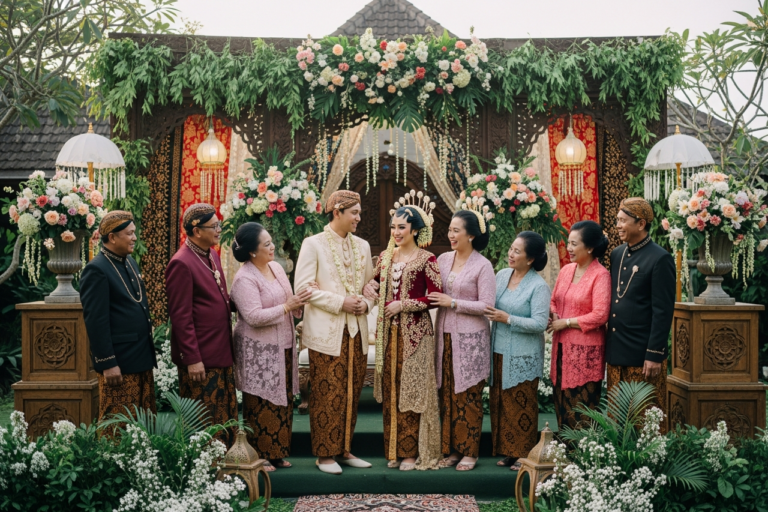
Key Highlights
-
An Indonesian wedding is full of life. It is all about culture and includes many family members in the event.
-
The wedding ceremony in Indonesia looks different among the ethnic groups. Each group has a unique wedding tradition.
-
Before the wedding day, there are important wedding customs like the formal proposal and showing respect to the bride’s parents. These customs matter just as much as the wedding day.
-
People wear traditional outfits, such as Javanese and Balinese clothes. These clothes are made with meaning and look elegant.
-
The key rituals in the wedding include getting blessings from the groom’s family and the bride’s parents.
-
Many modern Indonesian weddings now mix old customs and new ideas. This makes the celebration fit what the bride and groom want.
Introduction
Welcome to the beautiful world of Indonesian weddings. Here, an Indonesian culture wedding is not just about the bride and groom. It is about two families coming together. The wedding day is full of meaning. People share in many rich rituals and traditions. You will see stunning clothes and feel the deep ties that hold everyone close. For the bride and the groom’s family, a cultural wedding is very special. It lets them honor their roots and get even closer to each other. Are you ready to see how great these weddings can be?
Overview of Indonesian Wedding Traditions
Indonesian wedding traditions bring together many cultures found in the country. A wedding ceremony in Indonesia is usually a big event. It invites not only close friends and family members, but the whole community. These are more than just marriage ceremonies—they tell people about love and the promise two people make to each other. They mix things from ancient times with ideas from now.
Every unique wedding tradition in Indonesia has its own story and meaning. The wedding ceremony is often spread across several days. There are many rituals during the days that show the couple leaving their old lives and starting a new life together. Let’s see how different indonesian wedding traditions are and what makes them stand out.
Diversity Across the Archipelago
Indonesia has many ethnic groups, and each one has its own different traditions for an indonesian wedding. This mix of customs is what makes indonesian weddings different and interesting. For example, in west java, people hold big and special ceremonies, while in eastern indonesia, you will see unique wedding tradition. Because of this, no two weddings look the same. Every place has its own style and meaning for the event.
These differences come from many years of local history, the beliefs people have, and the way they live. For example, a wedding in Sumatra does not be the same as one in Bali or Sulawesi. The unique wedding tradition in every group shows what its people value and how they see the world. All these things together make a bright picture of indonesian culture.
When you look at these wedding traditions, you start to see what is at the heart of indonesian culture. The things people do, the food they eat, and the clothes they wear on their wedding day all share the story of the group they come from. With so much variety, every indonesian wedding is special, full of meaning, and one that people remember for a very long time.
Influences of Religion and Local Beliefs
Religion is an important part of daily life in Indonesia. This is true for weddings as well. Most people in Indonesia are Muslim, so many marriage customs come from Islamic law. Still, there are people who are Protestant, Catholic, Hindu, and Buddhist. Each group has wedding traditions that add to ceremonies in the country. A marriage has to follow the couple’s religion for it to count as legal.
After the religious ceremony, couples need to finish a civil registration so the government knows about their marriage. This process makes sure the marriage is legal and also has meaning for them and their families. People who get married must have the permission of their parents, especially when they are under 21.
There are also local customs, or ‘adat.’ These are rules from older ways of life and they are used along with religious rules. Here are some important points:
-
The marriage has to be between one man and one woman.
-
Both sides have to say yes to the marriage.
-
A member of the family is often the guardian or witness at the wedding.
Pre-Wedding Customs and Engagement Rituals in Indonesia
Before the big day, the bride and groom follow a number of traditional wedding customs. These happen before the wedding and are important for both families. The main idea is to help the families get to know each other and show they agree to the plans for marriage. One of the biggest steps is the engagement. At this event, close family members from the bride’s side and the groom’s side take part.
These moments mean a lot for both sides. They are just as important as the wedding day itself. The bride’s family and the groom’s family use this time to connect and build trust. Next, we will take a look at wedding customs like the formal proposal and when both families exchange gifts.
Lamaran: The Indonesian Engagement Ceremony
The formal proposal, called Lamaran, is a very special event. At this time, the groom’s family visits the bride’s parents. They come to the house to ask if the bride can marry the groom. It is a big way to show respect. It also is the real start of the wedding journey. The gathering is often more private than the wedding day.
During the Lamaran, the two families get closer. The groom’s family tells the bride’s parents about what they want. If the bride’s parents agree, both families start talking about the wedding ceremony. This meeting is important for picking the day and what to do for the wedding.
This tradition shows how a marriage in Indonesia is about more than just the couple. It joins the bride’s family and groom’s family. Saying yes to the proposal is a happy time. It shows that both families are ready to plan the wedding together.
Exchanging Gifts and Negotiating Dowries
Gift-giving is a big part of the engagement process. At the Lamaran, the groom’s family brings various gifts for the bride and her family. These are not just random things. Each one means something and shows the groom can take care of his future wife. The gifts are usually put in red boxes or red baskets. These add a nice look to the moment.
There is also the idea of dowries, or ‘mahar.’ This shows up in different ways in different cultures. Sometimes people talk about money, land, or other valuable things as dowries. In Islamic tradition, the mahar is something the groom must give the bride. It becomes her own property.
People often exchange various items, and each item has a special meaning. Some common gifts are:
-
Food, especially sweets made from sticky rice. This is to wish for a close and lasting relationship.
-
Clothing, jewelry, and things for the bride’s care.
-
Symbolic offerings to hope for a good future and a wealthy life.
Traditional Wedding Attire and Symbolism
The traditional wedding attire in Indonesia is very beautiful, and it carries a lot of meaning. The wedding couple often wears detailed clothes that show their cultural roots. You can often see gold jewelry and gold attire, which stand for wealth, success, and even the idea of being royal. These outfits are not just pieces of clothing. They show the world who the couple is and remind us about the importance of their union.
What the wedding couple wears can show a lot about where they come from. The fabric patterns and even the style of the headdress give clues. For example, a couple from Central Java will dress in a way that is different from one from Bali. The clothes also respect the bride, her parents, and her family, helping to keep tradition alive. Now, let’s take a closer look at some of these stunning outfits.
Javanese Wedding Attire: Meaning and Elegance
In a Javanese wedding ceremony, the outfits are both beautiful and full of meaning. These clothes come from the royal courts in Central Java. The bride often wears a kebaya. This is a long-sleeved blouse. She also puts on a dodot or kampuh, which is a large piece of batik cloth. She wraps this around her body. Heavy gold jewelry is worn by the bride, from her head down to her feet.
One thing that stands out is the bride’s hairstyle. Another is the paes, which are black or green marks on her forehead. The front of the bride’s forehead is decorated with these patterns. They are not just for looks. Each design has its own meaning. For example, one shape can be a protective symbol. It can keep bad luck away and help make a happy marriage.
When you compare this to a western wedding dress, Javanese wedding clothes are much more colorful. These clothes show off the couple’s roots, their place in society, and their spiritual views. The groom wears clothes that are just as fancy. His outfit usually matches the bride’s. It shows that the two of them are together as one.
Balinese Ceremonial Dress and Adornments
For Balinese weddings, the bride and groom both wear gold attire that stands out. Their ceremonial dress is bright and full of meaning. The people look a lot like royalty on this day. The fabric called ‘songket’ is a special brocade. It has gold or silver threads inside, making shiny and detailed shapes. The colors are bright and show the happy and spiritual feel of the event.
A big part of the bride’s look is her thick golden crown. It is heavy, but it helps her look royal. The groom wears a headdress too, along with his own matching songket. They wear this outfit during ceremonies at the family temple. There, they ask for blessings from the gods and from their ancestors to support their marriage.
Balinese wedding dress is not simple. Unlike the often plain shape of a Western dress, Balinese wedding clothes are filled with layers and tiny details. It’s not just clothes. It is also a full set of personal things, which may be kept from family before or made just for the wedding. The hope is to make the bride and groom look amazing as they begin their new life together.
Main Steps in a Traditional Indonesian Wedding Ceremony
A traditional Indonesian wedding ceremony is made up of many special rituals. Each part of the day has its own meaning. The couple, the sets of parents, and people in the community take part in these actions. There is a grand procession and the showering of flowers. Every step in the marriage ceremony is done to bless the couple and to celebrate them.
These rituals are more than just the formal steps in a wedding ceremony. They are prayers and wishes to help the couple have happiness, good times, and peace in their life together. The parents take part in many places. Their blessings matter a lot. Now, let’s see the key moments in this Indonesian wedding that help make the day so special.
Procession, Blessings, and Key Rituals
The wedding day usually starts with a procession. The groom and his family come to the bride’s home, bringing gifts. The event is loud and happy, with music and dancing. These sounds tell everyone in the area about the groom’s arrival. The parents of the bride greet him. This is when the main wedding ceremony begins.
The bride and groom get blessings from elders many times throughout the day. The parents of the bride and the parents of the groom are very important. They give prayers and their good wishes, and they accept the couple’s desire to be married. These parts of the day can be emotional. Family respect and support mean a lot in Indonesian culture.
There are several rituals people do on the wedding day. What they do may change based on where you are in Indonesia. Still, many weddings have actions that show the new life the couple will start together.
-
The bride and groom say vows. In Islamic weddings, this is called ‘Ijab Kabul.’
-
The bride and groom feed each other. This stands for looking after each other.
-
People throw rice and flower petals on the bride and groom. This is to hope for good luck, healthy children, and wealth.
-
The bride washes the groom’s feet. This shows her respect and care for him.
Sungkeman: Paying Respects and Seeking Parental Blessings
One of the most touching and emotional parts of a Javanese wedding ceremony is the Sungkeman ritual. Here, the bride and groom kneel in front of both sets of parents and older family members like grandparents. They do this to ask for blessings and to say sorry for anything wrong done in the past. This is a big show of respect and humbleness.
The bride and groom will bow their heads down and kiss their parents’ knees or hands. This simple act shows deep respect. Their parents will then give their blessings, often going on to say prayers and share words of advice, too. This is an important time to thank the parents for raising them and to show they are ready for a new part of life.
Sungkeman means a lot for all of those taking part. It brings up strong feelings and helps keep the strong family ties that make Indonesian culture special. This is one of the most touching moments of a wedding ceremony. It is there to show that marriage is not only about two people, but about the families joining together as one.
Unique Wedding Traditions by Major Ethnic Groups
Indonesia has the motto “Bhinneka Tunggal Ika,” which means “Unity in Diversity.” This shows in the way its main ethnic groups have the wedding ceremony. The Javanese, Sundanese, Balinese, and Batak have their own unique wedding tradition. Each group brings deep cultural significance to their special day. You can see these customs from West Java to North Sumatra.
All these groups value family respect and community celebration. But the rituals are different for each. These traditions are very important. They help people keep their cultural identity for years to come. Now, let’s look at some of these unique ways of celebrating.
Javanese Customs: From Siraman to Panggih
The Javanese wedding ceremony is more than just one event. It has many steps and each one means something special. The first step in the wedding is called ‘Siraman.’ This happens the day before the wedding. The bride and the groom take part in this bathing ritual. During it, their parents and older family members pour water with flowers over the couple. This is done to clean the bride and groom on the inside and outside so they can begin their life together with nothing holding them back.
After the main religious ceremony, there is another special event called ‘Panggih.’ This is a ceremony where the bride and the groom meet as husband and wife for the first time. The wedding party gathers to see the couple do small acts, each with their own meaning, like the bride and groom stepping on an egg or the bride washing the groom’s feet. These actions show the bond between them and their hope to have children someday.
These Javanese wedding ceremony customs are full of deep meaning for both the couple and their families:
-
Siraman: Shows that the bride and groom are getting ready for marriage by being clean in their spirit and their body.
-
Panggih: Shows the joining together of the bride, the groom, and both of their families during the wedding ceremony.
Sundanese Rituals and Ngaras Ceremony
The Sundanese people from West Java have some special wedding customs. One important event before the wedding is called the ‘Ngaras’ ceremony. At this time, the bride and groom wash their parents’ feet. This shows respect and helps them ask for their parents’ blessing. It is a touching moment that honors their parents’ care and hard work.
These wedding customs in West Java are known to be fun and full of meaning. After the official part of the day, the couple often takes part in games like ‘meuleum harupat’ (which means burning sticks) and ‘meupeuskeun kendi’ (which means breaking a water jug). These activities are not just for fun. They give advice to the couple about how to handle problems in marriage and help each other.
All of the steps in these wedding customs are there to give good advice and best wishes to the couple. From respecting their elders at the Ngaras ceremony to the playful games after, each part is a way to honor love, family, and the Sundanese culture.
Wedding Traditions among Balinese and Batak Communities
Other islands beside Java also have interesting wedding practices. In Bali, Balinese weddings are spiritual. They use special gifts and holy water in their ceremonies. The Batak people in north sumatra do things their own way. They give Ulos cloth and hold the ‘Mandok Hata’ ceremony. At this event, families share formal speeches.
These different ways show how Indonesia is full of many customs. Every community has made its own way to honor marriage. Let’s look closer at these balinese weddings and Batak traditions.
Balinese Wedding Offerings and Holy Water Rituals
In Balinese weddings, the spiritual aspect is paramount. The ceremony, often held at the bride’s family temple, is centered around seeking blessings from the deities and ancestors. A key part of this is the preparation of intricate wedding offerings, or ‘banten.’ These are beautiful arrangements of flowers, fruits, and other items that are presented to the gods.
Holy water rituals, known as ‘Mekala-kala,’ are also central to the ceremony. The couple is purified with holy water to cleanse them of any negative influences before they begin their life together. This ritual symbolizes a spiritual rebirth for the couple as they embark on their shared journey.
The ceremony is a blend of Hindu-Balinese religious rites and local customs. It is a visually stunning and deeply meaningful affair that connects the couple not only to each other but also to their community, their ancestors, and their gods.
|
Ritual Element |
Description and Symbolism |
|---|---|
|
Banten |
Elaborate offerings of flowers, fruit, and rice cakes made to appease and honor the gods and ancestors. |
|
Mekala-kala |
A purification ritual using holy water to cleanse the couple of any evil spirits or negative energy. |
|
Family Temple |
The venue for the ceremony, symbolizing the importance of ancestral blessings and family lineage. |
Batak Ulos Gift-Giving and Mandok Hata
The Batak people in North Sumatra have wedding customs that are full of meaning and bring many people together. One main tradition is giving an ‘Ulos,’ which is a hand-woven cloth. During the wedding, the bride’s parents give the couple an Ulos. It stands for warmth and blessings. The cloth also shows that the groom is being welcomed into their family.
Another big part of a Batak wedding is the ‘Mandok Hata’ ceremony. This is a formal event where both families take part in long speeches. People share advice, blessings, and good wishes. It is a set way to show ties between families and support for the couple.
These traditions shape the Batak identity and the steps in marriage.
-
Ulos: This cloth is not just a present. It means that the family offers the couple a bond and protection.
-
Mandok Hata: These speeches show wisdom is passed down and how the two families are joined as one.
Modern vs. Traditional Indonesian Weddings
Today, many wedding couples in Indonesia face a choice. They can go with a modern wedding, or stay with a traditional wedding. There are still people who love and keep old customs. At the same time, Western styles are liked by many too. A modern wedding couple may wear a white dress and a tuxedo. They may have a nice party in a hotel ballroom and take pictures at a professional photo studio.
Urbanization and level of education often affect what people decide. Still, even with modern events, some old traditions stay. A lot of wedding couples mix both ways. They may have a traditional ceremony first, then a modern party after. This helps them respect their culture and enjoy a fresh, new style at the same time.
Contemporary Venues, Decorations, and Influences
Modern Indonesian weddings now often follow global trends. The couple might pick a modern place for their big day. This could be a five-star hotel, a fancy ballroom, or a beautiful spot outdoors. The decorations may have a clean and simple look, not the old, detailed style. At many parties, the wedding cake is also something you will see.
These new ideas tend to be popular with people living in cities and those from mixed backgrounds. They want to show their own style during their wedding. A professional photo studio or a pre-wedding photoshoot is something many couples want. They like to have these photos to keep happy memories of their love.
Still, for most, the main values stay the same. The party is a big event, and many people are invited to come together and celebrate.
-
Venues: Hotels and grand halls give ease and a stylish feel.
-
Western Elements: Now you often see a wedding cake, the first dance, and a formal photoshoot.
Adapting Customs for Urban and Mixed-Culture Couples
For couples living in the city and those from mixed backgrounds, planning a wedding is about being creative and working together. They often change or make some traditions simpler, so it fits in with their way of life and beliefs. An urban couple may choose a one-day wedding instead of many days, because people have busy lives and guests are from lots of different places.
A mixed-culture wedding party is a great chance to bring different customs together for a special day. A couple can wear clothes from their old traditions during the ceremony, and later switch to modern outfits for the wedding party. The food, music, and rituals can come from both sides, which makes the cultural wedding feel real and close to them.
The most important thing is to find a way to include both families’ history and show the couple’s own style. These new types of wedding day events prove that Indonesia’s culture is growing. Traditions can change and include more people, but still keep what matters most.
Intercultural Marriages and Blended Customs
Intercultural marriages are more common in Indonesia now. Many people come together from different places, family backgrounds, or religions. The wedding celebrations can be very special because they mix different traditions. There are beautiful ways that people blend customs to honor both sides of the family.
When planning this kind of wedding, you have to be careful. You need to pay attention to all the traditions, and also think about some religious and legal steps. The goal is to make a ceremony that is special and means a lot to everyone. Every family wants to feel included and respected.
Couples often bring together the best parts from each culture. Many do this so their wedding is one of a kind, showing their mix of backgrounds and their life together. With good planning, they can tell their love story by using special touches from both worlds. I think it is nice to see how people work together with the different traditions they come from and turn the day into something everyone can enjoy.
Navigating Religious and Legal Requirements
For intercultural couples in Indonesia, getting through the rules of religion and law is an important first step. Indonesian law says that you need to have a wedding ceremony based on a religion that the state accepts. This can be tough if the couple follows different religions, because interfaith marriage is not simple.
After the religious wedding ceremony, the couple should do a civil registration to make the marriage legal. This step means more paperwork and checks to make sure all the legal needs are met, especially when one person is from another country. Often, a member of the immediate family of the groom or bride will help with making these things happen.
It is good to plan ahead and talk openly. Many couples get advice from legal and religious experts to make sure their wedding ceremony is okay and can be accepted. Knowing about these steps early will help prevent extra stress, so the couple can enjoy their day and focus on their union.
Combining Traditions from Different Ethnic Backgrounds
When two different traditions come together, the wedding can be something special. It is often a big, and very personal moment for the couple. When two people from different backgrounds get married, they have a chance to pick the wedding customs that mean the most to them. This means they can have a mix of both families’ traditions, making the day show what their life as a couple is about.
At the wedding party, you might see something like a Javanese ‘Sungkeman’ ceremony, and then a Western-style exchange of rings.
The way they decorate can combine patterns from one culture, and add colors from the other. What matters is that everything feels right to them, and both families feel included and respected.
Here are some common ways people blend different traditions:
-
Attire: The couple can wear traditional clothes from one family’s culture when they say their vows, then change into an outfit from the other culture, or something new, for the party
-
Food and Music: They can give guests food from both backgrounds, and make a playlist with a mix of traditional songs and new hits.
By doing these things, couples get to celebrate both sides. They show what’s important to them, and share their story with family and friends through wedding customs and personal touches.
Essential Elements of Indonesian Wedding Receptions
The wedding reception is when the real fun starts. After everyone has gotten through the formal ceremonies, people can relax and enjoy the food, music, and entertainment. An Indonesian wedding reception is usually big. You might see hundreds or even thousands of guests there to celebrate with the wedding couple and their family members.
This part of the day lets the whole community come together. They get to share in the happiness with the wedding couple. There is a lot of focus on being a good host, offering plenty of traditional food and lots of exciting performances. Here are the things that make an Indonesian wedding reception such a special and hard-to-forget time.
Signature Indonesian Wedding Foods and Drinks
No wedding reception is complete without a big meal, and Indonesian weddings are known for the tasty traditional food they serve. The menu usually has a large lunch or dinner with many dishes from different parts of the country. The food lets people take a food trip across Indonesia and enjoy many flavors.
One popular dish at many wedding receptions is Nasi Tumpeng. This is a mound of yellow rice shaped like a cone, and it comes with different side dishes all around it. The yellow rice stands for wealth and good luck. On the wedding day, the couple cuts the tumpeng together. This is a special tradition and is like how people cut a wedding cake in the West.
The many kinds of food at the wedding are something to be proud of and show warmth to guests. People at the wedding will often find:
-
Rendang: This is a rich stew with soft beef. People say it is one of the best foods in the world.
-
Satay: These are meats on a stick, grilled and served with peanut sauce.
-
Gado-gado: A salad with vegetables, served with peanut sauce.
All these dishes help make the wedding day feel special with good food, family, and friends.
Entertainment, Music, and Dance Traditions
Entertainment is a big part of an Indonesian wedding. There will be music, dancing, and shows that help make the wedding party and the wedding reception feel alive. What you see at each wedding often depends on the couple’s background. Some weddings might have a traditional gamelan group that plays soft tunes, while others may feature a band playing songs that people know and like.
Many Indonesian weddings will show a traditional dance. People who do these dances often wear bright costumes. The dances can be much more than a show—they may tell stories or give wishes for the couple. These dances bring the couple’s culture into the celebration and let close friends and family enjoy it with them.
At more modern wedding receptions, you might find a live band or a DJ playing later in the evening. They play music that gets people up and out of their seats to dance. The idea is to give everyone a good time and make the day special. This way, everyone can think back on the wedding as a fun and lively event.
Conclusion
Indonesia’s wedding traditions show the mix of its many cultures and ways of life. Each part, from the detailed pre-wedding steps to the clothes people wear and the touching ceremonies, comes from a long history and means a lot. You can see bright parties in Javanese weddings and special customs with the Balinese and Batak people. These traditions make each wedding a day people won’t forget. Bringing together new ideas and old ways makes the indonesian wedding happy for couples from different backgrounds. When you plan your wedding day, think about these lovely customs. They honor the past and bring families close. If you want to learn more about planning an indonesian wedding, reach out to us for a free talk!
Frequently Asked Questions
Which Indonesian wedding tradition is considered the most unique?
It’s tough to choose one, since there are many ethnic groups in Indonesia and each has its own unique wedding tradition. The big celebrations of the Javanese can go on for days. Or you can see the special holy water rituals in a Balinese Indonesian wedding. Both of these weddings show how deep their roots go into ancient times. Each has its own style and stands out among other wedding traditions.
What do guests typically wear to an Indonesian wedding?
Guests often choose to dress in a formal and modest way. Many will wear classic wedding clothes. On the wedding day, men might put on a ‘batik’ shirt. Women may get dressed in a ‘kebaya’. It is best not to wear casual clothes at these events. You do not have to wear gold attire. But looking nice shows respect for the couple and their family members on this important wedding day.
How are gifts and dowries handled in Indonesian weddings?
Dowries, called ‘mahar,’ are often a gift from the groom given to the bride. This becomes the bride’s property. The groom’s family will bring various gifts to the bride’s parents, too. Wedding customs can be different from one family to the next. Giving these gifts shows commitment and respect. Gifts can also say something about the social status of the families involved.



