

Key Highlights
-
Ghanaian wedding traditions are full of life and show the strong roots in ghanaian culture and how the community celebrates together.
-
The marriage ceremony usually has two main parts. There is a traditional wedding and then another ceremony that can be religious or civil.
-
One big step is the “knocking” ceremony. The groom’s family comes to the bride’s house to ask for her hand in marriage.
-
Family members, with elders taking the lead, are important in all the wedding customs. They help with talks and giving their blessings.
-
The marriage list, sometimes called the dowry, means a lot. It shows how much the groom wants to join his bride’s family.
-
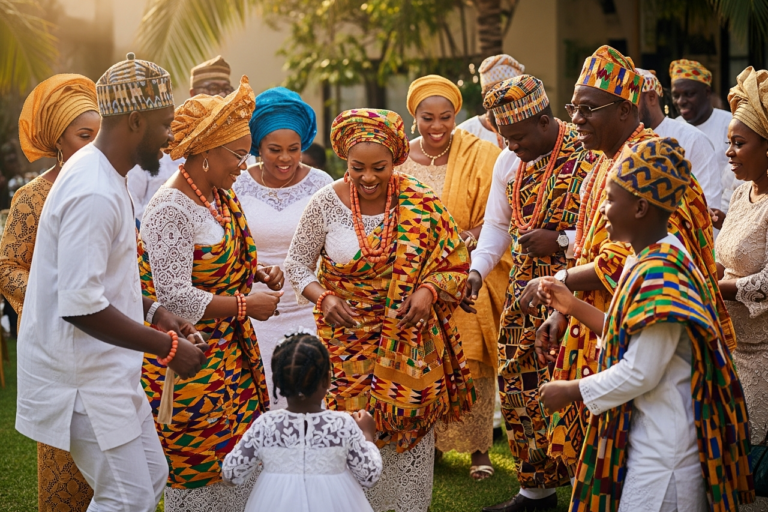
Bright kente cloth and gold jewelry are common at every ghanaian wedding. They stand for the deep and colorful ghanaian culture.
Introduction
Welcome to the bright and colorful world of Ghanaian weddings! Ghanaian wedding traditions have a lot of rich traditions and deep meaning. The wedding ceremony is not just about two people getting married. It is a day when families and the whole community come together for a big event. Every aspect of the wedding, from the first proposal to the last celebration, is packed with symbolic rituals and a lot of joy. If you have ever been curious about what these beautiful customs look like, you are in the right place. Let’s look at what makes a Ghanaian wedding ceremony so special.
Understanding Ghanaian Wedding Traditions
Ghanaian wedding traditions are a big part of the culture. They show the joining of two families, not just the couple. The marriage ceremony is about family members too. Both close and distant relatives help with each step. These rich traditions mix old customs with new ideas from modern times. This mix makes each Ghanaian wedding special.
Most couples will have a traditional wedding before doing a white wedding or religious one. This way, the union is given a blessing by family elders and is seen as right by the community. Every aspect of the wedding matters, beginning with the marriage proposal. The giving of gifts, like gold jewelry, is also important. Each of these things is a big part of starting a new life together.
The Importance of Marriage in Ghanaian Culture
In Ghanaian culture, marriage is a big part of life. It is more than just two people coming together in love. It shows that two families are joining and that their family line will carry on. This marriage ceremony is seen as a big step into adulthood. It also means making a promise to start a new life in the community.
Family members are very important during this time. From the first meeting to the final marriage ceremony, everyone gets involved. The advice and blessings from family elders matter a lot. These family elders know the traditions and give support. They help make sure the couple has the strength of the whole community behind them as they start this new life.
Every aspect of the wedding is full of meaning because family and community are at the heart of it. It’s more than a party—it is a way to honor unity, where people remember their roots, and look forward to the future together. This is a deep part of Ghanaian culture.
Regional and Ethnic Variations in Wedding Customs
While many wedding traditions are shared across Ghana, there are fascinating variations depending on the region and ethnic group. The core principles of family involvement and respect remain, but the specific wedding customs and rituals can differ, adding to the country’s rich cultural tapestry.
For example, among the Ashanti people, the groom’s family formally asks for the bride’s hand in a ceremony that involves presenting a dowry. In Ewe communities, the groom’s aunts play a key role by sending a pot of palm wine to the bride’s father as a formal marriage proposal. In the North, the proposal is often made through a series of gifts given directly to the woman.
These differences highlight the diverse heritage within Ghana. Here’s a quick look at some regional distinctions in the wedding ceremony:
|
Ethnic Group |
Key Wedding Custom |
|---|---|
|
Ashanti |
The groom’s family presents a dowry after a formal “knocking” ceremony to ask for the bride’s hand. |
|
Ewe |
The groom’s aunts send palm wine to the bride’s father to initiate the marriage proposal. |
|
Northern |
The man gives gifts like money and towels to the woman; her acceptance signifies her consent to marry. |
Essential Elements Needed for a Traditional Ghanaian Wedding
To have a good traditional Ghanaian wedding, you need some key things. These items are not just symbols. They are a big part of wedding traditions. They honor the bride’s family and show the potential groom’s promise.
The engagement list is at the center of this ceremony. It lists the things the groom must give. The list often has drinks, money, and kente fabric. On the wedding day, these things are brought to the bride’s family. This act ties the two people together and shows respect for their daughter.
The Marriage List and Its Role
The marriage list, which is sometimes called the engagement list, is an important part of a traditional Ghanaian wedding. The groom and his family have to give the bride’s family a list of things. They do this as part of the dowry or bride price during the wedding ceremony. The marriage list is not meant as a payment for the bride. It is a way to show thanks and to prove the groom can look after his new wife.
Both families talk and agree on the things that should be on the engagement list. The items on the list can change from one family to another. These things are given to the bride’s family at the traditional Ghanaian wedding ceremony for all to see. Once the bride’s family accepts these gifts, it means they agree to the marriage.
Some things that are usually on the marriage list are:
-
Drinks like schnapps or palm wine, which people use to make prayers
-
Money—for the bride, her father, and her mother
-
A Bible, which stands for the key role faith plays in the marriage
Key Participants and Their Responsibilities
At a Ghanaian wedding, there are more people involved than just the new couple. Family members take part in a big way, and family elders are very important from start to finish. These people do more than sit and watch. They make sure the wedding sticks to special and old traditions.
Both sides, the groom’s family and the bride’s family, have elders who play a big role. These elders can speak for the families, help solve problems, and give advice. The bride’s father has an important job too. He is the one who gives his daughter away at the wedding, but only after she says yes more than one time.
Here are some of the main roles and what they do:
-
Family Elders: They guide talks during the ceremony. They also pray and give advice and good wishes to the couple.
-
Groom’s Spokesperson: This person speaks for the groom’s family and tells everyone why they are here.
-
Bride’s Father: He listens to the groom’s proposal and takes the gifts. In the end, he gives his blessing for the marriage.
Step-by-Step Guide to Ghanaian Wedding Rituals
Ghanaian wedding rituals are a mix of many beautiful and special events. Each part of the marriage ceremony is full of meaning and old tradition. These traditional weddings follow a set path that has come down from older times.
From the first time two people tell others that they want to get married, up to the last party, every part of the wedding is planned with care. When you know more about these wedding ceremony steps, you get to see the deep meaning and all the thought that goes into every part of the wedding. Let’s look at some of the main traditional rituals in a Ghanaian wedding.
Step 1: The Knocking Ceremony (Introduction and Consent)
The journey to a Ghanaian wedding starts with the “knocking” ceremony, which many people call “kookoo ko.” At this time, the potential groom comes with his father and family elders. They go to the bride’s house to ask her family for her hand. The tradition starts when they give a real knock on the door. This shows they are asking to come in and want to meet her family in a respectful way.
When the groom’s group gets there, they do not go in right away. They are often made to wait outside for a while. This is a fun part that helps build up the moment. After they are invited in, someone from the groom’s family speaks for them. He tells everyone why they came and sometimes uses a nice saying about finding a “flower” in the house that they want to “take away.”
This wedding ceremony is the first big step in a Ghanaian wedding. It helps get the families ready for talks and shows everyone that the groom is serious about marrying their daughter. At this time, the groom’s group brings gifts, like schnapps. These gifts are used for special prayers to the ancestors.
Step 2: Family Negotiations and the Role of Elders
After the knocking ceremony, there is an important step called the family negotiations. In this part of the marriage ceremony, family elders from the bride’s side and the groom’s side take the lead. They sit across from each other on different sides of the room to show which family they come from. The groom stays quiet during this time.
The elders do all the talking. They work out the terms for the marriage. They talk about the dowry and plan the wedding details. People show much respect during these talks. It is not just about rules; it is about making sure the two families become close and get along well. The elders must see that all the traditions are followed and both families agree on everything.
This part of the marriage ceremony is very important for both families. It helps the families build trust for the future. When they reach a deal, they often share palm wine or use other signs to celebrate. This means the families came to an agreement, and now the marriage can move forward in a good way.
Step 3: Exchange of Gifts and Bride Price
In Ghanaian wedding traditions, giving gifts and the bride price is one of the best parts. At this time, the groom’s family gives the things on the engagement list to the bride’s family. This is not about buying the bride, but it shows the groom’s love, respect, and his promise to look after his wife.
The gifts are wrapped nicely and put out for everyone in the wedding party and guests to look at. The list may have different things like a pot of palm wine, schnapps to use in prayers, money, fine textiles, and beautiful gold jewelry for the bride. The bride’s family looks at the gifts and checks that everything needed is there.
When the bride’s family agrees to take the gifts, they then ask the bride if she is happy to go on. This shows that the groom’s family has done what is needed, and both families now agree. The couple is now one step closer to getting married.
Step 4: Wedding Attire, Music, and Celebration
The celebration is the heart of a traditional marriage in Ghana. It is at this part of the wedding ceremony where everyone truly gets to see Ghanaian wedding culture come alive. The couple and many of the guests come dressed in matching Kente outfits. These outfits are woven with bright colors and unique patterns. Each pattern means something special. The bride often finishes her look with shiny gold jewelry, and she might wear a traditional headdress that stands out.
A Ghanaian wedding ceremony is not complete without music and dancing. The party is filled with the sounds of traditional Ghanaian music and Highlife, which is a lively modern style. It is all about energy and joy. People cannot help but move to the beat while they celebrate together. Afterward, everyone sits down to eat. There is a big feast, and local food like Jollof rice is served to all the guests.
The wedding ceremony is bright, full of life, and brings people together. Here are some things you will always find:
-
Vibrant Attire: At a ghanaian wedding, the couple wears matching Kente outfits in bright colors. This shows they are now united.
-
Lively Music: Music is a big part of the day. You will hear drums and traditional ghanaian music, plus modern Highlife.
-
Delicious Food: The ghanaian wedding ceremony is not complete without Jollof rice, which is a favorite part of the feast for most guests.
Conclusion
In short, Ghanaian wedding traditions play a big part in the country’s culture. They show how much family, friends, and love mean to people. Every moment, from the knocking ceremony to the big party, has its own special touch that many will not forget. Learning about these wedding traditions can help you understand more about Ghanaian culture and let you join in the joy when you attend. If you want to plan your own event or are just interested in these customs, opening your mind to these ways can bring you closer to the Ghanaian community. If you have any questions or need help with your own day, reach out anytime!
Frequently Asked Questions
What is the significance of the bride’s attire at a Ghanaian traditional wedding?
The bride at a Ghanaian traditional wedding wears kente cloth that stands out with bright colors. The patterns on this kente cloth show her family’s history and what they believe in. She puts on gold jewelry to go with her outfit. This makes the wedding ceremony look special, and it lets people see her beauty and position. When she enters, the whole event feels bold and full of culture.
How do modern twists influence Ghanaian wedding ceremonies today?
Modern weddings in Ghana mix new trends with old wedding customs. Couples may have pre-wedding photo sessions, use bright colors for their reception decor, and make their own music playlists. The main parts of the traditional wedding ceremony are still there. But these modern touches help couples make their Ghanaian wedding special for them.
Are arranged marriages still practiced in Ghana?
In the past, arranged marriages happened a lot in Ghanaian culture. Now, most people get married by choice. Family members are still important in these unions. They help, and their approval is needed for the wedding ceremony. This mixes what you want with the role of family in traditional weddings.
What should guests expect when attending a Ghanaian wedding?
Wedding guests at a Ghanaian wedding can expect the day to be full of color and fun. There will be lots of music and many people dancing. People wear bright clothes that make the event even more lively. An important part of the wedding is the food. You will get to enjoy a tasty meal at the wedding reception. Jollof rice will almost always be served.



