

Key Highlights
-
A traditional Chinese wedding has many customs. The first step is to pick a good wedding date.
-
The Betrothal Ceremony (Guo Da Li) happens next. At this time, the groom’s family brings gifts to the bride’s family.
-
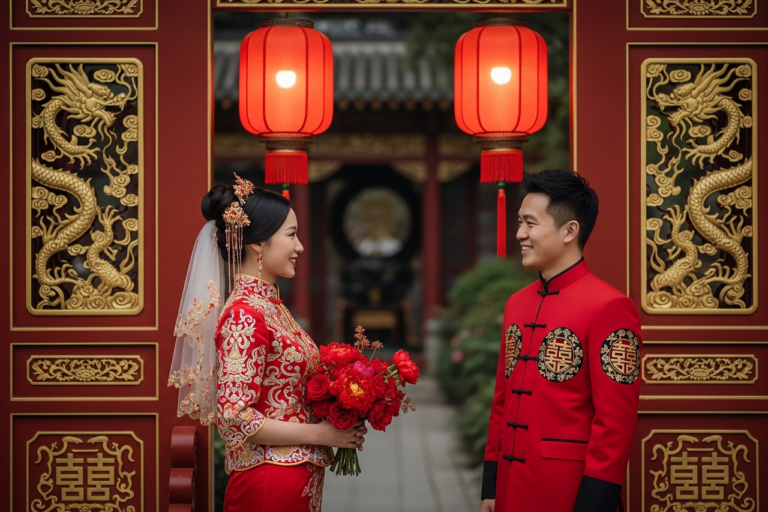
The color red is used a lot, as well as the double happiness symbol. These things stand for good fortune.
-
On the wedding day, there are many important rituals. These include door games, the hair combing ceremony, and the well-known tea ceremony.
-
There is usually a big wedding banquet after all the rituals. The meal has dishes that each stand for something you want in a happy marriage.
Introduction
Chinese weddings are wonderful times that have a lot of history. People follow many wedding traditions because they mean so much in chinese culture. From choosing the right day to having a big meal, each part of a chinese wedding has its own purpose. These traditions are not just special events. They show how important family, respect, and loyalty are in chinese culture. This article will look at what makes chinese wedding customs so happy and special.
Origins and Historical Evolution of Chinese Wedding Traditions
The story of chinese wedding traditions goes way back. It started during the Han Dynasty, around 206 BCE to 220 CE. Back then, getting married was a big deal. People saw it as a special event. There were lots of rituals, and many are still part of a traditional chinese wedding today.
As years passed, the customs changed with the times. Still, the ideas of family and respect stayed important. Many wedding traditions in a traditional chinese wedding are made to honor ancestors. They help people ask for good luck and blessings for the marriage. It is also about joining two families together. Now, let’s see how these chinese wedding traditions have changed and talk about how strong family ties are in each wedding.
Ancient Customs and Their Modern Transformations
Ancient chinese wedding traditions were more involved than the way weddings happen today. Back then, the procession was a big deal. There were firecrackers and gongs that helped keep evil spirits away as the groom went to the bride’s home. The main ceremony was simple. It was about praying to gods and showing respect to ancestors.
Now, these wedding traditions are easier to follow. You may still see a procession in a chinese wedding, but today the attention is mostly on the ceremony and the party with family. One big change is what modern brides wear. In ancient times, the bride wore one red dress. Now, modern brides often pick two or more dresses. They might start in a white Western wedding gown, then wear a qipao for part of the celebration.
This mix of old ways and new ideas helps people stay close to their roots yet be part of today. The main chinese wedding custom, which is to honor family and marriage, is still strong. These customs show how younger couples bring the han dynasty’s rich history into modern weddings, making something both traditional and fresh.
Influence of Family and Social Values in Wedding Rituals
Family is very important in chinese wedding customs. The wedding is not just about two people. It is the joining of two families. The groom’s family and the bride’s family are a big part of everything, starting with the betrothal plans and gift exchanges.
Family members help with a lot of rituals. For example, when the marital bed is set, a senior family member who has good fortune does this to wish the couple luck. On the wedding day, the couple takes part in a tea ceremony. They give tea to their elders to show respect and say thanks. The bride’s family also gives a dowry. This is a way to show love and support for the new couple.
On the day of the wedding banquet, both families invite guests and celebrate as two families coming together. Older relatives give the new couple red envelopes filled with money as a blessing. This shows how strong family and community ties are in these chinese wedding traditions. Family members play a key part in making the wedding day special and joyful for everyone.
The Importance of Auspicious Wedding Date Selection
Choosing the right wedding date is the first step for people planning a chinese wedding. In chinese culture, picking an auspicious date makes people believe that they will have good luck and a happy marriage. The wedding date isn’t chosen at random. The chinese calendar and some old ways help decide it.
The focus on finding a lucky day shows how strong these ideas of fate and fortune are in chinese culture. A good date is thought to give the couple a happy start. This sets the mood for their life together. Next, we will talk about how to find these special dates and why this matters.
Traditional Methods for Choosing Lucky Dates
In the past, families would go through a careful process to pick an auspicious date for a wedding. They would meet with fortune tellers or monks who know a lot about the Chinese calendar. The experts would look at the bride and groom’s birth dates and the time they were born. Then, they would choose a wedding date that worked best for both people.
They did this to make sure the wedding date was in line with the couple’s energy and would bring good results. Some periods are not good for weddings. For example, people should stay away from:
-
The last 15 days of the seventh lunar month, which is called the Hungry Ghost Festival.
-
Dates that do not go well with the couple’s zodiac signs.
-
Bad or unlucky days on the lunar calendar.
Now, some couples do not go to a fortune teller for help, but many people still use these rules to respect old ways. They try to choose a date that feels lucky, skips known bad days, and picks a day that is good, just like people stay away from the new year or major holidays like the Lunar New Year to make things easier for guests. This helps everything start well for their wedding.
Cultural Significance Behind the Date Selection
The way people pick lucky dates in Chinese culture shows how much they think good timing matters for a happy marriage. Many believe that the day of the wedding should have good energy. Starting married life on this day can bring good fortune, long life, and wealth to the couple.
The day of the wedding is not just a date. It is the start of the couple’s shared journey. Picking a lucky day means asking for blessings from the heavens and the family’s ancestors. It is a sign of respect for the powers that can shape our lives.
This tradition is all about harmony. it connects the couple, the family, and the universe. When the family chooses a day from the list of lucky ones, they try to make sure married life will be smooth and filled with good things. It shows their wish for positive beginnings and helps keep away bad luck.
The Betrothal Ceremony (Guo Da Li) and Its Rituals
The Betrothal, also called Guo Da Li, is a big part of chinese wedding customs. It is a formal engagement ceremony. This takes place on an auspicious date, usually two or three weeks before the wedding day. Here, the groom’s family visits the bride’s family. They bring betrothal gifts with them.
One important thing in this event is the red envelope. It is called “Pin Jin.” This envelope holds a sum of money. It stands for the groom’s truth and serious intent.
This ceremony makes the engagement official. It also shows the generosity of the groom’s family. After getting these items, the bride’s family will give back some of the gifts. This means they accept everything, and they are ready to join in the happiness. Now, we will talk about what items get exchanged and how the two families help with this event.
Key Items Exchanged During Engagement
During the Guo Da Li, there are many important items that are given to wish the couple well. The groom’s parents give gifts, and these can change based on their dialect group. The gifts are usually traditional and carry clear meanings. For example, lotus seeds stand for the hope of having children. Rock sugar is there to mean a sweet and happy life for the pair.
Other usual gifts include:
-
Dragon and Phoenix wax candles to bring good fortune.
-
Some gold jewelry, like four pieces, from the groom’s family to the bride.
-
Two bottles of liquor for the bride’s father.
-
Traditional wedding cakes or pastries that the bride’s family can share.
After this, the bride’s parents often give part of the pin jin back and put together a dowry. This sharing makes the two families even more linked together. All the gifts, from a red envelope to special foods like sea cucumber, are picked to show care and send best wishes for a happy future for the couple.
Role of Families in Arranging the Betrothal
Families have the main role in planning the betrothal ceremony. The groom’s family needs to get the betrothal gifts ready and bring them to the bride’s family. This act shows respect and the promise they make to the bride’s family. Most of the time, older relatives guide the groom’s family in following the right wedding traditions.
The bride’s family takes these gifts with thanks and then gives something in return. They need to show they appreciate the groom’s family’s kindness and must say yes to the marriage in a formal way. They do this by giving back some of the betrothal gifts and by setting up a dowry for their daughter, that is meant to help with her life in her new home.
The give and take between families is done together. Both families sit down, talk about all the details, and make sure they follow the customs. Family members take part in this event, and that helps both families get closer. This bond is made strong even before the wedding day.
Symbolic Elements and Colors in Chinese Wedding Customs
Symbolism is an important part of every chinese wedding. Certain colors and designs mean a lot in these ceremonies. The color red stands out the most. You will see it in the chinese wedding dress and much of the decoration. It is used to show joy, good fortune, and luck. Many people also think it helps keep away evil.
One more symbol is the double happiness character. It is used only for a traditional chinese wedding. This sign is for a happy marriage. These things are not only nice to look at. They are seen as a way to bless the couple as they start their life together. Now let’s look at what these symbols mean and what people wear at a traditional chinese wedding.
The Meaning of the Color Red and Double Happiness Symbols
In Chinese culture, the color red stands for happiness, success, and good fortune. You will see a lot of red at a wedding ceremony. It helps make the day feel outgoing and light. People also believe that red can keep away evil spirits. This lets the couple start their life with the best possible luck.
The double happiness symbol, called shuang xi, is also important. The symbol looks like two happiness characters joined together. People use it only at weddings. It shows the joining of two people and two families, and it is a strong wish for a happy marriage full of joy and peace.
You can find this double happiness symbol on wedding invitations, decorations, and even on the wedding cake. The color red and the double happiness symbol work together to send blessings to the bride, groom, and everyone there. They help everyone feel hope and good wishes for the future.
Traditional Wedding Attire for the Bride, Groom, and Guests
Traditional wedding attire is a beautiful expression of Chinese culture. The bride often wears a stunning red dress, as red is the color of luck and joy. One popular option is the Qun Kwa, a two-piece gown adorned with intricate embroidery of dragons and phoenixes, which symbolize marital bliss. Another choice is the more form-fitting Qipao or Cheongsam.
Grooms typically wear a Tang suit, which can be personalized with auspicious symbols. The parents of the couple also dress in formal attire, with the mother of the bride and mother of the groom often choosing an elegant Qipao. Modern brides may opt for a white Western gown for the ceremony and change into a traditional red dress for the reception.
Guests are encouraged to wear festive clothing but should generally avoid red, white, or black. Red is reserved for the bride, while white and black are associated with funerals. Here is a quick guide to traditional attire:
|
Role |
Attire |
Details |
|---|---|---|
|
Bride |
Qun Kwa or Qipao/Cheongsam |
Typically red, often with dragon and phoenix embroidery. |
|
Groom |
Tang Suit |
A traditional jacket and trousers, sometimes with custom symbols. |
|
Mothers of the Couple |
Qipao |
Elegant dresses in subtle colors with traditional motifs. |
|
Guests |
Festive Attire |
Cultural outfits like a Qipao are welcome, but avoid red, black, and white. |
Essential Wedding Day Rituals in China
The wedding day in China is full of color and energy. It is also a busy day with many rituals that last from morning to night. The morning of the wedding often starts at the homes of both the bride and the groom. One big part of the morning is when the groom goes to pick up his bride. He faces fun door games during this part.
After all these morning events, people focus on two main parts of the wedding day. There is the tea ceremony, where the couple shows respect to their elders. Then, everyone gathers at the wedding banquet, where family and friends come together to celebrate. All of this is at the heart of the Chinese tradition. The wedding brings all the pre-wedding plans to a high point. Now, let’s take a closer look at these key moments.
The Tea Ceremony and Its Purpose
The tea ceremony is an important part of a Chinese wedding. The main goal is for the married couple to show respect and thanks to their parents and older relatives. By serving tea, they say thanks and welcome family members, and they get blessings to start their new life.
This act stands for purity, stability, and fertility. It is also a time when the family brings the new spouse into their lives. The older relatives support the couple by giving blessings for a happy marriage. They may give red envelopes to the couple. These often have money or gold jewelry inside.
This ceremony helps the bride and groom become part of each other’s families. The tea ceremony takes place at the groom’s home and at the bride’s home. This lets the couple honor both of their families. The order in which tea is served goes by who is the eldest. First, parents get tea, then grandparents, and then other older relatives. This shows how the family values respect for those who are older.
Door Games, Wedding Banquet, and Family Involvement
Family plays a big part on the wedding day. There are many lively traditions that happen with family. One of the most fun ones is the “door games,” which people also call “chuangmen.” On this day, the groom and his friends must finish a list of silly or funny tasks. The bridesmaids come up with these games. The groom has to do all this before he can see his bride. These games let people see his love for her and that he will do anything for his new life.
Some other family moments are:
-
The hair combing ceremony. The couple’s parents do this the night before. They use this to give good wishes to the couple.
-
The groom goes to pick up the bride. She walks out while covered by a red umbrella. Her dad or an older man in the family holds it over her to protect her.
-
A little child will roll around on the couple’s bed. This is to give them luck so they can have children.
At the end of the wedding day, there’s the wedding banquet. Both families and all their friends enjoy a big meal together. Everyone comes out to cheer for the two people coming together. There are funny games called naohun during the party, which make sure the wedding day ends with lots of laughs and happy family members.
FAQs (Frequently Asked Questions)
People often ask about the tea ceremony in a traditional Chinese wedding. This tea ceremony is very important. The bride and groom do it to show respect to their families. It also shows thanks to both families. During the tea ceremony, the bride and groom serve tea with both hands.
Many people also ask why you see a lot of red at these weddings. Red is used because it stands for good fortune and joy. It is a bright color that brings luck.
There are also questions about things like lotus seeds and red dates used at the wedding. Lotus seeds and red dates are special. People use them as gifts because they show new life, happiness, and hope for children in the future. These gifts wish the couple a happy and lucky life together.
What are the most important wedding traditions in China today?
In modern Chinese weddings, the main wedding traditions are Guo Da Li (betrothal ceremony), the tea ceremony, and the wedding banquet. People may make changes based on their own wedding plans. But, these three parts are still very important. They help families show respect, honor each other, and celebrate in a way that is meaningful to the culture.
How is the tea ceremony performed and what does it symbolize?
During the tea ceremony, the married couple kneels down and gives tea to their parents and older relatives. They do this for each person, starting with the oldest one. This action shows respect and thanks, and it helps bring both families together. In return, the older relatives give their blessings to the couple for good luck and happiness. At times, they also give gifts to the couple.
How have Chinese wedding traditions changed in modern times?
Many modern Chinese weddings mix old customs with things from Western weddings. For example, the bride may start the wedding ceremony in a white dress. Then, she might change into a red dress, which is a Chinese wedding custom. The old rituals are not as hard now, but some core traditions stay the same. The tea ceremony is still an important part of a Chinese wedding. Some families would not skip this in Chinese weddings today.
Conclusion
To sum up, chinese wedding traditions have a lot of history and meaning. These customs show how important family, love, and a good future are. People pay close attention when picking wedding dates. The color red stands for joy and luck, and the tea ceremony gives respect to family and brings two sides together. Every tradition in a chinese wedding means something and helps mark the start of life together. With time, some wedding traditions have changed, but most still keep their main values. Even with modern changes, people still show respect for old ways. No matter if you are getting ready for your own wedding or just want to know more, learning about these traditions can help you see what love and commitment really mean. If you want to find out more about chinese wedding customs or the tea ceremony, you can get in touch at any time.



