

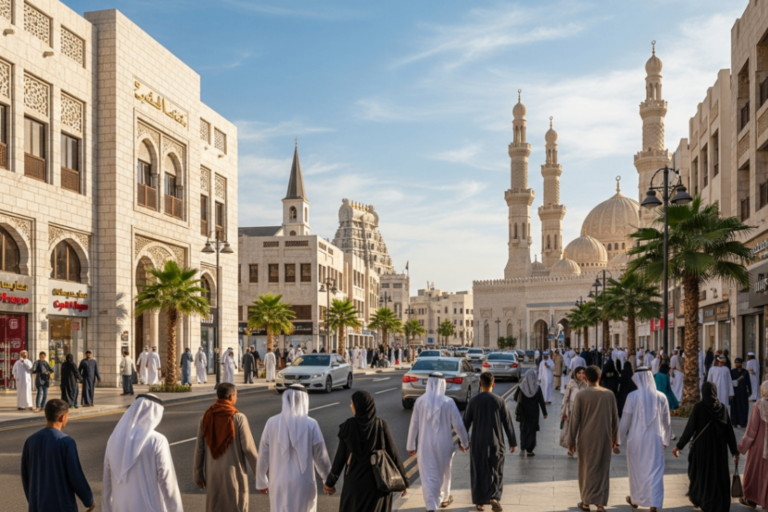
Key Highlights
-
The official religion in the United Arab Emirates is Islam. Islamic law is a main source of rules in the country.
-
The UAE constitution gives religious freedom. This lets many different groups practice their own faith out in the open.
-
There are many places of worship in the country. You will find churches, Hindu temples, and a Sikh gurdwara.
-
The Ministry of Tolerance and Coexistence helps promote religious tolerance and helps people understand each other.
-
Sharia courts take care of family matters for Muslims. Noncitizen residents use different systems.
-
The government helps with interfaith dialogue. This helps keep a peaceful place for all the different people who live in the United Arab Emirates.
Introduction
Welcome to a look at the religious landscape in the United Arab Emirates. Islam is the official religion, but the country also shows what religious freedom can look like. People from more than 200 places around the world live in the United Arab Emirates. This makes the nation a mix of many faiths living together.
This guide will show you how the United Arab Emirates keeps to its Islamic roots and still welcomes others. The country is a special and open place for people of every belief. You will see how the UAE values inclusion, which makes it stand out.
Overview of Religion in the UAE
The UAE has a mix of people from many countries in its total population. Most people here are expatriates. Official statistics say that more than 75% of residents follow Islam. Still, you will find many other religious groups from all over the world.
In places like Abu Dhabi or Dubai, there are communities of Christians, Hindus, Sikhs, Buddhists, and others. The country supports religious freedom. This lets people practice their beliefs and respect each other. Now, we will look at the history and the way the population is made up, to see how abu dhabi and the rest of the UAE got this mix.
Historical Roots of Religion in the Emirates
The religious side of the UAE has strong ties to the history of the Arabian Peninsula. Islam is at the heart of the culture here and helps guide the country’s rules. Islamic law has shaped how people in the UAE act and live for many years. The rulers of the emirates have kept these values a part of daily life, making them important from the start.
Even before the UAE came together as one country in 1971, leaders showed they were open to others. For example, in the late 1950s, the rulers welcomed Christian workers. They gave land for a church to be built. This act showed how ready they were to include other beliefs.
The mix of old Islamic tradition and a new view on bringing people together has steered the UAE’s path from the beginning. This has helped the country stand out in the region, long before it became a nation.
Current Religious Demographics
The religious demographics of the UAE reflect its status as a global hub. The total population is estimated to be just over 9 million, with a large noncitizen population from South Asia and other parts of the world. While official statistics confirm that all UAE citizens are considered Muslim, the expatriate community brings a wide diversity of faiths.
The Muslim population itself is composed of both Sunni and Shia Muslims. Among Emirati citizens, approximately 85% are Sunni Muslims, while 15% are Shia Muslims. The large noncitizen Muslim population adds further diversity to the Islamic community within the country.
Here is a general breakdown of the religious landscape based on available data:
|
Religious Group |
Percentage of Population (Approximate) |
|---|---|
|
Islam |
76% |
|
Christianity |
12.6% |
|
Hinduism |
6.6% |
|
Buddhism & Others |
4.8% |
Role of Religion in Everyday Life
Religion is easy to see and people respect it every day in the UAE. In places like Abu Dhabi and Dubai, Islamic beliefs guide much of daily life. You can hear the call to prayer on time each day. People talk about the need to follow public morals. But with all this, the country also values religious tolerance, and it is an important part of what makes the national identity strong.
You can notice how this works in daily life. During Ramadan, non-Muslims always try to be kind and support people who fast. There are often interfaith iftars which are for everyone in the community. Religious leaders from different groups come together at many events. Their talks and pictures are on social media, and they share ideas about unity.
Because of this balance, people living in the UAE can practice their faith in the open. At the same time, they respect the customs that others have. All of this helps make religion in the UAE a way for people to feel part of a group, not something that keeps people apart.
Islam as the Official Religion
Islam is the official religion of the UAE. This is written in the country’s basic rules. Because of this, Islamic law is used as a main source for many laws. It shapes the legal system and the way people live. For example, sharia courts look into personal status and family issues for the Muslim population.
At the same time, the law gives room for all kinds of religious groups in the UAE. The country works to make sure the rights of every person are respected. In the next parts, you will get to see more about how Islam leads society and how different Islamic communities live together in the nation.
Importance of Islam in Society
Islam shapes a lot in the UAE. It is more than just the country’s religion. The ideas of peace, kindness, and being generous are at the heart of Islam and help direct what the government does and how people live. The UAE’s founder, Sheikh Zayed, used these values to make the country kind and open to others.
Islam is also a big reason why there is so much religious tolerance in the UAE. The leaders want everyone to know that Islam is about peace. They try to make the country welcoming for those who follow different faiths. Islamic law is important and part of the rules, but other beliefs get respect, too.
Islam’s teachings help decide how people work together, and how laws treat muslim women, especially when it comes to families. These values are also used when people give to charity. Islam gives the UAE its national identity and helps guide the people on what is right and wrong.
Sunni and Shia Communities in the UAE
In the UAE, there are both Sunni Muslims and Shia Muslims in the Muslim population. Most Emirati citizens are Sunni Muslims, making up about 85%. Shia Muslims are around 15% of the total population.
These two religious groups get along and live together in peace. The country wants everyone to feel united and be open to each other. Sunni Muslims and Shia Muslims have their own mosques and places to meet. They both work in all parts of life in the UAE. The government helps make sure both Sunni Muslims and Shia Muslims can follow their faith without any problems.
This peaceful life between different religious groups is an important part of the UAE. It shows that Muslims from different backgrounds can share the same country and stay strong. The UAE is a good example for other places in the region.
Contribution of Islamic Institutions and Mosques
Islamic institutions and mosques are a big part of life in the UAE. They are not there just for prayer. The mosques also give people a place to learn. People can meet and talk with each other in those places. You will see there is spiritual guidance too. There are many Sunni mosques in this country. Each one is well taken care of and looks good.
The government watches over these places. They check that religious leaders in the Sunni mosques have the right knowledge. The sermons have to talk about peace and being fair. The government is the one who chooses the imams for most mosques. It also gives the imams weekly guidance. This way, all people in the mosques get the same good message.
The religious leaders of these mosques also work a lot with groups like the Ministry of Tolerance and Coexistence. They talk together to show what this country stands for. The main message they want everyone to know is about getting along and having respect for all people. With this work, the mosques help make life in the UAE better for everyone.
Structure of Religious Governance
The UAE has a clear setup for handling religious matters. This helps keep peace and supports its plan for religious freedom. There are government groups on both the federal and local levels. These groups look after Islamic institutions. They guide religious leaders and work to bring different faiths together. The Ministry of Tolerance and Coexistence is a big part of this work.
This system lets people practice Islam and also gives other religious groups a way to work in the country. The next parts explain the main authorities, councils, and ministries that show how the UAE manages religious governance in its own way.
Federal and Local Religious Authorities
Religious governance in the UAE works at both the federal and local levels. The Federal Supreme Council, which has the rulers of the emirates, is at the top. This group sets the main direction for public policy and covers religious topics too.
At the local level, each emirate runs its own departments to handle Islamic affairs. For example, in Abu Dhabi there is the General Authority of Islamic Affairs and Endowments (AWQAF). These offices watch over mosques, pick religious leaders, and share ideas for sermons.
Important government leaders, like the Vice President, and groups such as the Ministry of Tolerance and Coexistence, work as a team. They run programs that help people respect and understand each other, no matter their faith. This wide-ranging system keeps things steady across the country but lets each emirate manage religious life in its own way.
UAE Fatwa Council Functions
The UAE Fatwa Council is the main group that gives religious rulings, known as fatwas, in the country. It is made up of religious leaders and experts in Islamic law. They help guide people and organizations with advice based on Islamic law.
These fatwas focus on many topics. Some are about personal issues like money and family life. Others are about bigger topics that affect society. The council keeps religious opinions united. It stops the growth of wrong or extreme teachings. They work to make sure all their guidance fits with the UAE’s moderate view of Islam.
The Fatwa Council’s advice is for people and organizations, but it is not part of the judicial system. Their rulings help with religious questions, but they cannot decide on criminal matters. These are handled by the civil courts and the Sharia courts.
Ministry of Tolerance and Coexistence
The Ministry of Tolerance and Coexistence started in 2016. It is a government group focused on helping people include each other and show mutual respect. The main goal is to run programs that support religious tolerance and peaceful coexistence. This helps everyone in the UAE feel safe and part of the community. There are people from over 200 countries living there.
The ministry runs different projects, such as national festivals and learning drives. These projects celebrate diversity and help build connections between groups. By making tolerance a key idea, the ministry helps keep religious harmony and keeps public order strong.
This ministry stands for the UAE’s promise to make a place where all people feel they belong and are respected. It takes the nation’s dreams for coexistence and turns them into real steps. This benefits everyone who lives in the country.
Key Islamic Practices in the UAE
Islamic practices play a big part in life in the UAE. These ways of living shape how people spend each day and fill the culture with meaning. Everything is based on the Five Pillars of Islam, which the Muslim community follows with much care. People in the UAE pray five times a day, fast during the holy month of Ramadan, and give Zakat.
These practices are not just for each person. They also bring people together and help build a strong feeling of being part of the same group. Next, we will talk more about these important habits and what they mean for those who live in the Emirates.
Daily Prayers and Their Social Significance
The five daily prayers, known as Salat, are a big part of every Muslim’s day in the UAE. You can hear the call to prayer, called Adhan, from mosques all over the country. This tells people when it is time to pray during the day. It gives the community a shared way of life and reminds everyone about the importance of faith.
At work and in public places, like shopping malls and airports, there are special rooms for prayer. This shows the country’s respect for these religious customs. The UAE makes sure everyone can do what they need to do for their faith.
Praying together, especially during the Friday group prayer, helps people build close ties. The community joins for these prayers, making everyone feel like they belong and have something important in common. You can see how these prayers are a key part of life in the UAE, and people from all backgrounds show respect for this part of the country’s Islamic identity.
Ramadan Traditions Across the Emirates
Ramadan is a holy month for fasting. It is a special time in the UAE. People in the emirates of Dubai and Abu Dhabi follow old traditions and share a strong feeling of being together. From sunrise to sunset, Muslims do not eat or drink. They put their focus on prayer, thinking, and helping others. The way people live every day changes a lot during this month. Work hours are shorter. After sunset, the streets have new life.
When the fast ends, there is a meal called Iftar. This meal makes everyone happy. Families, friends, and workmates often sit together for Iftar. Many hotels and restaurants in Abu Dhabi and Dubai have special Iftar buffets. Going to someone’s house for Iftar is also a normal thing. The UAE is known for its religious freedom, and people have Iftars that anyone, even from a different faith, can join.
During Ramadan, people in the UAE want to show care for others and follow good public morals. Free Iftar tents are put up to give food to workers and people who need it. There are many chances to do charity and help these people. This month brings all people in the country together. People share, give, and care for each other more than any other time of the year.
Zakat and Community Support
Zakat is an important part of giving in Islam, and it helps people in the UAE. It is one of the Five Pillars of Islam. This means that Muslims who have enough money must give some of their wealth to those who need it. This way of giving is a good way to help people and make sure things are more fair.
In the UAE, many organizations and charities, approved by the government, help collect and give Zakat. This money goes to many causes. It helps low-income families, gives people education, and makes healthcare easier to get for those who need help.
Zakat is based on values of kindness and being responsible. These values are a big part of what the people in the UAE believe. This planned way of giving, as set by islamic law, helps make the community stronger. It makes sure people take care of one another.
Islamic Holidays and Public Observances
Islamic holidays are big events in the UAE. The country celebrates them with public gatherings, days off from work, and lots of fun activities. The two main holidays are Eid al-Fitr and Eid al-Adha. Eid al-Fitr happens when Ramadan ends. Eid al-Adha is also called the festival of sacrifice. On these days, people pray, spend time with their family, and help those in need.
The holiday dates change every year. This is because they follow the lunar calendar. The government then tells everyone which days the public holidays will be each year. Now we can see how these special days are celebrated across the UAE.
Eid al-Fitr Celebrations
Eid al-Fitr, called the “festival of breaking the fast,” is one of the happiest holidays in the UAE. The day marks the end of Ramadan, which is a month-long fasting. People celebrate it with a lot of excitement. The day starts with Eid prayers that take place in mosques and out in open spaces all over the country.
After the prayers, the celebrations get going. Families and friends come together, and they give gifts. People share special meals. Children get money or gifts, and this is called ‘Eidiya.’ The feeling of giving is strong, and many people give charity, so everyone can enjoy the celebrations.
Cities like Abu Dhabi shine with decorations and fireworks. There are also special events. Eid al-Fitr is a public holiday, so people from all religious groups get to relax and join in the fun that fills the whole nation.
Eid al-Adha Practices
Eid al-Adha is known as the “festival of sacrifice.” It is the second big Islamic holiday in the UAE. The holiday remembers when Prophet Ibrahim (Abraham) was ready to give up his son to follow God’s command. Eid al-Adha also happens at the same time as the yearly Hajj trip to Mecca.
One important part of Eid al-Adha is the sacrifice of an animal, like a sheep or goat. According to Islamic law, the meat from the animal is split into three parts. The first part is for the family, the second is for relatives and friends, and the third is given to the poor and those in need. This shows how people are devoted to their faith, and that charity is important.
Much like Eid al-Fitr, this holiday is a time for prayer and being with family members. In Abu Dhabi and other cities, families come together for big meals. The joyful mood spreads through the community and helps build close ties and kindness.
Islamic New Year in the UAE
The Islamic New Year, called Hijri New Year, is the start of a new year in the Islamic lunar calendar. It remembers when the Prophet Muhammad moved from Mecca to Medina in 622 CE, known as the Hijra. The UAE recognizes this as an official Islamic holiday.
Unlike Eid, the Islamic New Year is usually calm and quiet. It is a public holiday, so people get a day off to remember the event. Many Muslims use this day to pray, think about their lives, and spend time with family.
Religious leaders may give talks about what the Hijra means. They focus on sticking with your faith, starting fresh, and not giving up. There are not big public parties, but this date matters a lot and affects public policy about national holidays.
Non-Muslim Religious Communities
The UAE has many people who come from other countries. These people bring different beliefs and ways of life. The country supports religious freedom, so you can find many places of worship that are not just for Muslims. There are christian churches, hindu temples, and sikh gurdwaras. This gives religious groups a chance to follow their own faith.
Because the UAE is open to people of all backgrounds, many religious groups can grow, find friends, and keep their traditions alive. The next sections talk about some of the main non-Muslim communities and their places of worship in the UAE.
Christian Denominations and Churches
Christianity is followed by a large group of people in the UAE who come from other countries. There are close to one million Catholics living in the country. The UAE has many types of Christian churches, such as Catholic, Orthodox, Anglican, and Evangelical. About 40 christian churches serve the community.
Most of the churches are found in church compounds. The ruling families have given land for these compounds. These areas are full of life, especially on weekends. Here, different groups of people meet for worship. They use many languages and come from many countries.
Religious freedom is very important to the Christian community. One parish priest said, “The religious freedom we enjoy here is fantastic.” Because of this, Christian communities have grown and been strong for many years. The UAE has become a good example for religious freedom and inclusion in the region.
Hindu Temples and Sikh Gurdwaras
The Hindu and Sikh people have lived in the UAE for a long time. Hindus came here many years ago. In 1958, the first of the Hindu temples in Dubai was built. Now, there are two temples in Dubai for the Hindu community. There are also cremation facilities to help people follow their religious needs.
A big new project is the BAPS Shri Swaminarayan Mandir in Abu Dhabi. This is the first traditional Hindu stone temple in the Middle East. The land for this temple was given by the Crown Prince of Abu Dhabi. This shows the close ties between the UAE and India.
The Sikh community is also strong here, with more than 50,000 people now. They have their own place of worship, the Guru Nanak Darbar in Dubai. This is the largest gurdwara in the Gulf. It opened in 2012 on land given by the Ruler of Dubai. This place is important for the community and brings people together for religious and interfaith events.
Buddhist, Jain, and Other Faith Centers
Beyond the bigger religious groups, the UAE has many different people living in it. There are Buddhists, Jains, Parsis, Baha’is, and others. The country’s push for religious freedom gives all these groups a chance to practice their beliefs in peace.
The Buddhist group is made up mostly of people from Sri Lanka and other places. They come together at the Mahamevnawa Buddhist Monastery in Dubai. This site is the very first Buddhist temple on the Arabian Peninsula. It is where about 500,000 Buddhists in the UAE gather for worship and join in their faith.
These groups may not have as many large places of worship as others. But they stay active and involved in the social life of the country. They join interfaith events and work with local governments. As their numbers grow, they hope to get more centers for their faith.
Freedom of Religion in the Constitution
The UAE’s constitution gives clear support for religious freedom. It says everyone has the right to worship, as long as their way of worship fits in with public order and that people do things the right way. This right is a big part of what makes the country open to all.
The law also gives protection in other ways, like the anti-discrimination law. This law stops people from being treated unfairly because of their religion. The rules work to make sure there is peace in society, but the constitution gives the strongest protection to freedom of worship. Next, you will see details about the laws and what people are expected to do with this freedom.
Legal Foundations for Religious Practice
The right to practice religion in the UAE is clear in the country’s constitution. This right was first promised in the 1971 temporary constitution. It later became permanent in 1996. It means that the people in the country can practice their religion and do their religious customs.
The UAE legal system uses both civil law and Islamic law. Sharia courts handle personal status matters for Muslims. For non-Muslims, there is another system. In Abu Dhabi, for example, churches can manage marriage and divorce for Christian expatriates. This gives people an option besides the Sharia courts.
Still, these rights have some rules. The penal code has laws against blasphemy and proselytizing. These rules help keep public order and show respect among different faiths. With this setup, the country wants religious freedom in a way that keeps peace for everyone.
Keywords: abu dhabi, religious freedom, personal status, islamic law, sharia courts, public order, penal code, civil law, freedom of worship
Rights and Responsibilities for Religious Groups
Religious groups in the UAE have the right to worship freely. But there are rules they must follow to keep the country peaceful and respectful. The government gives land for places of worship. People can gather to practice their faith. But they need to act within the country’s laws.
One of the main rules is to make sure all activity does not go against public order or public morals. Religious groups should not try to get others to join their religion or speak badly about other religions. These acts are not allowed by law.
Key responsibilities include:
-
Practicing faith in a way that does not disturb public order.
-
Respecting the laws and customs of the UAE, especially during Islamic holidays like Ramadan.
-
Keeping religious activities and teaching inside their own places of worship, and not using public schools for spreading their faith.
When religious groups follow these guidelines, they help make the UAE a place that cares about respect and tolerance for everyone.
Government’s Role in Protecting Religious Freedom
The UAE government works hard to protect and promote religious freedom. It uses laws and real actions to show this. The focus on religious freedom is important at home and also shapes how people see the UAE in other countries. Groups like the Ministry of Tolerance and Coexistence were set up to run programs that encourage respect and inclusion.
The government takes action by giving land for non-Muslim places of worship. This has been done since before the country started. This support helps many religious groups have the space they need to grow.
The UAE takes part in talks abroad about religious freedom and human rights. People often look at its new ways of doing things as good examples for other Muslim-majority places. The government’s active role shows that it wants to keep international religious freedom strong.
Interfaith Dialogues and Initiatives
The UAE is known as a world leader for bringing people of different religions together to talk and understand each other. The government gives its support to projects that help people from all kinds of faiths meet. The goal is to help people respect each other and work well together. This is a big part of the public policy in the UAE. The focus is to make a country that is based on religious tolerance.
One big example of how the UAE shows this is the Abrahamic Family House. This project stands out as a sign of people from different faiths coming together. The following sections will talk about this project and other important ways the UAE works for peaceful living and understanding between its people.
Abrahamic Family House Initiative
The Abrahamic Family House is on Saadiyat Island in Abu Dhabi. It brings together a mosque, a church, and a synagogue in one place. This shows the link between the “People of the Book.” Muslims, Christians, and Jews can all visit and find a space for prayer here. The center is also a place where people can learn, talk, and connect.
The idea for this center came after Pope Francis visited the UAE in 2019. During that visit, he and the Grand Imam of Al-Azhar signed the Document on Human Fraternity. The Abrahamic Family House shows the UAE wants to live by the values of understanding and getting along with others in that paper.
There are three special places of worship, and they all lead to a main garden. This design helps people come together and work with each other. The whole place makes a clear statement of how the UAE invites religious leaders and people from all over the world to come, share, and learn side by side.
Prominent Interfaith Conferences and Events
The UAE often hosts big interfaith meetings and events that get attention from all over the world. These events bring together religious leaders, scholars, and experts. They talk about how to spread peace and stop extremism. Abu Dhabi, in this way, is a main place for these talks.
One main event is the yearly Forum for Promoting Peace in Muslim Societies. It brings together many people from different nations to talk about how to put Islamic values of friendship and inclusion first. The forum helps make a peaceful and moderate message for Islam in the world.
There are also interfaith iftars during Ramadan in places like the Guru Nanak Darbar Sikh temple and other public spots. These events show the UAE’s promise to religious tolerance at a community level. People from many backgrounds come, talk, share, and build good friendships at these get-togethers. This helps keep the country’s spirit of respect between different religions strong.
Promoting Understanding Through Education
Education is an important tool in the UAE’s plan to encourage religious tolerance. The government has added the ideas from the Document on Human Fraternity to what is taught in schools and universities. This helps the next generation learn to respect each other and live together peacefully.
In public schools, Muslim students learn Islamic studies. But this is taught in a way that shows moderation and respect for other religions. Private schools, which serve many different expatriate groups, are urged to support and help an open and tolerant environment too.
This use of education is a big part of the UAE’s public policy that aims to make tolerance a main value in society. By teaching these ideas early, the UAE hopes to set up a strong base for a peaceful and welcoming future.
Expatriate Religious Diversity
The UAE has a large number of noncitizen residents. This makes the country’s population very mixed, with people from many places all over the world. Because of this, the UAE is one of the most diverse countries in the world. These people bring different religious beliefs with them. The good thing is, they can all practice their faiths. The government makes sure there is religious freedom for everyone, and you can see this in the many places of worship for these communities.
This mix of cultures is a main part of life in the country. It helps create a place where people of all backgrounds can live and work together in peace. The next parts will talk more about the main expat religious groups and the places of worship they use.
Major Expat Religious Communities
Expatriate groups in the UAE make up most of its total population. They account for around 85% to 90% of all people there. You will find many different religious groups in this mix. Many expats are Muslims from lots of countries. But people of other faiths also have a big place.
Media estimates and official data say some of the largest non-Muslim expatriate religious groups are Christians, Hindus, and Buddhists. There are between half a million and a million Christians from all over the world. The Hindu community is also large. Most Hindus in the UAE come from the Indian subcontinent.
Among expatriates, the most common religions are:
-
Islam: Practiced by expats from South Asia, the middle east, and other parts.
-
Christianity: Includes Catholic, Orthodox, and Protestant denominations. These people have many different national backgrounds.
-
Hinduism: Mainly practiced by people who are from India. It has a long story in the UAE.
-
Buddhism: Known among workers from places like Sri Lanka and Thailand.
Places of Worship for Expatriates
The UAE offers many places where people can worship, no matter where they are from. The government has a long history of giving land so that non-Muslim people can build their own places of worship. Because of this, you can now see a lot of churches, temples, and gurdwaras across the country.
In cities like Abu Dhabi and Dubai, you will find special church compounds. These compounds have many groups, and people from different countries and groups come to pray here. For the Hindu community, there are two Hindu temples in Dubai. Also, in Abu Dhabi, a new traditional stone temple is being built. The government has also helped by giving cremation facilities, so Hindu people can follow their burial traditions.
Sikhs have a big spiritual place in Dubai called Guru Nanak Darbar. Smaller groups like the Buddhists also have their own temple. By giving these spaces for people to pray, the UAE shows that it welcomes everyone and cares for its people, no matter their background.
[abu dhabi], places of worship, hindu temples, church compounds, cremation facilities
Cultural Festivals Among Different Ethnicities
The UAE is known for its religious tolerance. People in the country are free to celebrate their cultural and religious festivals from all over the world. Expat communities can enjoy their important holidays. Many of these events become big public celebrations and make the country’s social life bright and active.
Festivals like Christmas, Diwali (the Hindu festival of lights), and Vaisakhi (a Sikh harvest festival) are known and enjoyed by many. At these times, you will see many decorations in malls and other public areas. Communities come together to host events and gatherings for everyone.
These celebrations do not just stay at home. They are seen out in the open as part of the UAE’s multicultural way of life, with people from different backgrounds joining in. The way the UAE welcomes these different cultural festivals shows its spirit of harmony and how open and friendly the country can be.
The UAE’s Approach to Religious Inclusion
The UAE has taken steps to support and plan for religious inclusion. This is now a key part of the country’s plans for how people live together. The UAE’s idea is not just to let people with different beliefs live in the country. The country also works to teach people to accept and respect each other. It does this with help from parts of the government, like the Ministry of Tolerance and Coexistence. The UAE also uses national plans such as the National Tolerance Program.
With this way of working, the UAE makes sure that differences bring the people together and help keep public order. The next parts will talk about the main programs and work that show the country’s focus on religious tolerance and building a friendly society for all.
National Tolerance Program
The National Tolerance Program started in 2016. It is a very important public policy, brought forward by the UAE government, to make sure tolerance is at the core of life in the country. The program works closely with many other federal and local groups to help people respect each other and live together in peace.
The Ministry of Tolerance and Coexistence leads this work. The program stands on a few key ideas. One is that the government should help grow tolerance in the country. Another is that families play a big part in building a strong and united nation. The plan shows a promise from the UAE to help everyone feel included.
With this program, the UAE wants to stand out to the world as a place for tolerance. The country is against extreme ideas and wants to grow a climate where people can be open with each other. This is a wide plan, taking steps to support religious freedom and harmony, and turning these ideas into real, lasting actions.
Educational Efforts Toward Tolerance
The UAE puts a lot of focus on using education to grow religious tolerance. The government works hard to teach students the value of respect and understanding from when they are young.
In public schools, the curriculum helps students learn about Islam in a moderate and peaceful way. The lessons also tell students to respect people from other cultures and with other beliefs. In private schools, where many students come from different countries, it is important to make everyone feel welcome.
One big step was using the Document on Human Fraternity in learning materials in the country. When kids learn about living together peacefully in both public schools and private schools, the UAE helps make sure that respect for others becomes a strong value, not just a rule. This is meant to last for many years and be a part of life for new generations.
Community Events That Build Harmony
Community events are very important for building good ties and bringing people together in the UAE. The country has many public events made to help people from different religions and cultures learn about each other.
There is the National Festival of Tolerance. This is run by the Ministry of Tolerance each year. For a week, people join many things to learn more about social inclusion. During Ramadan, there are also interfaith iftars. Here, religious leaders and others meet, talk, and share a meal.
These are not just normal meetups. They show real religious tolerance in the country. People make new memories together. This helps the UAE bring its many people closer and makes the community more friendly and open to all.
Legal Considerations for Religious Practice
The UAE supports religious freedom, but there are the rules that everyone must follow. The law in this country tries to allow people to practice their faith while also making sure there is public order and that people get along well. So, while you can practice your religion in the UAE, you have to do it within some limits.
The penal code in the country has rules about blasphemy, defamation of religion, and proselytizing. These laws are there so people do not fight about beliefs. Now, let’s look at some of the main laws that guide what people can do when it comes to religious activities in the UAE.
Establishing Houses of Worship
The government in the UAE watches over how houses of worship are set up. This is to make sure that these houses fit with the country’s laws and keep the public order. Non-Muslim groups can ask to be seen as official religious groups. To do this, they often get land as a gift and must ask the ruler of the emirate for permission to build.
This way of doing things has been used for many years. Because of this, there are now many churches, temples, and gurdwaras found in the country. In recent years, the government in Abu Dhabi has listened to requests from people who want new land for more places of worship.
Still, the process is not always the same in every emirate. Religious groups must follow the rules. They have to meet only in their chosen houses of worship. This plan makes sure there is religious freedom in the UAE, but also keeps things safe and follows the correct way to do things for everyone involved.
Limitations on Proselytizing
The UAE gives people religious freedom. But its laws have clear limits on trying to convince someone to change their religion. The penal code in the country stops anyone from doing things that may be trying to switch a person from one faith to another. This rule covers all religions, including Islam.
The country puts this limit in place to keep everyone getting along and to avoid fights between different religions. It helps to show respect for the official religion and the beliefs of every resident. The law gets enforced, and some people from other countries have faced jail time or been sent away for taking part in proselytizing.
These restrictions help the UAE manage the balance between freedom of worship and keeping public morals and order. People can follow their own faith, but they can not work to get others to join it.
Regulations on Public and Private Worship
The legal rules in the UAE separate public worship from private worship. People are free to worship in their homes without others coming in. No one stops you from doing that.
Public worship is different. There are rules to make sure it happens in a way that is calm and shows respect to others. Non-Muslims can worship in special places like churches, temples, or gurdwaras. The government gives approval for these places. You can’t have religious services in places like hotels or community halls unless they say it’s ok. Some emirates may not let you use these places at all.
The rules help keep public order. They make sure there is no trouble when people worship together. By giving approved places of worship, the government helps everyone have religious freedom, but keeps things organized and managed.
Status of Women in Religious Life
The role of women in the religious life of the UAE is changing. This change matches the country’s bigger goal for female empowerment. For muslim women, both Islamic rules and new legal changes shape their rights and roles. This is true, especially in family law matters. The government has done a lot to help women be part of society in all areas.
Some old ideas may still have an effect on a few roles. But now, the UAE is seeing women speak out and be leaders in religious talks and work. The next sections will look at the place of women in Islamic religious life. It will also show new changes in family law.
Women in Islamic Religious Roles
In the UAE, Muslim women have a key and respected part in the religious life of their community. Their part may not always be the same as men, but it is still important. The most well-known public religious leaders in mosques, like imams who lead group prayers, are men. However, women are very involved as teachers, scholars, and leaders in the community.
Many women know a lot about Islamic law and Quran studies. They give lessons and help other women and children with their learning and spiritual life. Many women also lead study groups and teaching programs at mosques and community centers. They help a lot with teaching about the faith.
The UAE government works to support muslim women, so they can move up in all types of jobs, including ones in Islamic affairs. Women serve as advisors and have jobs in groups that work with religious leaders and family law matters. They help make sure their views are heard when talking about social issues and important family matters.
Participation in Non-Muslim Religious Communities
In the UAE, there are many different non-Muslim groups. They all add something to the country’s rich culture. People from all backgrounds—like Christians, Hindus, and Buddhists—share their ideas and talk with each other. This helps everyone respect and understand one another. In cities like Abu Dhabi and Dubai, you will find churches, temples, and other places of worship. Noncitizen residents are free to go to these places and practice their faith.
The government in the UAE supports religious freedom and makes sure there is tolerance. People can celebrate their different traditions without worry. This open way of living brings the community together and makes life better for everyone. It also helps the UAE stand out in the Middle East as a strong example of how people from all backgrounds can live together peacefully.
Initiatives Empowering Women in Religion
Across the UAE, there are many programs that help muslim women in religious life. These programs give women the chance to lead and ask them to join in talks about religion. They also ask them to help out in the community. There are groups that hold workshops to teach women about their rights from islamic law, mostly when it comes to family law matters. These groups also talk about how women can have a say when people make public policy.
Today, muslim women are not just in traditional roles. Many are now becoming religious leaders. They break barriers and show young girls they can do the same. This step helps grow religious tolerance in the country. It gives more people the chance to share in faith, and it helps people see how much women give to religious life.
Youth Engagement in Religion
Getting young people involved in religious practices helps them feel like they belong. It gives them a sense of who they are. In the United Arab Emirates, the youth are asked to join programs that help people from different religious groups understand and accept one another. Groups often hold events where people from united arab and other backgrounds can meet and talk. This helps everyone get closer and builds community ties.
There is also religious education made just for young people, which helps them feel more connected to their faith. When young people spend time in local mosques, churches, and temples, they help the society and grow in their spiritual life at the same time.
Religious Education in the UAE
There is a strong focus on religious education in the UAE. It is found in many parts of life. This helps people understand both Islamic and non-Islamic ways. In public schools, children take Islamic studies as part of their learning. This is how students learn the basic ideas of their faith. Private schools teach religion as well. They design classes that fit people from different backgrounds, especially noncitizen residents. This helps students know more about other cultures. Colleges and universities also talk about and study different religions. They want students to listen, ask questions, and learn from each other. All of this work in education supports religious tolerance. It also helps people from the many groups on the Arabian Peninsula live together in a peaceful way.
Youth Involvement in Religious Organizations
Being part of religious organizations helps youth feel that they belong and are part of a group. More young people now join interfaith groups and take part in volunteer work. These activities help them learn more about many beliefs. The youth also get the chance for personal growth during these times. They pick up the values of religious tolerance and respect for people from other faiths.
With the help of religious leaders and community programs, the youth also find ways to share their thoughts about faith. Taking part helps them find out more about who they are. They also help keep peace in the community. In the UAE, this shows how important it is to live together in harmony, which comes from their support for religious tolerance.
Interfaith Activities for Young People
Getting young people involved in interfaith activities helps them understand and respect others in different communities. The UAE has groups, like youth wings of religious groups, that give places for people to talk, join workshops, and help the community. At these events, people get to share what they think and also learn ways to respect each other. This lets them see what they have in common and build social harmony.
When there are interfaith talks or culture exchanges, these efforts help young people speak up for religious tolerance. With these experiences, people see how different faiths can work together. This helps make the UAE a better place where the future is built on kindness and respect for all.
Religion and National Identity
In the UAE, faith and national identity go hand in hand. The way people live each day mixes culture with religion. Many Emirati customs grow from Islamic values. These values bring people together and help them feel like one group. Things like being modest and having good manners are more than just social rules. They come from religious beliefs and guide how people act and show respect. This strong link between religion and identity helps everyone in the Emirates live together in peace. It gives people a common goal and keeps the nation’s culture strong.
Cultural Traditions Rooted in Faith
Rich cultural traditions in the UAE show how many faiths live together here. In the UAE, people from many religious groups have practices that are close to their way of life. Their customs and religion work together, from big parties to family get-togethers.
On important days like Eid al-Fitr and Eid al-Adha, families come together. The focus is on being generous and welcoming others. These values are at the heart of both Islamic and Emirati ways of life.
People also follow special customs, like what happens during Ramadan. During this time, there is deep spiritual thinking. It is also a time when families and friends spend more time together.
These ways of living are not just about faith. They bring different religious groups closer, helping everyone understand and share more with each other.
Emirati Customs Informed by Religion
Emirati customs are a big part of life in the UAE, and they come from Islam. These traditions guide many things people do and the way they act around others. You can see respect for the old ways in simple things, like how people say hello with respect and stop for prayers during the day. Special times, like family gatherings at Eid, show kindness and bring the community together. People also dress in a modest way and act with care, following what their beliefs teach them.
These customs help to make people feel close in the UAE. This is true for both citizens and noncitizen residents. In this country, people of the book live together, respect each other, and share many of the same values.
Importance of Modesty and Etiquette
Modesty and good manners are very important in the culture of the UAE. They come from the beliefs taught by Islam. The people in the UAE, both Muslims and non-Muslims, follow these customs in daily life. These values help people talk to each other with respect. This, in turn, creates a friendly space for everyone.
When you act with modesty, you wear clothes and behave in a way that fits local customs. This is how people in the UAE show respect for their culture. Having good manners in social events is also important. It makes talking with others easy and helps build good relationships.
By following these local values, you show you care about the old ways and the way things are done in the UAE. This is key for bringing people together and making the community stronger in the arabian peninsula.
Religious Symbols and Architecture
In the United Arab Emirates, there are many types of religious symbols and buildings that show the country’s strong cultural roots. Iconic mosques, like the Sheikh Zayed Grand Mosque in Abu Dhabi, have great designs and fine calligraphy. Both are key parts of Islamic art. The presence of Hindu temples and Christian churches also shows the nation’s focus on religious tolerance. These places of worship, from mosques to temples and churches, are more than just spots for prayer. They are also used as centers for the community, helping people have open talks and learn from each other. Such well-known architecture adds a lot to the beauty and spirit of the United Arab Emirates. All these places stand for the peaceful coexistence of many faiths in the country.
Iconic Mosques and Their Designs
Mosques in the UAE are known for their beautiful building styles. Many mix old Islamic looks with some new ideas. One great example is the Sheikh Zayed Grand Mosque in Abu Dhabi. It has detailed designs, big prayer halls, and colorful mosaics that show the nation’s history. Jumeirah Mosque in Dubai also stands out. It shows the style of Islamic buildings and welcomes people to see how grand it is. Each mosque is a place for the community to come together and connect. These places of prayer also help promote religious tolerance. The way cultural designs are put into these mosques shows that the UAE wants to keep its Islamic roots while also welcoming new things and changes.
Churches, Temples, and Interfaith Sites
In the UAE, there are many places for people of different faiths to gather. You will find churches, hindu temples, and other interfaith sites all over the country. These places help show that the UAE believes in religious tolerance. There are large church compounds for all types of Christian groups. Hindu temples are open for worshippers, especially from the Indian community. This brings out the country’s multicultural spirit.
The country also works to bring people of different faiths together. You will see interfaith activities where everyone can share and celebrate their beliefs. Some well-known interfaith centers have been set up. These are spaces where Jewish, Christian, Hindu, and Muslim people can come together to talk and understand one another. These efforts help everyone live together in peace. The UAE’s support for freedom of worship and social harmony is clear for all to see.
Religious Art and Calligraphy
Art in the UAE shows how faith and culture come together in a special way. You will often see religious art, like calligraphy, in many places of worship. It is found in sunni mosques and in public spots around the country. The fine details in this art help make the area look nice and also show Islamic ideas. These ideas often talk about patience and devotion.
Many people see calligraphy as a top type of art. Here, the writing turns into eye-catching pieces that share deep and spiritual messages. This kind of art helps people from different backgrounds understand each other more. It supports religious tolerance and respect for others. If you go to the UAE, you can find this art in sunni mosques, peaceful churches, and other places of worship. It adds beauty to the culture all over the region.
Religion in the Workplace
In many workplaces across the UAE, people respect religious freedom. Employees like to have prayer rooms. Some places give flexible hours, so people can pray and still get their work done. Companies want a workplace where all religious groups feel welcome. This way, there is more teamwork. People are kinder to each other. The companies also pay attention to holidays for different faiths. This helps every employee feel important, no matter what they believe. These actions make the work culture friendly. It helps people from different backgrounds get along better.
Accommodations for Prayer Times
Many workplaces in the UAE put a lot of focus on being inclusive. This means employees can follow their prayer times with ease. Many companies offer flexible work hours so people can take breaks when they need to pray five times a day, as this is important in the Islamic faith. Religious freedom is a core value in the UAE. So, there are special rooms set up for prayer for everyone, no matter their religion. This helps different religious groups feel respected and welcomed. Because of this, there is a good level of understanding at work. People from all groups can work well together. The strong focus on religious freedom helps build trust and support and makes the workplace better for everyone.
Multifaith Work Environments
Creating multifaith work spaces helps build respect and understanding between different religious groups. Many companies in the UAE, where there is a mix of nationalities, have rules that support being open and fair to everyone. These rules let employees show their faith. They give prayer rooms and let people adjust their schedules for religious days. This shows the company cares about religious freedom and harmony. The way they do things at work gets better, and they bring in more people from different backgrounds. It also makes sure noncitizen residents, and all workers feel seen and cared for. Focusing on religious tolerance and mutual respect makes teams stronger and helps everyone work better together.
Observing Holidays in Professional Settings
Respecting different holidays in the workplace helps everyone get along better. In the UAE, many employers know how important Islamic holidays like Eid al-Fitr and Eid al-Adha are. They let Muslim employees celebrate these days without worry. At the same time, people who are not Muslim can also mark their own special days, such as Christmas and Diwali. This helps build an open and welcoming place to work.
Many companies give flexible hours or some time off during these holidays. This shows they care about religious tolerance. When companies do this, it is good for everyone. It respects all the people who work there and makes the team stronger. People work better together, and the place feels more positive for everyone.
Media and Public Representation of Religion
In the UAE, the media has a big part in how people see religion. Many platforms give out information about the different religious groups in the country. They talk about both Sunni and Shia groups, as well as non-Muslim religious groups.
There are public campaigns that help support religious tolerance. These campaigns show what leaders like Mohammed bin Rashid Al Maktoum and others do to help people understand each other. When the media talks about interfaith events and changes to policies for religious freedom, it shows that many people of different backgrounds can live together well in this place.
These messages help people talk and show respect to each other. This brings the total population closer and helps to shape the UAE’s identity as a country that welcomes religious freedom and harmony.
Portrayal of Religion in UAE Media
Media in the UAE has a big job in the way people see religion. The country is home to many different faiths, but Islam is the official religion. Media here shows this mix with care and respect. They talk a lot about plans and events that help people understand religious tolerance and freedom. These stories often share how the total population celebrates interfaith events together. Regional publications also let religious leaders share their views. This helps people get to know more about each other. By showing this side of life, the media helps everyone feel welcome. It helps the people of the UAE live and work together in peace, even though they come from so many places.
Accessibility of Religious Information Online
Access to religious information in the UAE has grown a lot in recent years. Now, it is much easier for both citizens and noncitizen residents to find out about different faiths. People can go online to learn about many Islamic traditions, like Sunni and Shia practices. There are also resources on the web about Christian churches and Hindu temples.
The Ministry of Tolerance and other parts of the government also give support. They do this by starting programs that help people see the value of religious diversity and get along with each other. Social media is important in this change. It gives people in the Arabian Peninsula a place to talk about and learn from ideas about faith.
This new focus on using the internet helps people understand each other better. It also builds more respect between groups in the region.
Public Campaigns for Religious Awareness
Efforts to build religious awareness in the UAE are picking up speed. The work aims to help people understand each other across different groups. Public campaigns show why religious tolerance is important and tell people to have open talks about their faiths with respect.
Events and projects from the Ministry of Tolerance invite both Emiratis and noncitizen residents to share their beliefs. This helps close the gap between cultures. The campaigns use social media to reach more people, making sure that all kinds of people learn about each other’s religious practices. These steps help everyone get along, bringing peaceful, good living to this multicultural place.
Recent Developments in Religious Freedom
There has been a lot of good change when it comes to religious freedom in the UAE. In the last few years, the rules have changed to make sure that all people, including noncitizen Muslims and people of the Book, can show their faith in the open. The UAE wants to keep building more tolerance. The country is also working to help people from different faiths talk to each other. The Ministry of Tolerance runs programs to show how important it is for people with many faiths to live together. They plan events where many groups can join in. This work will bring even more mix of cultures. The UAE is moving toward being a more open and welcoming place for all the people who live there, and this will help everyone feel at home.
Notable Policy Changes
In the last few years, the UAE made many changes in its laws to support religious freedom and help people live together in peace. The country started programs to help non-Muslim groups. This shows that they want to create a friendly place for people of all faiths. The government also changed some rules to fit with human rights laws around the world. For example, there are now new ways to handle family law matters, like child custody, that give more options for non-Muslim families. These updates show that the UAE is open to having people with different beliefs. This has also helped build better ties between Sunni and Shia Muslims, and with others who follow different religions in the Emirates.
High-Profile Events Impacting Religious Affairs
Big events have shaped religious matters in the UAE. They helped people better understand and accept each other. The yearly tolerance meeting in Abu Dhabi shows off ideas that aim to help different religious groups talk with each other. This helps grow a feeling of living together in peace. Also, when Pope Francis visited the UAE, it was a big step for people of different faiths to come together. This visit showed why it is important for everyone to work as one, no matter their religion. These well-known events help share the idea of religious freedom. They also get more people involved, making the UAE stand out as a light of tolerance in the Middle East.
Ongoing Government Commitments
The UAE shows its promise to support religious freedom with many government plans. The Ministry of Tolerance helps people from different religious groups live together in peace. It asks everyone to talk and try to understand each other better. There are some important programs made to bring Muslim people and non-Muslim people in the community close. This fit with the country’s hope to make a better and more friendly society.
The UAE gives help for both learning about religion and for places of worship. This shows that it wants to keep rights safe for people of all faiths. By putting focus on being open and showing respect, the UAE gives a good example for other places in the Middle East. The country stands for the main values of religious freedom, freedom of worship, and tolerance.
Challenges and Opportunities for Coexistence
Promoting people living together in the UAE brings some challenges. One big part is talking about culture and making sure everyone in different religious groups feels safe and heard. The UAE has many different faiths, so it is very important to be kind and understand each other in daily life.
There are many chances to connect, meet new people, and talk with each other. This can be done in many ways, like starting programs at schools or talking about faith with others. Getting young people into these talks is a good way to help everyone see the good in each other’s beliefs.
If the UAE puts focus on religious freedom and respect for everyone, there is no doubt it will make people in the country closer. This will also help show others in the Middle East how it can work when all religious groups live together in peace.
Addressing Cultural Sensitivities
Dealing with cultural differences needs care, especially in a place as mixed as the UAE. There are many different beliefs and traditions in this country. When people notice and honor these, it helps build respect in the community. It is important to understand why people follow certain customs, like dressing in a certain way or coming together as a group. This helps people get along better. Teaching others about these things makes it simpler for people from all backgrounds to take part in a good way. Open talks between different religious groups help, too. When Shia Muslims, Sunni Muslims, and others who are not Muslim talk and listen to each other, it builds religious tolerance. This is good for everyone.
Building Bridges Between Communities
Working together with people from different faiths helps to create a feeling of understanding in the UAE. Projects such as interfaith talks and community service help bring different groups together. They also help everyone show respect and care for one another. When people take part in these events, they get to celebrate what they share and also see how they are different.
When Muslim and non-Muslim groups spend time together, it helps break down wrong ideas people may have about each other. It also helps people trust one another more. Local religious leaders and the government often plan events for everyone to learn about other faiths. This helps make life in the UAE peaceful and happy, with people from many backgrounds. All these actions come together to build a warm and welcoming home for everyone.
Lessons Learned for the Future
Working toward living together in the UAE has given many lessons that help build peace. Being open to all religions helps people understand each other better. This is true for the Muslim group, which has both Sunni and Shia Muslims, and also for people who are not Muslim. Talking with one another about religion brings more respect for all. The UAE shows that it cares about freedom of worship. New plans can grow from these ideas by joining culture and modern ways of governing, putting civil rights first. The way different groups pull together is proof that the Arabian Peninsula can be peaceful, making ties stronger for everyone, no matter their beliefs.
Conclusion
Religion plays a big part in what makes the UAE special. People from many backgrounds live together, and the country has ways to make sure everyone can get along. There are efforts to help people have tolerance and respect for different faiths. This brings the country a lot of rich culture.
Young people in the UAE are getting involved, and there is more religious freedom now than before. This helps the UAE lead the way for other countries in the middle east. Leaders like Mohammed bin Rashid Al Maktoum work hard to keep these good values.
Because of all this, everyone in the UAE, no matter where they are from, can feel sure about their place. It is a place where old ways are kept alive, and the next generation is free to have their own beliefs. This comes with respect for all.
Frequently Asked Questions
How do different religions coexist within the UAE?
In the UAE, there are many religions that live together. People show respect to each other. There are talks between faiths, and the law supports religious freedom. The government wants people to share their cultures and join events in the community. This helps people get along with each other. It also helps them understand and accept different faiths every day.
Are non-Muslim religions allowed to practice freely in the UAE?
Yes, people of non-Muslim faiths can go to their own places of worship and practice their religion in the UAE. There are special places for Christians, Hindus, and others. The government works hard to support religious tolerance. People from different faiths all come together and help make the country more rich and full of culture. At the same time, everyone is asked to honor local customs and Islamic ways.
What are the main religious holidays observed in the UAE?
In the UAE, people celebrate important religious days. These include Eid al-Fitr, which comes after Ramadan ends. They also have Eid al-Adha. This day remembers how Ibrahim was ready to give up his son. Another special day is the Islamic New Year. During these times, there are group prayers, family gatherings, and people do good by helping others in the community.



