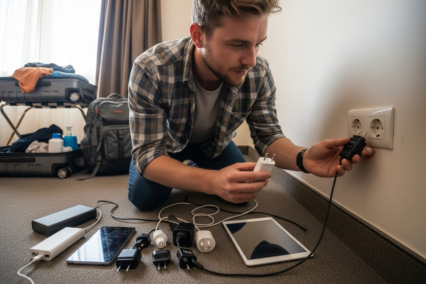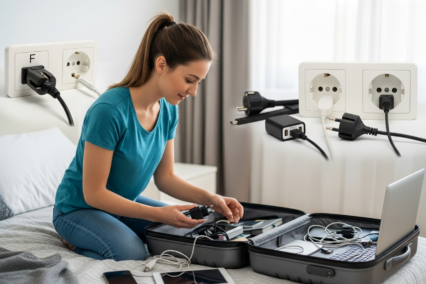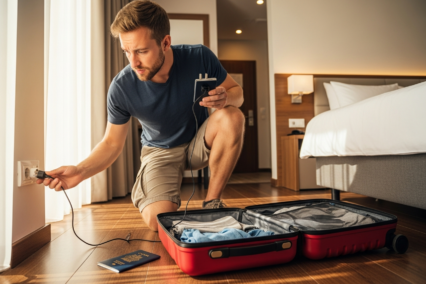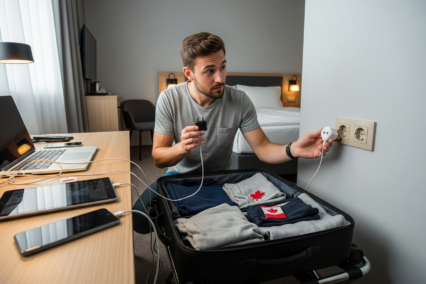
Key Highlights
Planning a trip to Vietnam? You should know how to keep your electronic devices charged. It’s good to understand the local power system so your journey goes well.
-
In Vietnam, the most common sockets use Type A, C, and F plugs, but there are many hybrid sockets too.
-
The standard voltage there is 220V and the frequency is 50Hz, while in Canada it is 120V.
-
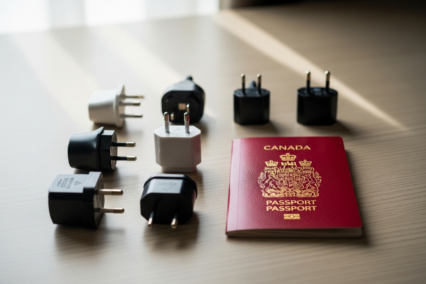
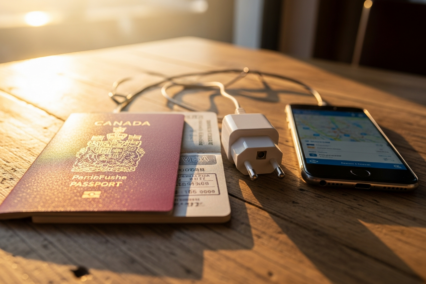
You will need a travel adapter for your devices from Canada.
-
Most electronic devices like your phone or laptop are made for dual-voltage. You usually do not need a voltage converter for these.
-
Always look at the input label on your device to check if it says “100-240V, 50/60Hz.” This will tell you if it will work in Vietnam.
-
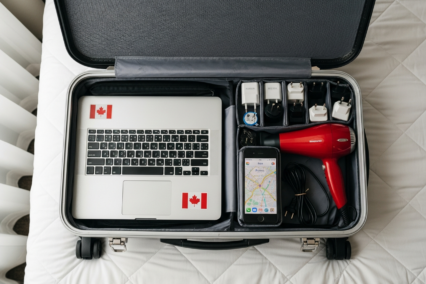
It’s a good idea for international travelers to bring a universal travel adapter when visiting a new place.
This will help keep your electronic devices working in Vietnam and you won’t run into problems with sockets, voltage, or adapters.
Introduction
When you are planning a fun trip to Vietnam, you will probably think about seeing the sights and trying great food. But have you thought about something small but important, like the power plug? For international travelers, it can be tricky to know how they will charge their devices in a new place. No one wants to deal with a phone or camera that is dead while travelling. This guide tells Canadians what they need to know about Vietnam’s sockets and the power plug. So, you can stay connected and keep your devices charged during your journey.
Common Electrical Outlets and Plug Types in Vietnam
Vietnam’s electrical system makes it easy for you to use your devices as a tourist. You will find different power plug types and socket types when you travel the country. The most common are Type A, Type C, and Type F plugs and sockets.
If you are from Canada, your Type A plug should work in some places. Many sockets are made to be flexible. Hotels and modern spots often use universal sockets. These can fit more than one type of power plug. This helps travelers plug in without too much trouble.
Overview of Vietnamese Power Outlet Designs
When you get to Vietnam, you may see that socket types change a lot from one place to another. The most common socket types you will find are Type A, Type C, and Type F. This mix is part of the history of Vietnam, and shows how the country picked up different rules from around the world over time.
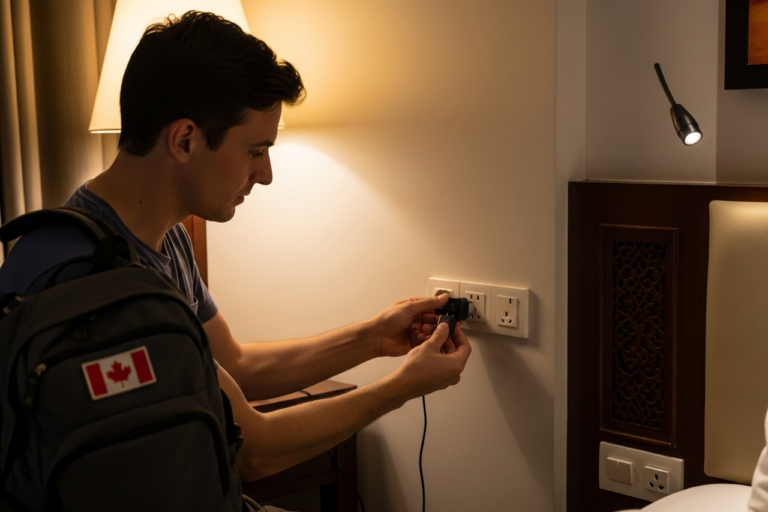
In many hotels, cafes, and new buildings in big cities, you will see a universal socket. This power plug type works well for many people. It has many holes so you can use both flat sticks and round pins. This is nice for international travelers. It means you can put different types of plugs into the same outlet. You will not need any extra adapter for your device most of the time.
But, in older buildings or out in the country, sockets may not be this flexible. You could see outlets that fit just one kind of power plug. This is why you should bring your own adapter when you visit. It helps you to be ready for anything and to always be able to charge your things in Vietnam.
Most Popular Plug Types Canadians Will Encounter
As a Canadian traveler in Vietnam, you’ll mainly come across three plug types. Understanding them will help you prepare. The most common are Type A (which you’ll recognize), Type C, and Type F. Type D is not common but can occasionally be found in very old buildings.
Type A plugs, with their two flat parallel pins, are standard in Canada. While many Vietnamese outlets accept this type, you might find some that don’t. Type C and Type F plugs, which are common in Europe, both feature two round pins. The main difference is that Type F is larger and includes grounding clips.
Here’s a quick breakdown of the plug types you’ll most likely see:
|
Plug Type |
Description |
Common Use in Vietnam |
|---|---|---|
|
Type A |
Two flat parallel pins |
Widely used, especially for low-power devices |
|
Type C |
Two small round pins |
Very common, used for computers and TVs |
|
Type F |
Two larger round pins with grounding clips on the side |
Common for high-power appliances like fridges |
Voltage and Frequency in Vietnam: What Canadians Need to Know
When you pick out a plug for your devices in Vietnam, you have to look at the standard voltage and frequency. The usual voltage in Vietnam is 220V, and the frequency is 50Hz. This is not the same as Canada. In Canada, the standard voltage is 120V, and the frequency is 60Hz.
This matters because if you plug in something made for only 120V into a 220V outlet, it can break your device. You should check if your things work with Vietnam’s standard voltage before you use them. In the next parts, we will talk more about how this could affect your electronics.
Standard Voltage in Vietnam and Device Compatibility
The standard voltage in Vietnam is 220V. This is almost double what you get in Canada, which is 120V. It might seem risky, but most modern electronic devices the people use can handle this change. Things like your phone charger, laptop charger, or camera charger work with more than one voltage.
To check for sure, you should look at your device’s charger. You need to find the fine print that says “INPUT: 100-240V, 50/60Hz.” If it says this, your device is made for both voltages and will work in Vietnam. You do not need a voltage converter. You just need a plug adapter no matter if you go to Hanoi or ho chi minh city.
But some devices, like older ones or a few high-power items such as some electric shavers or hair dryers, are single-voltage. They only work with 110V-120V. If you use these in Vietnam and do not use a voltage converter, they will stop working for good. Always check your device’s label before you pack.
Frequency Differences Between Vietnam and Canada
Another thing you should think about with electronic devices is the frequency. This gets measured in Hertz (Hz). In Vietnam, the frequency is 50Hz. In Canada, it is 60Hz. For most new electronics, this small change in frequency does not cause any problems.
If you see “50/60Hz” on your device, you can use it in both places. Most personal devices, like chargers for your phone, tablet, or laptop, will work just fine. They will change to fit the local frequency on their own.
Frequency is only a big deal with things like motors, some clocks, or old music equipment. If your device only says “60Hz,” it might run slower or not as well in Vietnam, since they use 50Hz. But for most people travelling, you do not need to worry about it.
Adapter and Converter Options for Canadians Visiting Vietnam
Now you know about plugs and voltage, so let’s look at the tools you will need. The two main things are a travel adapter and a voltage converter. There is a difference between them. An adapter changes the shape of your power plug. A converter changes the voltage of the electricity.
Most people from Canada only need a travel adapter to charge their phones, laptops, and cameras. You will need a voltage converter if your device is single-voltage and does not work with Vietnam’s 220V system. Knowing when to use an adapter or a converter keeps your electronics safe when you travel.
When Do You Need an Adapter or Converter?
Knowing if you need a travel adapter or a voltage converter is the first thing to check before you use your electronics in Vietnam. The answer is all about your device. A travel adapter just lets your plug fit into the wall socket. It does not change the voltage. A voltage converter drops the voltage from 220V to 110V so that your single-voltage things don’t get damaged.
If your plug is shaped different from the sockets in Vietnam, you will need a travel adapter. In Vietnam, the sockets are Type A, Type C, and Type F. In Canada, our plugs are Type A and B. Bringing a travel adapter is a good plan to handle all the types. You only need a voltage converter if your device can’t handle two different voltages.
Here’s a short checklist to help you know what to bring:
-
You need an adapter if: Your plug does not match the wall socket. It’s smart to bring a universal travel adapter.
-
You need a converter if: Your device’s label says “INPUT: 110V” or “INPUT: 120V” only.
-
You need both if: Your single-voltage device plug does not fit in the socket.
-
You need neither if: Your dual-voltage device has a plug that fits the socket (for example, a Type A plug in a Type A socket).
Tips for Choosing the Right Travel Adapter for Vietnam
Picking the right travel adapter can help make your trip to Vietnam go much smoother. The country uses a few socket types, like type A, type C, and type F. It is a good idea to get a universal travel adapter for your plug needs. This one tool will get you ready for any outlet. You can use it not only in Vietnam but also if you go to Europe or other places in Asia.
When looking for an adapter, find one that is built well and will last. Cheaper ones can break, and the plug sometimes does not stay in the wall. This can be rough to deal with and might not be safe. Spending a bit more for a stronger adapter gives you peace of mind.
Here are some tips to help you pick a good travel adapter:
-
Pick a universal adapter that covers many plug types, like type C and type F.
-
Think about an adapter that has USB ports built right in, so you can charge a few things at the same time.
-
Check how much power the adapter can handle before you use it for your devices.
-
Find one that is small and not heavy. This makes it easy to pack and take with you.
-
Try to get your adapter from a well-known brand for safety and good quality.
Conclusion
When you travel to Vietnam, it is good to know how the electrical outlet system works. This helps you be ready if you are from Canada and plan to live or visit there. You should know the different types of plugs used in Vietnam and think about the voltage. It is also smart to remember that the voltage and the frequency there may not be the same as what is used in Canada.
Make sure to have the right adapters or converters with you. Many of your devices can work in Vietnam, but you should check their details first. It is always good to make sure before you plug anything in.
When you know this, you can spend more time having fun in Vietnam and not worry about your electronics. If you need help or have questions before your trip, reach out to someone who knows. This will make your trip much easier.
Frequently Asked Questions
Can I use my Canadian electronics in Vietnam?
Yes, you can use your electronic devices in Vietnam, but you need to prepare first. Most new devices like laptops and phones work with Vietnam’s standard voltage. You still need a travel adapter because the sockets are not the same as at home. If your device is not dual-voltage, you will need a voltage converter. This keeps your single-voltage items safe from damage.
Is it safe to charge phones and laptops in Vietnam?
Yes, you can charge your phone chargers and other electronic devices in Vietnam. Just make sure you have the right power plug and adapter for the sockets. Your device needs to fit the 220V voltage because that is what they use in Vietnam. If you use the right equipment, it will work fine in hotels, cafes, and airports.
Where can Canadians buy a suitable adapter for Vietnam?
You can get a travel adapter in Canada at electronics shops, travel stores, or online before you go. If you don’t bring one, it’s easy to buy a travel adapter in Vietnam. You can find them at airports, big electronics stores like The Gioi Di Dong, and nearby convenience shops. These adapters are easy to get, especially in places popular with international travelers.