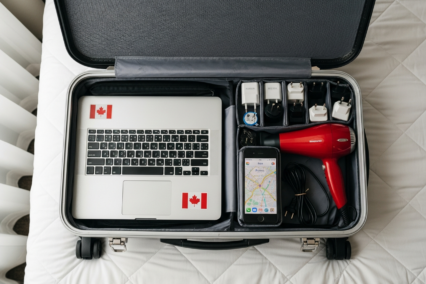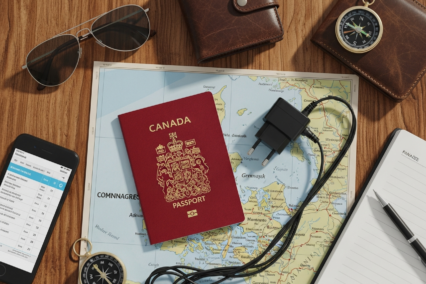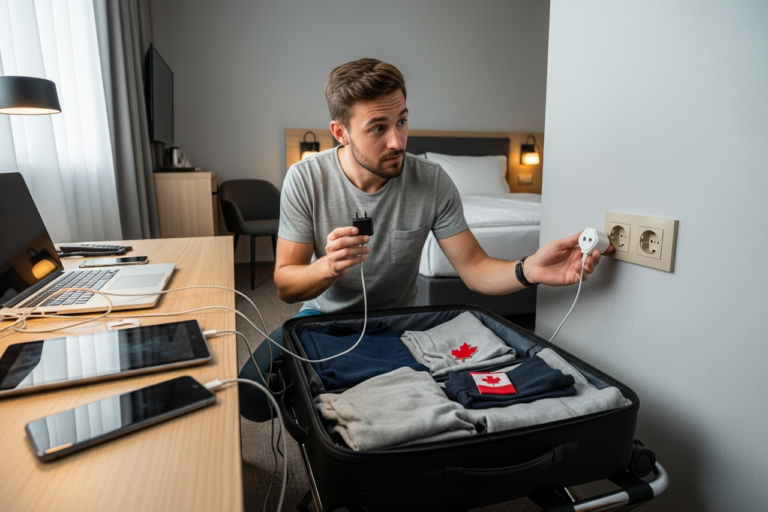
Key Highlights
Here is a quick look at what you should know about using your electronics in Hungary:
-
Hungary uses type c and type f plug types. These are not like the ones you have in Canada.
-
The voltage in Hungary is 230V. This is much higher than the 120V you get in Canada.
-
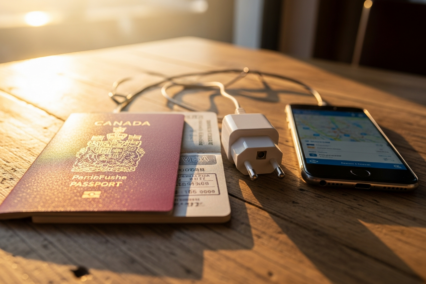
You need a travel adaptor to use your plugs from Canada in hungary.
-
Always check your electronics for voltage compatibility. Most of the newer ones are made to work with both voltages.
-
Some things like certain hair dryers only have one voltage. In this case, a converter is needed to keep them safe.
This should help you get everything ready for your trip to Hungary.
Introduction
Are you getting ready for a trip to beautiful Hungary? There’s a lot to look forward to, and you should also think about the small things, like how you will charge your phone, camera, and other devices. Different places have their own way of doing things when it comes to plugs and voltage. Knowing about plug types, voltage, and if your devices will work is very important if you want to stay connected on your trip. This guide will show you everything a Canadian traveller should know to make sure your electronics can be used safely in Hungary. This way, your trip will go well and you won’t have to worry.
Understanding Electrical Outlets and Plug Types in Hungary
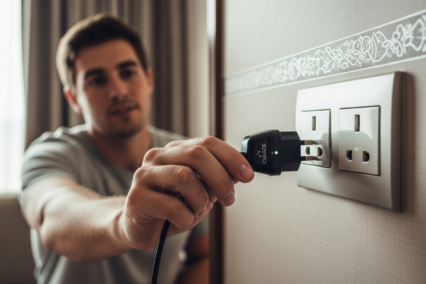
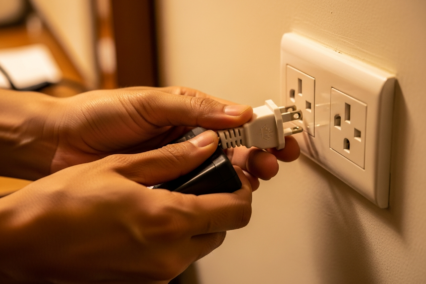
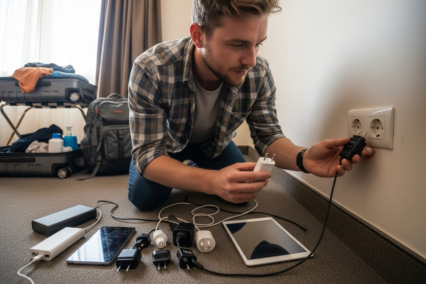
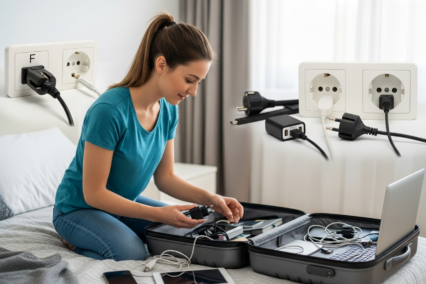
When you travel from Canada to Hungary, you’ll see that the electrical outlets are different. In Hungary, the plug types they use are C and F. You can find these types in many parts of Europe. They look different from the flat plugs found in Canada. Because of this, your plug will not fit into a Hungarian socket without help.
It is important to check the compatibility of your devices before your trip. Make sure your electronics can work with the plug types in Hungary. Let’s look at what plug types you will see and if the outlets are safe and grounded.
Common plug types (Type C and Type F) and their compatibility
Hungary uses type F sockets as the standard for power. But you can also use type C plugs in these sockets. Knowing about the two plug types helps you make sure your plug and socket will work together.
Here’s an easy look at type C and type F plug types:
-
Plug Type C: People often call this the “Europlug.” It has two round pins that run next to each other. This plug does not have a ground pin.
-
Plug Type F: People know this one as the “Schuko” plug. It also has two round pins like type C. But it adds two clips for grounding, one on top and one on the bottom.
-
Compatibility: A type C plug will go into a type F socket, but you cannot use type F plugs in type C sockets.
Type F sockets are what you find most in Hungary. If you need to buy an adaptor, you have to get one that works with type f sockets. This way your plug will fit right and your device will ground the right way for safe use.
Are Hungarian power outlets grounded or ungrounded?
Safety is very important when you use electricity, and grounding is a key part of that. In Hungary, the main type you see is the Type F socket. This is a grounded outlet. It gives extra protection if something goes wrong, which is why new work and big repairs must use this kind.
In some very old buildings, you might find Type C sockets. These are ungrounded, but they are not common. People can’t put in new ungrounded sockets now because they are not as safe. When you go to Hungary, you can count on almost all sockets you see to be Type F and grounded.
Having these grounded F sockets everywhere is good for safety. It means when you use a plug or adaptor that fits, you are using a system made to protect you and your things.
[type f],[type c],[f sockets],[type f sockets],[hungary],[plug],[socket],[adaptor]
Voltage, Frequency, and Device Compatibility for Canadians
Beyond just the shape of the plug, the power supply in Hungary is quite different from what we use in Canada. Hungary has a much higher voltage, and the frequency is not the same as in Canada. If your electronics are not made for this, it can damage them for good. Not checking the voltage can ruin your devices.
So, it’s very important to check the compatibility of your devices before you go. Find out if your device works with the European standard. If not, you will need a power converter. Let’s learn more about Hungary’s power supply and see what this means for your Canadian gadgets.
Standard voltage and frequency in Hungary
The electrical system in Hungary operates at a standard that is common throughout Europe but different from North America. The power supply provides a voltage of 230V with a frequency of 50 Hz. This is a significant jump from Canada’s 120V and 60 Hz standard.
This difference is critical. Plugging a device designed only for 120V into a 230V outlet can instantly destroy its internal components. Here’s a quick comparison to put it in perspective:
|
Country |
Voltage |
Frequency |
|---|---|---|
|
Hungary |
230V |
50 Hz |
|
Canada |
120V |
60 Hz |
Before you plug anything in, you must verify that your appliance can handle 230V. Most modern personal electronics like laptops and phone chargers are designed for international travel and can handle a range of voltages, but it is always best to check.
Adapter and converter requirements for Canadian electronics
If you want to use your Canadian electronics in Hungary, you have to handle both the plug shape and the voltage difference. You will find that an adaptor and a voltage converter are not the same thing. You might need just one or both, depending on your electronics.
An adaptor will help change the plug so it goes into the socket in Hungary. It does not switch the voltage at all. You will need a voltage converter or a transformer to make the voltage go down from 230V to 120V. This is important to keep your single-voltage items safe.
Here’s what you should know:
-
For dual-voltage devices (like, “INPUT: 100-240V”): You will only need a travel adaptor for the plug.
-
For single-voltage devices (like, “INPUT: 120V”): You need to use both an adaptor and a voltage converter to use your electronics there.
-
Common single-voltage items: Hair dryers, some older things, and electric razors will often need a voltage converter.
You should always check the power label on your item before you pack it. If you use the wrong adaptor, transformer, voltage converter, or plug, you may break your device and lose money. Be sure to check before you go.
Travel Adapters and Power Converters: What Canadians Need to Know
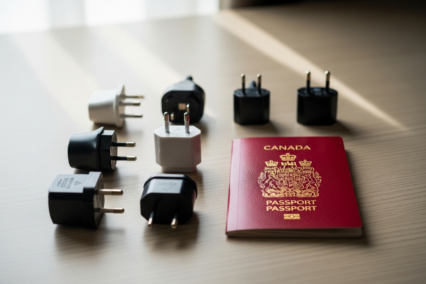
Now that you know why this matters, let’s talk about what you will need. Picking the right travel gear is important for any trip. You should get a travel adaptor that will fit Hungarian outlets. You also have to know if you need a bigger power converter or a transformer for your things.
When you make the right choice, your electronics will work and stay safe. We will show you how to pick the best travel adaptor for Hungary. We will also help you figure out if it is really needed to bring a power converter.
Choosing the right travel adapter for Hungarian outlets
Since your Canadian plugs will not fit in a Hungary socket, you will need a travel adaptor. Be sure you get one that works with type F sockets, because these are used the most in Hungary. If you use a type C adaptor, it will still work in these sockets, but a type F one is a safer choice.
Here are a few tips for picking the right travel adaptor:
-
Look for an adaptor that is made for “type F” or “Schuko” plugs.
-
Think about getting a universal travel adaptor that covers a few regions. This is good for your next trips too.
-
Make sure the adaptor is strong and from a good brand.
-
Some travel adaptors have USB ports, so you can charge more than one thing at a time.
You can buy these travel adaptors online at sites like Amazon before your trip or you can get them at the airport and at some electronics stores. If you buy early, you will have more types to pick from and maybe better costs to choose from.
Do you need a power converter or transformer?
The kind of device you need, like a power converter or transformer, will depend on your electronics. A lot of newer gadgets, like hair dryers and some other items, are made to be used anywhere in the world. These gadgets are called dual-voltage. To see if yours is, look for a label on the plug or power brick. This label will say something like “INPUT: 100-240V, 50/60 hz.” If you see those numbers, your device can be used on both types of voltage and does not need a converter.
But, if your device is single-voltage, you will see just “110V” or “120V” on the label. In this case, you will need a voltage converter. Plugging that device into a 230V outlet without the right converter will likely break it, and it may not be fixed. This often happens with some older electronics and with things like hair dryers or curling irons.
It’s a good idea to look at all of your appliances first, before buying a converter. You may find that just one or two things need it. If that happens, you can get a small, cheap travel-sized version of those items in Europe or just leave them home.
Tips for Using Your Electronics Safely in Hungary
When you use your electronics in other countries, you need more than a good adaptor. It is important to keep yourself safe and take care of your devices, as the power supply can be different from what you use at home. If you plug a device that does not fit in the socket, or use the wrong kind of adaptor, it could cause damage.
There are some easy steps you can take to keep your electronics working well and not run into power problems. We will talk about what to watch out for, how to get ready, and where to find an adaptor if you do not have one with you.
Risks of plugging devices directly into Hungarian sockets
Plugging your devices from Canada right into a Hungarian socket can cause trouble if you do not check their compatibility first. The big risk is the change in voltage. A device that is made for 120V may get damaged fast if it is plugged into a 230V power supply. Sparks, smoke, or even a small fire can happen.
Some things may not break right away. But using the wrong voltage can make your appliance overheat and not last as long. It is not worth putting your device at risk just because it is easy to plug it in.
Here’s what can happen:
-
Permanent damage: The inside parts of your appliance may get ruined.
-
Safety hazard: Overheating can make the plastic melt and could lead to a fire.
-
Tripped circuits: Using an appliance that is not made for this socket may cause a short and shut off your circuit breaker in the room.
You should always use the right adaptor and converter. That way, you keep both your electronics and yourself safe.
Availability of adapters at hotels, airports, and stores
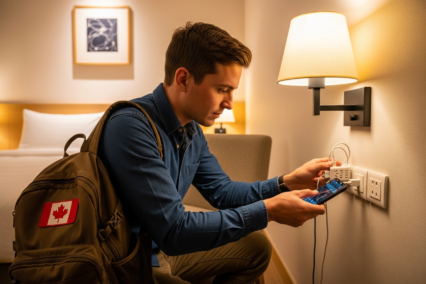
If you forget to pack a travel adaptor for your trip to Hungary, don’t worry. You can usually pick up one when you get there. It may cost a bit more than if you bought it before you left. The airport is a good place to look first because many shops and electronics stores stock travel adaptors for last-minute needs.
Many big hotels, mostly the ones that get lots of international guests, might have a small number of adaptors to lend to guests. It is always good to ask at the front desk. But don’t count on it every time, as they might run out.
For more choice and better prices on a travel adaptor, try these places:
-
Airports: Shops in the arrivals area usually have universal adaptors.
-
Electronics stores: Large electronics shops in cities across Hungary offer many types of adaptors.
-
Larger supermarkets: Bigger supermarkets or hypermarkets sometimes have a small area with travel adaptors in the electronics section.
Conclusion
To sum up, it is important to know about the compatibility of electrical outlets in Hungary for a smooth trip. When you know about the plug types, voltage, and frequency in Hungary, you can use your Canadian devices without trouble. Be sure to get the right travel adapters and power converters for your plug. You should also follow safety tips any time you use your electronics there. If you are ready before you go, your devices and your trip will both be better. For any other questions or help, you can always ask for more information!
Frequently Asked Questions
Can I use UK or US plugs in Hungarian electrical sockets?
No, you can’t do that. Plugs from the UK (type G) and the US or Canada (types A & B) will not fit Hungarian type F sockets. You have to use a travel adaptor if you want to plug your devices in. Be sure that you have the right adaptor, so the connection is safe and works well.
Is there a risk of damaging my device if I use the wrong adapter or converter?
Yes, there is a big risk. If you use just an adaptor for a single-voltage (120V) appliance, it will get 230V. That can break it for good. Using the wrong type of voltage converter or transformer can also damage your appliance. Always make sure the compatibility is right so you don’t ruin your device.
Do most Hungarian hotels provide adapters for guests?
Some big hotels that focus on tourists might have a few adaptors at the front desk for guests to use. But you cannot always count on this, mainly in small hotels or guesthouses. It is best to have your own adaptor with you. That way, you will be able to charge your devices without any problem.