Key Highlights
Here are the key things you need to know for your trip to Finland:
-
Finland uses Type F and Type C electrical outlets, which are not the same as Canadian outlets.
-
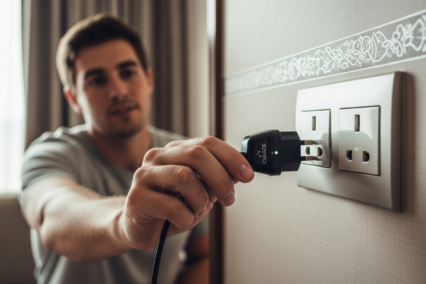
You have to get a travel adapter if you want to plug your Canadian devices into Finnish sockets.
-
The power supply in Finland is usually 230V and 50Hz.
-
Look at your devices to see if they are dual-voltage. If it says something like “110-240V,” you should be good with the voltage.
-
If you have a single-voltage device from Canada, you will need a voltage converter for it to work the right way in Finland.
-
It is a good idea to buy the right plug type adapter before leaving home.
These steps will help with compatibility between your devices and the electrical outlets in Finland. Remember to make sure your voltage, adapter, and plug are all correct for your trip.
Introduction
Planning a trip to Finland is always exciting. But, have you thought about how you will charge your phone or camera? The electrical outlets in Finland are not the same as what you use back in your home country, Canada. So, you will not be able to just plug your devices into the wall. You need to know about the plug type in Finland, and also understand their power system. This is important if you want your gadgets to work well during your stay. This guide will help you with things like how to pick the right travel adapter, and how to check the compatibility of your devices before you plug them in.
Understanding Electrical Outlets in Finland
When you get to Finland, you will see that the electrical outlets are not the same as the ones back home. The country uses Type F sockets most of the time, and these are common in many parts of Europe. You may also come across Type C sockets in Finland, and they work with Type F plugs.
Because the plug type is not the same, your Canadian electronics will not fit the sockets in Finland unless you have an adapter. To keep your devices ready to use on your trip, you need to make sure you have the right equipment with you. Let’s take a look at these plug types and see how they are different from what you use at home.
Overview of Finnish Plug Types and Socket Compatibility
Finland uses some of the same plug types you see in most of Scandinavia and a lot of Europe. The main sockets in Finland are Type F. You can also use Type C plugs in these sockets.
The Type F plug is easy to spot because it has two round pins. Type C plugs have two round pins as well, but they do not have the grounding clips like Type F plugs do. Because of this, you can put a Type C plug into a Type F socket. It’s not always possible to fit a Type F plug where a Type C plug goes. So, it’s important to know about this compatibility.
Here’s a quick summary of plug compatibility in Finland:
-
Primary Socket: Type F
-
Compatible Plugs: Type C and Type F
-
Design: Both have two round pins.
-
Your Canadian Plugs (Type A/B): These are not compatible and will require an adapter.
Comparison with Canadian and Other European Electrical Standards
The differences between Canadian and Finnish electrical standards go beyond just the shape of the plug. The voltage and frequency are also distinct. While Finland’s electrical outlets are common in many parts of Europe, they are incompatible with standards in Canada, the UK, and the US without the right accessories.
For instance, the UK uses the Type G plug, which has three rectangular prongs and is completely different from Finland’s Type F. Similarly, Canadian Type A and B plugs won’t fit. This highlights the importance of checking the standards for every country on your itinerary.
Here is a simple comparison:
|
Country/Region |
Plug Type(s) |
Voltage |
|---|---|---|
|
Finland |
C, F |
230V |
|
Canada |
A, B |
120V |
|
United Kingdom |
G |
230V |
|
Much of Europe |
C, F, E |
230V |
Voltage and Frequency in Finland
It’s not just about the shape of the plug, you also need to think about the electrical current. The power supply in Finland has a different voltage and frequency than what you get in Canada. This is a big deal for safety and for how well your electronics work. If you do not think about these differences, it could damage your devices.
Every place in Finland follows the same standard, so there is no need to worry about changes when you go from one area to another in the country. The main thing is to check if your devices are okay to use with Finland’s power supply before you travel. We will now talk about the details of voltage and frequency.
Standard Voltage in Finnish Outlets
The power supply in Finland uses a standard voltage of 230V. This is much higher than the 120V you get in Canada. Because of this, you should always check your devices before you plug them in. Make sure they can work with the higher voltage in Finland.
A lot of new electronics like laptops or phone chargers can work with two voltages. You can find out if this is true by looking at the plug or the power brick. If you see something like “INPUT: 100-240V,” your device can work in Finland. In that case, you only need a plug adapter to use your device. If your device only works at 110-127V, you will need to get a voltage converter. This will keep your device safe.
If you use a single-voltage appliance from Canada in Finland without the right converter, you could ruin the device. Always look at what voltage and power supply your device needs before you plug it in.
Frequency Considerations for Canadian Devices
Another thing to think about with the power supply is how often it cycles, called frequency, and it’s measured in Hertz (Hz). Finland and most of Europe use a 50Hz frequency. In Canada, the frequency is 60Hz. For most travel electronics, this difference does not make a big impact.
Most new devices can work on both 50Hz and 60Hz. To check, look at your device or its charger. There should be a label that says “50/60Hz.” If you see that, your device has compatibility with both types and should work just fine.
But, some appliances with motors or clocks, like a few types of alarm clocks or electric razors, can get affected by different frequencies. They might run too fast or too slow if the frequency is not what they need. For those, it is a good idea to leave them at home or bring a travel version meant for more than one area.
What Canadians Need for Their Devices in Finland
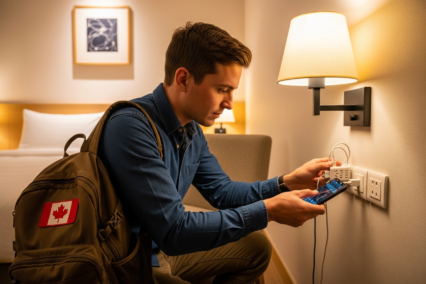
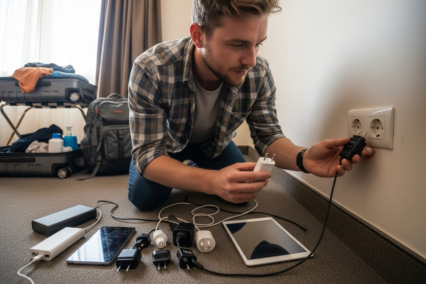
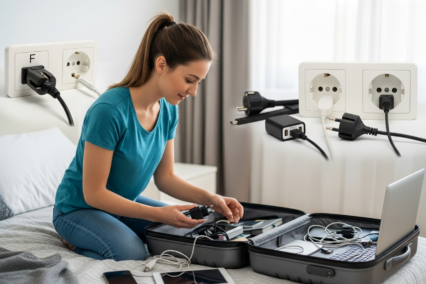
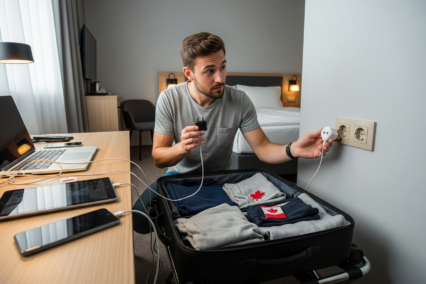
What do you need to pack for your trip? For most Canadian travellers, you will need a simple travel adapter, sometimes called a plug converter. This handy device will let your Canadian plug work in Finnish sockets. If your plug does not fit, you will want to use this adapter. If you travel to many countries, getting a universal adapter can be a good idea.
Keep in mind, a travel adapter only changes the way your plug fits in the socket. It does not change the voltage. Make sure you use the adapter and your gadgets the right way. It is important to check that your devices are ok with the local voltage. Using the right tools for your sockets will help you have a smooth trip. Let’s look at how to use your travel adapter and check your electronics the proper way.
Using Travel Adapters and Plug Converters Safely
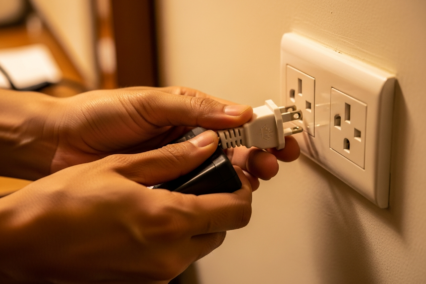
A travel adapter helps you connect your devices in Finland, but you need to use it the right way. For things like your laptop or phone charger that are made to handle more than one voltage, a simple plug converter is good and safe. But remember, a voltage converter is another thing. It’s a bigger device and you will need it only with appliances that take just one voltage.
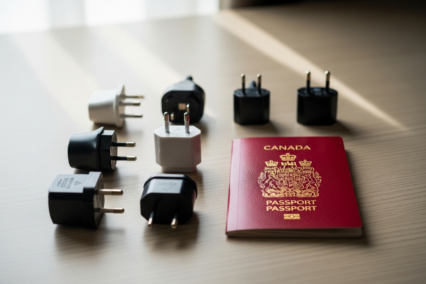
When you buy an adapter, think about picking a universal adapter. The universal adapter can work with many plug types, which is useful if you want to travel to other places one day. It’s smart to buy your travel adapter while you are still in Canada. This way you do not have to look for one when you get to Finland.
For safe and easy use, follow these tips:
-
Make sure the travel adapter is from a known brand and that it is certified.
-
Do not use a plug converter with single-voltage appliances. Use a voltage converter for those.
-
The adapter must fit tight and not be loose in the wall socket or with the plug of your device.
-
Don’t put a power strip into one adapter, unless the strip is made to work with 230V. This will help keep you, your charger, and your appliances safe in Finland.
Compatibility Tips for Laptops, Mobile Phones, and Everyday Appliances
The good news is that most personal electronics today are made for travel around the world. Things like laptops, smartphones, and tablets often come with a charger that works with different voltage levels. You will just need to get a plug adapter for these.
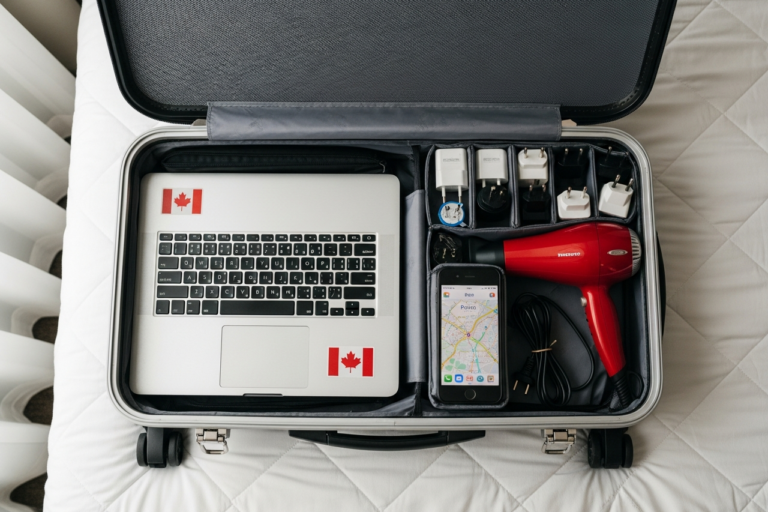
Many adapters now have usb ports built right in. This makes it easy to charge your phone or other small gadgets because you don’t have to use a separate charger for each one. That means you can pack less. Remember, though, that some things use a lot of power. Things like hair dryers or straighteners are often not made with dual voltage, so you have to be careful.
Here are a few quick tips to make sure there is compatibility:
-
Laptops and Smartphones: Most chargers for these have dual voltage. Look for “100-240V” on the charger.
-
USB Ports: You can use adapters with usb ports to make charging easier.
-
Hair Dryers: If you don’t have a travel model or one with dual voltage, it is best to just use the one given at your hotel.
-
Check Every Device: Don’t guess. Always look at the label on the charger or other appliance to find out about voltage and compatibility.
Conclusion
To sum it up, knowing about electrical outlets in Finland is important if you are a Canadian traveler. The plug types, voltage, and frequency are different from what we have in Canada. If you prepare before you go, your appliances and gadgets will work when you need them. Use the right travel adapter and check the compatibility of your items. This way, you will not run into any trouble. If you know about these things, your devices will be safe and your whole trip will go well. If you need more help or still have questions, just ask. Have a great time in Finland!
Frequently Asked Questions
Do Finnish outlets work with UK or US plugs?
No, you can’t use UK or US plugs directly in Finland. In Finland, the sockets are type F and type C. In the UK, people use type G plugs, while in the US, they use type A and type B. So, if you bring your device from the UK or the US, you will need a travel adapter. A travel adapter makes sure your plug fits the sockets in Finland, giving you the compatibility you need.
Is it safe to use an adapter for charging phones and laptops in Finland?
Yes, you can safely use a plug adapter to charge your laptops and smartphones in Finland. Most chargers for these devices can work on different voltage, so they have compatibility with Finland’s 230V system. The adapter does not change the voltage, but it will help your plug fit the socket.
Where can Canadians buy a plug adapter for Finland before their trip?
Canadians can buy a travel adapter for Finland without any trouble. You will find them at electronics stores, travel shops, or big department stores. There are also many choices online. On Amazon, you will see travel adapter options, such as single adapters for the Type F plug type or a universal adapter kit. The universal adapter is good if you plan to travel to other places, not just Finland.