Key Highlights
-
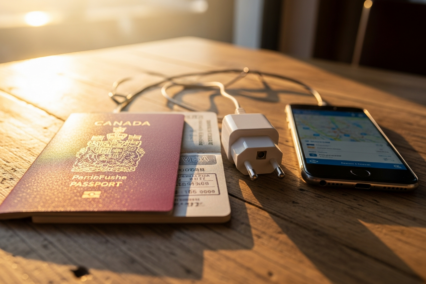
In the united kingdom, they use a Type G plug. If you bring your plugs from Canada, they will not fit without an adapter.
-
UK outlets have a higher voltage at 230V, but in Canada, it is 120V. This can hurt your electrical appliances if they are not made to handle it.
-
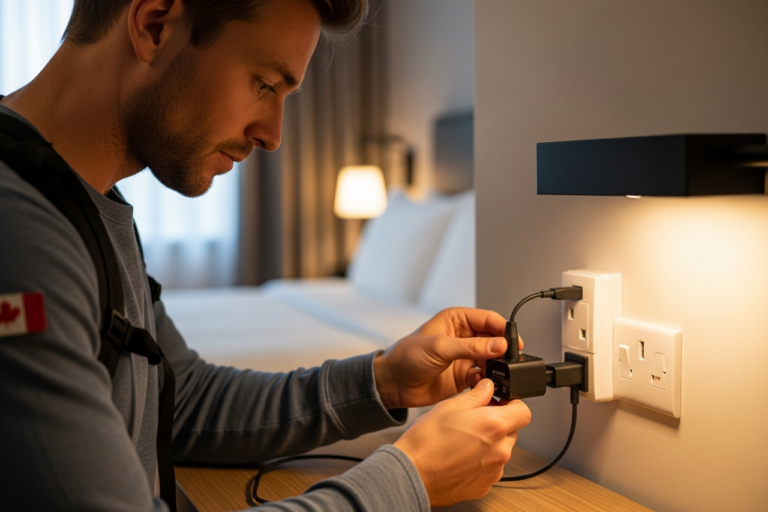
Many new electrical appliances and electronics can take both voltages, but you will still need a travel adapter to use the plug in the united kingdom.
-
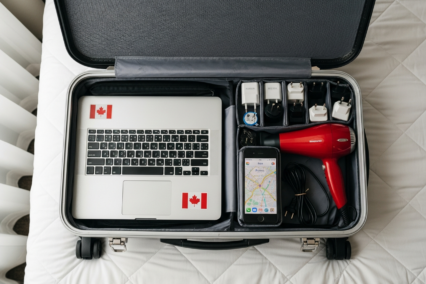
For single-voltage items like hair dryers, you may need a voltage converter for the plug so you do not wreck your thing.
-
The plug type used in the UK comes with key safety features, including an earth pin and a fuse. This makes the plug one of the safest with these features.
-
You should always use a good universal adapter or travel adapter to make sure your electronics and appliances work well and have safety when you are in the united kingdom.
Introduction
Are you getting ready to go from Canada to the United Kingdom? This can be a very good trip! But before you get too excited and start to pack, there is something you have to think about. The united kingdom and UK do not use the same outlets as Canada. You do not want to get there and find out that you cannot charge your phone or use your other appliances. This guide will help you know all you need about UK outlets. You will learn which adapter you need, how the voltage is different, and how to keep your things working well, so you can enjoy your time and not worry.
Understanding UK Electrical Outlets for Canadians
When you go to the United Kingdom, you will see that the electrical outlets look different from what you would find at home. The UK uses its own plug type and a special power supply system. It is made to follow a British Standard that keeps things safe and gives all plugs and sockets their shape.
If you are travelling from Canada, your devices will have two- or three-pronged plugs. These will not fit in UK sockets on their own. It is important to know about these differences. This helps you use your electronics in the right way when you visit. Let’s look at the plug types and sockets you will find in the United Kingdom and how they work.
Types of Power Sockets in the United Kingdom
The main kind of power sockets you see in the United Kingdom is the Type G. People use this design for all new installations, and this change started in the late 1950s. It took the place of old sockets that used to be common. If you go to the UK, you will find Type G sockets almost everywhere. You will see them in hotels, cafes, and homes. This socket is made to work with the associated plug type, and that plug has its own shape.
Many people think this Type G plug type is just for the United Kingdom, but that’s not true. Some other places use the same British Standard for their power plugs and sockets. You can find the British Standard BS 1363 system, with the same type G, in these countries:
-
Ireland
-
Malaysia
-
Singapore
-
Hong Kong
The BS 1363 Type G standard came out in 1947. After that, it became the usual choice for new installations, mostly because of its better safety features. Now, you will see this type of socket all across the UK. The old types of sockets are hard to find today.
What UK Power Plugs Look Like and How They Work
A UK power plug is quite distinctive. It features three large, rectangular pins arranged in a triangular pattern. The top pin is the earth pin, which is slightly longer than the other two. This clever design means that when you insert the plug, the earth pin enters the socket first, opening shutters that cover the live and neutral pin holes. This is one of its key safety features. Ireland uses the exact same BS 1363 plug and socket system, so there is no difference between UK and Ireland electrical sockets.
Another crucial safety feature built into the UK plug is a cartridge fuse. Unlike in Canada, where circuits are protected at the main panel, the UK system requires each plug to be fused. The fuse rating (often 3A for small electronics or 13A for heavy-duty appliances) protects the appliance’s cable from drawing too much current.
Here’s a quick comparison to help you visualize the differences:
|
Feature |
UK Plug (Type G) |
Canadian Plug (Type A/B) |
European Plug (Type C) |
|---|---|---|---|
|
Pins |
3 rectangular pins |
2 flat parallel pins, optional 3rd round pin |
2 round pins |
|
Grounding |
Yes, via the top earth pin |
Optional (Type B) |
No (in standard Type C) |
|
Fuse |
Yes, built into the plug |
No |
No |
|
Shape |
Bulky, triangular pattern |
Flat, compact |
Small, round |
Voltage, Frequency, and Compatibility with Canadian Devices
Besides the shape of the plug, you also have to think about the electrical voltage and how often the current switches. The UK and Canada use different ways of sending power, and this can cause issues with the compatibility of your appliances. The power in the UK is at a much higher voltage than what most people use in Canada.
It is important to know about this difference to keep your devices safe. If you use something made for Canadian voltage in a UK plug without the proper gear, it could get badly damaged. Next, let’s look at what this means for your electronics and how you can check if they will work in a safe way.
UK Standard Voltage vs. Canadian Voltage
In the united kingdom, the normal power in outlets is 230V, and the frequency is 50Hz. This is different from Canada, where outlets use 120V and 60Hz. ireland also uses the same kind of electrical setup as the uk, so it is 230V and 50Hz there too.
This higher voltage is why you can’t just come with a simple plug adapter for your Canadian devices. If you plug something built for 120V into a 230V socket, more than double the power will go into it. This can make the device get too hot, short out, or stop working right away. Even if it survives, the change in frequency can mess with things that have motors or clocks.
So, if your device is made to use just one voltage, you need a voltage converter or transformer. This little machine shifts the 230V from the uk down to 120V, so your stuff will work how it should and not break. Always look for the details about voltage, amps, and watts on your things before you travel.
Will Your Canadian Electronics Work in the UK?
Will your electronic devices work? It depends on the device that you have. Because a lot of people travel, companies now make many new electronic devices so they can work worldwide. You just need to check if your device is single voltage or dual voltage. This detail is on the power label that you can see on the plug, cord, or the device itself. If you see “Input: 100-240V, 50-60Hz” written, then you get a dual voltage device.
For those electronic devices that list dual voltage, you will not need a voltage converter. But you do need a travel adapter for the type G plug used in the UK. European plugs, which are type C, don’t fit in UK sockets because they do not have the earth pin to open the socket’s safety shutters.
Here’s a quick look at compatibility for some electronics and appliances:
-
Likely Dual Voltage: Newer devices like laptops, smartphone chargers, camera battery chargers, and other modern things will often be dual voltage.
-
Likely Single Voltage: Things like hair dryers, curling irons, electric shavers, and other big appliances are often single voltage. They will need a converter to work.
-
Always Check: Don’t just guess! It is important to look at the label for voltage on your appliances before you pack them.
This way, you can see if you need a travel adapter or a voltage converter before you go to the UK, and make sure
Choosing and Using Adapters and Converters
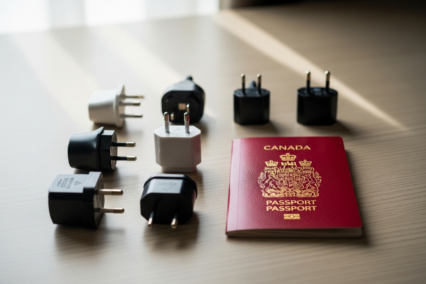
Now that you know more about plug shapes and voltage, you will want to get the right gear for your trip. For most of your devices like a laptop, a simple travel adapter is what you need. This small gadget lets your Canadian plug fit in a UK socket, and it does not change the electricity. You can use a single-country adapter or pick a universal adapter, which works in many countries.
If you have an appliance that is single-voltage, you will need a voltage converter or a transformer. These are bigger and a bit harder to use, since they change the type of electrical current that goes to your device. Let’s look at how to pick the right travel adapter and go over some safety tips you should know.
How to Select the Right UK Travel Adapter
Choosing the right UK travel adapter is easy when you know what you need. The main thing is to get an adapter that will let you use your Canadian plug with a Type G plug in the UK. You can find these online, at stores that sell electronics, or in travel shops before you leave. It is smart to buy one ahead of your trip so you are not looking for it when you get there.
A universal adapter is good if you go to different places a lot. It lets you use many types of plugs, all in one. Make sure the adapter has a type G setting for the UK. No matter if you pick one adapter or a universal adapter, look at some key features before you buy.
Look for these important things when you choose a travel adapter:
-
Grounded Connection: Check that the adapter works with your three-prong Canadian plugs.
-
Sturdy Construction: The adapter should go in the outlet well and keep your plug in strong.
-
Compliance with Standards: Pick one that has marks to show it is safe, like the International Electrotechnical Commission (IEC).
These tips will help you to find a uk travel adapter that fits your needs. If you want to make things easy, a good universal adapter with IEC marks for safety, a strong fit, and type G plug support is the way to go.
Safety Tips for Using Power Adapters Abroad
Yes, it is safe to use power adapters with UK outlets, as long as you use them the right way. The power supply in the UK is steady, and the sockets there have very good safety features built in. For most new electronics, you will just need a travel adapter to fit your plug. The biggest mistake that people make is mixing up an adapter and a converter. You need to remember that an adapter just changes the shape of the plug. It does not change the voltage.
Never plug a single-voltage (120V) Canadian device into a UK outlet with only an adapter. This is not safe. It can make a fire or break your device. Also, do not plug too many high-use items into one adapter, or into a power strip. This can trip the circuit breaker or blow the cartridge fuse that is in the plug.
To make your trip safe, just follow these easy tips:
-
Check Your Device Voltage: Always make sure your device can work with both 100-240V before you use it with just an adapter.
-
Use a Converter for Single-Voltage Items: If something you have is only 120V, you must use a voltage converter that can handle its power level in either amps or watts.
-
Don’t Force Plugs: Never push a plug into an adapter or socket if it does not fit. This can hurt the pins and lead to a bad connection.
Conclusion
To sum up, dealing with electrical outlets in the United Kingdom does not have to be hard for Canadians. You just need to know the things about voltage, sockets, and using the right adapters or converters. This will help your electronics work safely during your time there. Always be ready so you don’t run into problems. It does not matter if you are there for a few days or if you will stay longer. Make sure you know how to keep your devices working with the right sockets and voltage. If you want help that fits what you need, book a free chat with our team. We can tell you all you need to know!