Key Highlights
-
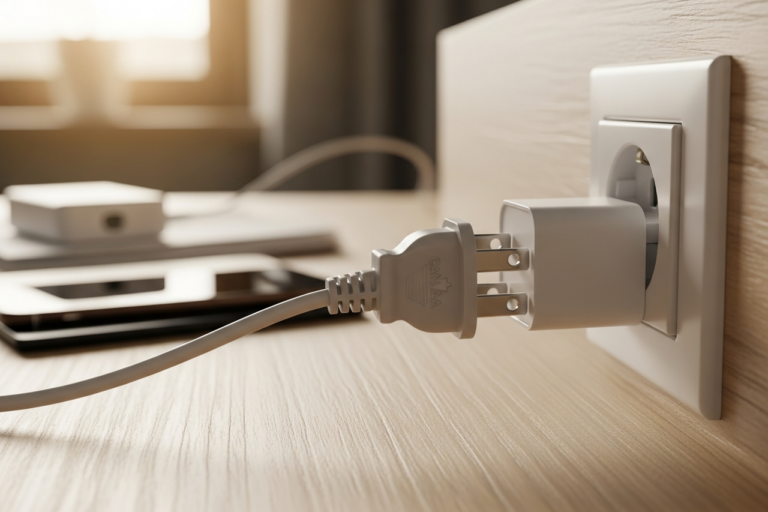
The Netherlands has power sockets type C and type F. These are not the same as the ones you use in Canada.
-
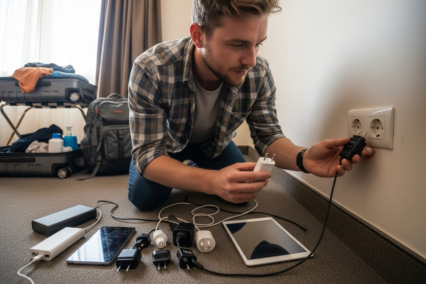
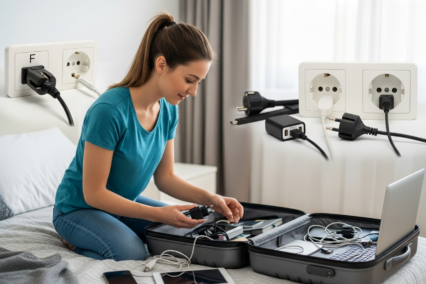
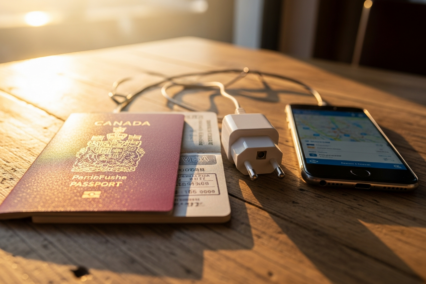
If you are travelling from Canada, you will need travel adapters to plug your electronic devices into Dutch power sockets.
-
The standard voltage in the Netherlands is 230V and the frequency is 50 Hz. This is much higher than the 120V found in Canada.
-
You need a voltage converter if your Canadian appliance is single-voltage. Without it, your device could get damaged.
-
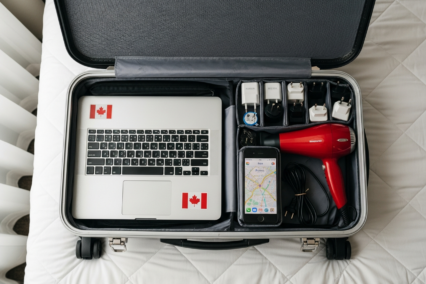
Most new electronic devices, like laptops and phones, are dual voltage. These only need a travel adapter, not a converter.
-
Before you go, it’s good to check your device’s label to see what voltage it uses.
Introduction
Planning a trip to the Netherlands is sure to get you excited about the beautiful canals and the vibrant streets of Amsterdam. You may have amsterdam guide books that help you find all the top places to see. But these books do not always tell you how to keep your electronics charged on your travels.
Before you go, you need to know how the electrical outlets work there. That way, you will not run into problems with your phone or camera.
This guide tells you all you need to know about the power plug and electrical outlets in the Netherlands. It will help you keep your stuff charged. Now you can just focus on having a good time with your adventure.
Understanding Electrical Outlets in the Netherlands
When you get to the Netherlands, you will see that the power sockets there are not the same as the ones in Canada. In the Netherlands, the main power sockets are Type C and Type F. These two types of power sockets are pretty common throughout most of Europe.
It is good to know the specific plug type before your trip to have no problems while charging your things. Canadian plugs, known as Type A and B, do not fit into Type C or Type F power sockets. So, you need to bring the right adapter with you. Now, let’s talk a bit more about the Dutch outlet types, and how they are different from what you use at home.
Common Plug Types and Socket Designs
The two socket types you’ll encounter in the Netherlands are Type C and Type F. The Type C plug, also known as the Europlug, has two round pins. It is a very common plug type across Europe.
The Type F plug, often called a “Schuko plug,” is also very prevalent. It features two round pins like the Type C but includes two clips on the top and bottom sides for grounding. While Type F plugs are grounded, Type C plugs are not. Fortunately, Type C plugs can fit into Type F sockets, making them quite versatile. For Canadians, neither your Type A (two flat parallel pins) nor Type B (two flat pins with a round grounding pin) plugs will fit.
Here is a simple breakdown of the socket types:
-
Type C: Features two round pins and is ungrounded.
-
Type F: Has two round pins plus grounding clips on the sides.
-
Compatibility: A Type C power plug adapter will fit into both Type C and Type F sockets.
|
Plug Type |
Description |
Compatible Sockets in the Netherlands |
|---|---|---|
|
Type C |
Two round pins, ungrounded |
Type C, Type F |
|
Type F |
Two round pins with grounding clips |
Type F |
How Dutch Outlets Differ from Canadian Standards
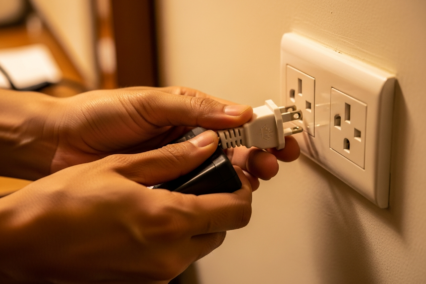
The biggest difference between Dutch and Canadian outlets is the shape. Canadian outlets take flat pins (Type A and B). Dutch outlets use round pins (Type C and F). This is the first thing you will notice when you try to plug in your device. You cannot fit a Canadian power plug into a Dutch outlet type without an adapter.
The voltage level is another very important thing to think about. The Netherlands uses a 230V system. Canada uses 120V, which is much lower. If you have a single-voltage Canadian device and plug it in the Netherlands without a voltage converter, it could break your electronics.
Check your device for a small label on the power cord or near the plug. If it says ‘INPUT: 100-240V’, this means it is dual voltage. It will work with just a plug adapter that matches the outlet type, like Type C. If it says 120V, you need a voltage converter. Doing this check helps keep your domestic plug and your stuff safe.
Voltage and Frequency in the Netherlands
When you move to a new country, there is more to think about than just different plug shapes. You also need to check the standard voltage and how many times the current changes every second, called frequency. In the Netherlands, the mains voltage is 230V. The frequency is 50 Hz. In Canada, these numbers are very different. It uses 120V and a frequency of 60 Hz.
Because of this, your devices might not work as they should, or sometimes not work at all. This is really important for things that can only work with one type of voltage. If you have these single-voltage electronics, you must use a voltage converter. We will look at the standard voltage and how this can affect your Canadian devices.
Standard Voltage Used Across the Country
In the Netherlands, homes and businesses use a standard voltage of 230V. This is the local voltage you will find at any wall outlet, no matter if you are staying in a hotel in Amsterdam or sipping coffee in a café in Rotterdam. The good thing is, this brings some ease when you are there. You do not have to worry about changes in the standard voltage from one city to another.
The frequency of the local Dutch mains supply is also set at 50 Hz. In Canada, it is 60 Hz. This change in frequency does not make a big difference for most modern travel gadgets. Still, some devices — like those with motors or electric clocks such as certain shavers — may not run the right way or could show the wrong speed because of the difference in frequency.
So, make sure when you pack and plan for your trip, you think about both the higher local voltage and the frequency of the local Dutch mains supply. A simple power plug adapter will let your power plug fit, but it will not change either the standard voltage or the frequency. You should always check your device’s details to make sure it can deal with a 50 Hz supply.
Compatibility Considerations for Canadian Devices
When you get your electronic devices ready for your trip to the Netherlands, the first thing to do is to see if they are dual voltage or single voltage. It is important to know this, so your things work well and stay safe in another country.
Many newer electronic devices, such as laptops, smartphones, and camera chargers, are built for use in different countries. They often have a dual voltage power supply. To check, look at the label on the device or power supply. If the label says “INPUT: 100-240V, 50/60 Hz,” you have a dual voltage device. These devices can use Dutch 230V power, so you just need a plug adapter for the plug type.
But some things, like older electronic devices or hair dryers, are usually single voltage. These are made to work with one voltage, for example, Canada’s 120V. If you try to use a single voltage device in the Netherlands without a voltage converter, you will probably break the device.
-
Dual Voltage: Labeled “100-240V.” Needs only a plug adapter.
-
Single Voltage: Labeled “120V.” Needs a voltage converter and a plug adapter.
-
Always Check: Before you plug in a device, read the label on your power supply.
Travel Adapters and Converters for Canadians
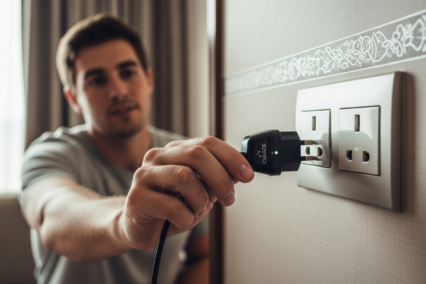
Yes, if you go from Canada to the Netherlands, you will need travel adapters. The power plug you use in Canada will not fit in a Dutch outlet. You have to use a power plug travel adapter. This is a small thing, but it is important. It connects your plug to the outlet in the other country.
Sometimes, you might need a voltage converter, too. This is not the same as an adapter. A voltage converter makes the Dutch voltage safe for your things. It is good to know when you need only a travel adapter or when you also need a voltage converter. Let’s talk about how to pick the right travel adapter and see when to use a converter.
Choosing the Right Adapter for Dutch Electrical Outlets
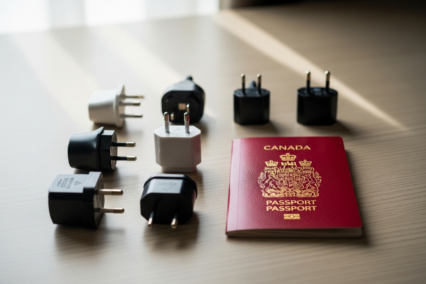
When you are looking for travel adapters for a trip to the Netherlands, you need to pick one that works with type c and type f outlets. The best and easiest option is to buy a power plug adapter made for these socket types.
A type c adapter will work well. It fits type c outlets, and it also fits into type f outlets. Type f adapters will get the job done too. But type c is just a bit better if you plan to go to other European places with ungrounded sockets. If you want something easier for many trips, a world travel adapter is a good choice. The world travel adapter can have different settings or attachments. These help you use it with different power plugs around the world. It’s a good thing to have for anyone who travels a lot.
When picking an adapter, keep these tips in mind:
-
Look for an adapter that says right on it that its made for type c and type f plugs.
-
If you want to go to other countries later, a universal or world travel adapter is a good idea.
-
Some travel adapters come with usb ports, so you can charge phones and tablets. That can be very handy.
-
There is a great selection of travel adapters online and at electronics stores. Be sure to get one before you fly.
This way, you can be sure your electronics will work with type c outlets and type f outlets wherever you go.
When a Voltage Converter Is Needed
A voltage converter is an important tool for some Canadian electronic devices when you use them in the Netherlands. You will need the voltage converter if your device is single voltage and made for Canada’s 120V power supply. If you plug a 120V device into a 230V outlet without the converter, it will get too much power. This can break your device for good.
To find out if you need the converter, look at the power label on your device. If you see “INPUT: 120V” or words like that, you should not use it in the Netherlands unless you have a voltage converter. This often applies to simple things like some hair dryers, curling irons, and electric razors.
But, you do not need a voltage converter for devices that work with both kinds of power. Most new electronic devices, such as laptops, phone chargers, and camera batteries, have a power supply that can handle different voltages (for example, 100-240V). With these, you only need a plug adapter. Be sure you check each device before you pack your things.
Safe Usage of Electronic Devices Abroad
Using your electronic devices in the Netherlands is easy when you know what you need. The main thing is to be sure that each device gets the right voltage. If your electronic devices can handle two voltages, the device’s own power supply will take care of this. If they have only one voltage, you need to use a converter.
When you check what voltage your device can handle and use the right power supply, adapter, or converter, you can plug in with no problem. Do not just plug in your device and trust the default settings. Always check first. Now, let’s see how to safely plug in your electronic devices and what to do with high-wattage items.
Charging Phones, Laptops, and Everyday Electronics
Good news for people who love tech and travel: you will find it easy to charge cell phones, laptops, and tablets in the Netherlands. Most modern pieces of electrical equipment are made with dual-voltage. Their chargers switch by themselves to the 230V power that is normal in the Netherlands.
To be sure, take a look at what it says on your charger. It should show something like “INPUT: 100-240V.” If you spot this, your device will be fine. You only need your appropriate charging cable and a plug adapter to fit the wall socket.
It’s safe to charge these devices, since they are built to work in many places. Just bring the right plug adapter for Type C or F outlets, and you can keep your gadgets charged for your whole trip with no trouble.
High-Wattage Appliances: Hair Dryers and Beyond
High-wattage items like hair dryers, hair straighteners, and travel kettles need special care when you go on a trip. These things use a lot of power, and most are single voltage. That means they work best with the 120V power supply you find in Canada. To use them with the 230V power supply that is common in the Netherlands, you will need a heavy-duty voltage converter.
A regular travel voltage converter often will not be enough for these appliances. You should use a converter with a wattage rating higher than what your device needs. If the converter does not have enough power, it can damage both the voltage converter and your appliance.
Because using the right voltage converter can be costly and a hassle, you might want to leave these high-wattage items at home. Most hotels in the Netherlands will have hair dryers in the room. If there is not one, you can get an affordable travel hair dryer that is dual-voltage before you go, or you can buy one after you arrive.
Buying Adapters Before and During Your Trip
To keep things easy, it’s a good idea to get your travel adapters before you leave Canada. This way, you will have the right power plug travel adapter as soon as you get to where you go. There’s a great selection of travel adapters at many stores, so you can pick one that is best for you.
But if you forget or lose your adapter, don’t worry. You can get one after you land in the Netherlands. Let’s talk about where you can find travel adapters both when you are still in Canada and when you arrive in the Netherlands, and use some local info to help you out.
Where to Find Travel Adapters in Canada
Getting your travel adapters before you leave is the easiest way to go. In Canada, you will find many places to get travel adapters that will work for your trip to the Netherlands. This means you can pack your personal electrical items and feel sure you’re set.
Big electronics stores, department stores, and shops that sell travel things are good spots to look for a travel adapter. These stores often have many types, from single travel adapters to a full world travel adapter kit. If you want something fast and easy, go with an online site like Amazon. They have a big mix of travel adapters. Plus, you can read what other people say before you buy. Shopping from your own home is much better than looking for travel adapters in a new place when you get there.
Here are some places in Canada where you can get a travel adapter:
-
Electronics stores (e.g., Best Buy, The Source)
-
Luggage and travel stores
-
Major department stores
-
Online marketplaces like Amazon.ca
-
Some larger pharmacies with travel sections
Shopping Options Upon Arrival in the Netherlands
If you get to the Netherlands and see that you left your adapter at home, you do not have to worry. Travel adapters are easy to find in most Dutch cities. You can look for them as you go out to see ideas of interesting places.
The airport electronics shops will be the first place to check. These are quick to get to but the prices can be high. When you are in the city, you can go to large department stores and electronics stores, like MediaMarkt. Some bigger supermarkets also have a great selection of travel adapters.
Having this local info can really help. If you ask someone for a “reisstekker,” they will know you want a travel plug and can send you to the right spot. It’s always good to buy one before you leave home, but you know the options are there if you need them when you get in. This helps each traveller feel at ease.
Power Outlets in Hotels, Airports, and Homes
When you travel in the Netherlands, you will see that the power outlets are pretty much the same everywhere. The type C and F sockets are the standard ones you will find in hotels, airports, and homes. Most of mainland Europe uses these, so this makes things easy for travellers.
Some newer hotels want to help people coming from other countries. So, they might give you other charging choices, like universal outlets or plug-in USB ports. It helps to know what options you can get at your hotel or wherever you are staying. We will talk about what you can find in hotels and what you will see in most people’s homes when it comes to type C and F sockets.
Universal Outlets in Dutch Accommodations
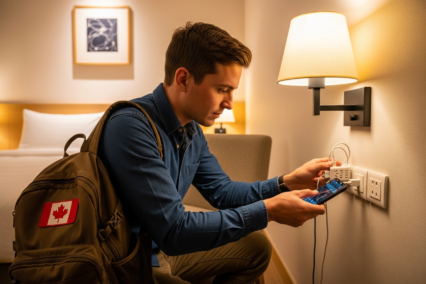
Many hotels in the Netherlands now offer universal power outlets, especially those that serve business and leisure travellers from other countries. These outlets can handle many plug types. This even covers the North American domestic plug. So, you might not need to bring an adapter for your hotel room. Some hotels also have a plethora of different charging ports, including built-in USB sockets. This can make things much easier for you.
But, you should not count on every hotel having this feature. Older hotels or ones that charge less money may not have these outlets. If you stay in a modern and new hotel, it is more likely to be there.
It’s a good idea to think about your own personal circumstances. Even though it’s nice when hotels have universal outlets, bringing your own adapter means you can charge your stuff anywhere. You will be ready for any hotel, no matter what they offer. If you worry about this, you should ask your hotel before you go.
What to Expect in Private Residences and Public Spaces
Outside of hotels that focus on tourists, the normal Dutch power sockets you will see are Type F. You’ll find this outlet type in private homes, cafes, libraries, and other public spots in the rest of the country. It is very rare to see a universal outlet in these places.
So, if you stay in an Airbnb, visit a local friend, or want to get work done in a coffee shop, you have to bring the right power plug adapter. The electrical system in Dutch homes and public areas is set up the same as in most of mainland Europe. You must use a Type C or Type F adapter for your devices.
You should not expect these places to give special power sockets for foreign plugs. People in the Netherlands use type C and type F plugs for all their things, and the power setup matches this standard. If you plan to go around the rest of the country beyond your hotel, packing your own adapter is the best way for you to keep your devices charged.
FAQs (Frequently Asked Questions)
This part gives answers to the top questions that people from Canada have about power outlets and using electronics in the Netherlands.
Can I plug my Canadian phone charger directly into Dutch outlets?
No, you cannot plug it in right away because the plug type is not the same. But most cell phones today have chargers that use dual voltage. If your charger is dual voltage, you just need a simple power plug adapter. This will let your power plug fit into the Dutch outlet.
Do I need a converter for my laptop or camera?
It’s almost always the case that you don’t need a voltage converter. The power supply for most new laptops and digital photo cameras is set up for dual voltage. This means these electronic devices will work in many countries. You will just have to get a plug adapter so that the plug fits into the Dutch socket. You do not need to use a voltage converter. Be sure to look at the label on your device to check.
How can I check if my device is dual voltage?
Check the label on the power plug or the device. You will see the voltage level marked there. If it says “INPUT: 100-240V,” this means the device is dual-voltage. If it says “120V,” the device is single-voltage. You will need a converter for it in the Netherlands.
Conclusion
To sum up, it’s important to know about the different plug types in the Netherlands if you want to travel or move there from Canada. The voltage and frequency there may not be the same, so it’s good to be aware of this before you go. If you check your electronics for what they need and bring the right travel adapters, you can avoid any trouble charging your things. It helps to know what to expect, no matter if you stay in hotels, private homes, or spend time in public spaces. This way, you will have a better time while you are away. With the right info, you will be able to stay connected and keep your devices powered. If you need more help or want to ask anything about this topic, you can always reach out.