Key Highlights
Here are the most important things you need to know for your trip to South Africa:
-
South Africa mostly uses Type M plugs. You can also see Types C, D, and N plugs in some places.
-
The standard voltage in South Africa is 230V and the frequency is 50Hz. This is not the same as Canada’s voltage, which is 120V.
-
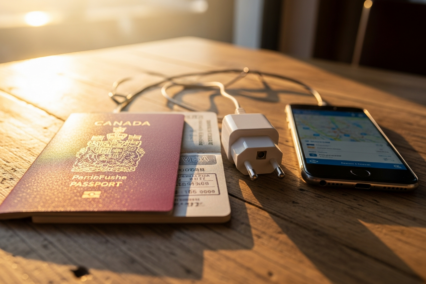
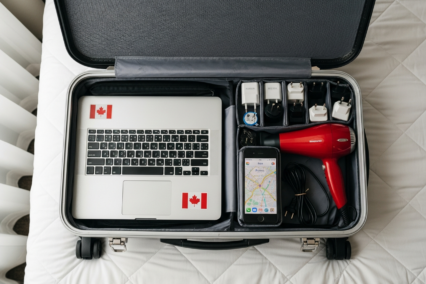
You will need to get a travel adapter for your Canadian electronics.
-
Take a look at your devices to see if they say “110-240V.” If your device is not dual-voltage, you may also need a voltage converter.
-
It’s smart to buy travel adapters for Type M and other plugs before you leave Canada.
-
Types D and M plugs both have round pins, but you can’t use them the same way. Make sure you have the adapter that fits your plug.
These tips will help you manage your electronics safely while in Africa.
Introduction
Are you getting ready for a great trip from Canada to South Africa? There is so much to see, from the busy city life in Cape Town to the amazing sights in Kruger National Park. You will have an adventure in Africa. But before you leave, you need to remember one important thing: power. The electrical outlets in South Africa are not like the ones you use in Canada. You will need to be ready for different plugs, adapters, and voltage. This guide will show you what to bring and what to look for, so your devices stay charged during your trip.
Overview of Electrical Outlets in South Africa
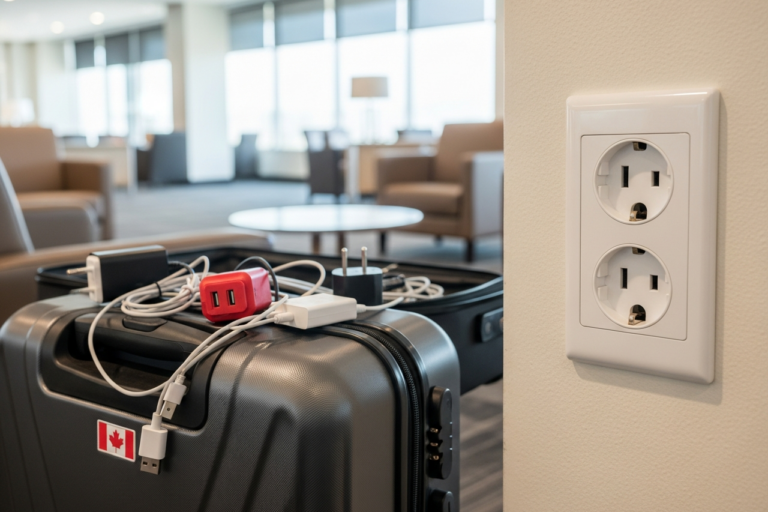
When you go to South Africa, you will see that their electrical system is not the same as in Canada. The sockets in South Africa use different plugs. The one you will see the most is the Type M plug. This is the main plug type in Africa, but you might find types C, D, and N too, in some places.
Because there are a few different plug types, it’s a good idea to get the right adapter for your things. This way, your stuff will work, and you will not have a problem. Let’s talk about the plug types that are in South Africa and how they are not the same as what you see in Canada.
Common Plug Types Found Across South Africa
South Africa has a mix of plug types. While some are used more than others, it helps to know about all the plug types you might see as you travel in Africa.
The plug type you will find the most in South Africa is Type M. This one stands out here. It is a big plug with three round pins set in a triangle shape. This type is the main standard in the country. Still, you may come across other plug types. This can happen in older buildings or in some places where you stay.
These are the main plug types you can find in South Africa:
-
Type M: This is the top plug type. It has three thick, round pins.
-
Type N: This is called the new standard. But people do not use it much yet. It comes with three round pins in a V shape.
-
Type C: This plug is the “Europlug.” It has two pins. People see it from time to time, but not often.
-
Type D: This is an older type. It has three smaller round pins. This one looks a bit like Type M but the two plugs cannot be swapped.
So, when you go to South Africa or travel around Africa, knowing about these plug types will be useful. Some buildings—especially old ones—could use more than one plug type, so it is always good to check what plug you will need.
Key Differences from Canadian and American Outlets
The differences between South African and Canadian/American electrical systems go beyond just the shape of the plug. The voltage and frequency are also distinct, which affects device compatibility. In Canada and America, the standard is 110-120V and 60Hz, while South Africa operates at a much higher voltage.
This higher voltage means you can’t simply use a plug adapter and expect all your devices to work safely. For electronics that are not dual-voltage, you will need a voltage converter to step down the power from 230V to a level that is safe for your device.
Here’s a quick comparison to highlight the key differences:
|
Feature |
Canada/America |
South Africa |
|---|---|---|
|
Plug Types |
A, B |
M, C, D, N |
|
Voltage |
110-120V |
220-230V |
|
Frequency |
60Hz |
50Hz |
Plug Types Used in South African Sockets
Getting to know the different plug types in South Africa can feel a bit tricky at first. The country uses a few types, but there is one you are most likely to find. The main plug you need is the Type M.
Even though Type M is the main plug in South Africa, the South African government has started to use Type N as the new standard. The goal is to be more in line with other countries, like Brazil. But most places still use the Type M plug, and you will see it a lot more often. In some older spots, you might come across Type D as well. Now, let’s take a closer look at what these plug types mean for you in Africa.
Type M, Type D, and Type N Explained
If you know the details of each plug type, you will find it easy to pick the right adapter. Type M, Type D, and Type N plugs all come with round pins. But, there are important size and shape differences in each one that mean you can’t use them together.
You will want to use the Type M plug the most. It is big and sometimes called BS 546. This is the normal plug in South Africa. The Type D plug is like a small Type M plug, but the pins are thinner and also shorter. Because of this, you can’t fit a Type D plug in a Type M socket.
Here’s a quick look at the different plugs:
-
Type M plug: This is the plug you see most often. It has three big round pins. Anyone going to South Africa should have this.
-
Type D plug: You may find this old three-pin plug in older buildings. It is smaller than a Type M and will not work in a Type M socket.
-
Type N plug: This is the new type but it is not common yet. It also has three round pins and looks a bit like a Swiss plug.
This will help you know more about plug types and round pins if you are in Africa or any older buildings. Make sure you have the right adapter and plug for the socket you find there.
Compatibility with North American and UK Devices
When you want to use your devices from Canada, the US, or the UK in South Africa, you will run into two main issues. The first is the type of plug they use, and the second is the voltage. Devices from Canada and the US have Type A and B plugs. UK devices use Type G plugs. None of these work right away in African sockets.
You will always need a plug adapter so your device can connect to a South African socket. But there is another big thing to think about. The voltage in South Africa is 230V. In Canada, the voltage is only 120V. Many simple devices, like phone or laptop chargers, are “dual-voltage.” This means they work with both types of power supply. To be sure, check your device’s label.
If your device works on just one voltage (if it says only 110-120V), you need a voltage converter as well as a plug adapter. If you use a single-voltage device in a 230V African outlet without a converter, it will likely get damaged or stop working. UK devices run on 230V, so they’re a match for the voltage in Africa, but you will still need a plug adapter for them for south africa.
Using the right plug adapter and, if needed, a voltage converter keeps your laptops and other electronics safe and working while you travel. Always check your power supply and understand the compatibility before plugging into any African outlet.
Voltage and Frequency Standards in South Africa
Beyond the shape of the plug, the way the electricity works in South Africa is not the same as what you will find in Canada. The standard voltage in South Africa is 230V, and the power runs at 50 Hertz. In Canada, it is only 120V and the frequency is 60 Hertz.
This difference is important for the safety of your electronic devices. If you plug something made to work on 120V into a 230V outlet, that can break the device for good. So, it is important to know about the voltage and frequency before you plan on using your appliances in Africa. Having the right plug adapter is not enough. You also need to think about the voltage and how many Hertz the power has. Let’s talk about what standard voltage means for people in Canada and their electronic devices. It also matters what to do with the different power frequencies.
Standard Voltage — What Canadians Need to Know
For people in Canada who plan to go to South Africa, the big thing to remember is that the voltage jumps from 120 volts to 230 volts. This change is important and can hurt your electronics if they are not made for it. The first thing you need to do is check your device’s power supply or charger.
A lot of modern electronics, like laptops and phone chargers, are made for travel. They are usually “dual-voltage,” so they work with many voltages. If the power brick says something like “Input: 100-240V,” then you just need a plug adapter to use it in Africa.
If your device only says “110V” or “120V” on it, then it is single-voltage and will not work with outlets there.
-
You will need a voltage converter or a transformer to stay safe in south africa.
-
This device changes the 230 volts from the wall and brings it down to 120 volts, so that your stuff runs right.
-
Items that use a lot of power, such as hair dryers, often need a special heavy-duty converter.
Frequency Details and Device Compatibility Concerns
Another thing to think about is the electrical frequency. It’s measured in Hertz (Hz). In Canada, the frequency is 60Hz. In South Africa, it’s 50Hz. For most new electronic devices, this should not be a problem.
Things like laptops, tablets, or phone chargers from canada are made to work with both 50Hz and 60Hz, so you will not see much change in how they work. The power label on dual-voltage electronic devices will usually say “50/60Hz” to show this.
But, sometimes the different frequency can be a problem for appliances that have motors or for devices with clocks. For example, an electric alarm clock bought in canada might run slower or not show the right time on a 50Hz system in africa. Heaters or other simple appliances mostly work fine, but you should always look at the device’s instructions to check the compatibility with the voltage and hertz before you use it in south africa or any other new place.
Essential Travel Adapters and Power Solutions for Canadians
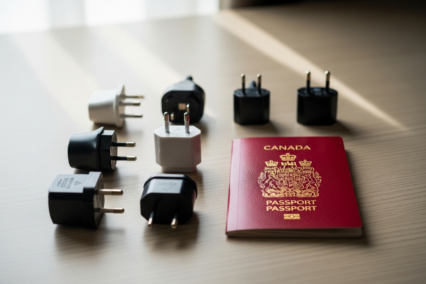
If you are a Canadian traveller, here is what you need to know. You must bring travel adapters with you to plug your things into African outlets. The most common plug is Type M, so you will need a Type M adapter.
A simple adapter just changes the shape of the plug. It does not change the voltage. If you travel often, a universal adapter can also be a good buy, but make sure yours works with the Type M plug. You may also want to bring a power bank. It gives you a way to charge your phone when you are out. Now, let’s go over how you can pick the right adapter and where you can get one.
Choosing the Right Adapter for South African Outlets
When you pick a travel adaptor for your trip, you want to make sure it works with the Type M socket. This socket uses a large plug with three prongs, and you will see it almost everywhere you go in South Africa.
Many people think about using a universal adapter that has different plug types in one device. This sort of adapter can be handy. But, you need to make sure it will work with the Type M plug. Not every universal adapter comes with that plug type, even though you need it in Africa. Always look at the package or product details to check if it will fit the Type M socket.
Think about these tips before you buy:
-
Prioritize Type M: You should get a Type M adapter above all others. Buying one made just for Type M or a full set can be helpful.
-
Grounded is better: It’s best to pick a grounded adapter that has all three prongs. It’s safer for your devices.
-
Consider a power strip: A Canadian power strip paired with one Type M adapter means you can use it to charge more than one device at a time from one outlet.
This way, you know your plug, adapter, and other devices will work during your year or even longer stay in South Africa. Check for type m, socket, plug type, and compatibility with your adapter to make sure it is good to go.
Where to Buy South Africa Power Adapters (In Canada & On Arrival)
The easiest way to avoid stress is to buy your power adapters before you leave Canada. This makes sure you have what you need when you get to South Africa. You can find a type M adapter on online stores like Amazon and eBay. They sell single adapters or packs with more than one. Some travel stores and electronics shops also sell them.
If you forget to get an adapter ahead of time, you still may find one when you land. Major airports in Africa like those in South Africa sometimes have adapters, but the price can be higher. Some hotels or other places where you stay might have spare adapters for guests, but this is not something you can always count on.
The best move is to buy your adapter before you go. If you wait until you are already in South Africa, you might have trouble finding one, and you might spend your trip looking for an adapter instead of enjoying your vacation. If you pack one before you leave, you know you can charge your phone or camera right away and catch the first African sunset.
Conclusion
To sum up, knowing about electrical outlets in South Africa is important if you are coming from Canada. It will help a lot to learn about the plug types, how the voltage works, and the frequency, before you go. This way, you avoid any problems when you need to use or charge your things. This is good advice, whether you want to stay in South Africa for a short time or a long one. Remember to grab the right travel adapters for South Africa or plan to buy one when you get there. If you want help or have any questions about plugs, voltage, or travel adapters in Africa, you can always ask for a free chat about your needs!