Key Highlights
-
Russia uses type C and type F electrical outlets. These are not the same as the ones used in Canada.
-
The standard voltage in Russia is 220V. This is double the standard voltage in Canada, which is 120V.
-
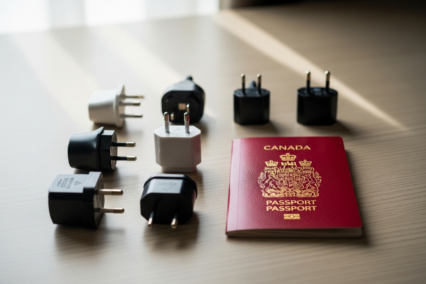
If you travel from Canada to Russia, you will need a plug adapter for your devices to fit into Russian sockets.
-
Some Canadian devices are single-voltage. You may need a voltage converter to use them in Russia.
-
Please check your devices to see if they support dual voltage. Look for labels like “INPUT: 110-240V” before you leave on your trip.
-
If you use electronics that are not compatible with the voltage or plugs, you can damage them.
Introduction
Planning a trip to Russia? You are about to have a great time! But before you pack your bags, there is one big thing every Canadian should think about—the electrical outlets. In Russia, the power system is not the same as ours. In this guide, you will find all you need about plug types, voltage, and if you should get a plug adapter, travel adapter, or even a voltage converter to charge your stuff and keep your devices safe during your time in Russia.
Understanding Russian Electrical Outlets for Canadian Travellers
When you travel to other countries, you will often see different electrical outlets. If you are a Canadian going to Russia, you need to know about the plug types and sockets there. This can help you protect your electronics and charge them the right way. If you do not prepare, you could damage your devices or not be able to use them at all. You would be doing this at your own risk.
It is good to bring the right plug adapter or travel adapter with you. This will make your trip smoother. You need to know what plug types and sockets Russia uses, so you can pick the right equipment for your needs. Let’s look at the common electrical outlets and adapters you will see in Russia.
Common Plug Types in Russia: Type C and Type F
Russia uses two main types of power plugs. These are type C and type F. You will see them in most places across Europe. They are not like what people in Canada use. In Canada, you will find plugs with flat pins.
The key thing to know is the shape. Canadian plugs have flat prongs, but the ones in Europe, including Russia, are round.
-
Type C: This type comes with two round pins. It does not have a ground pin. You see this plug in a lot of countries around the world.
-
Type F: People call this the “Schuko” plug. It also has two round pins. But you will notice it has two clips on the side for grounding. Sockets in Russia take both type C and type F plugs.
You will notice that most electronic devices, like phone chargers or laptops, sold in Europe have either type C or type F power plugs. If you bring your devices from Canada to Russia, you need to use the right adapter that fits these plug types and sockets.
Physical Features of Russian Power Sockets
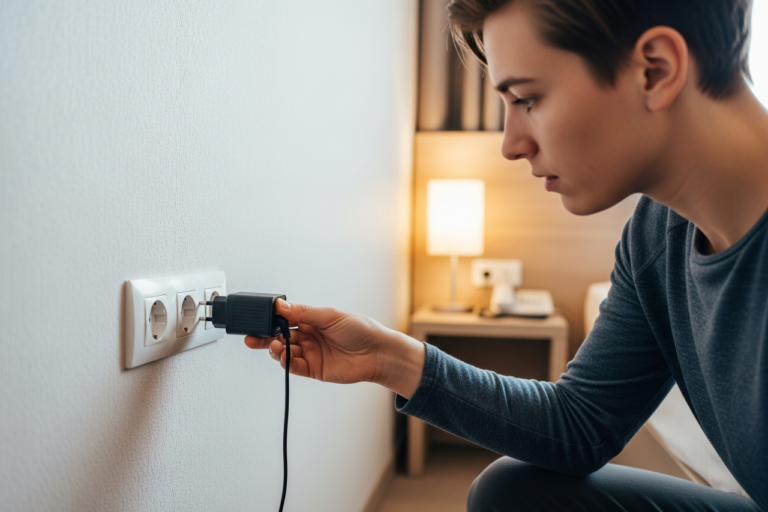
Russian power sockets use type C and type F plugs. Both plugs have two round pins. The sockets are set into the wall. This helps keep the connection tight and adds protection so you don’t touch the pins by accident. The holes are round. This shape fits the round pins.
These sockets are different from the flat, blade-style sockets you see in North America. If you use a Canadian plug, it won’t fit in a Russian socket unless you use an adapter. The CEE 7 standard, which includes type F, has this safe and recessed design.
The good news is that these sockets are not just found in Russia. You will see them in other parts of Europe, like Germany, Austria, the Netherlands, and Spain. So, if you buy a good adapter for your Russian trip, you can use it later when you travel in Europe too.
Voltage, Frequency, and Device Compatibility
Beyond just how the plug looks, the main thing you need to know is that Russia has a different power supply. The voltage and frequency in Russia are not the same as in Canada. This can change how your electrical devices work there, and it affects their compatibility. Using your device with a power source that does not match can be dangerous.
You need to check your electrical devices before you plug them in. Some of them may work fine if you just use a plug adapter, but some will need a power converter so they are safe to use and do not get damaged. Now, we can look at the details and see what you need to use for your devices in Russia.
Russia’s Voltage and Frequency Compared to Canada
The electrical systems in Russia and Canada are fundamentally different. Russia operates on a higher standard voltage, which is a critical factor for any traveller bringing electronics. The frequency, measured in Hertz (Hz), also differs slightly, which can affect certain types of appliances.
Here is a simple comparison of the supply voltage and frequency:
|
Country |
Standard Voltage |
Frequency |
|---|---|---|
|
Russia |
220 V |
50 Hz |
|
Canada |
120 V |
60 Hz |
What does this mean for you? Plugging a Canadian device designed only for 120V into a 220V Russian outlet will overload it, likely causing permanent damage and creating a safety hazard. Always verify the voltage requirements of your devices before attempting to use them in Russia.
Safe Use of Canadian and North American Devices in Russia
Safely using your electronics in Russia starts with knowing if they are single voltage or dual voltage. It is not safe to plug a single voltage 110V or 120V appliance into a Russian outlet. Most laptops, phone chargers, and some other new devices are dual voltage. They can work with both 120V and 220V. To check, look at the power brick or rating plate for words like “INPUT: 110-240V, 50/60 Hz.” If you find this, you only need a plug adapter.
But, for single voltage appliances like some hair dryers, electric shavers, or older items, you need to use a voltage converter or a transformer. This will turn the 220V from the wall into power that your appliance can use safely. Plugging a 110V appliance straight into a 220V outlet without a converter can be very dangerous.
Here are some things to remember for safe use:
-
Always check your appliance for the voltage rating.
-
Use a simple plug adapter if your device is dual voltage.
-
Use a voltage converter for single voltage appliances.
-
Never plug a 110V/120V appliance into a 220V outlet.
Conclusion
To sum up, knowing about Russian electrical outlets is a good idea for any Canadian who wants things to go well on their trip. There are different plug types, voltage, and frequency, so it’s smart to know about these things before you go. Make sure you check the compatibility of your devices. Use a travel adapter that you can count on. This will help your plugs and gadgets work in Russia without trouble. If you do these things, you can relax and enjoy your time there without thinking about electrical problems. If you want help or have questions about adapters, plug types, voltage, or compatibility, you can always ask for more info or a consultation. Safe travels!
Frequently Asked Questions
Do I need a travel adapter or voltage converter for Russia from Canada?
Yes, you will need a travel adapter or plug adapter to use your Canadian plug in Russia. Russian sockets are not the same as the ones in Canada. If your device is not dual voltage and can’t work with Russia’s 220V, you will also need a voltage converter. Always look at your device’s label first to know what kind of adapter or converter you may require.
How can I check if my Canadian electronics are compatible with Russian outlets?
Check the power label on your electrical appliances. If you see “INPUT: 110-240V” or something like it, that means your device is dual voltage. It will work with Russia’s voltage, so you only need to get a plug adapter for your plug. But if it just says 110V or 120V, it will not work with Russia’s voltage. You will have to use a voltage converter.
Where can Canadians buy a reliable travel adapter for Russia?
You can buy a travel adapter for Russia at many electronics stores or travel shops in Canada. Big shops also have them. You can get one on the internet too, like from Amazon. Be sure to get a “Type C” or “Type F” plug adapter or a universal plug adapter. That way, the adapter will work for plug types in Russia.