Key Highlights
-
In Peru, the electrical outlets are Type A and Type C. These may not work with all plugs from Canada.
-
The standard voltage in Peru is 220V. This is much higher than the 120V used in Canada, so some devices will need a voltage converter.
-
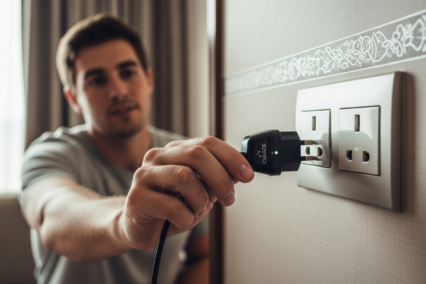
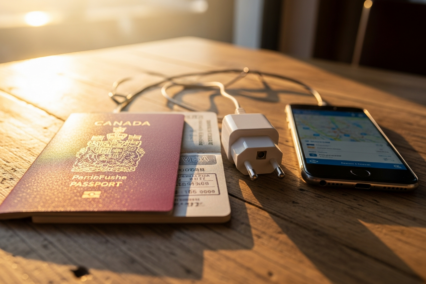
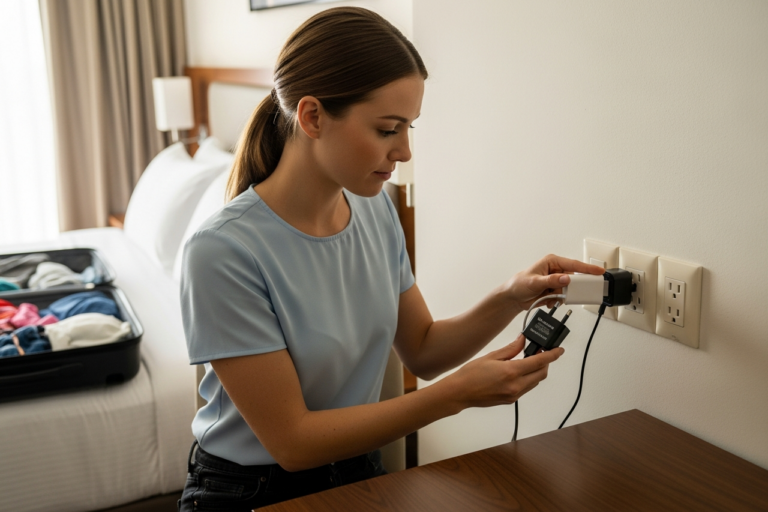
You will need a power adapter to plug your Canadian devices into outlets in Peru.
-
Many new electronics such as laptops and phones are dual voltage. These will only need an adapter, not a converter, to work in Peru.
-
It is a good idea to bring a universal travel adapter and always check your device’s voltage before using it.
-
You may find adapters in Peru, but it’s better to bring one to be ready when you get there.
Introduction
If you plan to go from Canada to Peru, you are in for a fun trip. You will see the amazing views, like Machu Picchu. But before you start to dream and pack your things, there is a small but important thing you must think about: electricity. The outlets and voltage in Peru are not the same as in Canada. This can affect how your stuff works.
In this guide, you will find out all you need about power, plug types, travel adapters, and if you need a converter while in Peru. With this help, you can make sure the things you bring with you stay charged and safe.
Understanding Electrical Outlets in Peru
When you go to Peru, you will see that there are different types of outlets than in Canada. In Peru, they use Type A and Type C sockets the most. It is good to know this, so you can keep your electrical devices working when you travel.
The outlets can look different in each place. Some have a hybrid outlet that can take more than one plug type. Even with that, you should still bring the right adapter, so you do not get caught off guard. Here, you can find what plug types you will see in Peru and what this means for your electronics from Canada.
Common Plug Types Found in Peru
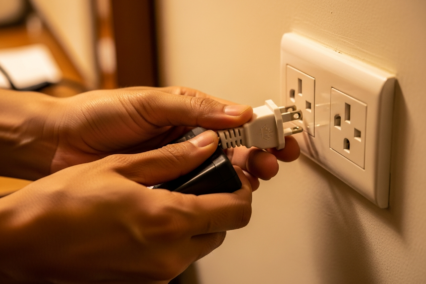
Peru uses a few different plug types. The main ones are Type A and Type C. Type A plugs have two flat parallel pins. You should know this type, as it is used a lot in North America. So, some plugs from Canada can go right into a Type A outlet. But there is a catch you need to know.
You will also see the Type C plug in Peru. This one has two round pins and is often used in Europe. You will come across outlets that accept only the Type C plugs. That means you will need an adapter.
But what about the three-pronged Canadian plugs? These are called Type B. They will not fit into either Type A or Type C sockets without using an adapter.
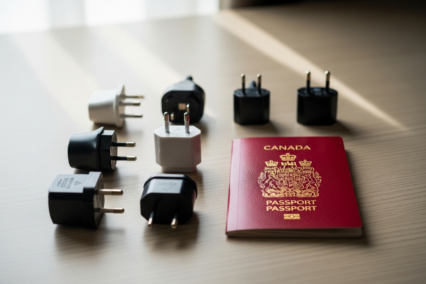
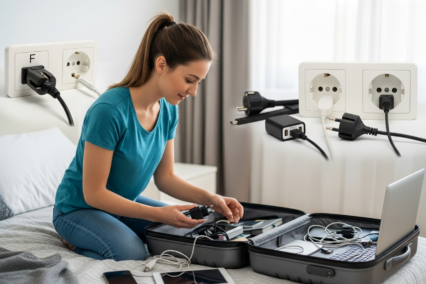
Because there is a mix of plug types, it is best to come ready. Take a 3-to-2 prong adapter for your Type B plugs. You might also want a universal adapter. This way, you know you can plug in your gear and use it with any outlet you find in Peru.
Outlet Design and Compatibility for Canadian Devices
In Peru, the outlet design can be pretty helpful in some places. You will see this the most in new hotels and tourist spots. Sometimes, there is a hybrid outlet that lets you use both the flat pins of Type A plugs and the round pins of Type C plugs. This helps a lot of people because it works with many types of devices.
Also, some newer places and a few adapters now have USB outlets. With these, you can plug in your phone or tablet right with a USB cable. This makes things easier and you don’t need to bring so many adapters. But, you should know that not every place will have this.
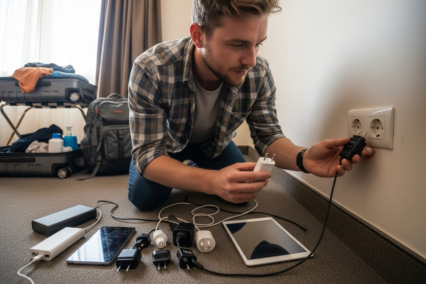
If you want to make sure all your Canadian devices work, especially the ones that have a three-prong plug, the best plan is to pack an adapter. It is true that you could pick up an adapter in Peru. But if you bring one with you, you can start to charge your things as soon as you get there and won’t have to look for a hardware store.
Voltage and Frequency Standards in Peru
Besides the shape of the plug, it is important to think about the power supply, standard voltage, and frequency when you go to Peru. The power supply in Peru is set at a standard voltage of 220V and the frequency is 60 Hz. This is different than what you use in Canada.
Knowing about these voltage types helps you keep your electronics safe from harm. The frequency is the same as in Canada, but the standard voltage is much higher in Peru. That can be a big problem for some devices. We are going to look at what this change means for your gadgets and find out when you might need more than a regular adapter.
Voltage Differences: Canada vs. Peru
The most significant electrical difference between Canada and Peru is the standard voltage. The electricity supplied to homes and businesses in Peru is 220 volts, which is much higher than Canada’s 120 volts. Plugging a device designed only for 120V into a 220V outlet can cause serious damage, so it’s something you must pay attention to.
Fortunately, many modern personal electronics are built for travel. Devices like laptops, cell phones, and camera chargers are often “dual voltage,” meaning they can handle a range from 100V to 240V. For these, you won’t need a voltage converter. Always check the label on your charger or power brick. If it says ‘INPUT: 100-240V’, you’re all set for using it in Peru with just a plug adapter.
Here is a simple comparison:
|
Country |
Standard Voltage |
|---|---|
|
Peru |
220 V |
|
Canada |
120 V |
How Frequency Impacts Your Electronics
Frequency is measured in Hertz (Hz). This means how many times the electric current changes direction in one second. In Peru and Canada, the frequency is 60 Hz. This is good for travellers. The same frequency makes things simple. You do not need to worry about your electronic device working too fast, too slow, or not at all because of the frequency.
This is important for things with motors or clocks. But for most people, the main thing to think about is still the voltage. A dual voltage electronic device is made to work with 50 Hz and 60 Hz. That is why you see ’50/60 Hz’ on the label.
So, you do need to be careful with a single voltage device. But, because Peru and Canada both use the same frequency, that is one less thing to think about. The main thing is to always check the voltage rating for any electronic device you use in Peru. It must handle Peru’s 220V power supply.
Adapter and Converter Essentials for Canadian Travellers
If you are coming from Canada to Peru, you need to know that their power system is different. You have to get the right electronics ready before your trip. There are two main things you should think of: a travel adapter and a voltage converter. A power adapter lets you plug your Canadian device into a Peruvian outlet. A voltage converter changes the level of electricity going into your device.
It is important to know what you need for your trip to Peru. That keeps your stuff from being ruined. Most things like your phone or laptop only need travel adapters. Some things, though, need a voltage converter to work right and not get wrecked. Let’s talk about how you can pick the right adapter and find out if you also need a converter when you travel from Canada.
Choosing the Right Power Adapter for Peru
Picking the right power adapter for Peru is easy once you know what plug types to use. In Peru, you will see Type A and Type C sockets. The best choice is a universal travel adapter. This kind of adapter works with many outlet types. It is good for Peru, and you can use it in other places too.
When you go to buy an adapter, keep these things in mind:
-
Compatibility: Check if it works with Type A and Type C outlets.
-
Plug Support: See if it fits your Canadian two- or three-prong plugs (Type A and B).
-
USB Ports: Many adapters now have USB ports. You can charge your phones and tablets with these, so you do not need the big charging bricks.
You can get adapters in a hardware store or at the airport in Peru. But it is much easier if you buy one before you leave home. This way, you have it ready when you get there, and you do not have to spend your trip looking for a new adapter.
When Do You Need a Voltage Converter?
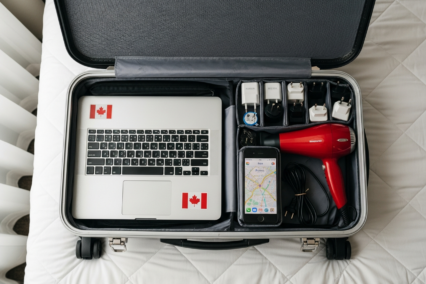
You need to use a voltage converter in Peru if you bring an electronic device that is not dual voltage. This is the case with many “single voltage” devices, like hair dryers, straighteners, or electric razors bought in Canada. Most of the time, these gadgets only work with 120V.
To see if you need a converter, look at your device’s label. If it only says ‘110V’ or ‘120V’ and does not show a range, then you have to use a voltage converter. If you plug a single voltage, 120V appliance into a 220V plug in Peru without a converter, it can damage the device inside. It can also be unsafe.
But if your electronic device is dual voltage and the label shows ‘INPUT: 100-240V’, it can work on Peru’s voltage without trouble. Then you will just need a plug adapter. Some people like to buy an adapter that also works as a voltage converter or buy travel-sized, dual voltage appliances for their trips.
Using Laptops, Phones, and Other Electronics In Peru
Good news for tech-savvy people or anyone who travels: you can use your main electronics like cell phones, laptops, and tablets in Peru with little trouble. These items are made to be ready for the world. They use power chargers that are dual voltage, so you don’t need a voltage converter. Your gear can work with the 220V electricity that Peru has.
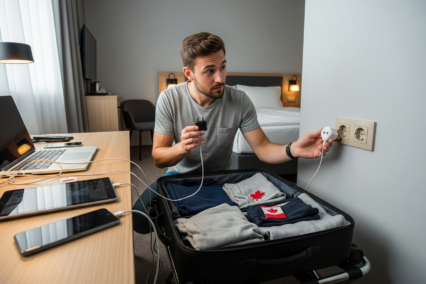
But you still need to bring an adapter. This helps your charger from Canada fit into the wall sockets in Peru. Before you pack, check the writing on your charger to be sure about its voltage range. This way, you will be ready to use all your devices the right way. There are also a few things you should know about other Canadian appliances if you want to bring them, not just your laptops or cell phones.
Charging Your Devices Safely
Keeping your personal electronics charged in Peru is simple if you follow some easy steps. Many new chargers for laptops and phones are dual voltage, so you can use them in Peru without a converter. Look at the label on the charger to make sure it says “dual voltage” or “100-240V.”
The big risk is not from the voltage, but from power that goes up and down. This can happen after the power goes out and comes back on. Power surges can hurt your personal electronics. It is a good idea to use an adapter with a surge protector. That way, your device has extra safety for its parts.
For safe charging when you visit Peru, keep these points in mind:
-
Confirm your device is dual voltage (reads ‘100-240V’).
-
Use a quality plug adapter that fits snugly in the outlet.
-
Consider an adapter with surge protection for added safety, especially in more remote areas.
Can You Use Canadian Appliances Without a Converter?
The answer is almost always no. Most small appliances you bring from Canada are not made for travel outside the country. That is not the same as laptops or some other electronics. Devices like hair dryers, curling irons, clothes steamers, and many electric shavers usually run on just one voltage. They work with 120V, which is what you get in Canada.
If you plug a 120V appliance into a 220V outlet in Peru, and you do not use a strong voltage converter, things can go very wrong. The appliance will get almost double the power it should. It might overheat, make smoke, or even catch fire. This will break the appliance for good and can put people at risk.
To keep safe, you must use a voltage converter that matches the power your appliance needs. There is also another simple way. You can buy a travel appliance that works with both voltages, or just use the ones your hotel in Peru has for people.
Practical Tips for Managing Power Needs While Travelling
You need to think ahead when you want to manage your power needs in Peru. It’s important to have the right travel adapters, but you should also keep some other things in mind. For example, what happens if you do not bring your adapter? And what kind of power supply can you get where you are staying?
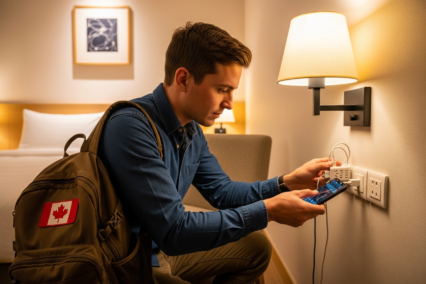
No matter if you stay at a modern hotel in Lima or a hostel in Cusco, it’s smart to get ready so you don’t end up with a dead battery on your phone or other devices. Now, let’s look at if you should bring travel adapters with you or get them in Peru. We can also talk about what kind of power your hotel or hostel will usually offer.
Bringing or Buying Adapters: What’s Best?
The big question for many travellers is if they should pack something or just buy it when they get there. When you go to Peru, it is best to pack your own adapter. If you bring the right adapter with you, you can plug in your phone and other things you need right after you arrive. This is really good after a long flight when you just want to get started.
You can often find an adapter at a hardware store or in tourist spots in Peru. But you may need to look around to find one. Buying an adapter after you get there can take up time, and there might not be a lot to pick from. Prices can also be pretty high at an airport shop.
Here are some reasons why it is better to bring adapters from home:
-
Immediate Use: You can start to charge your stuff as soon as you check in.
-
Guaranteed Quality: You pick out a safe, good adapter before you leave.
-
No Hassle: You do not need to worry about finding a hardware store in a new place.
Options at Hotels and Hostels in Peru
Accommodations in Peru, especially those made for people visiting from other countries, often have what you need for power. Many hotels in Lima and Cusco that cost a bit more may let you use different plug types. Some may offer adapters to borrow at the front desk. But you should not count on this.
You should ask about it, but also bring your own adapter, just in case. Hostels and smaller guesthouses usually do not give out adapters, so having your own is very important. In some spots, especially places with more tourists, hotels may use backup generators to keep power going during power outages.
In the end, while hotels or hostels might have a way to help, bringing your own universal adapter is the best idea. It means you can keep your devices charged anywhere you go in Peru, no matter which place you stay at in Lima or Cusco.
Electrical Safety and Issues to Watch For in Peru
When you travel in Peru, you should pay attention to electrical safety. You may also deal with power outages or electrical surges. The power system is more stable in big cities but there can be more power problems in smaller towns or country areas. Some places might lose power or have strange power jumps more often.
Knowing about the risks will help you protect your stuff and stay away from any unsafe scenario. You should learn about what to do when the power changes quickly and remember some easy safety rules. This will help you enjoy your time in Peru, and your devices will not get damaged. We will talk about how to deal with power outages, ways to handle electrical surges, and some basic safety ideas.
Dealing With Power Surges and Outages
Power outages can happen in some parts of Peru. This is true for remote places or when wet season hits areas like Cusco. Heavy rains come in the wet season and can mess up the power lines. In Lima, power is more stable most of the time, but sometimes there are planned outages so workers can make repairs. When the power goes out and then comes back, electrical surges may happen.
These surges can be bad for your devices. To keep your electronics safe, it is good to unplug them when the power goes out. Wait a few minutes after the power is restored before you plug them back in. In many hotels that welcome tourists, backup generators are there and you may not notice shorter outages.
To make sure your gear stays safe:
-
Use a surge protector, or an adapter that has protection built in.
-
Unplug your electronics when there is a power outage.
-
You can carry a power bank to keep your phone charged when power outages happen.
Essential Electrical Safety Tips for Canadians
Being safe with electricity in Peru is much like what you do at home, but there are a few extra things to think about for people from Canada. The main things to watch out for are the voltage and the way some wiring is done. These can make an unsafe scenario if you are not paying attention.
Never try to force plugs into sockets that do not match. Always use the right adapter. That will help you make a good connection. Be careful with outlets that look broken, loose, or have wires showing. It’s best to use another outlet if one looks unsafe. Do not plug too many things into just one outlet, especially if you use things that need a lot of power.
Key safety tips include:
-
Always look at the voltage on your device before plugging it in.
-
Do not use things that have cords or plugs which are broken.
-
Keep all electronics away from water, especially in bathrooms, as sockets there may not be grounded.
With these steps, you can help avoid an unsafe scenario when in Peru. Always double-check your plugs and adapters, just like you would in Canada.
Frequently Asked Questions (FAQ)
Are you going to Peru and need to know about the power outlets? Many people want to make sure that their personal electronics will work there. In Peru, most outlets take type B or type C plugs. The type B plug is what most people find. The voltage in Peru is 220 volts. Make sure your things are dual voltage, or you will need a voltage converter. If they are not, you should have a converter to use your electronics safely.
The wet season in Peru may bring power outages. During those times, it is smart to have a backup generator ready. This way, you can keep your devices up and running even when the power is out.
Do I need to bring a power adapter to Peru from Canada?
Yes, you should bring travel adapters with you. In Peru, there are Type A and Type C outlets. Your Type B plugs from Canada have three prongs and will not fit in those outlets without an adapter. If you want to use your devices, you need travel adapters. Some places in Peru do not have the right outlets for your plugs, so it’s best to have an adapter so you can charge your items everywhere.
Will I be able to use my phone charger or laptop in Peru?
Yes, you will. Most chargers for cell phones and laptops these days are dual voltage. They be able to work on both Canada’s 120V and Peru’s 220V. You do not have to use a voltage converter for them. You still need a plug adapter so it fits in the Peru outlets.
Are UK or Australian adapters compatible with outlets in Peru?
No, plugs from the UK (Type G) and plugs from Australia (Type I) will not work in Peru by themselves. Outlets in Peru use plug types A and C. If you travel to Peru from the UK or Australia, you will need adapters to use your plugs. This is how you can connect your devices to plug types in Peru.
Conclusion
To sum up, it is important to know about the plug types and voltage used in Peru before you travel from Canada. Make sure you know what plugs are used there and what the voltage is. This will help you bring the right adapters and keep your electronics safe. When you are ready, your trip will go smoother and be more enjoyable. It is also good to learn how you can handle power or plug problems you may find in Peru. If you know what to do, you can avoid problems and not worry too much. With this information, you can enjoy your time in Peru even more. If you have questions or need some help with plug types, voltage, or anything else, you can ask other travelers or talk to someone local so you have a good and safe trip.