Key Highlights
Here are the main things you should keep in mind for your trip to Papua New Guinea:
-
Papua New Guinea uses Type I power outlets. These are not the same as Canadian ones.
-
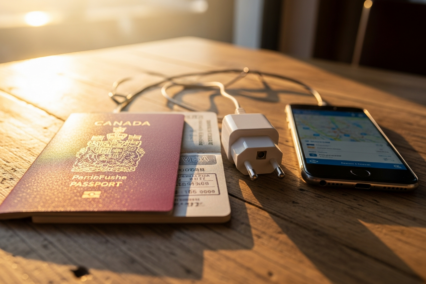
You will need to get a plug adapter so your Canadian devices will fit.
-
The standard voltage in Papua New Guinea is 240V. This is more than Canada’s 120V.
-
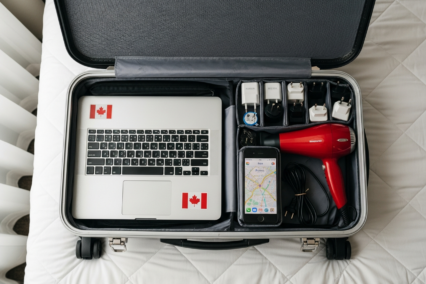
Be sure to check if your devices are dual voltage. If they are not, you will need a voltage converter.
-
The power outlets there are the same as the ones found in Australia and New Zealand.
-
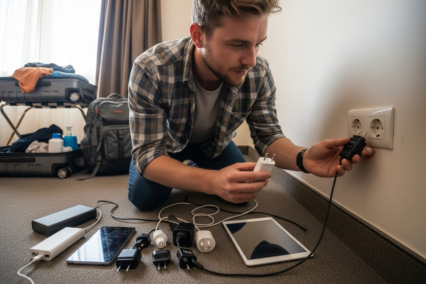
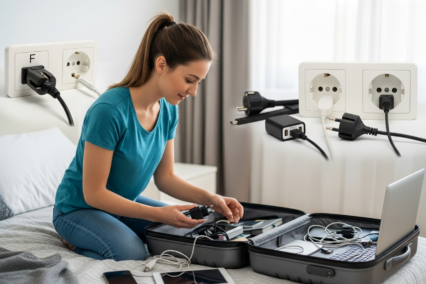
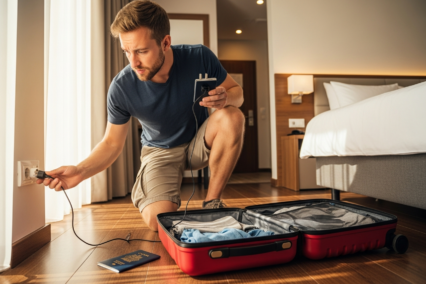
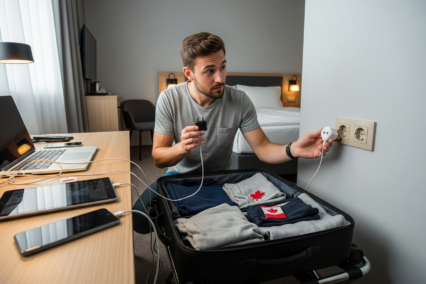
You should bring a travel adapter. It will help you keep your electronics charged during your stay in New Guinea.
Introduction
Are you getting ready for a trip to the lovely islands of Papua New Guinea? This will be an exciting time for you. But before you start to pack, you should think about something important. That’s your electricity needs. The electrical outlet system you find in Papua New Guinea is not the same as what you use in Canada. You need to know more about things like plug types, voltage, and how your devices work with their system. This is key for making sure your items stay charged and safe. In this guide, you will learn what you have to know about using your electronics. You will find out which power adapter you need to use the electrical outlet in new guinea. This way, your trip can be easy, and you will not have to worry about your charger, plug, voltage, or adapter compatibility with your devices.
Understanding Electrical Outlets in Papua New Guinea
When you get to Papua New Guinea, you will see that the power plugs and sockets are not the same as what you use back home in Canada. The country uses its own electrical standard that is different from North America.
This means your plugs from Canada will not work in their sockets right away. You will need a plug adapter to use your devices. Let’s take a closer look at the types of plugs you will find in Papua New Guinea, and how these are different from what you use every day.
Common Plug Types Used in Papua New Guinea
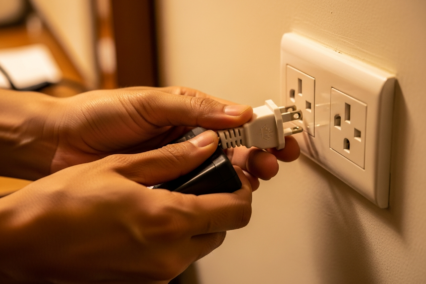
The official plug used in Papua New Guinea is called the Type I plug. If you have been to Australia or New Zealand, you might have seen this plug before. It has two flat pins set up in a “V” shape that points down. Many plugs of this type also have a third long pin that sticks out for grounding, to help keep you safe.
You will often see the three-pin grounded plug. But sometimes, you might see a version with only two pins and no grounding. The way this plug is made helps it sit tight in an electrical outlet. The pins are sometimes covered at the bottom, and this helps stop shock if the plug is only partly in.
Knowing the Type I plug is important if you want to go to Papua New Guinea or other places nearby, like Australia or New Zealand. This is the only plug type you are going to find there, so if you want to use your devices, you need to be ready for it. This includes any visit or stay in New Guinea or its neighbours.
Comparison with Canadian and Australian Outlets
For Canadians, the power outlets in Papua New Guinea are completely different. Canada uses Type A and Type B plugs, which have two flat parallel pins (and a round grounding pin for Type B). In contrast, Papua New Guinea uses Type I plugs, which are identical to those used in Australia.
The key difference lies in the pin configuration and shape. The angled, flat blades of the Type I plug won’t fit into a parallel-slotted Canadian outlet, and vice-versa. This highlights the absolute need for an adapter.
Here’s a quick comparison to help you visualize the differences:
|
Feature |
Canada (Type A/B) |
Papua New Guinea/Australia (Type I) |
|---|---|---|
|
Pin Shape |
Two flat, parallel pins; one round ground pin (Type B) |
Two flat, angled pins; one flat ground pin |
|
Grounding |
Third round pin below the main two |
Third flat pin below the main two |
|
Voltage |
120V |
240V |
Voltage and Frequency Specifications
It is important to see more than just the shape of the plug when you think about the power system in Papua New Guinea. You need to know the voltage and how often the electricity goes up and down there. This is what makes your gear from Canada work right and be safe. The standard voltage in Papua New Guinea is a lot different from what we have at home.
If you do not pay attention to these things, your stuff could get damaged. This is not a step you want to skip. We will look at all the numbers for you. This way, you can find out if your things will work in New Guinea and if you can use just a power adapter. Let us help you understand the compatibility with your gadgets and make sure the voltage is safe for them.
Standard Voltage and Frequency Details
In Papua New Guinea, the electrical system uses a standard voltage of 240V and runs at 50Hz. This is not the same as in Canada, where you get 120V and 60Hz. The higher voltage in New Guinea is important. You need to be careful with it.
Voltage is the push of the electricity. If you use a device that is made for a lower voltage, putting it in twice the voltage will burn it out right away. The voltage is something you really have to think about, but the difference between 50Hz and 60Hz is not such a big deal for most new electronics.
Even so, some older things or anything with a motor inside, such as clocks or shavers, may not work right if the frequency is wrong. Always look at your device’s label and check for the right standard voltage and frequency compatibility before you plug it in with the system in Papua New Guinea or New Guinea.
Compatibility Considerations for Canadian Devices
When you bring your Canadian devices to Papua New Guinea, you have to think about two things: the plug shape and the voltage. You will need a plug adapter because the shape of Canadian plugs does not fit in Papua New Guinean outlets. This is your first step to make sure there is compatibility.
The second step is about voltage. Most newer things, like smartphone chargers, laptops, or camera chargers, are made to work in more than one country. These are called dual voltage devices. You can check if your device is dual voltage by looking for a label that says “INPUT: 100-240V, 50/60Hz” on the device or its charger. If it says this, your device can work just fine, and you only need a plug adapter.
But, if your device says just “120V,” like many hair dryers or electric razors, and does not have dual voltage, you will need a voltage converter or transformer. If you plug a 120V item into a 240V outlet without a converter, it will not work, and you could wreck your device.
Travel Adaptors and Power Converters for Canadians
Travelling from Canada to Papua New Guinea can seem tough when it comes to using your devices. There are two main things you need to know about: adapters and converters. These are key to keeping your things like phones or laptops working and safe when you are in new guinea.
The most common thing you will need is a travel adapter. This lets your plug fit into a different style of wall socket. But you need to know that just a plug adapter will not always fix your problems. This is true for big items or things that use only one voltage.
Let’s look at when you need each tool and what makes a plug adapter and a converter not the same. This will help you stay safe and make sure your things work while you are in guinea.
When Do You Need an Adapter or Converter?
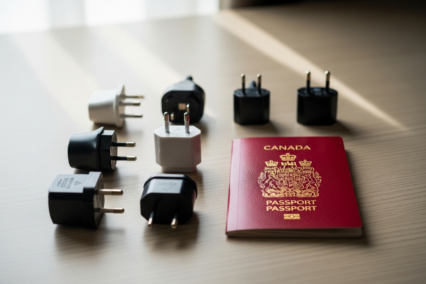
You need a travel adapter when the plug on your device is not the same shape as the wall outlet. In Canada, they use Type A and Type B plugs. Papua New Guinea uses Type I plugs. That means you will need a plug adapter for each device you want to use in Papua New Guinea.
A voltage converter is something you only need if your device does not work with the 240V voltage in Papua New Guinea. Some devices in Canada use 120V only. If your device is made for 120V and you plug it in without a converter, you will break it.
Here is a simple list to help you know what to bring to new guinea:
-
Does your plug fit without help? If no, you need an adapter.
-
Is your device dual voltage and says “100-240V”? If yes, you just need an adapter.
-
Is your device only for 120V? If yes, you need a voltage converter plus an adapter.
So, remember to check your plug and your device before you travel to papua new guinea. When in doubt, pack a travel adapter and a converter!
Differences Between Travel Adaptors and Voltage Converters
Many people mix up the words “adapter” and “converter,” but these do very different things. A travel adapter is simple. The job of the travel adapter is to change the shape of your plug so you can use it in a wall socket in another country like Papua New Guinea. A power adapter will not change the voltage that comes out of the wall.
A voltage converter is another thing. The voltage converter changes the electrical voltage. The converter takes the 240V from a wall outlet in Papua New Guinea and steps it down to 120V. This is so you can use your Canadian devices that are made for that lower voltage. A converter is heavier and does more work than an adapter.
So, an adapter fixes problems with the shape of a plug, and a converter fixes problems with different voltage. If you are going to Papua New Guinea, you will need an adapter for your devices. You will only need a converter for items that have just one voltage.
Safely Using Your Devices in Papua New Guinea
Keeping your electronic devices safe when you travel in Papua New Guinea is easy if you stick to a few simple tips. The main thing is to check the voltage and see if your device works with it before you plug it in. When you use a dual voltage device with a plug adapter, it is usually very safe.
You also need to think about grounding. Many Type I outlets in Papua New Guinea have a grounding pin. This helps protect you from shocks if there is a problem with the power. We will talk about how to charge your electronics in a safe way and what guidelines to follow for different devices. Just remember to use the right plug adapter and make sure of the dual voltage and grounding pin for extra safety.
Charging Phones, Laptops, and Other Electronics
It is safe to charge your phone, laptop, iPad, tablet, or other new electronics in Papua New Guinea when you take simple steps. Most chargers that come with your smartphone, iPad, laptop, or other devices work as dual voltage.
This lets them handle voltage from 100V to 240V with no trouble. To check, look at the small print on your charger. You will find words like “INPUT: 100-240V.” When you see this on your charger, you only need a Type I plug adapter to use a wall outlet found in Papua New Guinea.
There is no risk of damage from the higher voltage, because the charger makes sure it is safe. So, for all your good electronics, just make sure they are dual voltage and use the right travel adapter or plug adapter.
Dual Voltage and Single Voltage Device Guidelines
Knowing the difference between dual voltage and single voltage devices can help you avoid trouble when you travel. Dual voltage devices are great to take with you if you go to another country. They work with many types of electric systems. You do not need anything extra, except a plug adapter.
Single voltage devices work on just one electric system. They can easily break if they get the wrong voltage. Hair dryers or curling irons are often single voltage and make heat. Always look at the label on your appliance before thinking about packing it.
Here are easy steps to follow:
-
For Dual Voltage Devices (100-240V): You need a plug adapter that fits the outlet.
-
For Single Voltage Devices (120V): You need a voltage converter to bring the 240V down to 120V.
-
Check the Label: Be sure to read the label, as the voltage is always shown there or on the cord.
-
When in Doubt: If you do not see the voltage, you should think it is single voltage. Either do not use it, or buy one made for travel.
Where to Buy Adapters Before Your Trip
The best way to be ready is to buy your travel adapter before you leave Canada. This takes away the worry of having to look for an adapter when you get to another country. You will know that you can charge your phone as soon as you arrive at your hotel.
There are many good ways to shop here in Canada. You can get your adapter from both online stores and shops you walk into. It is easy to get this done before your trip.
Shopping Options in Canada
You have many ways to get a travel adapter in Canada. Online stores are easy to use. They let you choose from a lot of adapters and often give good prices. Amazon Canada is a good place to start. You can find a single-plug adapter for Type I outlets. You can also get an adapter kit that works in many places.
If you want to shop in person, look in electronics stores, travel stores, or big department stores. That way, you can see the adapter before you buy. You can talk to the staff if you have questions about the plug you need.
Here are some places to find a travel adapter in Canada:
-
Online retailers like Amazon
-
Electronics stores (e.g., Best Buy, The Source)
-
Luggage and travel accessory stores
-
Major department stores with travel sections
Buying Adapters Upon Arrival in Papua New Guinea
It is best to buy your adapter before you leave for Papua New Guinea. You can get one after you arrive, but it might not be easy. They are sometimes sold at airports, big hotels, and electronics stores in cities like Port Moresby. But the choice may not be good, and it could cost more than it does in Canada.
If you wait to get an adapter in Papua New Guinea, you might use up your time looking for one. Stores may not always have what you need. This gets harder if you travel to remote parts of New Guinea.
Even though English is the official language in Papua New Guinea, going around local shops can still be hard for some people. To make things simple for you and to avoid trouble, pack an adapter from home. It is small and can save you from a lot of stress on your travel day.
Countries Using Similar Outlets
The Type I plug that you find in Papua New Guinea is not just for that country. This is the usual plug used by many places in Oceania. So, if you travel in this area, it’s good for you. When you get an adapter for Papua New Guinea, you can use it in other spots close by.
Australia and New Zealand have the same Type I outlets too. This helps a lot if you plan to visit these well-liked places. Packing becomes much easier. Now, let’s see which other places in the area your adapter will be good for.
List of Countries with Type I Outlets
The Type I plug is common in Australia, New Zealand, and the islands of Oceania. If you take a plug adapter with you when you visit Papua New Guinea, you can use it in other countries too. This makes the adapter handy when you travel.
It is good that most of the countries in the South Pacific use the same outlets. When you buy a good Type I plug adapter, you can use it in many places in this beautiful area. This makes your trip to new countries easier and more comfortable.
Here are some of the countries and places where you will use a Type I outlet:
-
Australia
-
New Zealand
-
Fiji
-
Argentina
-
Solomon Islands
-
Kiribati
-
China (with small differences)
How Plug Shape Differs Around the World
The plug shape in Papua New Guinea is the same as in Australia and New Zealand. They all use the Type I standard plug. But, when you look at the world as a whole, plug shapes can be very different. There is no one plug shape everywhere. That is why you need travel adapters.
For example, the United States and Canada use Types A and B plugs. These have flat pins that sit next to each other. Most countries in Europe use Type C, E, or F plugs. These plugs have two round pins. The United Kingdom uses its own kind, the Type G plug, which has three rectangular pins.
This difference in plug shape came from each country making its own electrical system.
-
North America (Type A/B): Flat pins side by side.
-
Australia/PNG (Type I): Flat pins at an angle.
-
Europe (Type C/E/F): Two round pins.
-
United Kingdom (Type G): Three rectangular pins.
Conclusion
To sum up, if you are from Canada, you need to know about electrical outlets in Papua New Guinea before your trip. It is important to know which plug and voltage you will find there. Checking compatibility with your own devices can stop many problems before they happen. You should get the right travel adapters and converters for your needs. Prepare early so you can use your electronics in Papua New Guinea with no stress. If you want to make sure your devices work and travel without worry, you can get a free consultation to help you plan for your journey.
Remember, it’s always good to know about Papua New Guinea plug, voltage, and device compatibility before you go.
Frequently Asked Questions
Are electrical outlets in Papua New Guinea grounded for safety?
Yes, many electrical outlets in Papua New Guinea have a grounding pin for safety. The standard socket in Papua New Guinea is the Type I, and it has a space for a grounding pin. You might see some older two-slot outlets with no grounding, but the three-pin outlets are now common across New Guinea. These grounded outlets help protect you and your devices.
Is it safe to use UK/Canadian appliances in Papua New Guinea?
It is safe to use your Canadian appliances if you follow the right steps. You have to use a plug adapter. If the device is dual voltage (100-240V), one plug adapter is all you need. If the appliance is a single voltage (120V) item from Canada, you have to use both a plug adapter and a voltage converter. This will stop the 240V supply from hurting your device.
What should I check to ensure device compatibility before travelling?
Before you go on a trip, look at the label on your device. The first thing to check is the plug type. It should say Type I. If not, you will need to get the right adapter. Next, and this is very important, look at the input voltage. If you see “100-240V,” you just need an adapter for your plug. If you only see “120V,” your device will need a converter, not just an adapter. Make sure you have the right plug and power setup before you pack.