Key Highlights
Before you go to Nigeria, you need to know about the way electric works there to keep your things charged and safe. Here’s what you should know.
-
In Nigeria, the main plug types used are plug types D and G for their sockets.
-
The regular, or standard voltage in Nigeria is 230V, with a 50 Hz frequency. In Canada, it’s 120V. The voltage is not the same.
-
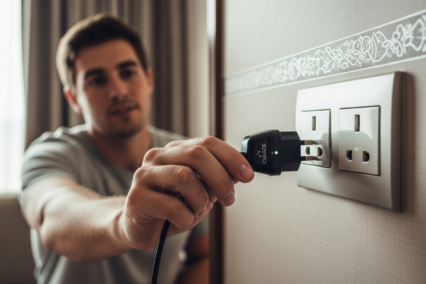
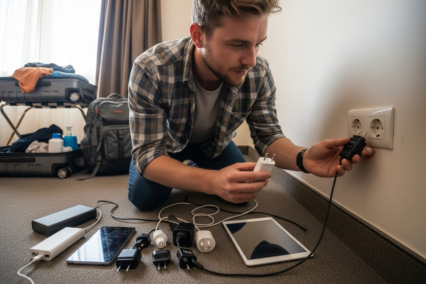
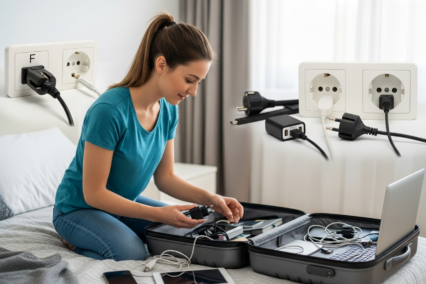
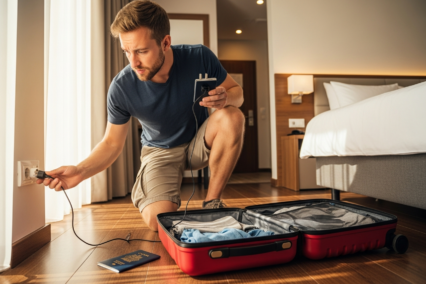
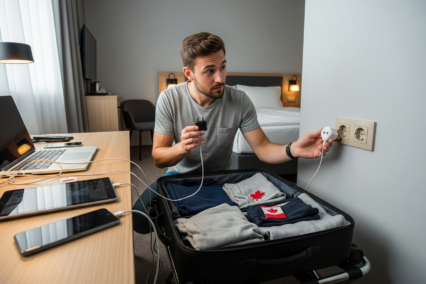
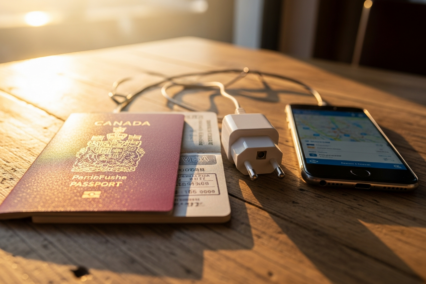
To use things from Canada, you will need a plug adapter to fit Nigerian sockets.
-
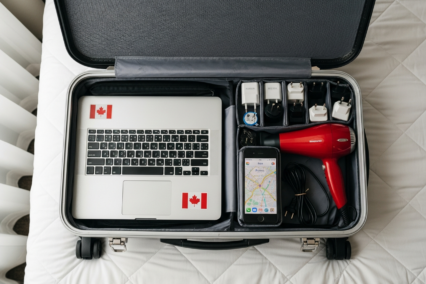
Check if your items are dual voltage, so they can work both in Canada and Nigeria. If not, you’ll need to use a voltage converter to avoid problems.
-
Some sockets in Nigeria work with many plug types, but you should always bring the right plug adapter for safety.
Introduction
Are you getting ready for a trip to Nigeria? This can be a good time! As you make your packing list, do not forget one key thing: electricity. The power outlets, the voltage, and plug shapes in Nigeria are not the same as what you use in Canada. You may find it hard to know how to plug in your phone, laptop, or camera when you get there. This guide will help you with all you need to know about using a travel adapter. It will also cover how to check if your devices, like your phone and laptop, will work with Nigeria’s outlets. That way, you can keep your things charged and not worry about missing out.
Understanding Nigerian Electrical Outlets
When you get to Nigeria, you will see that the electrical outlets are not the same as in Canada. The country uses two main plug types. These plugs are different from Canadian ones. So your normal devices from home will not fit in the wall right away.
To use your electronics, you will need the right adapter. Some hotels or places might have outlets that take more kinds of plugs, but this is not always the case. It helps to know the outlet types in Nigeria so that you can be ready. Let’s check out the common plug types and how they work.
Common Plug Types Used in Nigeria
The two most common power plug types used in Nigeria are type D and type G. Type D power plug is like the one people use in India, while type G is just like the plug in the United Kingdom. Both type D and type G are not the same as Canadian plugs.
Here is what you will find in Nigeria:
-
Plug Type D: This power plug has three large round pins set up like a triangle. You will see it in some places, even though it is an older plug type.
-
Plug Type G: This power plug has three rectangular prongs that form a triangle. It is the same plug type you find in the UK, Ireland, Singapore, and Malaysia.
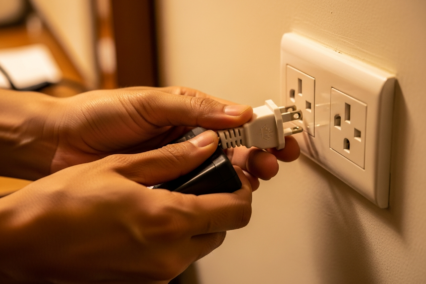
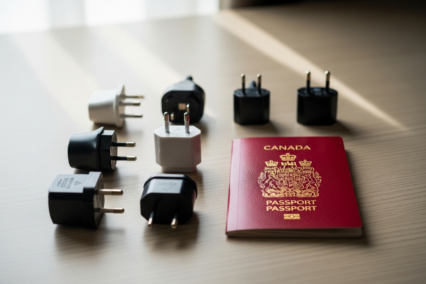
Canadian plugs will not fit in a type D or type G socket in Nigeria. You will need a travel adapter if you want to use your things there. It is good to get both type D and type G adapters before you go. This way, you will be ready for any plug you meet.
Power Outlet Shapes and Configurations
The shape of power outlets in Nigeria corresponds directly to the Type D and Type G plugs. A Type D socket has three round holes, while a Type G socket has three rectangular slots to match its plug. Understanding these configurations is key to choosing the correct power plug adapter.
While these are the official standards, you might find some universal sockets, especially in hotels or newer buildings. These are designed to accept multiple outlet types. However, relying on the availability of these can be risky. It’s always a good idea to travel with your own adapters to be safe.
Here’s a quick reference for the sockets you’ll find:
|
Outlet Type |
Plug Description |
Pin Shape |
|---|---|---|
|
Type D |
Three pins in a triangular pattern |
Round |
|
Type G |
Three prongs in a triangular formation |
Rectangular |
Voltage and Frequency in Nigeria
Beyond just the shape of the plug, you need to think about the voltage and how often the current changes in Nigeria. In Nigeria, the standard voltage is 230V and the frequency is 50 Hz. This is much higher than what you get in Canada, where the standard voltage is 120V with a frequency of 60 Hz. If you plug something made only for 120V into a 230V outlet, it can break the device.
So, you have to check your devices before you travel. Some devices are made to work with more than one voltage, but not all of them. We will talk about standard voltage for each area, and see how the frequency difference can change how your devices work.
Standard Voltage Requirements
The standard voltage in Nigeria is 230 volts. This is much higher than the 120 volts you get in Canada. Because of this different voltage, you can’t just use a simple plug adapter with all your items and expect them to work right. An adapter will help you fit the plug in, but it doesn’t change the electrical current.
If your device can’t handle 230V, plugging it into a Nigerian power supply might be risky. It can overload and even damage the appliance, like some hair dryers or electric shavers that are made for just one voltage.
Make sure to check the label on your gadgets before you travel. Doing this can help you avoid problems and protect your stuff. If your device is not made for 230V, you will need a power converter to make the voltage safe for use.
How Frequency Affects Your Devices
Another thing to look at is the electrical frequency, which is measured in Hertz (Hz). In nigeria, the power grid uses 50 Hz. In canada, it uses 60 Hz. For most electronic devices like laptops and chargers, this difference is not a big problem.
But some electrical appliances, like ones that have motors or timers, can be affected. A device with only one voltage made for 60 Hz may run slower on a 50 Hz system. For example, an electric clock may not keep the right time.
The good news is that most new and travel-friendly electronic devices are dual voltage. They can work with both 50 Hz and 60 Hz, so there is not usually a problem. Always check the information on your device to make sure, because you will need an adapter and, sometimes, a converter to use US or canadian electronics in nigeria.
Compatibility for Canadian Devices in Nigeria
So, what does this mean for your Canadian devices? The main thing is your plugs will not fit in Nigeria, and the voltage in Nigeria is not the same as Canada’s. You will need a travel adapter for sure to change the plug shape. If you need a voltage converter or not depends on each device you want to use.
Many newer gadgets the people use now are ready for travel and are called dual voltage. This means these gadgets can work with both 120V and 230V. If you have these kinds of devices, you just need a plug adapter. But some other things need a power converter if you want to use them with different voltage. Let’s look at how to check your electronics, and make sure your Canadian devices will work fine and not get damaged in Nigeria with the right plug adapter or voltage converter.
Do Canadian Plugs and Electronics Work in Nigeria?
No, Canadian plugs and most electronics will not work in Nigeria on their own. Plugs from Canada are Type A and B. In Nigeria, they use Type D and G outlets. The plug shapes do not match, so you cannot put your device into a socket in Nigeria without a travel adapter. You will need a plug adapter to make your Canadian plug fit a Type D or G outlet.
On top of that, the voltage in Nigeria is 230V. In Canada, it is 120V. If your device is not dual voltage, plugging it in can break it. For single-voltage electronics from Canada, you must use a power converter (also called a transformer) to step the voltage down. Not using the right power converter can damage your appliance for good.
So, if you want to use your Canadian electronics in Nigeria, you will need at least a plug adapter. Some devices will also need a voltage converter. Make sure to check what your device needs before you travel.
Identifying Dual Voltage Appliances
How can you know if your appliance is dual voltage? It’s pretty simple. Most electronic devices have a label on the power brick, the plug, or right on the device. This label gives the power details. Look for the “INPUT” rating.
A dual voltage appliance will list something like “100-240V” for voltage. You’ll also see “50/60 Hz” for the frequency. If the label shows this, the device can be used in Nigeria with a plug adapter. Nigerian outlets work well with dual voltage appliances. Here are some items that often use dual voltage:
-
Laptops and tablets
-
Smartphone chargers
-
Many camera battery chargers
If the label has a single voltage like “120V,” your device is not dual voltage. You will need a voltage converter for it. Items that make heat, like a dual voltage hair dryer from your home country, can be tricky. Always read the instructions before use.
Travel Adapters, Power Converters, and Where to Buy Them
Now that you know what you need, where do you get it? A travel adapter is a simple tool. It lets you change the shape of your plug so it can fit in the outlet. A voltage converter is more tricky. It changes the voltage so your stuff works in other places. You can find both a travel adapter and voltage converter on the web at places like Amazon. You can also buy them in a store that sells electronics or at kiosks in airports. For most people, it is best to get them before you leave Canada.
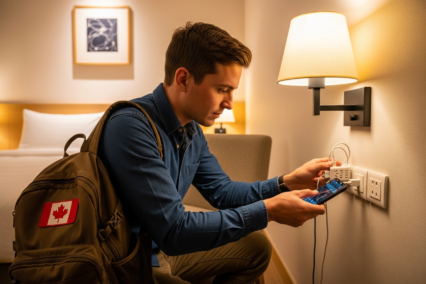
You might want to get a universal travel adapter. It usually has many plug types, and can handle D and G plugs, so you be ready for more than one country. Some travellers also bring a power strip. That way you can use one adapter to plug in many devices—very helpful if there are not many outlets in your hotel. Just make sure your power strip can handle 230V. This is important when you plug in something that is dual voltage.
Selecting the Right Adapter for Nigerian Outlets
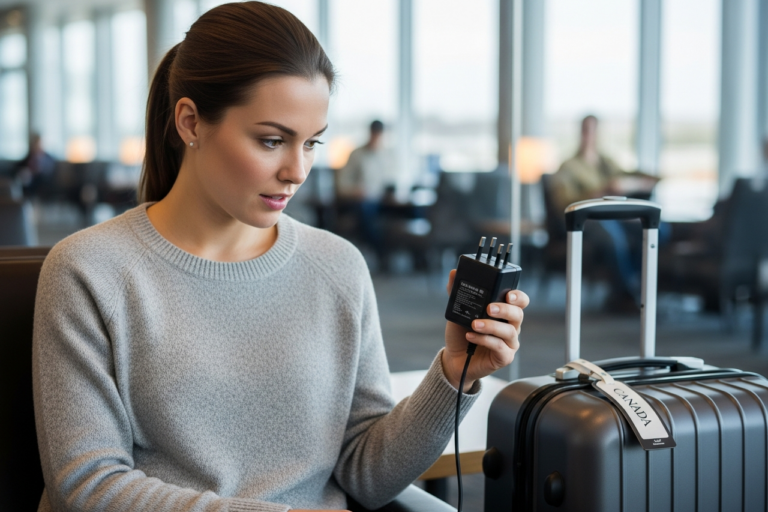
Yes, you will need a travel adapter for Nigeria. Nigeria uses Type D and Type G plugs. Your Canadian plugs will not fit into these sockets. When looking for a travel adapter, pick one that is good quality and comes from a trusted brand. This helps to keep you and your things safe.
Before you plug something in, make sure to check a few things so you do not hurt your electronics. A universal adapter might be good, but double-check that it works with both Type D and Type G settings. Some adapters can feel loose or cheap, so pick one that stays tight in the plug.
Here is a quick list for what to look for when you pick and use your adapter:
-
Confirm that it is a Type G plug adapter or a Type D adapter.
-
Check your device to see if it is dual voltage (100-240V).
-
If your device is single voltage (120V), you must use a voltage transformer with your adapter.
-
Make sure the adapter is certified and offers safety features.
Conclusion
To sum up, knowing the details about electrical outlets in Nigeria is important if you are a Canadian traveler or someone moving there. It helps to learn about the plug types, voltage, and how often the power changes, so your devices work well and stay safe. Make sure to check if your electronics use dual voltage. Use travel adapters or power converters if needed to avoid any problems with plug or voltage. Doing this keeps you from trouble and helps you stay connected during your stay in Nigeria. If you want more help or tips just for you, feel free to ask!