Key Highlights
Here are the main things you should know for your trip to Mexico:
-
Mexico uses the same Type A and Type B plug types as Canada, so you may not need a travel adapter for your stuff.
-
The usual voltage in Mexico is 127V. This is a bit higher than Canada’s 120V.
-
Most new gadgets are dual voltage. They should work well. But, you might need a voltage converter for appliances that are not.
-
You won’t need adapters much, but a grounded adapter is good to have. It can help if you find only two-prong power outlets.
-
Think about bringing a surge protector. It will protect your things if there are sudden changes in the power.
-
Power outlets in Mexico mostly fit Canadian plugs. This makes things easy when you want to use them.
Introduction
Planning a trip to Mexico is fun. You might want to see mexico city or spend time on the sunny beaches. When you start to pack, it is a good idea to think about small things, such as how you will charge your phone or camera. You will want to be sure that your other devices work too. The electrical outlets in Mexico are much like the ones used in north america. This makes it simple. This guide will help you know what to do. You will learn how to keep all your things charged and ready to go while you are in Mexico.
Understanding Electrical Outlets in Mexico
You’re in luck when you think about the power supply in Mexico. The country uses the same main plug types as other North American countries, like the United States and Canada. So, your Canadian plugs will almost always go right into Mexican outlets with no problems.
No matter if you are in Mexico City or spending time in a beach town, the outlets you see will be very much like the ones at home. Let’s look a bit more at the plug types you will find in the country and how they match what you use back in Canada.
Common Plug Types Used Across Mexico
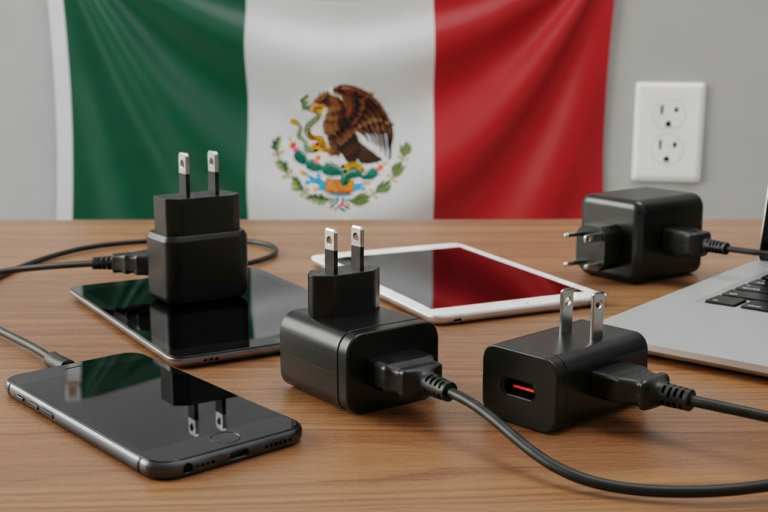
Mexico mainly uses two plug types, and these are what you see most often in North America. You will see that they are the same as the ones used in Canada. The normal plug style in Mexico is the United States plug.
The usual plug types are:
-
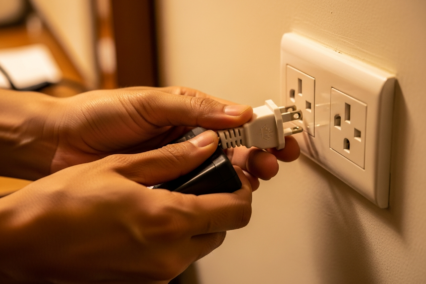
Type A: This plug has two flat side-by-side metal pins. It is not grounded. It’s often good for things that do not need a ground pin, like small lamps or phone chargers.
-
Type B: This one also has two flat pins, but it adds a round pin that acts as a ground. It’s used for gear that needs the ground for extra safety, like laptops or kitchen tools.
While Mexico uses both plug types, type B plugs with their round pin are now more common, as people want better safety. When you travel there, you will get a mix of both. If your item has a three-prong plug, now and then, you may find you’ll run into an older two-prong outlet, so that’s something to keep in mind.
How Mexican Outlets Compare to Canadian and US Outlets
The good news for Canadian travellers is that Mexican power outlets are essentially identical to those in Canada and the US. The system of North American sockets is standardized, meaning your devices should plug in without needing an adapter. The main physical difference you might encounter is the prevalence of older, ungrounded outlets in some buildings.
If your device has a three-prong plug (Type B) and you can only find a two-prong outlet (Type A), you might need a simple grounded adaptor plug, often called a “cheater plug.” However, most modern accommodations provide updated power outlets that accept both plug types. The power supply is designed to be compatible across the continent.
Here is a simple comparison:
|
Country |
Common Plug Types |
Standard Voltage |
Frequency |
|---|---|---|---|
|
Mexico |
Type A, Type B |
127V |
60 Hz |
|
Canada |
Type A, Type B |
120V |
60 Hz |
|
USA |
Type A, Type B |
120V |
60 Hz |
Voltage and Frequency in Mexico
The plugs in both places are the same. But there is a small difference between the electric voltage. Mexico uses 127 volts, and Canada uses 120 volts. This is not a big change, but you should know about it because it can matter for some of your devices. The frequency is the same in both places, which is 60 Hz. So, there is no need to worry about that part.
For most new electronics, this small jump in voltage will not cause any trouble. But with some kinds of voltage appliance, like old or very delicate ones, you might need a voltage converter to keep them safe. We will talk more about the local voltage and find out if your Canadian things will work there.
Mexico’s Standard Voltage Explained
The local voltage in Mexico is 127V, and it runs at 60 Hz. The main standard is set at 127V, but by law, that number can go up or down by about 10%. So, the the power from the wall can be as low as 114V or as high as 140V.
This gap matters when you get your electronics ready. Most things you use will work fine with some small changes in power. But some items, especially those marked or built as a single voltage appliance, may not handle these ups and downs well. If your device says it is for 120V only, using it with a higher local voltage could hurt it after some time.
So, you should always know what your device can handle. If you bring something that is not ready for the range of voltage in Mexico, you must use a voltage converter. This will help keep your things safe and working right. This idea holds true even more for high-power devices that are not meant to work with more than one voltage.
Can Canadian Devices Handle Mexican Electrical Standards?
For the most part, yes. Most modern electronic devices, like laptops, phone chargers, and cameras, are made for travel. They are dual voltage. They can change and work with voltages from 100V up to 240V. To see if your device is dual voltage, take a look at the label on the power brick or on the device.
You should be able to find text like this:
-
“INPUT: 100-240V, 50/60 Hz”: This means the device is dual voltage. It will work in Mexico without needing a voltage converter.
-
“INPUT: 120V, 60 Hz”: This means the device is single voltage. A 7-volt difference is not usually a big deal, but it is safer to use a voltage converter. This will stop your device from getting damaged.
Older or simpler electrical appliances, like some hair dryers or electric razors, are pretty often single voltage. If you plug a 120V-only item into a 127V or higher outlet, it can get too hot or stop working. Always check your electrical appliances before you pack them.
Adapter and Converter Essentials for Canadian Travellers
Canadian plugs fit right into outlets in Mexico. So, you most likely won’t need a travel adapter. The big thing to look at is the voltage. If you should bring a converter depends on what kinds of devices you want to use there. You can find this out by checking the labels on your electronics.
You will not need a physical adapter most of the time, but some people like to have a mexico adaptor kit or a universal adapter when traveling. This can help if you run into any old, ungrounded outlets. Now, let’s talk about when you might need a converter and go over your different options.
When Do You Need a Travel Adapter or Converter in Mexico?
You only have to think about things like voltage converters and travel adapters in some cases. Most of the time, if you are traveling from Canada, your stuff will work just fine. But it’s smart to know when you may need to bring something extra with you.
Here’s a quick list:
-
You need a voltage converter if you have a single voltage item that is made for only 120V. This comes up most with things that use a lot of power, like some hair dryers or straighteners. If this is the case, use a grounded transformer or converter to make the voltage safe for your devices.
-
You might want a simple travel adapter if your device has a three-prong plug but the outlets in your room take only two prongs. Having a small 3-to-2 prong adapter in your bag can really help.
-
You do not need any travel adapter or converter if the label on your items says “dual voltage” like “100–240V”.
You can use a converter finder tool online to help you decide. But the best way is to check the label on each one of your devices before you go anywhere.
Keywords: voltage converter, dual voltage, travel adapter, single voltage, grounded transformer, converter finder
Choosing Between Universal Adapters and Mexico-Specific Plugs
Since Mexico has the same plug types as Canada, you do not need a special travel adapter for Mexico. Your usual Canadian plugs will work there. So, the main thing is to think about future trips, or to be ready if you find an old outlet.
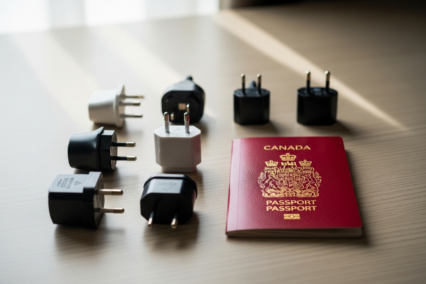
A universal adapter is handy if you often travel outside North America. These are all-in-one tools that fit plugs in many countries. You will need one if you leave North America. If you only go to Mexico, it is more than you need, but it will still work.
Here are some things to think about:
-
Universal Adapters: These are good if you travel to many countries. One device can work with different plug types.
-
Simple 3-to-2 Prong Adapter: This is small and costs less. It can help if you see an old outlet in Mexico that is not grounded.
-
Mexico Adaptor Kit: You will not need this, as your regular plugs already fit in Mexico.
If you bring the right items in your bag, you will be ready for almost any trip. This is what many people do to make sure they can use their things everywhere. So, when you get your travel adapter or even a mexico adaptor kit, remember what you will need for your trip in or outside North America.
Practical Tips for Using Electrical Devices in Mexico
Making sure you have safe connections for your electrical equipment is very important when you travel. The power supply in Mexico is a lot like what you find in Canada. But, the power can still go up and down in any country. This can happen more in some places or when storms come in. That is why it is a good idea to bring a small surge protector with you. It will help keep your electronics safe from problems with the power.
You do not need to worry too much, but being careful is always smart. There are some easy safety tips to follow when you plug in your gear. Below, you will find some basic things you should know about the power supply and what you get at most places to stay in Mexico.
Safety Tips for Plugging in Your Electronics
To keep your devices safe and make sure you have good, safe connections, it is smart to take a few easy steps. Electrical safety is important when you are away from home, as well as when you are at home. Power surges can happen almost anywhere. With some planning, you can stop your phone or laptop from getting damaged.
Think about using these tips for safe connections:
-
Use a surge protector: Bring a surge protector that is easy to carry or a travel power strip that has surge protection. Both will help guard your devices from surprise voltage jumps.
-
Don’t overload outlets: Don’t put too many heavy-duty things into one outlet or power strip. This is extra important if you are in an older building.
-
Check for damage: Stay away from any outlets that are cracked, look broken, or are loose.
-
Unplug during storms: If a thunderstorm starts, unplug any sensitive pieces of equipment. That will protect them from a sudden surge caused by lightning.
These easy tips can help keep your electronics safe when you travel.
What to Expect in Hotels, Resorts, and Rentals Across Mexico
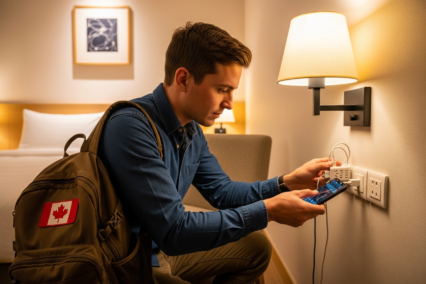
In most modern hotels, resorts, and vacation rentals in places like Playa del Carmen, Cancún, and Mexico City, the power supply should be good. These places know what people want. They are built for people from around the world. So, you will see many outlets for your electrical appliances. Most have both two-prong and three-prong spots. And, the electrical setup is up-to-date.
But, it can be different in older hotels or in smaller places that are outside the city. Here, you may see older outlets. These are often just the two-prong (Type A) kind. And, you might not find too many of them.
-
Modern Hotels and Resorts: You can look for lots of outlets that take three-prong (Type B) plugs, like what you get in any new hotel in Canada. You might also find handy USB ports. This makes it easy to charge your phone or other things.
-
Older Buildings or Rural Rentals: There is a chance you will just see two-prong (Type A) outlets. These are ungrounded. If your electrical appliances need three prongs, a 3-to-2 prong adapter will help a lot.
Conclusion
To sum up, it’s important to know about the different electric outlets in Mexico if you are a Canadian who wants to stay connected. There are different plug types and voltage that you might find there. You may also need a travel adapter or converter. If you get ready before you go, you can avoid problems with your devices. Be sure to think about safety when you plug in your things and find out what to expect at each place you stay. This will help everything go well as you see the great places in Mexico. If you are getting ready for your trip now, make sure you pick up the right travel adapter. That way, your devices will always be charged and ready to use!