Key Highlights
-
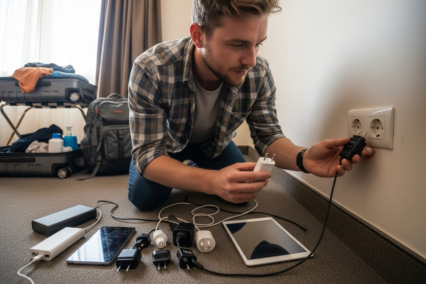
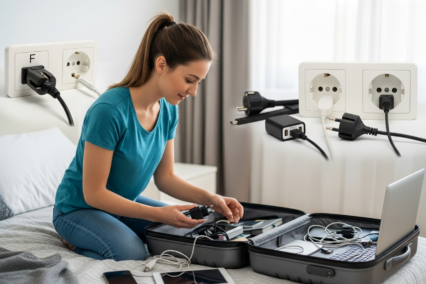
In Germany, the main plug types are Type F and Type C. These are not the same as the ones you use in Canada.
-
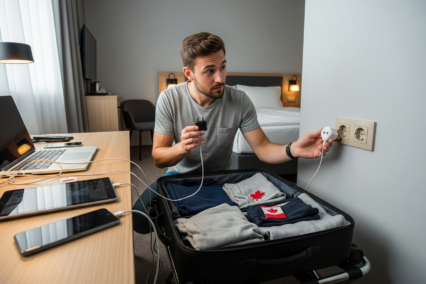
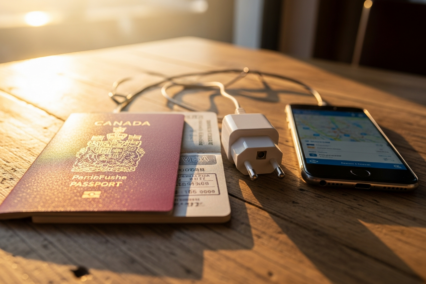
You will need a travel adapter to connect your Canadian plug to a German outlet.
-
The power supply in Germany is 230V, so it is a lot more than the 120V you get in Canada.
-
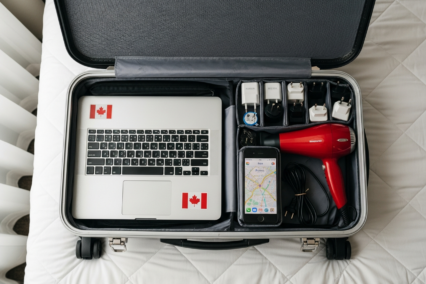
You should look for “dual voltage” (110-240V) on your electronics. If they do not have this, you need to use a voltage converter.
-
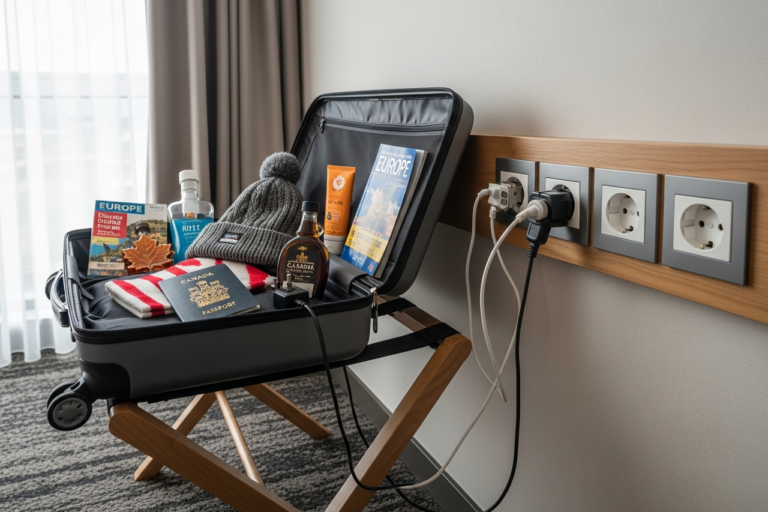
The plug types to look for in Germany are Type F (Schuko) and Type C, which also fits in the F socket.
-
Most laptops and phone chargers use dual voltage, but you should always check before you plug your devices in.
Introduction
Planning a trip to Germany is a good time, but have you thought about how you will charge your phone or camera? If you are going from Canada, you need to know that the electrical systems are not the same. The plug types, outlets, and voltage in Germany are different from what you have at home. If you know what to expect, your gadgets will stay charged and safe on your trip through Germany or other European countries. This way, you can spend your time having fun and not worry about your devices running out of power.
Types of Electrical Outlets in Germany
When you come to Germany, you will see that the wall sockets are not the same as at home. There are two main plug types in Germany. One is the Type F socket. Most appliances in the country use this. The Type F socket has two round holes with clips on the side to ground it.
You will also notice another plug type in Germany. It is called Type C. This plug is common in other parts of Europe as well. The Type C plug fits into the Type F socket, which is good news for lots of people who travel. Still, if you come from Canada, you will need a travel adapter to use your devices in these sockets. So, learning about these plug types before your trip can help you stay connected in Germany.
Overview of Plug Types Used (Type C, Type F)
The two main plug types you’ll encounter in Germany are Type C and Type F. The Type F plug, often called a “Schuko plug,” is the most common. It has two round pins and two clips on the side for grounding, making it a very secure connection for the power supply.
The Type C plug, also known as the “Europlug,” has two round pins but no grounding clips. It’s designed for lower-power devices and will fit into any Type F socket. While Type F is the standard in Germany, the ungrounded Type C is also widely compatible across many European countries, especially for modern devices like phone chargers.
Here’s a simple breakdown of these different plug types:
|
Feature |
Plug Type C (Europlug) |
Plug Type F (Schuko) |
|---|---|---|
|
Pins |
Two round pins |
Two round pins |
|
Grounding |
No grounding |
Two grounding clips on the side |
|
Common Use |
Low-power devices (chargers, radios) |
High-power appliances (laptops, kitchen gear) |
|
Compatibility |
Fits into Type F sockets |
Is the standard socket in Germany |
Standard versus Specialty Outlets
In Germany, you will see that most hotel, cafe, and home outlets are type F power outlets. You see these all over Germany and in a lot of Europe. These sockets can take both type F and type C plugs. This works for almost all modern devices people travel with. It makes things very easy.
Sometimes, you might see a special socket. It does not happen much and is not common in public places. The outlet could be for very strong machines or for old buildings that have not been updated. There are also a few bathrooms with circuits that have lower wattage for safety. If you use things that need a lot of power, like a hair dryer, it might not work well there.
For a Canadian going to Germany, you mostly just need to know about the normal sockets. Here is what you should look for:
-
Type F Sockets: These sockets are in almost every spot around Germany. They have two holes for round pins and clips for grounding.
-
Compatibility: Both type F plugs and type C plugs work with these sockets. That means you can use a grounded or ungrounded plug for your modern devices.
-
Location: You find these sockets in most new and updated buildings, such as hotels, airports, and places where you eat.
These outlets make travel simple and easy for you. Just check if your plug fits. The type f socket is what you use in most cases when in Germany or continental Europe.
Understanding German Voltage and Frequency
In Germany, the power that comes through the plug is not the same as in Canada. The usual voltage in Germany is 230V and the frequency is 50Hz. In Canada, the power supply is 120V and 60Hz. So, there is a big change in both voltage and frequency. It is important to know about this before you use your electronics.
If you use a Canadian device that works only with 120V in a 230V outlet, you can ruin it for good or even put yourself in danger. That is why you have to check your electronics first. You need to see if you just need a plug adapter or if you also need a voltage converter.
Voltage Specifications (230V)
Germany uses an electrical grid with a standard voltage of 230V and a frequency of 50Hz. Most of Europe uses the same system. This is very different from the 120V power supply found in Canada. The higher voltage in Germany means the outlets will give more power.
If you plug in something made for only 120V into a 230V socket, the device will likely get too much voltage and could burn out right away. This is why a simple plug adapter will not always solve the problem. You need to check if your gadget or device can handle the different voltage first.
If an electronic item is not dual voltage, you have to use a voltage converter or transformer. A voltage converter will change the 230 volts of the German power supply down to a level that is good for your Canadian gadgets. Before you use a converter, always check the wattage and amp ratings on the device and on the converter. They both need to be right for each other.
Compatibility with Canadian Electronics
The good thing is that many of the new gadgets people use are made for travel. To check if your gadget will work, look at your charger or the power supply. You can find the input details in small print on the plug or the body of your device.
You need to find words like “INPUT: 110-240V” or something like it. This means your device is dual voltage, and it can handle the power supply in Germany, which is 230V, with no problem. So, if you see this, you just need a plug adapter. But if the device says only “INPUT: 110V” or “120V,” then it is a single voltage device. For these, you must use a voltage converter if you plan to use it in Germany.
Here’s a quick guide:
-
Dual-voltage devices: Things like laptops, smartphones, and camera chargers are often dual voltage. You only need a plug adapter for them.
-
Single-voltage devices: Some things like hair dryers, electric razors, or curling irons are often single voltage. You will need a voltage converter for these.
-
Always check: Make sure you always look at the label on your power supply before plugging it in. Do not just guess.
These steps help people know if their charger, laptops, or other gadgets can be used in Germany without any issues. It’s very important to check compatibility for your safety and the life of your device.
Travel Adapter Essentials for Canadians
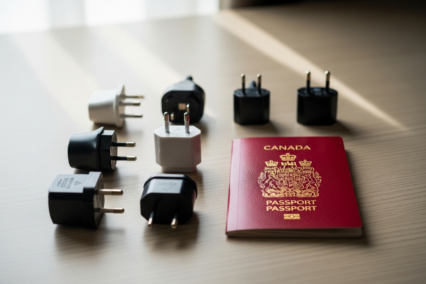
Canadian plugs are not made to fit German outlets, so you will need to bring a travel adapter for your trip. This small device goes between your charger and the socket, so you can use your electronics in Germany. Keep in mind that the travel adapter does not change the voltage.
When you pick an adapter, you have to think about more than just the plug types. You should know if you want only an adapter, or if you need a converter too, and what features are good for travel. Next, we can see how to tell the difference between them and what to check for when you pick a good adapter for Germany.
Do You Need a Plug Adapter or Converter?
It can be hard to tell the difference between a plug adapter and a voltage converter, but the two do very different things. A plug adapter is small and light. It just changes the shape of the plug so your Canadian plug fits into a German socket. It does not change the voltage or power.
A voltage converter, also called a power converter, is bigger and much heavier. It changes the voltage. The converter drops the 230V from a German socket down to 120V. This helps keep your Canadian devices safe if they are made for just one voltage. Some converters are for things that use a lot of power for a short time. Other types, called transformers, are made for things you use all the time.
Here is when to use each one:
-
Plug Adapter: You need a plug adapter for all Canadian devices. It helps them fit the sockets in Germany.
-
Voltage Converter: You only need a voltage converter if your device has one voltage (and doesn’t say “110-240V”). This is often needed for things like older electronics or some hair dryers.
-
Dual-Voltage Devices: If it says “110-240V,” you just need a plug adapter, never a converter.
Features to Look for in a Quality Adapter
When you shop for a travel adapter for your trip to Germany, you will find that not every adapter is the same. It is good to get one that will be safe to use, work well, and be easy to take with you. Instead of picking up a cheap, single-use adapter at the airport, try to get an adapter with features that can help make your trip easy.
If you travel a lot, you might want a universal adapter. With this, you can use different plug types from many places around the world. Many adapters now have built-in USB ports too. This is helpful since you can charge your phone and tablet with the adapter. The main socket will still be open for another device, like your laptop or camera charger.
When you pick an adapter, look for these things:
-
USB Ports: Let you charge more than one device at a time. You will not need to bring lots of extra power bricks.
-
Grounded Connection: For safety, get one that works with the grounding clips in a type f socket. This is important for high-power things like laptops.
-
Safety Certification: Look for marks like CE. This shows the adapter meets safety rules.
-
Compact Design: A well-made adapter will not be too big, so you can pack it with no trouble.
Conclusion
In short, it is important for a Canadian traveler to know about the plug types and voltage in Germany. This helps you keep your devices working. You will need the right adapter for your trip, so your plug will fit and your electronics are safe. Using the best adapter keeps all your devices running, and stops them from getting hurt. Check which plug and voltage your equipment needs before you go. This way, you will be ready for your time in Germany. Make sure to look at everything you are packing for a plug or adapter you might need. Have a good trip and enjoy what Germany has to give! If you want some help, ask for tips on the best adapter for you.
Frequently Asked Questions
Can I use North American devices in Germany with an adapter?
Yes, but you need to look at the voltage compatibility first. Most laptops and phone chargers work with two voltages, so they only need a plug adapter in Germany. If a device uses just one voltage, you must use both a plug adapter and a voltage converter. This will help the device work with Germany’s 230V power supply and keep it safe from harm.
Are international adapters safe for German outlets?
Yes, you can use good international adapters from well-known brands in Germany. Make sure the adapter is made for 230V and is right for the Type F plug. To be safe, choose an adapter that has grounding features and safety certificates like CE. This will help you use your plug in Germany the right way.
Where can I buy a travel adapter for Germany from Canada?
You can get a travel adapter for Germany in Canada before your trip. You can check electronics stores, some luggage shops, or big online websites for the right adapter. When you buy your adapter in advance, you make sure it fits your needs and you will not have to look for one after you land.