Key Highlights
-
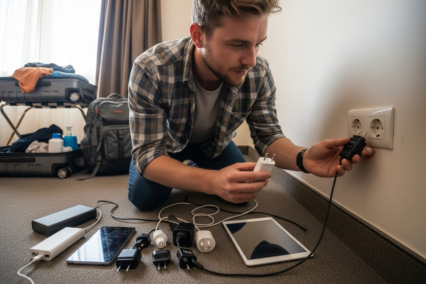
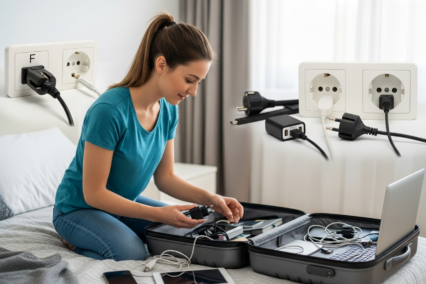
In France, the electrical outlets are type C and type E. These are not the same as the ones you see in Canada.
-
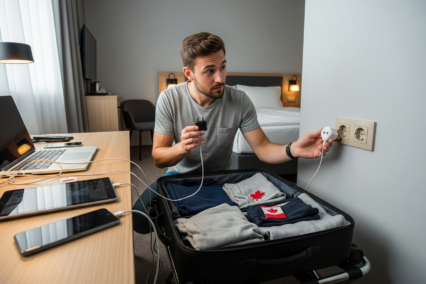
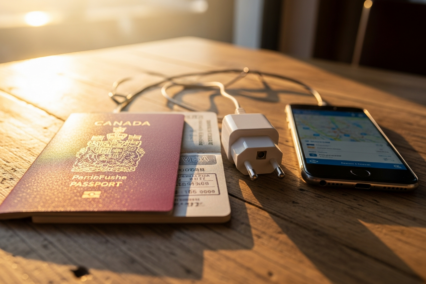
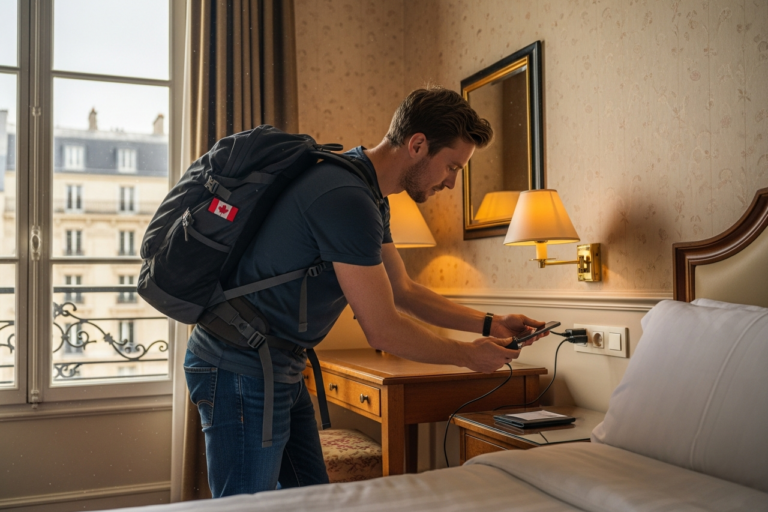
You will need a plug adapter to use your Canadian items in French sockets.
-
The standard voltage in France is 230V. That is higher than Canada’s 120V, so you need to check if your devices can handle this voltage.
-
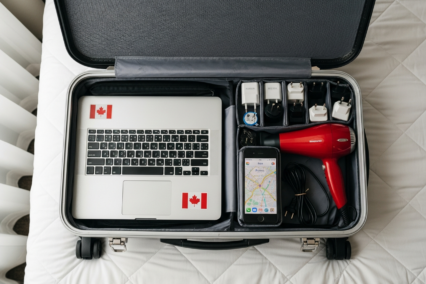
Many modern electronics are dual voltage. For some things, like older hair dryers, you may need a voltage converter if your device is not dual voltage.
-
Type C plugs are used in many European countries. In France, type E is the main one for things that need a ground connection.
-
Before you go, check your device for its power needs. This helps make sure you get the right plug adapter or converter.
Introduction
Planning a trip to France can be a lot of fun, but it’s easy to forget how you will plug in your phone or other gadgets. In France, there are different electrical outlets and plug types than what you use back in Canada. You should know about this before you pack your things. If you are ready ahead of time, you can keep your phone, laptop, and camera charged up. This way, you won’t miss out on anything during your time in France. This guide gives you the tips you need, so you can keep all your gadgets working in France with the right plug types and electrical outlets.
Understanding Electrical Outlets in France
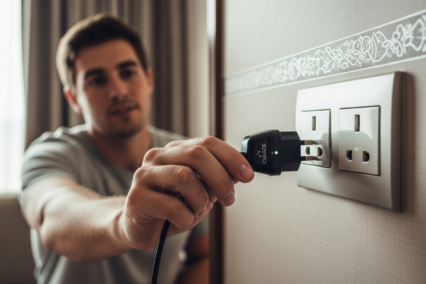
When you go to France, you will notice the electrical setup is new and works well. But the outlets and sockets there are not the same as in Canada. In most homes, hotels, and public spots in France, you will find plug types that need you to use adapters for your electronic devices.
It is good to know about these differences for your own compatibility. The usual outlets in France use Type C and Type E plugs. These types are seen in many other European countries too. So, you cannot put your Canadian plugs in the sockets right away. You will need to get the right travel adapters to use your devices.
Overview of Plug Types Used in France
The most common types of plugs in France are Type C and Type E. Type C is also called the “Europlug.” It has two round pins and is not grounded. You can use this plug for many low-power appliances in most European countries. You will see these sockets in many places.
For grounded appliances, France uses Type E sockets. These sockets have two round holes for the plug and a pin that sticks out for grounding. The Type E plug has a hole to fit this pin. This makes sure your grounded appliances stay safe when you use them.
When you travel, it is important to look at your devices. You can use Type C plugs in Type E sockets, but you cannot always use Type E plugs in Type C sockets because of the grounding pin. If you’re not sure, bring a plug adapter that works for both type C and type E sockets in France. This will make it easy to use your devices.
Common Features of French Electrical Outlets
French electrical outlets work with a standard voltage of 230V, and they use a frequency of 50Hz. This is different from the power supply used in your home country of Canada. The type of sockets you will find there are mostly Type E sockets. These outlets have a recessed shape. That means the socket is set deeper into the wall. Sometimes, this can cause a problem if your plug adapter is too big and is not made for the extra depth.
French outlets have some features that are there for your safety and to make things easier.
-
Recessed Sockets: This design helps you not touch the pins by mistake while plugging in.
-
Grounding Pin: These Type E sockets come with a grounding pin that is there to keep grounded appliances safe.
-
Child Safety Shutters: A lot of new outlets have small shutters inside. These keep the holes covered until you put the plug in the right way.
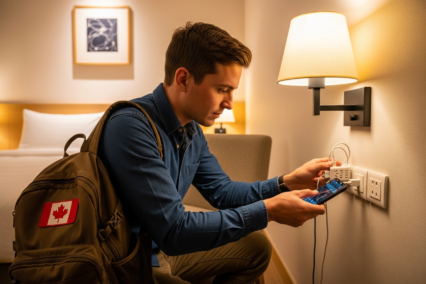
You will usually get lots of electrical outlets in hotels and also public places like airports. But some older buildings can have only one or two. So, it is smart to bring a France plug adapter. Try to get one with extra sockets or USB ports. This way you can charge more than one device at the same time.
Compatibility of Canadian Devices in France
Using your Canadian electronics in France comes with two main problems. The first one is that the plug shapes are different. Your Canadian plugs, which are type A and B, will not work with French sockets. In France, you will find type C and E sockets. You will need a plug adapter to make your devices fit.
The next big thing is the voltage. France has a 230V system, but in Canada, it is 120V. Many modern electronics can handle both, but some cannot. If you have a device that does not work with different voltages, you will need a voltage converter. This helps your stuff work safely and stops it from getting damaged.
So, if you go to France with your gear from Canada, get a type C adapter and, if needed, a voltage converter for good compatibility.
Differences Between Canadian and French Plugs
The physical differences between Canadian and French plugs are immediately noticeable. Canadian plugs, known as Type A and Type B, have two flat vertical prongs (Type A) or two flat prongs plus a round grounding pin (Type B). In contrast, French plugs use two round pins (Type C and E). Due to these differences, US and Canadian plugs are not compatible with French electrical outlets without an adapter.
The technical specifications also vary significantly. The standard voltage in France is nearly double that of Canada. This means that simply using an adapter might not be enough for all your devices.
Here’s a quick comparison:
|
Feature |
Canada |
France |
|---|---|---|
|
Plug Types |
Type A, Type B |
Type C, Type E |
|
Prongs |
Flat (Type A/B) |
Round (Type C/E) |
|
Standard Voltage |
120V |
230V |
|
Frequency |
60Hz |
50Hz |
To bridge this gap, you’ll need a France plug adapter. A universal adapter can be a versatile choice, especially if you plan to visit other countries.
Can Canadian Devices Be Plugged in Directly?
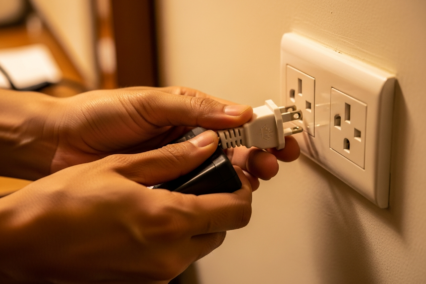
No, you cannot just plug Canadian devices straight into French outlets. The plug types are not the same, so you will need a travel adapter. This adapter lets the plug from your device, like your phone chargers or laptops, fit into the outlet.
But you also need to think about the voltage. Many modern electronics, for example laptops, tablets, and phone chargers, are made to work with more than one voltage. They are called dual voltage devices. To check, look at your plug or power brick for the words “INPUT: 100-240V.” If you see that, you only need the plug adapter. The voltage will be fine, so there’s no need for a converter.
There are some devices that you need to be careful with, like hair dryers, curling irons, or electric shavers. These are appliances that use a lot of power and are often just 120V. If you try to use them in a French outlet without a voltage converter, they can get damaged. They might even stop working completely. Always look for a dual voltage switch or check the ratings written on the device. If your device is not dual voltage, you should use a step-down voltage converter or leave it at home to be safe.
Plug Types Found Across France
In France, you will see two main plug types. These are Type C and Type E. The country does not have many changes in sockets from one area to another. It is still good to know about these, especially if you plan to visit other European countries.
Type E sockets are the main standard in France. But this socket also works with the Type C plug, even though it is not grounded. Sometimes, you might use Type F plugs in France. These are popular in places like Germany and Spain. Type F plugs can fit into Type E sockets, but the ground may not connect. This makes it a bit easier to travel in Europe. Still, you should know the plug standards in France so you do not have any problems with your plugs or sockets.
This shows how plug types and their compatibility are important for anyone who will travel between France and other European countries.
Type C Plugs: What Canadians Need to Know
The Type C plug, also known as the “Europlug”, is one you will see the most in France and Europe. It has two round pins that are set side by side. This plug is not grounded. Type C is made for small electronic devices. You will see it used with chargers for cell phones, cameras, and tablets.
Since the Type C plug is ungrounded, it works with both Type C and the more common Type E sockets in France. If you get a travel adapter for France, it will almost always connect your Canadian plug to a Type C or Type E socket.
If you bring something from another part of Europe that uses a Type C plug, you can just use it in French sockets without a problem. For Canadian devices, a basic adapter is what you need. It will let you change your flat prongs to the two round pins that a Type C plug uses. This is all you need for your dual-voltage electronics in France.
Type E Plugs: Distinctive Features and Use
The Type E plug is the usual grounded plug that you see in France. The thing that stands out most is its round place for a grounding pin, which sticks out from the wall socket. The plug has two round pins for power, like the Type C. But it also has a hole that lets the grounding pin in the socket go through. This way, it is different from the Type F plug, which gets grounded by two clips on its sides.
Type E plugs and sockets are made to be safe when you are using things like high-powered appliances. The grounding pin connects first, before the power pins do, and this gives a bit more safety. The sockets also fit Type C plugs that do not need grounding, so you can plug your phone charger in with no issue.
You can find Type E sockets in almost every place in France. They are in homes, hotels, cafes, airports, and other buildings. If you need a plug adapter, make sure it works with a Type E socket. This way, you can plug in your things anywhere.
Voltage and Frequency Standards in France
One thing that you really need to know as someone from Canada is that the electrical standards in France are not the same as back home. In France, the power supply uses a standard voltage of 230 volts and a frequency of 50 hertz. This is different from Canada, where the voltage is 120 volts and the frequency is 60 hertz.
Because the voltage in France is higher, you have to check your electronic devices before you plug them in. If you use something that is made for 120V in an outlet in France, it can break the device. It might cause it to overheat, start a fire, or even shock you. The best thing to do is always look at your device’s voltage rating. Make sure it will work with the power supply in France before you use it.
Standard Voltage in France Compared to Canada
The standard voltage in France is 230V, and that is much higher than the 120V you get in Canada. So, the electrical current in French outlets will be a lot stronger. If your device fits the French system, there is no problem. But if it is not made for this, the higher power can damage it.
This is why you need to check the voltage on all your devices before you plug them in. You will often see this number on the power adapter, on the plug itself, or inside the manual. If your device is dual voltage, it will show something like “100-240V.” These can work on the power supply in France. You will just need a plug adapter, and not a voltage converter.
If the device only shows “110V” or “120V,” it will not work with the French system. For items like hair dryers or electric razors, you need a voltage converter. This converter makes the 230 volts at the wall safe for your Canadian gadgets by changing it down to 120 volts. You can’t skip this step for single-voltage stuff, or it might break your appliance.
Frequency Considerations for Your Electronics
Besides voltage, there is also a change in how often electricity switches direction. France’s power runs at 50 Hertz (Hz), but in Canada, it is 60Hz. This number shows how many times each second the electric current changes direction. For most modern electronics like laptops and phone chargers, this difference is not a big deal. These chargers are made to work with 50Hz and 60Hz. You can often find “50/60Hz” written on the label.
But some older or simple appliances that have motors can have trouble with the frequency switch. For example, an electric clock made for 60Hz may go slower when you use it on 50Hz. Some hair dryers or any appliances with motors may also work at a bit different speed.
For most people when they travel, this frequency change is not a big issue. Most modern electronics are fine. You should really think more about voltage compatibility and having the right travel adapter. If your device is not made for two different voltages, you need to use a voltage converter. Most new voltage converters can also take care of the different frequencies for you.
Using Adapters and Converters Safely in France
If you want to use your Canadian electronics in France, you have to get the right gear. You need a plug adapter and maybe a voltage converter. The plug adapter lets your plug fit in a French outlet. The voltage converter changes the amount of voltage. You need to know which option is right for each of your modern devices.
It is important to use these things the right way. Your safety and the health of your electronics depend on it. Not using them right can hurt your devices, knock out fuses, or start electrical fires. Take the time to pick the right travel adapter and use it as you should. This way, you can avoid problems with power during your trip.
How to Choose the Right Adapter for Your Trip
Picking the right plug adapter for France does not have to be hard. Your best option is to buy a travel adapter made for Type E sockets. These sockets are what you will find in most places in France. Some plug adapters sold for “Europe” will work, but you need to check and make sure they fit the French recessed socket design.
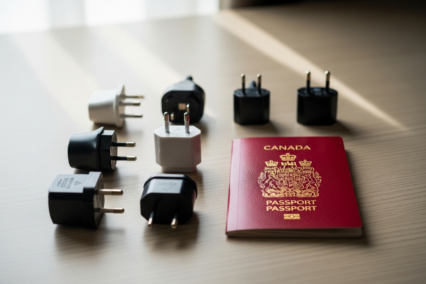
If you travel a lot, a universal adapter is a good idea to buy. These plug adapters work in many countries and have sliders or attachments for different plug types. You will need the round pins for France. Many adapters now come with built-in USB ports. These are great for charging your phone or tablet. You do not have to carry separate plugs for your devices. Look for these features when you get a plug adapter:
-
Compatibility: Make sure it says it works in France, and it fits both Type C and Type E sockets.
-
Grounded vs. Ungrounded: If you use Canadian devices with three-prong plugs (Type B), pick an adapter that can take a grounded plug.
-
USB Ports: Plug adapters with USB-A and USB-C ports can charge many things at the same time.
-
Compact Size: Choose one that is small and light, so it does not take up space in your bag.
You can get a France plug adapter online from stores like Amazon before your trip. You will also find them in major airports, like Charles de Gaulle. They are sold in electronics shops too.
Safety Tips When Charging Devices Abroad
Charging your devices safely in France is easy if you keep a few things in mind. The biggest thing you need to watch out for is plugging a single-voltage (120V) device into a 230V plug without a converter. This can break your device fast and it can be dangerous too. Always look at the voltage compatibility for your chargers and appliances before you use them.
It’s also a good idea not to put too many things in one electrical outlet. It might be tempting to use a power strip with one travel adapter so you can charge everything at once, but this can put a lot of strain on the circuit, especially in older buildings. If you’ve got more than one thing to charge, try a travel adapter with a few USB ports built right in.
Here are a few quick reminders about using adapters and converters:
-
Unplug when not in use: Don’t leave your adapter or converter plugged in when you’re not charging anything.
-
Check for overheating: If your adapter, charger, or converter gets too hot to touch, unplug it right away.
-
Use certified products: Buy adapters and converters from well-known brands and make sure they are certified for safety.
By paying attention to the power supply and using the right adapter, converter, or USB ports, you will be able to keep all your devices working in France. Your chargers and appliances will stay safe, and you can enjoy your trip.
Conclusion
Getting used to plug types and voltage in France might seem tough for Canadians, but with the right info, it can be easy. You need to know about plug types and voltage there. This helps your things work well and stay safe on your trip. Get the right adapters and take care while using electricity, and you can stay connected without problems. Getting ready is important for a good trip. It doesn’t matter if you are in France for a short time or longer, make sure you have the tools you need for plug types and france voltage. Enjoy your travels, and ask other people for advice and stories if you need help!