Key Highlights
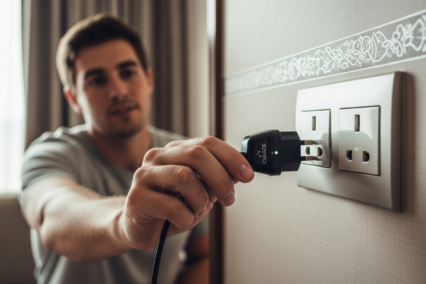
Before you go on your Fiji travel trip, you should know about the local power system. Here is a simple overview to help you with power outlets and standard voltage in Fiji:
-
In Fiji, you will find Type I power outlets. These are not the same as the ones used in Canada.
-
The standard voltage in Fiji is 240V and the frequency is 50 Hz.
-
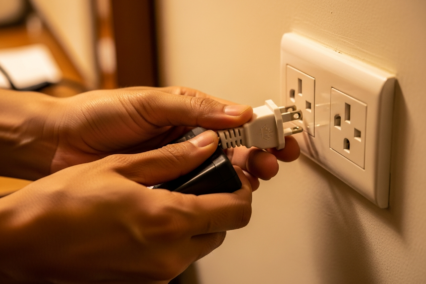
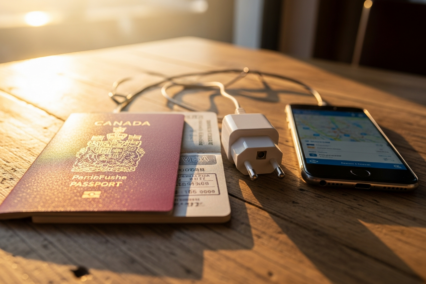
You will need to bring a power adapter if you want to plug any Canadian device into a Fijian outlet.
-
If you have a single-voltage device that does not work with 240V, you will need to use a voltage converter.
-
Lots of newer electronics, like laptops and phone chargers, are made for dual-voltage. They usually do not need a converter.
Introduction
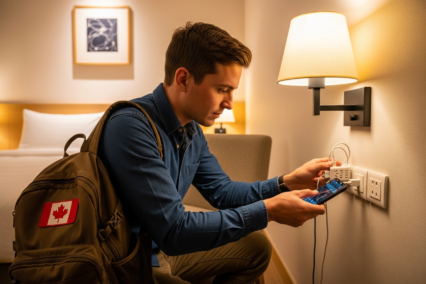
Planning a trip to the beautiful islands of Fiji is exciting. If you are a Canadian traveller, you might already be thinking about sandy beaches and clear blue water. But before you get set to go, you need to look at some important things. One thing to think about is how you will charge your phone and other devices while you are in Fiji. The power outlets, voltage, and the way electricity works in Fiji are not the same as back home. This guide will help you know what kind of adapter you need, what to check for, and how you can keep your electronics running while you are on your Fijian trip.
Types of Electrical Outlets in Fiji
In Fiji, the main socket you will see is called Type I. If you do not know much about this socket or plug type, it has two or three flat pins. If there are three, one flat pin sticks straight up for grounding, and the other two are slanted, which makes them look like an upside down ‘V’.
Many of the power plugs made for this socket use only the two slanting flat pins and leave out the grounding pin. Some places may have USB ports for charging your things, but they are not common in Fiji. So it is best to use the Type I socket when you want to plug in your devices.
Type I Plugs: Appearance and Compatibility
So, what does a Type I plug look like? Think of a plug with three prongs. The top two have flat pins. These are set at an angle, which makes them look like a V-shape. Under these, there is a straight, vertical prong. That one is the grounding pin. The three prongs make a kind of triangular shape. This is what makes it stand out, and it helps make sure the plug fits the socket well.
Some devices that use this type of plug might only have the two angled flat pins. These ones do not use the grounding pin. But they still work with the three-hole outlets you get in Fiji. So, you will find that all these plugs fit, and there is no need to worry about them not going in right.
You might think you have seen a plug like this before. That is because it is not only used in Fiji. You’ll find the same standard in other countries too. For example, New Zealand and Australia use these power plugs as well. So, people coming from new zealand or australia can plug in their devices in Fiji without using any adapter at all.
Comparison with Canadian and Australian Plug Types
For Canadians, the difference in plug types is significant. Canada primarily uses Type A and Type B plugs, which feature two flat, parallel pins and, in the case of Type B, an additional round grounding pin. These are completely incompatible with Fiji’s Type I sockets.
On the other hand, travellers from Australia and New Zealand will feel right at home. As Fiji uses the same Type I plug, New Zealanders visiting Fiji do not need to pack any adapters. Their devices will plug directly into the wall sockets.
Here’s a simple breakdown to help you visualize the differences:
|
Feature |
Canada (Type A/B) |
Australia/Fiji (Type I) |
|---|---|---|
|
Plug Type |
Two parallel flat pins, optional round grounding pin |
Two angled flat pins, optional vertical grounding pin |
|
Voltage |
120V |
240V |
|
Grounding |
Present on Type B plugs |
Present on three-prong plugs |
Voltage and Frequency Standards in Fiji
Besides the shape of the plug, you need to think about the electrical current too. In Fiji, the standard voltage for the power supply is 240 volts (V), and the frequency is 50 hertz (Hz). This is not the same as what we have in Canada. In Canada, the standard voltage is 120V, and the frequency is 60 Hz.
This difference in voltage and hz is important. If you plug a device that is made for only 120V into a 240V outlet, it can break your electronics. It could also be dangerous. In the next sections, we will look at what this means for Canadian devices.
Fiji’s 240V Supply: What Canadians Should Know
The main thing Canadian travellers need to remember is that the supply voltage in Fiji is 240V. This is double what most of the devices from here are made for. You will need a travel adapter to fit your plug into the wall, but this adapter does not change the voltage. To change the voltage, you have to use a converter or transformer.
Always check the power rating on your appliance before plugging it in. A lot of new electronics work with many voltages. Look on your device or the power brick for words like “INPUT: 100-240V, 50/60 Hz.” If it says this, your device can run on different voltages and you just need a plug adapter.
But if you see your device is listed as single voltage, such as “110V” or “120V,” you cannot plug that straight into a Fijian outlet. You will need a voltage converter or your device will likely get ruined from the high supply voltage. Make sure to check each appliance so you do not damage your items in Fiji.
Devices That Work Without a Converter
The good news is that many of the must-have gadgets you travel with are likely dual voltage. That means these items will work with both North American and Fijian electricity. You do not need a voltage converter for them. These gadgets can change with the incoming power on their own, so you just need a simple plug adapter to use them in Fiji.
To see if your device is dual voltage, check the label on the device or its power brick. Look for a voltage range like “100-240V.” If you see this marking, that device will work in Fiji with only an adapter. You do not need a voltage converter for it.
Common dual voltage items include:
-
Laptop chargers
-
Smartphone and tablet chargers
-
Camera battery chargers
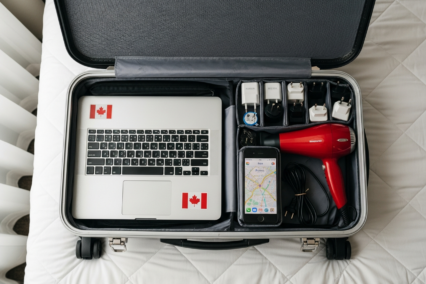
It is important to know that things that make heat, such as hair dryers, straighteners, or electric razors, are usually single voltage. Always check each one very well. If you plug a 120V hair dryer into a 240V outlet in Fiji, it can damage the device, so be careful and check before you use these items there.
Power Adapters and Converters for Canadian Travellers
To be clear, a power adapter and a voltage converter are not the same. A power adapter just makes your plug fit in a Fiji outlet. It does not change the electricity or voltage in the outlet. A voltage converter is different. It lowers the voltage from 240V to 120V. This helps keep your single-voltage devices safe if you use them in Fiji.
Canadian plugs will not work in Fiji’s Type I outlets. You will need to use a power adapter for your plug. If you should bring a voltage converter, that depends on the devices you want to use. The next parts will help you pick a travel adapter and see if a universal travel adapter is the right choice for your trip.
Choosing the Right Adapter for Fiji
When you need a travel adapter for your trip, make sure to get one that can take your Canadian plug on one side and has a Type I plug for Fiji on the other. It is best to buy this adapter before you go to Fiji. You might see travel adapters at Nadi Airport or some stores, but there is no way to know if they will have what you need.
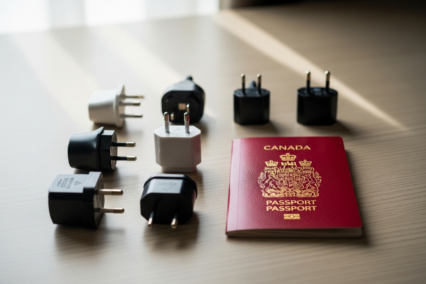
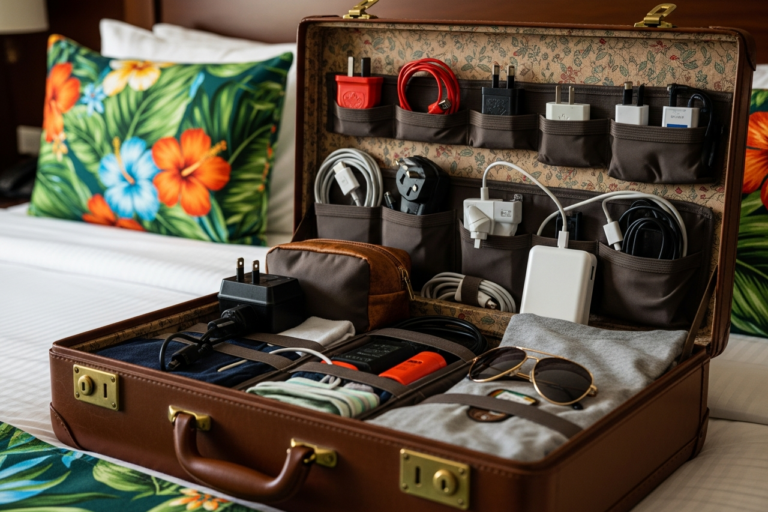
Many people shop for adapters online. Sites such as Amazon make it easy for anyone to look for a universal travel adapter or another type of travel adapter. You will find many to pick from, from adapters for just one place to universal travel adapter models. Try searching with words like “Canada to Fiji adapter,” “Type I plug adapter,” or “universal travel adapter” when you look.
These are a few choices for adapters you might like:
-
A simple travel adapter for just Australia, New Zealand, or Fiji.
-
A universal travel adapter that you can change for more plug types.
-
An adapter-and-converter mix for those appliances that need a voltage change, if your device cannot handle Fiji voltage.
Are Universal Travel Adapters Suitable for Fiji?
A universal travel adapter is a good buy, especially if you travel often. This handy device has sliders or parts you can change. It works with power outlets in many places. These include Europe, the UK, Asia, South America, and more. For your trip to Fiji, make sure your adapter has the Type I setup.
Most good universal travel adapters will fit Fiji’s power outlets. When you look for one, make sure it works with locking V-shape pins that fit Type I sockets. It is also smart to get a travel adapter that gives you a grounding pin for extra safety, mostly if you will use it with bigger items.
The big plus with a universal travel adapter is that it can be used for travel in Fiji and all over the world. You only need to get one. Just keep in mind, a travel adapter is not the same as a voltage converter, unless the product you buy says it can handle changing voltage too.
Conclusion
To sum up, it is important for Canadian travellers to know about the electrical outlets in Fiji. You need to be ready and have the right voltage, plug, and devices before you go. This will help you use your gadgets without any trouble when you travel in Fiji. Make sure you bring the right power adapters or converters so you can get the most from your things while you are there. If you plan to travel soon and want to be ready, you can always ask for a free consultation. That way, you get everything needed for a smooth stay in Fiji.