Key Highlights
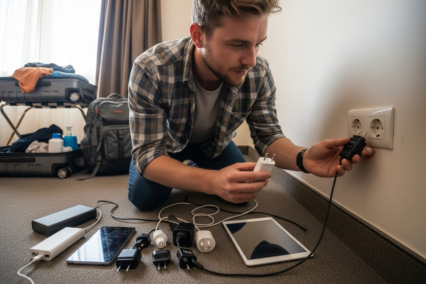
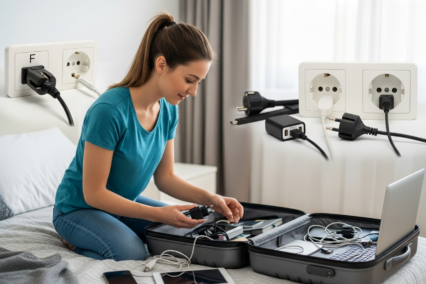
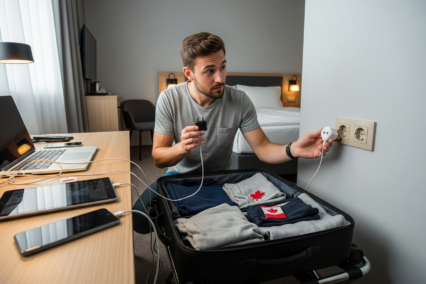
Here’s a quick look at what you need to know before you go to Colombia about electrical outlets:
-
The electrical outlets you will use in Colombia are mostly Type A and Type B. These are the same as the ones used in Canada.
-
The power supply is 110 V with a 60 Hz frequency. This is almost the same as Canada’s 120 V.
-
You do not need a travel adapter for your Canadian devices because the plug type is already a good fit.
-
Most of your electronics, including dual voltage ones, can be used without a voltage converter.
-
You do not usually need an adapter. Still, having a universal adapter can help if you want to charge more than one device at once.
Introduction
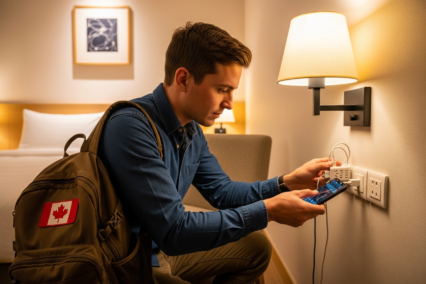
Planning a trip from Canada to see the beautiful places in Colombia can be full of fun. You will get a chance to visit busy cities and amazing coffee farms. There is so much for you to see and do there. As you get ready and pack your stuff, you might ask if your Canadian chargers and devices will work there. It is a good idea to know about the electrical outlets in Colombia before you go. This guide will tell you all you need to know about the power supply there. That way, you can keep your gadgets charged and stay in touch during your trip.
Understanding Electrical Outlet Types in Colombia
When you go to Colombia, you will see that the power outlets are a lot like the ones in Canada. The country mostly uses Type A and Type B outlet types. These outlet types are very common in North and Central America. So, this helps people from Canada.
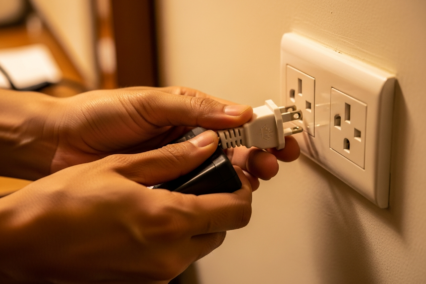
These power outlets look the same as what you have at home. They are flat on the wall. Type A plugs have two flat parts that go in side by side. Type B plugs also have those two flat parts and a round spot on top for grounding. Let’s look more at these plug types and see what makes them different.
Common plug types found in Colombia
The most common plugs you will see in Colombia are Type A and Type B. Knowing which is which makes it easier to get ready for your trip. Your devices from Canada have either a Type A or Type B plug.
Type A plugs have two flat prongs, side by side. They are used for smaller things like chargers. Type B plugs have two flat prongs plus a round pin under them. This pin is there for safety and is used for big things like appliances that need grounding.
Here’s a quick look:
-
Type A: Two flat prongs.
-
Type B: Two flat prongs and one round pin.
-
Compatibility: You can put a Type A plug into both Type A and Type B sockets.
-
Limitation: You can’t use a Type B plug in a Type A outlet because it does not have the hole for the round pin.
These tips help you know what to be ready for when you use plugs and sockets in Colombia. Check the type of plug and socket if you go with big appliances or want to know about compatibility.
Visual guide to Colombian power sockets
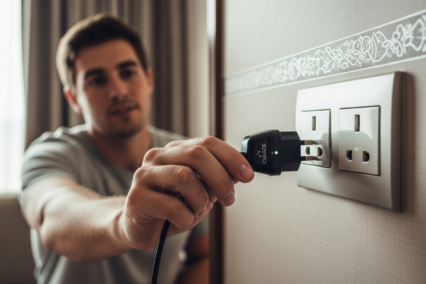
To make things even clearer, let’s visualize the power sockets you will find in Colombia. Seeing the outlet types side-by-side can help you quickly identify what to expect when you arrive at your hotel or accommodation. Fortunately, they will look just like the sockets you use daily in Canada.
Since Colombia uses Type A and Type B outlets, you’ll notice they look identical to North American ones. This familiarity means you generally won’t need a special power plug adapter for your standard Canadian devices.
Here is a simple text table to describe the sockets in Colombia:
|
Outlet Type |
Description |
Compatible Plug Types |
|---|---|---|
|
Type A |
Two flat vertical slots |
Type A |
|
Type B |
Two flat vertical slots and a round grounding hole |
Type A and Type B |
Differences between Canadian and Colombian outlets
When you look at the electrical systems in Canada and Colombia, you will see that there are not many differences. This is good for Canadian travellers. It makes it easy to pack for the trip, because you do not have to worry about compatibility problems.
The main outlet types in the two places are Type A and Type B. So, the shape of the plugs and sockets is the same. You can plug your Canadian plugs into a Colombian socket without an adapter.
There is only one main difference, and it is small. It comes down to the standard voltage:
-
Canada: The power supply uses 120 V.
-
Colombia: The power supply uses 110 V.
This small change in voltage will not hurt your modern devices. Most electronics from Canada will still work well in Colombia.
Colombian Power Voltage and Frequency Explained
It’s not just the shape of the plug that matters. You need to know the kind of electrical current that will be used to power your devices. The voltage and frequency of the power supply in Colombia are some of the key things that tell you if your electronics will work in a safe and right way.
Colombia uses a standard voltage of 110 V, and the power supply runs at a frequency of 60 Hz. This is very close to the power supply you get in North America. That makes things easy for Canadian travellers. Let’s look at what this standard voltage and power supply frequency mean for your devices.
Standard voltage in Colombia
The standard voltage in Colombia is 110 volts (V). This is the amount of power that comes out of wall plugs in the country. If you travel, you need to know this because it lets you see if your things will work with the local power supply.
The good thing is that this 110 V is almost the same as Canada’s 120 V. Most new electronics can work with small changes in voltage, so most of the time, this small change will not cause any problems. You can read the voltage range that is safe for your devices on the charger or power brick.
Colombia’s power grid works well, especially in big cities like Bogotá and Medellín. Short outages can happen, mostly if there’s heavy rain, but most of the time the power supply is steady. You can trust that the standard voltage of 110 V will be there at the outlet.
Operating frequency of Colombian outlets
The frequency of an electrical system is an important part, along with voltage. Frequency is measured in Hertz (Hz), and it shows how many times the current changes direction every second. In Colombia, power outlets are set to 60 Hz.
This is good news if you are coming from Canada, because Canada’s grid also uses 60 Hz. When the frequency matches, your electronics will work as they should. Devices with motors or timers, like electric clocks and some grooming tools, are more affected by the frequency.
If you use them on a grid with a different frequency, they might run too fast, too slow, or they can get damaged. But since Colombia and Canada both use 60 Hz, your devices will work well, and there will not be any issues caused by the electrical current’s cycle.
How voltage and frequency differ from Canada
If you go from Canada to Colombia, you will see the electrical setup is almost the same. This makes things easy. But you should know there is a different voltage, though it is not a big gap if you want your devices to be fully safe.
The main thing to check is the voltage. In Canada, the voltage is 120 V. In Colombia, it is 110 V. This means there is a small different voltage. Most new electronics out there can take this small change with no trouble.
Here’s what it looks like in the two places:
-
Voltage: In Canada, you get 120 V. In Colombia, you get 110 V. The different voltage here is just 10 volts, so most things will work fine.
-
Frequency: Canada and Colombia both use 60 Hz. Because these match, your things will run at the right speed and stay on time.
Plug Compatibility for Canadians Visiting Colombia
Now that you know about the outlets and voltage, let’s answer the main question. Will your plugs from Canada fit into plugs in Colombia? The plug type between Canada and Colombia is easy to see and it helps people who travel.
Canada and Colombia both use the type A and type B plug type. This means you can plug your things right into sockets in Colombia. You do not need an adapter. The compatibility makes it simple to charge your phone, camera, or other gadgets. We will go deeper into this compatibility and also talk about plugs from other places.
Are Canadian plugs compatible with Colombian outlets?
Yes, for sure! Canadian plugs work with the electrical sockets in Colombia. This is because both Canada and Colombia use the same shapes for plugs, mainly type b and Type A plugs. There is no need for you to bring an adapter along for this trip.
Your two-pronged (Type A) plugs and three-pronged (type b plugs) from Canada will fit into the sockets you find in Colombia. Charging your things will be just as easy as it is at home.
Here’s a look at how well they work together:
-
Plug Types: Canada uses Type A and type b plugs.
-
Socket Types: Colombia uses Type A and B electrical sockets.
-
Result: You can use your Canadian electronics in Colombian sockets. There is no need for an adapter. The compatibility between these two makes travel between them smooth.
Can you use US plugs in Colombia?
Just like plugs from Canada, plugs from the United States can be used in Colombia. The plug and socket types in the United States be the same as those in Canada. That means they work well with Colombia’s system.
Travellers from the United States will see that type A and type B plugs fit right into Colombian outlets. You do not need to get any special adapter to use these plugs. The standard voltage in the United States is 120 V, and Colombia uses 110 V. There is only a small difference. Most devices can work with both voltages without any problem.
This good compatibility makes going from the United States to Colombia simple. You can bring your phone, laptop, and other chargers, and use them the same way you would back home.
Is it safe to use European devices in Colombia?
Using devices from Europe in Colombia needs you to be more careful. In Europe, people usually use Type C, F, or G plugs. These do not fit the Type A and B sockets you find in Colombia. So, you must have a plug adapter to use your European devices.
The voltage in Europe is higher, about 220-240 V. In Colombia, it is only 110 V. If your European device does not support both voltages, it will not work the way it should, and it may get damaged because of the lower voltage. Always look at the label on your device. If you see “INPUT: 100-240V,” it means it is a dual voltage device. You just need a plug adapter, and you are fine to use it.
But if your device says something like “INPUT: 220V” and does not have both options, then your device is single-voltage. You need a voltage converter to boost Colombia’s 110 V up to 220 V. So you need both a plug adapter and a voltage converter if your device cannot switch between the two voltages.
Keep in mind these tips when you want to use European plugs, type C plugs, and anything that needs a converter, voltage converter, or dual voltage in Colombia. This helps you make sure your stuff is safe and it works well.
Do You Need a Travel Adapter in Colombia?
For most people in Canada, you do not need a travel adapter for Colombia. The plugs in both places look the same and work with each other. You can just plug in your phone or laptop without a problem. This means you do not have to buy or pack an extra adapter.
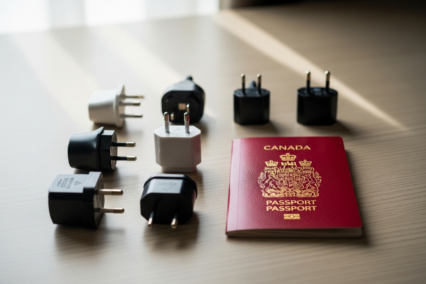
But, there are some times when a power adapter can still help you. For example, a universal adapter can give you more USB ports. This helps you charge more than one device at the same time, from only one outlet. Let’s look at what devices may still need an adapter in Colombia and how to pick the best travel adapter if you want to bring one with you.
Which devices need an adapter?
If you’re a Canadian traveller, you don’t need a plug adapter just for the shape of your plugs. Your phone charger, laptop cord, and other gear with Type A or Type B plugs will plug right into the outlets in Colombia.
You might want an adapter for your own comfort. For example, it helps when you have more items to charge, but there’s not enough outlets in your hotel room. A universal adapter with USB spots lets you charge your phone, tablet, and portable charger at the same time.
Bring an adapter if:
-
You have more devices than the wall outlets in the room.
-
You bring a three-pronged Type B plug, but there is only a two-pronged Type A outlet. A three-to-two-prong adapter will fix it, but you will lose the grounded connection.
-
You want to get more USB charging spots from one plug.
The options above make things easier when you travel with your chargers, plugs, and other devices.
Choosing the right plug adapter for Colombia
If you want to buy a plug adapter, maybe for future trips or to have more ports, picking the right one is simple. Because you are going from Canada, you do not have to get an adapter for plug shape compatibility, but you might want a universal power adapter, as it is often the best choice.
A universal power adapter works in many countries. This is good for any person who travels. The universal adapter often comes with sliders or parts you can change. You can set it up for different socket types, like type c, Type A, and Type B plugs.
When you pick an adapter, check for the following:
-
USB Ports: Having many USB ports is good. You can charge your phone and tablet at the same time.
-
Compact Design: Make sure the unit is light and all in one piece. This way it is easier to take along than many separate adapters.
-
Grounding: If you will be using three-pronged plugs, the adapter needs to allow for grounding.
-
Compatibility: You do not need this feature for plugs in Colombia, but make sure your adapter can be used with European (type c or F) and UK (type g) plugs. This will help for trips you take later on.
Where to purchase power adapters in Canada and Colombia
If you think a power adapter is a good choice for your trip, you will have no trouble finding one in both Canada and Colombia. In Canada, you can get it before you even go to the airport. This can help you feel relaxed and ready for your trip.
You will see that online shops like Amazon have a huge range of power adapters and things for travel. Many of these come with fast shipping. You can also buy one at electronics stores, shops with travel items, and some big department stores. There are travel stores at all major airports where you can get power adapters, but these may cost more.
If you do not buy an adapter before you leave, you do not need to worry about it. You can get one when you are in Colombia, too.
-
In Canada: You can check out stores like Best Buy, The Source, or Canadian Tire, as well as Amazon.ca.
-
In Colombia: Look in electronics stores in cities like Bogotá or Medellín. These are also sold at bigger supermarkets or right at the airport when you get there.
Power Converters and Transformers: What You Need to Know
While your plugs will work, you need to know if your device can handle the voltage. The little difference between Canada’s 120 V and Colombia’s 110 V is not a big deal for most things. But, some single voltage or high-powered items can need a voltage converter or a transformer.
Many new electronics are dual voltage. They can use a wide range of voltage without trouble. But, some things like heating appliances are only single voltage. In the next part, you will see when you need a converter and how you can spot dual voltage devices.
When you need a voltage converter or transformer
You will need to use a voltage converter or transformer only if you have a single voltage device that will not work with Colombia’s 110 V power. In Canada, the voltage is 120 V. Most Canadian appliances and devices should work in Colombia and will not need a converter.
The big problem is for people from countries that use 220-240 V electricity, such as Europe or Australia, when they use single voltage appliances. If you plug a 220 V device into a 110 V outlet, it will not break. But it may not work well or may not work at all. On the other hand, if you plug a 110 V device into a 220 V outlet, there is a good chance it will get ruined.
You might have to use a voltage converter if:
-
Your appliance says “INPUT: 120V” only, and it is a sensitive one.
-
You are bringing a strong appliance like a hair dryer that is made just for 120 V. In Colombia, it could work, but with less power.
-
You are coming with devices from a place with 220-240 V power, and they are not dual voltage.
Understanding dual voltage devices
A dual voltage device is an electrical item that works with many voltages. This makes it great for travel around the world. These devices can change on their own to the local power supply, so you do not need to carry a big converter or transformer with you to use them safely.
To check if you have a dual voltage device, look at the power label on the charger, the power brick, or the device. You want to find writing that says “INPUT: 100-240V” or something like that. When you see this, you know your device has voltage compatibility. This means you can use it in Colombia or most other places, and you do not need an extra converter.
Many electronics that people use every day, like the charger for laptops, smartphones, and tablets, are dual voltage. This helps a lot for people who travel. These days, you just need to get the right plug adapter if the shape of the socket is not the same. But if you are from Canada and going to Colombia, you will not even need an adapter.
Common devices requiring converters (hairdryers, curling irons, etc.)
Most of your electronics will work well, but some big appliances may need a voltage converter. These are mostly things that get hot, like hair dryers and curling irons.
If you want to take your favourite curling iron or hair dryer, be sure to check the label. Look for something like “100-240V.” If you do not see a range like that, it is probably a single voltage appliance. For example, if you use a 120V hair dryer from Canada in Colombia, where it is 110V, it might not work as well. It may run slower or not get as hot. If you bring a 220V hair dryer from Europe, you will need a voltage converter.
Some common things that might need a converter:
-
Older or cheaper hair dryers
-
Curling irons and flat irons
-
Electric shavers
-
Some kitchen appliances, if you plan to bring any
With these appliances, it is usually safer and simpler to buy a dual voltage or travel version before you go.
Frequently Asked Questions (FAQs)
Electrical outlets in Colombia are not the same as in other countries. If you travel from Canada or the U.S., you need to know about plug types. In Colombia, the plugs you will most often see are type A and type B. A lot of new appliances can work with dual voltage, so they might not need a converter. But if you have single voltage devices, you will need a voltage converter. To charge things like your smartphones or laptops, bring a universal power adapter. It is a good idea to check the power supply where you are going. Sometimes, power outages make it hard to use your devices in some places.
Do hotels in Colombia have universal power outlets?
Many modern or fancy hotels in Colombia might have universal power outlets or give you an adapter if you ask. Still, you should not depend on this. The usual power sockets in hotels are Type A and Type B sockets. If you are from Canada, your plugs will fit in these sockets. For people from other places, it is a good idea to bring a universal power adapter. This way, you can use your devices in Colombia without any problems with the plugs, sockets, or adapter.
Can I safely charge my phone or laptop in Colombia?
Yes, you can charge your cell phone, laptop, and many other electronics in Colombia. Most of these chargers are dual voltage. That means they work fine with the 110 V power supply there. The plugs fit too, so you can just use them as you do at home.
Are there any electrical safety tips Canadians should follow in Colombia?
The electrical safety tips for Colombia and Canada are much the same. Do not plug too many devices into one outlet. Stay away from using cords that are broken or worn out. You should also keep all electronics far from water. The power grid in Colombia is usually steady, but it is a good idea to use a surge protector for your valuable electronics.
Conclusion
To sum up, it is good to know about the different electrical outlets in Colombia before you travel. The plug types, voltage, and frequency there are not the same as in Canada. If you are ready for these changes, you will avoid problems. This will help you use your devices and appliances without any trouble. When you know what to expect, your stay in Colombia will go smoother. Make sure you check if your belongings have compatibility with the outlets you will find there. Also, get the right adapters and converters for your trip. Safe travels, and I hope you have many great moments in Colombia! If you want to ask anything or need some help, just let me know!