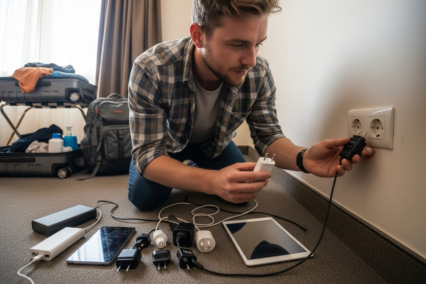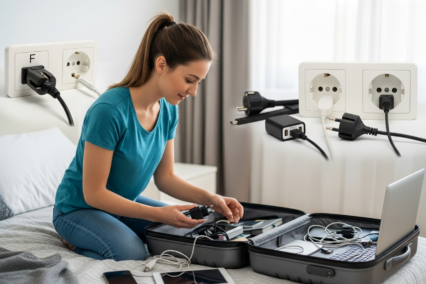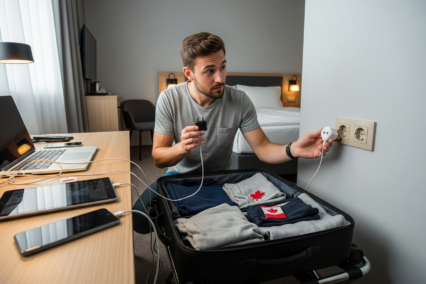
Key Highlights
Here are the key takeaways for your trip to China:
-
China uses three main plug types: Type A, Type C, and Type I.
-
The standard voltage in China is 220V with a frequency of 50 Hz. It is not the same as Canada’s 120V.
-
You will need a plug adapter for most of your Canadian electrical appliances.
-
A voltage converter is needed for single-voltage appliances, so you do not harm them.
-
Many newer devices like phones and laptops are dual voltage. You only need a plug adapter for these, not a converter.
-
Most hotels in China will have multi-functional sockets, but it is still smart to take a universal adapter with you.
Introduction
Planning a trip to China is exciting. But you need to think about small things too, like how to charge your devices. It is important for your trip to go well. The electrical system in China is not the same as what we have in Canada. The plug types and the standard voltage are different. This guide will tell you all you need to know about electrical outlets in China. You will learn which plug types China uses, and the standard voltage. This way, your phones, laptops, and other things will stay powered up the whole time you are there.
Overview of Electrical Outlets in China for Canadian Travellers
When you go to China from Canada, you will see that the power plugs and sockets there are not all the same as back home. In China, the main plug types are A, C, and I. If you have a two-prong Type A plug, it might work in some places. But your three-prong Canadian plugs will not fit. You will need a plug adapter to use your devices.
It is important to know about these differences so you can charge your stuff in a safe way. Let’s look at the different plug types you will find in China, and see how they are not like the ones you use in Canada.
Main Plug Types Used in China
China’s electrical system accommodates three main plug types: Type A, Type C, and Type I. Type A features two flat parallel pins, similar to what’s used in North America, but it’s not always a perfect fit. Type C has two round pins and is common in Europe.
Type I is the modern standard in China, especially for higher-power appliances, featuring three flat pins in a triangular shape. This type is also used in Australia and New Zealand. Since Canadian devices use Type A and Type B plugs, you’ll find that your three-prong plugs won’t fit without an adapter.
Here’s a quick breakdown of the plug types you’ll encounter in China:
|
Plug Type |
Description |
Common Use |
|---|---|---|
|
Type A |
Two flat, parallel pins |
Small devices like phone chargers |
|
Type C |
Two round pins |
Low-power electronics |
|
Type I |
Three flat pins in a triangle |
Laptops and higher-power appliances |
How Chinese Sockets Compare to Canadian and American Outlets
Wall sockets in China are made to fit many kinds of plugs. This can help people from other countries who travel there. The top part of a common Chinese wall socket can take both Type A with its flat parallel pins and Type C plugs. The bottom area is for the three-prong Type I plug.
This mix in design is not like what you find in North America. In places like Canada and the US, a wall socket is built only for Type A and Type B plugs. One big thing to know is not just about the shape but also about voltage.
Canadian and American sockets have a standard voltage of 120V. In China, sockets have a supply voltage of 220V. This means the wall socket gives out more voltage there. So, even when your plug fits in a Chinese socket, you have to check the device’s compatibility, or you might break it.
Understanding Voltages and Electricity Standards in China
For Canadian travellers, it’s not just the shape of the plugs that you need to think about in China. The standard voltage and the number of hertz for the electric supply in China are also very important. In China, they use a 220V standard voltage with 50 hertz. This is higher than the system in Canada, which is at 120V and 60 hertz.
Because of this big change in voltage, using just a plug adapter might not be enough for some of your things. Knowing about these electrical standards in China will help you keep your electronics safe. Next, we will talk more about voltage and what this means for your devices from Canada.
Standard Voltage and Frequency Details
The electrical system in mainland China always uses a standard voltage of 220 volts (V) and a frequency of 50 hertz (Hz). This is almost double the 120V standard that we use in Canada. This difference matters, because if you plug a device made for a lower voltage into a higher voltage plug, it can get too hot and break for good.
You should know that while mainland China uses 220V, the standard is not the same in all places close by. For example, Hong Kong uses 220V, but Taiwan uses 110V. That is much closer to what we use in North America.
There is also a difference in the frequency. Canada uses 60 Hz, but China uses 50 Hz. This can be a problem for some things with motors or clocks inside. Always check the voltage and hertz before you use your stuff in a new place.
Compatibility of Canadian Devices with Chinese Power Supply
The way your Canadian electronic devices work with the power supply in China depends on if they use single voltage or dual voltage. A lot of new things, like laptops, chargers, and cameras, are made to travel. These are often dual voltage. To check, look at the label on the power brick of your device.
If you see ‘INPUT: 100-240V, 50/60 Hz’ on the label, then your device has dual voltage. It will work with the 220V power in China. For these electronic devices, you just need a plug adapter so it will fit the Chinese wall socket.
Some things, like hair dryers and curling irons, are single voltage. They are made to work at only 120V. If you try to use these single voltage devices in China, you will need a voltage converter or a transformer. This helps step the voltage down so your device does not get damaged. Here’s how you can know which one you have:
-
Dual Voltage: The label will show a range of voltages (like 100-240V).
-
Single Voltage: The label only has one number (like 110V or 120V).
-
Action Needed: If you have a single voltage device, you must use a voltage converter.
Travel Adapters and Converters: What Canadians Need
If you are a Canadian going to China, it is important to pack the right things for your electronics. You will need travel adapters to help your plugs fit into Chinese sockets. But there is also a bigger question. Do you also need a voltage converter?
This depends on the kind of electrical appliances you have. An adapter helps change the shape of your plug. A converter changes the voltage for your appliances. Let’s look at how to pick the right travel adapters and when it is important to use a voltage converter on your trip to China.
Choosing the Right Adapter for Your Trip
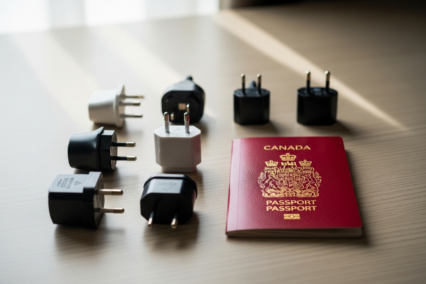
When you pick a plug adapter for China, you have some options. China uses three socket types—Type A, Type C, and Type I. The most helpful choice is a universal adapter. These adapters work with many plugs and sockets around the world. This will be good if you travel often.
Many newer universal adapters also have USB ports. This is useful because you can charge more than one device at the same time. You can plug in your phone and tablet, and you do not need separate power bricks for every device.
When you buy a travel adapter, think about these things:
-
Simple Plug Adapter: This works well if you have one or two devices and know which plugs you will need.
-
Universal Adapter: This is best for flexibility, and you also get USB ports with many of them.
-
Compatibility: Be sure the adapter you buy supports Type A, Type C, and Type I plugs. This will cover all the sockets you will find in China.
When to Use a Voltage Converter vs. a Plug Adapter
The difference between a plug adapter and a voltage converter is very important for the safety of your devices. A plug adapter just lets your plug fit inside a different outlet. It will not change the voltage or the electricity that comes from the outlet. A voltage converter is different. The converter works as a transformer. It brings down the voltage from 220V to 120V. This step is safe for your Canadian devices and powerful appliances.
You must use a voltage converter if you bring any device that is single voltage. Usually these are powerful devices, like hair dryers, curling irons, or electric shavers. If you use an adapter alone with these appliances, they can get too hot and break.
If your device says ‘dual voltage’ or ‘100-240V’ on it, then you only need a plug adapter. Many new chargers for phones, laptops, or cameras are built with this kind of compatibility. Always look at the label on your device before you plug it in.
Where to Find and Buy Plug Adapters for China
Finding a plug adapter for your trip to China is easy. You have a few good options for where to get one, both before you leave and after you get there. Most people like to buy an adapter in Canada before they leave, so they can be ready right away when they land.
But if you forget your adapter or you need one more, you can still buy one after you arrive in China. Plug adapters are sold all over China. You can find them at big electronics stores and at small convenience stores too. Now, let’s see where you can go to buy an adapter.
Buying Adapters in Canada Before Departure
Buying a plug adapter before you leave Canada is a good idea. You get to test it with your devices, so you know it will work. This helps you be ready to charge things as soon as you get to your hotel. You can find travel adapters at many stores in the country.
On amazon.ca and other online shops, you will see many adapters. Some adapters are simple with just one plug. Others are universal adapters and can handle more than one plug type, plus they have USB ports. You can look at reviews there, so you know which adapter is good for you. You can also visit stores like Best Buy, The Source, or look in travel and luggage shops to find them.
Here are some places where you can get an adapter in Canada:
-
Online Retailers: Amazon, Best Buy, and other electronics websites.
-
Electronics Stores: The Source, Best Buy, and local electronic shops.
-
Travel Stores: Retailers that have luggage and travel items.
Purchasing Plug Adapters Locally in China
If you are in China and do not have an adapter, do not worry. You can find power plugs and travel adapters in most major cities. Places with lots of tourists will have them for sale. There are many types of power plugs, so you do not have to look too hard to get one.
You can get a simple travel adapter at a local 7-Eleven, or at one of the convenience stores that are everywhere in China. If you want more types of power plugs and adapters, go to a big electronics store or a department store inside a shopping mall. They will have lots of options for adapters.
The price for an adapter is usually not expensive. Still, make sure to look at the plug to see if it fits your Canadian plug. Sometimes it is not easy to explain what you need because of a language barrier. To make it simple, bring a photo of your plug and of the socket so you can show them at the store.
Safety Tips for Using Electrical Outlets in China
If you use electronics in a country with a different electrical system, you need to take care. The voltage in China is higher, so there is a bigger risk to your devices. You must be careful or you could harm your things or run into a safety issue. Even small mistakes can burn out your electronics or cause a big spike in power.
If you follow some simple safety tips, you can use plug adapters and converters in the right way. This helps keep your electronics safe. Let’s talk about some basic things you can do to use electrical outlets safely in China.
Safe Usage of Plug Adapters and Converters
When you use a plug adapter or a voltage converter, safety has to come first. You need to check that you are using the right tool. A plug adapter changes the shape to work with your outlet, but a voltage converter is for matching the voltage. If you mix these up, your appliances could get damaged.
You should check your device before you plug anything in. Look at the voltage needs. If your device is single voltage like 120V, you have to use a voltage converter. Also, check the converter to see that its wattage is right for your appliance. Some devices need more power, so they need a strong converter.
Use these tips to stay safe:
-
Check compatibility: Always make sure your device is dual voltage, or use a converter with a single voltage device.
-
Secure the connection: Put the plug all the way into the adapter, and make sure the adapter fits well in the wall socket.
-
Avoid overloading: Try not to use too many strong appliances in one outlet or on a power strip, even with an adapter.
Protecting Your Devices from Power Surges
Power surges are quick jumps in voltage that can happen anywhere. These can damage electronics. Many new chargers come with some safety features built in. Still, using an extra layer of safety is a smart choice, especially when you travel.
A travel surge protector is a useful thing to have. It will soak up extra voltage and help to keep your things safe from harm. There are travel adapters that also have surge protection. You get both compatibility and safety in one item this way.
You don’t always need a big transformer or surge protector when you recharge small items like your phone. But, using one is a good move for computers like your laptop since they cost more. When there is a storm or you see the power going on and off, try to unplug your things for now, just to keep them safe.
Charging Common Canadian Devices in China
For many people from Canada, the main thing they care about is how to keep the daily devices charged. The devices could be their phones, tablets, and laptops. The good thing is that it is easy to charge these devices in China. These items are made for people who travel around the world.
But it can get tricky when you use appliances that need more power, like your hair dryer or other big devices. Here is what you need to know so that you can safely charge all of your things, such as your phone charger, a power bank for your phone, and your tablets, even when you are in China.
Charging Phones, Tablets, and Laptops Safely
Charging your key devices like your phone, tablets, or laptop in China is usually easy. Most of the new chargers be dual voltage, so they work with the 220V power supply in China. Always look for the words ‘INPUT: 100-240V’ on your phone charger or laptop to make sure.
If your devices be dual voltage, you do not need a voltage converter. You will just need a plug adapter that can fit into chinese sockets. Many new adapters also have usb ports, so you can charge many devices at the same time and not have to carry all their different power bricks.
Here are some good tips for safe charging:
-
Confirm dual voltage: Always check the words on your phone charger or laptop first.
-
Use a plug adapter: Make sure you get the right adapter for Type A, C, or I sockets.
-
Bring a power bank: A power bank helps to keep your devices charged all day, especially when you are out and about.
Using High-Power Canadian Appliances Abroad
If you want to use high-power Canadian appliances like hair dryers, curling irons, or straighteners in China, you need to be careful. Many of these powerful devices are single voltage. They are made for use in North America, where they run on 120V. In China, the outlets give out 220V. If you plug your appliance into a 220V outlet in China, even with an adapter, it will almost always get ruined.
To use your appliances in China, you need a voltage converter. Not every voltage converter is right for this. Get one that can handle how much power your device needs. For example, a hair dryer can use more than 1500 watts. You need to pick a voltage converter that is made for that much power so your device stays safe.
There is also an easy way to deal with this. You can buy a travel version of your appliance that is dual-voltage. You can also just use the hotel’s hair dryer. This helps save space and you don’t have to worry about packing a big and heavy voltage converter for your powerful devices when you go to China.
Hotel and Accommodation Outlet Options in China
When you check into your place to stay in China, you may find some good options for power plugs. Lots of hotels that welcome people from other countries use sockets that work with many types of plugs.
But, this will not always happen, especially in small hotels or if you go to areas that are far away. It is a good idea to get ready before your trip just in case. Here is what you can expect about plugs and sockets in Chinese hotels, and what to do if your room does not have an outlet that fits your plug.
Availability of International Sockets in Chinese Hotels
Many mid-range and high-end hotels in big Chinese cities, like Beijing and Shanghai, usually have things ready for people coming from other countries. In these hotels, you can often find rooms that have international sockets. These sockets can take different plug types. You might see plugs used in North America, Europe, or Australia that fit right into the wall. Some rooms even come with USB ports built right into the desk or wall.
Lots of these sockets have one spot for different plug types, like Type A, C, and I. This can help you charge all your devices without looking for an extra adapter. It’s a nice touch that makes travel much simpler.
But not every hotel will have these options. If the hotel is older, or if you stay in a budget place, or if you’re in a city area with fewer tourists, you might only see Chinese Type I sockets. For this reason, it’s smart to take your own adapter with you, just in case you need it.
Tips if Your Room Doesn’t Have a Compatible Outlet
If you get to your accommodation and see that your plugs do not fit the outlets, do not worry. There are a few easy ways to get your devices working again.
The first thing you should do is head to the front desk. Many hotels have some universal adapters to lend to people staying with them. This is pretty common, so go ahead and ask. It is usually the fastest and simplest way to fix the problem.
If the hotel does not have an adapter, you can buy one close by. Here are a few options you have:
-
Ask the hotel reception: Sometimes they have extra adapters that you can use for your stay.
-
Buy a universal adapter: Go to a local convenience or electronics store and get an adapter that will work with your plugs.
-
Use a power bank: If you need to charge your phone for the night, using a charged power bank could help until you find an adapter.
Conclusion
Navigating plugs and electrical outlets in China can look hard for Canadian travelers, but with the right info, it gets easy. The first thing you need to know is that China uses different types of plugs. The voltage there may also be different from what you use at home. Make sure that your devices have compatibility with these things so you can use them safely on your trip.
It is important to have the right travel adapters and converters before you go. This will keep your things charging up like they should. Always put safety first when you plug in your phone, camera, or other tech. You do not want things to break or overheat.
When you go to see big cities or quiet places in China, being ready helps you relax and make good memories. If you are still planning your trip, do not be afraid to ask for tips or help with plugs and travel adapters. Your next adventure in China will be even better when you are prepared.
Frequently Asked Questions
Will my North American phone charger work in China?
Most modern chargers are dual voltage (100-240V), so they work in China with its 220V system. But you will need a plug adapter to fit your charger into Chinese sockets. Always look at the label on your charger. Check that the voltage range matches before you plug it in.
Do Chinese hotels provide plug adapters for guests?
Many hotels in China, mainly the bigger ones that have people from other countries, give plug adapters to guests. You usually have to ask for one at the front desk. Some rooms also have universal sockets or even usb ports. But it is always a good idea to bring your own adapter, just in case you need it.
Are there any risks when using travel adapters in China?
The biggest risk happens when you plug a 120V device into a 220V outlet. This can break your device. An adapter will not change the voltage. To lower risks from power surges, try an adapter that has built-in surge protection. You should always use a voltage converter with any device that is not made for 220V.