Key Highlights
-
A vietnamese wedding is all about family, respect, and following loved wedding traditions.
-
In vietnamese culture, the family often helps to pick an auspicious date for the wedding ceremony.
-
Some key parts are the proposal, engagement, processional, altar prayers, and the tea ceremony.
-
The ao dai is common for wedding attire, and it has bright colours that people say bring good fortune.
-
There is a gift exchange, mam qua trays, and red envelopes which all have their own special meaning.
-
If you are an Australian guest, you should expect a warm and organised celebration that includes long-held custom and family etiquette.
Introduction
If you are going to a vietnamese wedding or planning one, it is good to know what each part of the wedding ceremony means. In vietnamese culture, a wedding is not just about two people. The day brings both families together in a special and respectful way. There are lucky dates, sharing tea, and family blessings. Every step in the wedding ceremony matters. If you live in Australia, knowing these things will help you understand the day. It will help you show respect and have a day you always remember.
Wedding Traditions in Vietnam That Australians Should Know
Vietnamese wedding traditions are a mix of unique wedding customs, key family roles, and strong cultural importance. In a traditional vietnamese wedding, the couple might pick a lucky wedding date with advice from a fortune teller. The wedding day often includes an engagement ceremony with mam qua, ancestor worship at the ancestor altar, and a tea ceremony to honour family members from both sides. Wedding attire, wedding gifts, and colours are all about showing respect and calling in good fortune.
If it’s your first time at one of these weddings in Australia, you may notice that the day feels much more planned out compared to western weddings. The groom’s family will commonly come to the bride’s house, often carrying gift trays covered with red cloth. There’s usually a bouquet of flowers, wedding rings, and red envelopes to see at the wedding reception. These days, modern couples might include a wedding gown, a big wedding feast, or other modern touches, while keeping the main traditions. Here is what you can expect from the most common vietnamese wedding traditions.
1. Choosing an Auspicious Wedding Date in Vietnamese Culture
One of the first things to do in a vietnamese wedding is picking the wedding date. This is not something the couple always do on their own. The parents can take the two to a temple, or ask a monk or even a fortune teller for help. They want to find an auspicious date, thinking it will help the marriage start strong.
A few things matter when they choose the date. They might look at birthdays, zodiac signs, and what season it is. Right from the start, you can see the whole event is done with family advice, meaning, and care.
-
An auspicious date is meant to cut down bad luck and help the couple have peace.
-
The whole family helps choose the date, which is part of what makes these vietnamese wedding traditions so different from others.
2. The Role of the Matchmaker and Family Introductions
Before the main ceremonies start, it is important for the two families to meet and get to know each other. In vietnamese wedding traditions, meeting the respective parents is a big part of the process. The families need to come together and see the wedding as joining two families, not just two people. That is why the initial proposal and formal visits really matter.
In a vietnamese wedding, the proposal ceremony sets things up. It gives both sides the chance to talk, welcome each other, and make their intentions clear. This part can seem more formal than what many australian guests are used to, but it helps people move ahead with respect and understanding.
-
The initial proposal helps the two households start talking to each other.
-
The respective parents help lead things along.
-
Family members are part of the process early, which is one of the main wedding traditions in these weddings.
3. Le Dam Ngo (Proposal Ceremony): Beginning the Journey
Le dam ngo is the proposal ceremony that starts off a traditional vietnamese wedding. This part is all about the couple’s intentions, showing respect, and getting family approval. Instead of jumping straight to the main party, both sides come together to honour the relationship in a planned way that has real meaning.
This proposal ceremony helps show how wedding traditions are set up. Family members on both sides take part right from the beginning. That’s because many people see marriage as something that joins two families, not just two people. You can spot this idea in almost every other ceremony after le dam ngo.
For Australians, this is the first thing to know about a vietnamese wedding. The proposal ceremony happens before anything else like the engagement ceremony, the big walk-in, saying prayers at the altar, and the reception. So, the wedding story begins well before the main event.
4. Le An Hoi (Engagement Ceremony) and Gift Exchange
Le an hoi, which people often call dam hoi, is the engagement ceremony in a vietnamese wedding. At this event, the groom’s family comes to the bride’s home and asks if they can marry. It is a big step in the wedding ceremony. They bring gifts in mam qua. These are red trays or baskets covered with red cloth. The groom’s family then gives these gifts to the bride’s family.
Giving and getting wedding gifts at the engagement ceremony really means a lot. It shows that someone is being honest, ready, and showing respect. Every family may give different things at a traditional vietnamese wedding, but some gifts are much the same. A lot of people know what they are.
-
Betel leaves and areca nuts are classic wedding gifts at an engagement ceremony.
-
Sometimes, they also bring a roasted pig.
-
The way people show the mam qua is an important part of the engagement ceremony.
This engagement ceremony is just the start. It is followed by other traditions like the tea ceremony. The tea ceremony is the time when both families get together and show respect to their elders.
5. Preparing Traditional Wedding Offerings and Gifts
Wedding gifts and wedding offerings are not random extras in a traditional vietnamese wedding. They are central to the structure of the day. Families prepare them carefully because the items represent respect, blessing, and support for the couple’s future.
The number and presentation matter too. Even numbers are preferred because odd numbers may be linked to bad luck. Gifts are often carried by family or attendants and displayed neatly before being accepted by the bride’s side.
|
Wedding offering |
Meaning or use in wedding culture |
|---|---|
|
Betel nuts |
A traditional symbol included in formal gift exchange |
|
Betel leaves |
Common offering presented with areca nuts |
|
Roasted pig |
A well-known ceremonial gift in some families |
|
Fruit, cakes, wine, sticky rice |
Practical and symbolic items carried in gift trays |
These wedding offerings help explain how the ceremony is structured from one step to the next.
6. The Importance of Ancestor Worship and Altars
Ancestor worship is a key part of vietnamese wedding traditions. At the wedding ceremony, both families may go to the ancestral altar to pray and bow. They do this to ask for blessings from those who have passed on. This shows just how much they value family, memory, and the line of ancestors.
For a lot of vietnamese families, you can not miss this ritual. It honours their ancestors and asks for help as the couple gets ready to start a life together. The focus on ancestor worship gives the wedding day a strong meaning that is based on both family and spirit.
If you are at a vietnamese wedding in Australia, you might notice that this part feels quiet and serious, not like the reception. But this is a big part of the wedding ceremony. It shows clear examples of how blessings are asked for—not just by words, but with prayer and signs of respect right there in the rituals.
7. Le Ruoc Dau (Wedding Processional) – Receiving the Bride
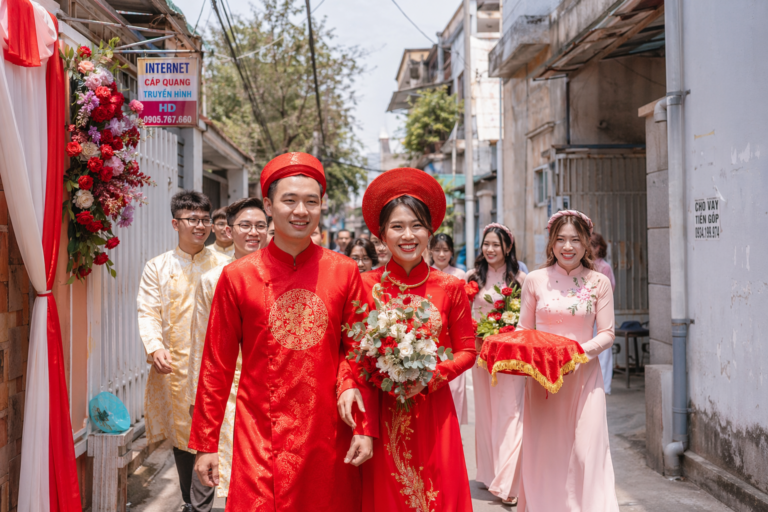
Le ruoc dau is a part of the wedding ceremony where the groom and his side go to the bride’s house. For many families, this the main moment that marks a big change in the day. The groom, his parents, and other relatives come in order. They often bring some gifts and a bouquet for the bride.
When they show up, the bride’s family waits outside to say hello, then welcomes them inside. The families hand over gift trays, which then stay near the altar. After that, a few people may give short talks. Next, the bride walks into the room. A parent often walks with her. The groom gives her flowers and sometimes a wedding band or some jewellery.
This custom is quite special in wedding culture. It stands out because families run the event, and it feels extra formal. For lots of Australians, this is one of the most unique and special moments of the whole day.
8. Prayers, Blessings, and Honouring Elders
After the families come inside, there are prayers and ways to show respect. This time in the wedding ceremony is about giving wedding blessings to the couple and thanking the people who brought them up. In Vietnamese custom, honouring older family members is not just a small part. It is a very important wedding tradition.
The couple might bow, pray at the altar, or thank their parents in person. In some families, there can be short prayers as well. These things show thanks and recognise all the hard work and care from parents and older family members.
-
Elders are honoured first as a sign of respect.
-
Family members pray or bow to ask for blessings.
-
Thanking parents is an important ritual within the wedding ceremony.
So, the wedding ceremony does have customs to give blessings to the couple. These customs always tie in with family respect and how people treat their family members.
9. The Vietnamese Tea Ceremony: Symbolism and Rituals
The tea ceremony is one of the most important parts of a traditional vietnamese wedding. At this point in the wedding ceremony, the couple gives tea to parents and older family members, starting with the oldest person first. This order is important because in vietnamese culture it shows respect and honours family order.
The ritual is not just a way of being polite. The tea ceremony is a big moment where both families meet in a formal way. It stands for saying thanks, showing everyone is accepted, and for coming together as one family. Some people may also say their vows and exchange wedding rings during this part, which makes the ceremony even more special.
After serving the tea, the couple sometimes gets jewellery, money, or a red envelope from their family. These gifts mean blessings and support. The tea ceremony means a lot for many families. It brings together tradition, family, and kindness, and this makes it the emotional centre of the day.
10. Le Thanh Hon (Wedding Ceremony) – Tying the Knot
Le thanh hon is the name for the marriage ceremony. This is the time when the couple says their vows and becomes husband and wife. Some families do these wedding traditions at home. For others, the marriage ceremony might be in a temple or a church, especially if the family is religious.
This way of doing things is now common. There can be family wedding traditions early in the day. Then later, a second marriage ceremony lets the bride wear her white dress and the groom put on his tuxedo. The traditional steps are still important and shape how the day goes.
For Australians, it can help to see le thanh hon as part of a bigger order of events and not just one thing. The marriage ceremony comes after many other steps, like the proposal, giving gifts, altar prayers, and the tea ceremony. These all lead up to the wedding traditions of the big day.
11. Le Cuoi (Wedding Reception) – Celebrating With Family and Friends
Le cuoi is the part of a vietnamese wedding where everyone can relax and have a good time. All the official rituals are done. Now it’s all about the reception. This is often the most familiar part for guests. At this point, there can be a big entrance, the first dance, some toasts, cake cutting, and lots of time to eat and chat with people.
But you still see special things from vietnamese wedding culture at the reception. The couple might take photos with each guest at the door before going in. After this, they usually go around to every table. They will thank people, greet their guests, and show respect to important family members and friends who support them.
People should get ready for a big wedding meal. Many vietnamese weddings have plenty of food, many courses, and lots to drink. The mood is upbeat, but the family members are always an important part of the day. It’s this mix of fun and respect that makes le cuoi stand out in a vietnamese wedding.
12. Post-Wedding Customs: Le Lai Mat and Returning Home
After the wedding, there are customs that show the celebration does not stop at the end of the reception. In wedding traditions, le lai mat means to go back home after you get married. This shows there is still a strong link between the new family and both of their families.
This is important, as a wedding starts a new family, but it does not mean you have to leave your old one behind. Even when the main parts of the wedding are over, keeping in touch with family and showing respect are still valued. This idea is found right through the wedding traditions.
For Australians, this is good to know. These wedding traditions are not just about one big day. They help shape what will happen later, because marriage is seen as a long-lasting connection that joins two households, not just two people.
13. Traditional Wedding Attire: Ao Dai, Khan Dong, and More
Traditional Vietnamese wedding attire is often built around the ao dai. The bride and groom both can wear this, but their colours are usually not the same. For example, the bride might wear red, and the groom could wear blue. These days, some couples pick other colours as well, but the shape of the outfit is still kept like the old days.
The khan dong, which goes with the ao dai, is a matching headdress. Most ao dai for weddings have high collars and long sleeves. This gives the wedding dress a put-together and graceful look. People wear this vietnamese wedding attire for family events at home, at a temple, or in a church.
-
The ao dai is the most common traditional wedding dress for both the bride and the groom.
-
Many couples change later into a white wedding gown and suit or tuxedo for a different part of the day or for the wedding party.
14. Family Roles and Duties Throughout the Ceremonies
Family members take an active part in the wedding ceremony. In vietnamese wedding culture, the sides of the family do more than just show up. They lead, host things, carry gifts, welcome everyone, and stand for the couple in big moments. That is why the wedding feels like something that belongs to all.
When there are processions or things done at home, you might see extended family members join the entrance or help with giving gifts. Parents will speak for the couple, accept gifts, and help say what happens next. This shows that marriage means both families join as one.
-
Parents lead the way with introductions and agreeing to the marriage.
-
Relatives carry gifts and walk together.
-
Extended family helps both sides to come together for the day.
This strong family part is something most Australians spot straight away.
15. Vietnamese Wedding Cuisine and Feast Traditions
Food is important at the wedding reception and in earlier parts of the ceremony too. In a traditional vietnamese wedding, what you see on the table is full of meaning and serves a clear purpose as well. The families might get gift trays ready with fruit, cakes, wine, sticky rice, and a few other party foods.
Guests at the reception will find a big wedding meal waiting for them. Sometimes there are eight or even more courses, with drinks flowing and toasts happening over and over. All this food and drink helps the event feel warm, open, and shared by all.
-
You might spot pandan rice cakes in the special gift trays.
-
Roast pig or candied fruits can sometimes be on the wedding menu, depending on what the family chooses.
If you’re coming from Australia, be ready to eat, raise a glass, and take part in a happy meal that’s full of vietnamese wedding tradition and plenty of good company.
16. Gift-Giving Etiquette for Guests at Vietnamese Weddings
For wedding guests, one thing is simple about wedding etiquette. Giving wedding gifts is always expected. At a traditional vietnamese wedding, people usually give money in a red envelope. They do not often give boxed presents. This is both practical and means a lot.
This gift is to help the couple start their new life. It is a way to wish them good fortune and offer some money support. It can also go towards the meal, so the couple doesn’t start their marriage in debt. Because of that, this act is viewed as thoughtful and useful, not cold.
If you are going to a vietnamese wedding as an Australian guest, you should use clean new bills or write a cheque. Remember to write your name on the envelope. wedding guests usually give these wedding gifts at the reception when greeting the couple or when the couple goes to each table to say thanks.
17. Regional Differences: Weddings in North, Central, and South Vietnam
There are some differences between regions, but most wedding traditions in Vietnam show the same key patterns, not a long list of changes for each area. At every traditional vietnamese wedding, you will see the same main things again and again: the family has to agree, gifts are given, there is an altar for rituals, people serve tea, and there is a big party at the end.
What changes is often how each family plans the day. The guest list, the size of the party, and what food or gifts to use can be different. In big places like Ho Chi Minh City, couples might go for newer ways to plan, and often pick venues, but the big moments remain the same.
-
Regional differences might change how the wedding looks and when it happens.
-
Weddings in Ho Chi Minh City tend to be influenced more by modern ways of doing things.
-
No matter the local changes, a vietnamese wedding still centres on family traditions.
Being able to change things but also keep the heart of these wedding traditions is what really makes a traditional vietnamese wedding stand out.
18. Modern Influences and Blending With Western Customs
Many modern couples mix old traditions with parts people often see in western weddings. This may be keeping family-led home rituals, then having another wedding ceremony at a church, temple, or a formal place. It can also mean having events over two days. This helps make the time less rushed.
On the wedding day, a bride may start out in traditional clothes first and later change into a white wedding dress. The groom might do the same and switch into a suit or tuxedo. The changes help couples stay close to vietnamese wedding culture and still wear what they like at the same time.
This mix is an easy way to explain how Vietnamese-American weddings often go as well. The traditional layout is still in things, but modern couples change the timing, what they wear, and where the wedding is held. This helps to fit what the family wants and goes with what people hope for today.
19. What Australian Guests Should Expect at a Vietnamese Wedding
If you go to a vietnamese wedding for the first time, you will see the day is full of respect, order, and family support. A traditional vietnamese wedding often starts with things done at home before everyone heads to the bigger party, so it can feel like more of an event than an average Australian wedding.
You will see gift trays, parents saying a few words, prayers in front of the altar, a tea service, and some very formal hellos and goodbyes. As the night goes on, things get brighter with a happy reception. People take photos together, make toasts, talk at tables, and a big meal comes out. This way of mixing the serious parts with fun is what stands out in vietnamese wedding traditions.
-
Be ready for serious customs first, then a big party after.
-
Bring a red envelope if you wish to give money.
-
Dress smart and neat. People think how you look and respect the day is very important in this wedding culture.
When you know how things go, it is much easier to sit back and have a good time.
Frequently Asked Questions (FAQ)
People often ask about vietnamese wedding traditions before going to or planning one of these lively events. The tea ceremony comes up a lot. In this part, the couple shows respect to their families. Family members are also important in the celebration. Their role is big in vietnamese culture and wedding traditions. Many people want to know about the red envelope, too. It is a way to wish the couple good fortune. The red envelope helps keep the community feel strong in vietnamese wedding traditions.
What is the significance of the tea ceremony in Vietnamese weddings?
The tea ceremony is important in a vietnamese wedding. It shows respect, thanks, and brings people together. At this wedding ceremony, the bride and groom give tea to their family members. They usually start with the oldest people first. In the wedding, it means both families now accept each other.
What should Australian guests wear when attending a Vietnamese wedding?
Australian wedding guests should wear neat and respectful wedding attire. You do not have to wear an ao dai unless you are asked to, but people will like it if you wear it the right way. For a traditional vietnamese wedding, it’s good to choose a simple wedding dress, a suit, or another tidy look. These are safe choices for wedding guests at a vietnamese wedding.
How do Vietnamese weddings combine tradition with modern elements?
A vietnamese wedding will often still use family traditions like giving gifts, altar prayers, and serving tea. But, more modern couples also include ideas from western weddings. These can have a wedding ceremony at a venue, a white wedding gown, a tuxedo, and new ways to do the reception.
Are there any special customs for blessing the couple in Vietnamese weddings?
Yes. At a vietnamese wedding, people give prayers, bow, and show respect as part of the wedding ceremony. Ancestor worship plays a big role. Elders are honoured before anyone else. These vietnamese wedding traditions bring support from ancestors and family members when the couple starts their married life.
Conclusion
In the end, learning about Vietnamese wedding traditions gives people in Australia a chance to see something special. It lets you look into a mix of culture that has many meanings. Every step in a vietnamese wedding, from picking the right wedding date to the tea ceremonies, has a part in bringing families together and showing respect for their history. As you get ready to go to a vietnamese wedding, knowing these wedding traditions adds to your experience. It also shows care and thanks for what the couple values. Wearing the classic outfit or joining in these rituals helps you take part in good ways. If you want to know more about vietnamese wedding traditions and how you can join these great moments kindly seek out advice or a consultation.