Key Highlights
-
Common british wedding traditions include the white dress, the veil, and the first dance.
-
Many of these started back in the Middle Ages, when the wedding often came from family agreements.
-
It was a practical idea for the groom and bride to not see each other before the wedding day, not just a romantic rule.
-
People still follow the “something old, something new, something borrowed, something blue” saying.
-
These days, couples like to keep the traditions they love and skip the ones that don’t fit them.
-
There are now many regional and modern choices that help shape UK weddings.
Introduction
If you are in Australia and want to plan, go to, or just learn about a wedding in the UK, it’s good to know where british wedding traditions started. Many things you see on the wedding day have been around for a long time, while some new couple might change things to fit with today’s way of living. The pageantry of royalty, old fears, or what people think is lucky—these have shaped each wedding in the United Kingdom. In the end, for a new couple, what matters most is this: traditions can help make your wedding day special, but you don’t have to let them rule everything.
Iconic British Wedding Traditions Every Australian Should Know
Some of the most well-known british wedding traditions are easy for people to notice. When you think about a wedding, you often see the white dress, the wedding dress with a veil, and that famous saying about something old, something new, something borrowed, and something blue. These customs are still loved today, because they bring so much meaning and they feel good to people.
Back then, the reason for these british wedding traditions was not always the same as what people think now. Some of them had to do with your place in life, some showed your family, and some were all about bringing good fortune. In the next parts, you will see how these ideas first started and why the white dress, the veil, and these old customs still matter today.
The White Wedding Dress and Its British Roots
A long time ago in Britain, brides did not pick just one colour to wear. Most women would wear their best clothes, often what they wore to church on Sunday, because it was not easy to own many dresses. Things changed in 1840 when Queen Victoria wore a white dress to marry Prince Albert.
After this, a white dress became a big part of british wedding traditions. Over the years, white and ivory became the main colours for a wedding dress. Many people began to think the look showed purity, beauty, and that the day was special. The veil stayed as an important part of what many saw as the classic bridal look.
These days, lots of people still like the style of a white dress and veil, but it is not the only way. Some brides want other colours, maybe for second weddings or if they are older. Because of this royal moment, the tradition grew, but now people often make it their own with new ideas.
“Something Old, Something New, Something Borrowed, Something Blue” – Meaning and Customs
This rhyme is still one of the best-loved parts of british wedding traditions. On the wedding day, the bride puts on things that stand for family, support, and bright hopes for the future. It is not about following strong rules, but more about putting meaning into the day.
Each item means something different:
-
Something old often comes from the bride’s family, like an old heirloom.
-
Something new hopes to bring good fortune and a happy life to the new couple.
-
Something borrowed is there to show that loved ones are with her, while something blue stands for faith and loyalty.
In the past, there was also a silver sixpence put in her shoe. This was to bring wealth and happiness to the new couple. You do not see it much anymore, as the coin is rare now. Still, many couples love the whole idea because it brings charm to the wedding day and helps keep bad luck away.
Uniquely British Ceremony Rituals and Their Significance
Not all customs at a wedding are about what the bride puts on. Some of the most memorable british wedding traditions have to do with things that happen during and after the ceremony. These include special gestures from guests and set roles for family members. These moments help make the day what it is.
You will see how these rituals bring together old ways and what people choose to do now. From the father of the bride walking someone down the aisle to the first dance kicking off the party, each tradition holds a story. Let’s look at a few examples now.
Throwing Confetti, Rice, and Other Symbolic Gestures
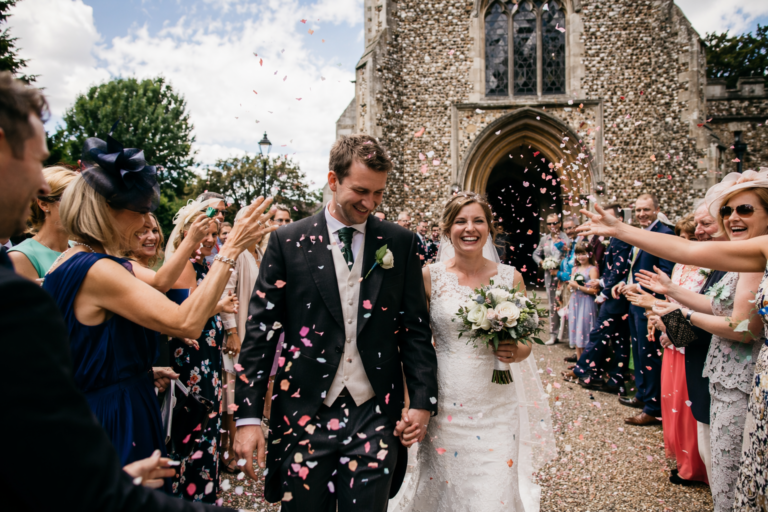
Celebratory throwing after the ceremony is often linked with wishes for happiness, abundance, and good fortune. While the compiled history here focuses more strongly on cakes and older symbolic practices, the wider idea fits neatly within british wedding traditions: guests mark the couple’s exit with a public sign of joy.
Some of these customs reflect older beliefs that go back to the Middle Ages, when wedding symbolism often centred on fertility, prosperity, and family success. In the same spirit, even the wedding cake developed from a medieval stack of sweet bread rolls that the groom had to kiss the bride over.
|
Symbolic gesture |
Meaning or historical link |
|---|---|
|
Throwing items after the ceremony |
A public wish for happiness and good fortune |
|
Sweet bread rolls in medieval weddings |
An early form of abundance symbolism |
|
Tiered wedding cake |
A later version of that older medieval custom |
Today, couples may keep these gestures because they create a cheerful send-off, even if the original meaning is no longer front of mind.
Traditional Roles: Bouquets, Bridesmaids, and the Giving Away of the Bride
One of the best-known parts of a UK wedding day is when the father of the bride walks his daughter down the aisle. Long ago, this was done at weddings because the bride was seen as belonging to her father before she got married. The bride would also stand on the left side, away from the groom’s sword arm.
But now, that idea has changed for many people. Most see the walk at a wedding day as a family moment. It is not about handing over a person. Modern couples also change how things are done so that the wedding fits their life and what they care about.
You might now see:
-
the father of the bride still walking his daughter, but just as a special family act
-
a mum, brother, sister, or even the bride’s child walking with her instead
-
the bride deciding to walk by herself, like Meghan Markle did for part of her wedding day
While there is not much in this about what the bouquet stands for, it does show that wedding day traditions keep changing. Modern weddings keep these roles, but couples add their own ideas, while holding on to what makes the moment special for the bride, groom, and their families.
Modern Trends and Regional Variations in UK Weddings
Many british wedding traditions can still be seen today. But the way couples now use them has changed. The wedding day is often more easy-going. It is also less strict and shaped around what people want. This has become a big change from old customs. In the past, these were about family duty, religion, or status.
For a new couple, the main question is not “Do we have to do this?” The question now is “Does this suit us?” This new way of thinking is changing things all over the UK. Young people and what is popular in the area now decide what stays, what goes, and what gets changed on the wedding day.
Evolving Traditions Among Younger Couples
Younger couples in the UK are now changing British wedding traditions in their own way. The biggest change you see is not that they cut out the past completely. They just pick what they find fun, useful, or special for their wedding day. What feels old or not needed is left out.
That can look like this:
-
some couples choose to have a ‘first-look’ before the ceremony instead of staying away from each other
-
brides might show up with their mum, a brother or sister, their children, or come by themselves
-
more brides are now wearing colours other than white on their wedding day
This really shows how new wedding day customs work. Now, weddings are more about love, who you are, and your true family life, instead of just old rules. For a new couple, these changing British wedding traditions bring freedom. The main advice is easy to get: keep the things you like, and leave out parts that do not suit you.
Distinctive Customs from England, Scotland, Wales, and Northern Ireland
The compiled information does not break customs down by England, Scotland, Wales, and Northern Ireland in detail. What it does show is that british wedding traditions share common themes across the UK, especially where customs began in older social structures shaped by the Middle Ages.
Because the source material focuses on broad UK practice, the safest way to understand regional variations is to see that modern couples in different places may adapt the same core traditions in different ways. The shared customs remain recognisable, even when the style changes.
|
UK area |
What the compiled information supports |
|---|---|
|
England |
Shared traditions such as the white dress, veil, first dance, and giving away the bride |
|
Scotland |
Broad UK customs may appear, with modern adaptation by couples |
|
Wales |
Core british wedding traditions remain relevant, though personalised |
|
Northern Ireland |
Similar traditional elements, adjusted to suit the couple |
So while the source does not list region-specific rituals, it does confirm that choice and adaptation now sit alongside older UK-wide customs.
Conclusion
To sum up, getting to know British wedding traditions can add something special to your day. You get a bit of history and meaning. Things like the classic white wedding dress and the “something old, something new, something borrowed, something blue” really help connect the family. They let people share good memories from year to year. When you get ready to plan your wedding, you might want to bring in some of these lovely rituals. You can still put your own style into it all. You can stick to the old ways, try new ideas, or mix both. Doing what feels right for you will make your day stand out even more.
If you want help or have any questions about mixing British wedding traditions into your Australian wedding, just ask!
Frequently Asked Questions
How do British wedding superstitions influence ceremonies today?
Some british wedding traditions still show old ideas about bad luck and good fortune. You might see this when couples do not see each other before the wedding day. There is also the custom of wearing a few special things from the famous rhyme. For a lot of people, these are now just nice wedding day touches, not hard rules, to help bring good fortune or keep away bad luck.
What makes British wedding traditions different from Australian ones?
One big thing that stands out is how british wedding traditions still link to customs from the middle ages. Things like giving away the bride or wearing a veil have deep roots in that time. If you are a new couple in Australia, you may find the UK style seems much older and full of old meaning. But now, some parts change with the place and choices. It makes everything less strict than before.
Are traditional British wedding customs still popular with new generations?
Yes, but they are being changed. Many people in the new generation still like british wedding traditions like the white dress, first dance, or things that have meaning for the bride. The difference now is that the new couple have more say in what happens on the wedding day, so traditions are becoming more about them and feel more personal. People like that these plans are now more flexible too.