Key Highlights
-
Dutch wedding traditions often focus on a simple wedding ceremony at first, followed by a casual party.
-
A dutch wedding usually has witnesses there, and a master of ceremonies to help things run well, along with a signed marriage certificate.
-
After the official part, the wedding guests greet the happy couple and sometimes throw flower petals for them.
-
Some well-known dutch wedding traditions are having bitterballen to eat, wedding speeches, the bouquet toss, and getting everyone up for that first dance.
-
The wedding cake is important, with a first bite between the couple and saving the top layer for later, all being part of many celebrations.
-
If you’re Australian, the flow will seem much the same, but having a civil focus at the wedding ceremony is something different.
Introduction
If you go to a dutch wedding, you will see a style that feels warm and down-to-earth. It is very much a part of dutch culture. Most wedding traditions in the Netherlands are simple. But each one means a lot. People put a lot of attention on the legal ceremony, close family, and the good moments they share with everyone. Some customs may look a bit like what Australians do at weddings, but others are unique to this place. If you know some of the basics, you feel more comfortable and can be respectful to everyone there, and you will be ready to get the most out of the big day.
Wedding Traditions in the Netherlands: Culture and Customs Australians Should Know
Many Dutch wedding traditions follow a clear order. The couple gets ready, then there is the wedding ceremony. Guests come up to say congrats, and after that, there is cake, drinks, dinner, and dancing. Some common Dutch wedding traditions are the witnesses signing the marriage certificate, tossing the bouquet, giving speeches, the first dance, and sharing Dutch snacks at the reception.
What stands out is how strong the focus is on the civil part. In Dutch culture, the legal side of the wedding day is very important. The official part of the wedding is usually simple, not as big as what you might see in other countries. To help you see what it’s like, here are wedding customs to know if you are coming from Australia.
1. The Dual Ceremony: Civil and Religious Nuptials
A Dutch wedding ceremony often starts with the civil ceremony. This part is handled by someone from the registry office who has the right to do weddings. The civil ceremony can be at the local council place or somewhere else that is allowed. At the end, the couple and their witnesses sign the marriage certificate.
This step is what makes a Dutch wedding a bit different to weddings in other countries. The official part of the wedding does not take very long. The official speaks, the couple share their vows and wedding rings, then the witnesses sign to say they were there.
Some couples have a church wedding after, but the civil ceremony is the bit that makes everything legal. This way of doing a dutch wedding stands out to Australians, as they might expect one wedding ceremony for both the legal and the special part.
2. The Role of the Ceremoniemeester (Master of Ceremonies)
One key person at a Dutch wedding is the master of ceremonies, or ceremoniemeester. This role helps the wedding day run well. The best man and maid of honor are there in some ways through the witnesses, but the master of ceremonies looks after what goes on for all of the wedding party.
This person will help guide wedding guests to where they need to be and tell them what’s next. They also talk to suppliers and speakers. Their job is more about doing things right than giving meaning, which fits the simple and quick style of many Dutch weddings.
Typical jobs for this person are:
-
guiding wedding guests to seats before the ceremony
-
showing people where to go for the reception or what comes next
-
telling everyone when there will be speeches, acts, or other key moments on the day
3. The Bridal Bouquet and Flower Symbolism
At many Dutch weddings, the groom gives the bride her bridal bouquet when they see each other for the first time on the wedding day. They usually get ready on their own before this. That first time together can be a lovely tradition, setting a warm feel for the wedding ceremony without making it too formal.
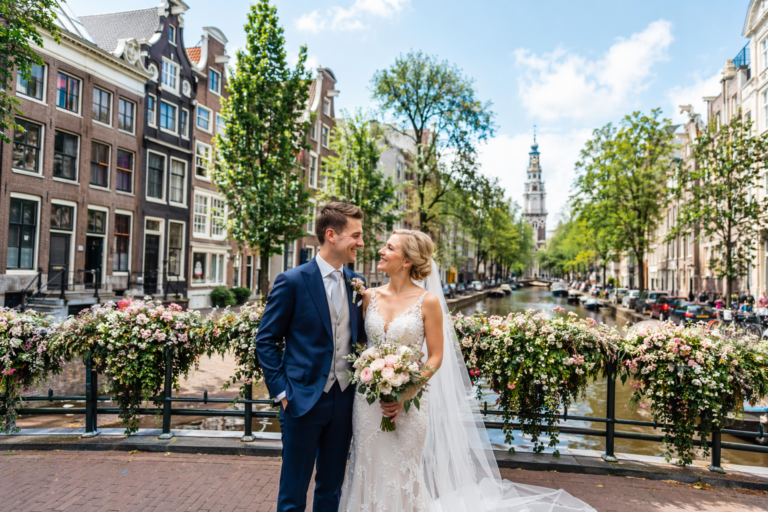
Flowers show up again after the official part. When the main part of the day is over, guests often stand outside the venue and make an erehaag, which is an honour guard. The couple walks between two rows of people, who shower them with flower petals. It helps turn their exit into a bright and happy moment.
You may also see these flower customs:
-
the bridal bouquet toss, which people say brings good luck to the next woman who will get married
-
using flower petals by guests as the couple leaves
-
smaller bouquet picks if the bride would like to keep her main bridal bouquet
4. Traditional Dutch Wedding Attire and Dress Codes
The compiled information points to a practical approach rather than strict national dress codes. On the wedding day, the Dutch bride usually gets ready with close female family members and friends, while the groom arrives later and presents the bouquet. The emphasis is on the sequence of the day, not on a highly prescribed costume tradition.
That said, who sits where and how people enter can shape the feel of the event. Family often sits in the front rows, and the couple may enter together, one by one, or with a parent. This gives couples flexibility within a recognisable Dutch format.
|
Wedding attire or dress codes detail |
What the compiled information shows |
|---|---|
|
Dutch bride preparation |
Assisted by close female family and friends |
|
Groom’s role before ceremony |
Picks up the bride and gives the bridal bouquet |
|
Guest seating |
Front rows usually reserved for family |
|
Ceremony entrance style |
Couple may enter together, separately, or with a parent |
|
Overall tone |
Simple, practical, and not heavily rule-bound |
5. The Wedding Procession and ‘Bruidsstoet’
A Dutch bridal procession can be less formal than what people in Australia might expect. There is not always a set way for people to enter the space where the ceremony is held. Most of the time, the wedding guests will take their seats first, with family sitting up in the front rows. Then, the bridal couple comes in however they want.
One thing that feels very Dutch happens after the official part. When the marriage certificate is signed and the couple leaves the room, wedding guests often wait outside the wedding venue. They line up in two rows to make a path, which is called an erehaag.
The bridal couple then walks through this path. People may throw flower petals or rice as they go. This Dutch tradition turns the exit into a special moment for everyone. It gives friends and family a chance to join in and show their happiness as the pair begins married life.
6. Unique Dutch Reception Foods and Drinks
A dutch wedding reception is the time when people say well done to the couple. There’s a laid-back feeling, because everyone likes to chat and eat. After the ceremony, guests meet up with the bride and groom. There is cake, drinks, and some little things to eat. This all happens before dinner or the start of the party.
Some things are always there. Bitterballen is a favourite snack. Pieces of cheese are also seen a lot. Many times, there is champagne for the toast. Some couples like to do champagne sabring to make the moment special. The wedding cake is usually cut at the reception and shared with everyone.
Common foods and drinks at a dutch wedding reception are:
-
bitterballen and cheese for a bite before the meal
-
champagne to make a toast, sometimes opened in a showy way
-
wedding cake is handed out soon after the ceremony
7. The Wish Tree and Gift-Giving Customs
People in Australia should know that the details above do not talk about a usual wish tree. This is not a well-known custom for everyone in the country. In the Netherlands, people mostly have speeches, small acts, and let guests join in during the dinner or party.
But there is still room for good wishes. Family members and close friends might stand up and say something, sing, or do a short act for the happy couple. Here, what they want to say means more than how they do it. Instead of a wish tree, these good wishes come straight from the people most close to the bride and groom.
From what we can see, people mostly give gifts and say good wishes by:
-
speeches or little acts from close friends or family members
-
public congratulations at the party after the main service
8. Bitterballen and Other Dutch Reception Treats
If you ask what food gives a Dutch feel at a wedding, bitterballen are one of the first things people think of. They are said to be a big hit with wedding guests, both at the reception and out on the dance floor. Once served, these treats often disappear fast.
But, that’s not all you find. There is also cheese, which is a common snack at a Dutch wedding. This kind of food matches the friendly, easy-going style of most Dutch events. These snacks aren’t meant as a big meal – instead, they help people talk, laugh, and celebrate together as they move around.
For Australians, seeing these Dutch wedding traditions is a real joy. It’s clear that a Dutch wedding has structure for the ceremony, but once the party gets going, it’s relaxed and welcoming for everyone.
9. Wedding Cake Traditions and the First Bite
The wedding cake is a big part of many Dutch celebrations. You usually see it at the reception. After the ceremony, people come together to say congratulations to the married couple, and the cutting of the cake is one of the first things everyone shares.
There is a well-known custom right after that. After the first piece is cut, the bride and groom give each other a bite to eat. That first bite is a fun and well-known ritual that many Australians would get, even if it happens at a different time in the day.
There is one more thing people do with the wedding cake. Some couples keep the top layer in the freezer for a year. Then, they eat it on their first anniversary. It is a simple way to add something to look forward to on a day already full of good moments.
10. The Opening Dance and Musical Moments
The opening dance is often when the wedding party really starts. In what we found, this is the time some guests see the happy couple first. This moment helps the day move from being formal to a more relaxed party.
The first dance does not have to be long or hard. The important thing is that the happy couple are the first to step on the dance floor. If this does not happen, the party can take longer to pick up. The music also tells everyone the wedding party has started.
Family is part of this moment, too. After the first dance, parents of the bride and groom often take to the dance floor. It is a nice way to join the wedding party with the families and make everyone feel included.
11. Family Roles and Involvement in Dutch Weddings
Family members are easy to spot at lots of Dutch weddings, even when the day itself is pretty simple. The bride will often have close family and mates there with her to help get ready. You will see family sitting in the front rows during the ceremony, so you know they are special, but it won’t feel too formal.
Some jobs look a bit different to what we are used to in Australia. The people who act most like the best man or maid of honor are the witnesses. They sign the papers and might also help plan things before the wedding. The parents might walk in with the couple, have a dance, or take part in special parts of the day.
Family members usually help like this:
-
close family helps the bride get ready
-
parents walk in with the couple or join in for a dance later on
-
witnesses may do best man and maid of honor jobs and sign documents
12. Regional Differences in Dutch Wedding Traditions
The information shows that there are not big differences between regions in the Netherlands. It gives a clear look at dutch tradition that you will see at many weddings. Most weddings include a civil ceremony, witnesses, people saying congratulations after the official part, some cake, speeches, and a party in the evening.
This tells us that most of the differences you see at weddings are personal. They do not come from the region. Couples get to choose a lot, like the way they arrive, if they have a church wedding, who gets invited for dinner, and what things happen during the party or reception. There might be some small local preferences, but those are not covered in the information.
The information does show that couples can change things like:
-
how they plan the day with the ceremony, dinner, and party
-
which wedding customs they keep, skip, or make their own
13. Modern Twists: How Dutch Couples Blend Tradition with Today
Modern Dutch weddings still keep much of the legal and social order from the past, but they also let people make their own choices. The information shows this well. A couple can choose a municipality official, a professional celebrant, or let a friend or family member—who’s had special training—lead the ceremony for the day.
You can spot both old and new ideas in these events. Some customs are taken from other places, like the “something old, something new, something borrowed, something blue”. Others are still very Dutch, like serving bitterballen, creating an erehaag, or having the master of ceremonies play an important part.
This says a lot about Dutch culture. The wedding day stays neat and well run, but the couple can add their own touches. There are many popular options like speeches, the shoe game, an A.B.C. activity, tossing the bouquet, and a simple first dance that helps everyone get into the fun.
Conclusion
To sum up, knowing about wedding traditions in the Netherlands can make your time at a Dutch wedding even better, especially if you’re an Australian guest. Dutch weddings often have two parts and include things like the wish tree and the first dance. These special moments show just how colourful Dutch culture can be. When you join in with these wedding traditions, you help make the day more fun and you get to share a close moment with the couple and their families. If you’re going to a dutch wedding soon, remember these tips so you can relax and join in the fun. And if you want to know more about the wish tree or other Dutch wedding traditions, just ask someone for help.
Frequently Asked Questions
What should Australians expect when attending a Dutch wedding?
At a Dutch wedding, the wedding guests can expect a clear plan for the day. Everything is built around the civil ceremony. After that, people say good wishes to the couple, eat cake, and have some drinks. Many times, there is a party later in the evening as well. The mood is usually relaxed and practical. This style fits Dutch culture well. Family and witnesses also have clear roles in what happens on the big day.
Are there any quirky or unique Dutch wedding customs to look out for?
Yes. Dutch wedding traditions often have an erehaag where people toss flower petals. The bride may also toss the bridal bouquet for good luck. At the reception, you can find bitterballen. There are usually games or guest performances, too. The information does not show a wish tree as something people always do. But, the bridal bouquet and saying congratulations in public are common on the wedding day.
How do Dutch wedding traditions compare to Australian ones?
Dutch wedding traditions have much in common with those in Australia. You will still see the wedding cake, speeches, dancing, and the way family members take part. The main thing that makes a Dutch wedding different is the focus on the legal wedding ceremony. There, witnesses need to sign documents, and the official part is usually more simple before the wedding party really starts.