Key Highlights
-
In Tanzanian wedding traditions, the bride’s family, the groom’s family, and their extended family are at the heart of the wedding day.
-
In Tanzanian culture in East Africa, wedding plans can need people from the community to help with money, a committee, and updates talked about in person.
-
A wedding ceremony may have some symbolic rituals, family promises, and religious parts as well.
-
Traditional attire plays a big role, and it is common for people to change outfits for the ceremony and the lively celebrations after.
-
These celebrations are lively with dancing, the giving of gifts, a wedding cake, and plenty of food shared with everyone.
-
Australians who get married in Dar es Salaam or in other places should also know about the marriage contract and all legal steps in the wedding ceremony.
Introduction
If you are in Australia and want to know about wedding traditions in Tanzania, it is good to understand that Tanzanian culture puts strong value on family, faith, and the need to support each other. Weddings in East Africa are both serious and happy together. The day is not just for the couple. It shows their links to the people around them and how everyone comes together. This makes the weddings in Tanzania stand out, with many layers and details. You may find they are not the same as what you see at a wedding in Australia.
The Foundations of Tanzanian Wedding Traditions
Tanzanian weddings are full of wedding traditions that link marriage to cultural identity, religion, and the extended family. From the start, people have many conversations, and both sides help to prepare for the wedding ceremony. This shared work is one of the most important parts of Tanzanian weddings.
Still, these customs can be different in Dar es Salaam and among different ethnic groups. People from different ethnic groups often follow their own ways, and even families in the same place may have a wedding that does not look the same as another. But, some things stay the same. Most weddings include the extended family, show many symbolic acts, and make it clear that marriage is about joining two bigger groups, not only the two people getting married.
Overview of Tanzanian Marriage Customs
In Tanzania, the road to getting married often starts with both the bride’s family and the groom’s family. The couple usually does not plan things alone. Traditional customs are strong, so both families get to have a say from the beginning. The wedding ceremony is a big moment. It shows that both sides accept the marriage.
For a lot of couples, the steps include meeting each other’s families, giving money, making plans through a group or committee, and having either a religious or civil event. While the marriage contract is important for the law, the social part matters just as much. When people go to the wedding, they are not there just for fun. They help others see and know that the marriage is real.
Tanzania has many ethnic groups, so each wedding can look different. But, there is one clear thing. Marriage always is about close family and the whole community, with traditional customs, support, and people accepting the couple in public.
The Importance of Family and Community in Weddings
One big thing you notice in these weddings is how much the extended family and the community are part of the day. In the one I watched, there was a committee that organised everything, and guests were even asked to help out with money through mchango first. This really tells you a lot about their family values and the cultural significance of getting married.
You also see this group feeling during the wedding and at the party after. There can be a group of women who dance and make noise for the bride when she comes in. The close family usually get to sit in the best spots, and both families will get a proper introduction. The whole wedding is not just about one couple. It is about them all together.
The usual signs of these community-focused weddings are:
-
contributions from relatives and friends before the event
-
committee-based planning, not just planning by the couple
-
public welcome of the new family member
-
gifts and money given out in front of everyone at the reception
-
both families are seen a lot all through the day
Steps to Marriage in Tanzania
The steps to getting married in Tanzania often mix what people expect with a clear set of rules. Before the wedding day, you might see families having meetings, people in the community giving their help, and a group sorting out wedding plans. This lets traditional weddings feel organised, even if some things change just before the day.
The bride’s family and the groom’s family both take part in the process from the start to the finish. Many times, the journey begins with a traditional proposal. The marriage contract or legal paperwork then makes it official. The next parts will talk about how families get introduced, the engagement, and how both families help shape what happens before the wedding.
Traditional Proposals and Formal Introductions
The first step in many marriage journeys is not just saying things in private. It’s a family-based step that shows how strong family values are. When you see a traditional proposal, it means the relationship is getting serious and public. At this stage, both sides get ready for a formal process.
At this point, the groom’s family may go to the bride’s home or meet her loved ones in a kind and polite way, before making any big plans. Even if the customs are not the same in every place, these early meetings help to build trust, show their intention, and gain respect between families. It is important, because marriage in Tanzania joins the families, not only the couple.
What really stands out is how much people care about being seen and known in public. Instead of jumping into the wedding day, the families take this time to show their support, talk about what they expect, and start a new connection. This strong base is one reason why Tanzanian weddings feel social right from the first step.
Engagement Announcements and Family Participation
When people in the family know about an engagement, the focus soon goes to getting more people involved. In this case, people did not only use printed invites to share news. Verbal updates were very important. Sometimes, the final invite would show up late. This shows the wedding plans could be changed and that families talk to each other a lot.
For Australians, this might seem strange. But it makes sense in places where the extended family and friends help out, talk often, and get things ready together. The engagement is not just about love. It is also the start of a new connection between more than one family.
Family participation may include:
-
helping fund the event through mchango
-
sharing updates verbally as plans change
-
joining a committee that manages logistics
-
treating the wedding as a shared family project rather than a private couple event
The Role of Dowry (Mahari) in Tanzanian Weddings
In traditional customs, mahari is seen as part of a bigger marriage process between the bride’s family and the groom’s family. The gathered details don’t give a set dowry amount. But they do show the exchange, the help, and open support from both sides. This is why the bride price means more than just money.
Instead of looking at it as a payment, many people view mahari as one of many acts that shows respect to the bride’s family. When the groom’s family presents gifts or support, it shows respect. It also shows they are serious and ready for married life.
Meaning and Symbolism of Mahari
Mahari has cultural significance in that it shows respect, acknowledgement, and a sense of seriousness. Even when the dowry amount isn’t talked about much in public, what it stands for is still important. It lets everyone know that marriage is taken seriously and both families accept it.
You can look at mahari as one of the gestures that mark the couple’s union. At many weddings, people give gifts in front of everyone, money is handed over as the right thing to do, and support is shown by both families. This kind of setting explains why exchanges in marriage matter for more than just their cash value.
When it comes to what actually changes hands, it can be money or household items, based on what each family wants. The most important thing isn’t what gets given. It’s about what this act says: it shows honour to the families, offers real support for the couple starting their new life, and says to all that the marriage is important.
Negotiation Process and Exchange of Gifts
The way people talk about marriage often happens in a family group, not just between the couple. The stuff collected does not show every move in bride price talks, but it makes clear that marriage is about organised help, giving, and showing these actions in front of others. The same things can steer what people say about gifts.
At the reception, guests go up to give gifts, and money goes into a box on the present table. Everyone can see this. The act of giving is a big, open part of the day. It is not in the background. It helps make the day mean what it does for all.
These exchanges can include:
-
money that people offer in front of others
-
groom’s family presents that show respect
-
household items the couple need to start out
-
agreed support that comes from family hopes about bride price
Pre-Wedding Ceremonies Across Tanzanian Communities
Before the wedding day, many Tanzanian communities put a lot of focus on getting their family’s approval. There are planning meetings and time set aside for preparing important rituals. A lot of the main work is done ahead of the day through groups of people. Family and friends make contributions, talk to each other, and get things ready. All these steps are part of what leads up to the wedding day. They are not just small things that happen in the background.
Blessings from parents and approval from family are also important in Tanzanian communities. Marriage is seen as something that matters to all and shows a promise in front of others. Sometimes, the way a couple gets ready for the wedding will be shaped by their religion. Tanzanian weddings can be Muslim or Christian events. This means there is a mix of social and spiritual steps in the pre-wedding time.
Blessing Rituals and Parental Approval
Blessing rituals are easiest to see in the ceremony, but their meaning starts before that. When close family give support to the couple, they do more than just sort things out. They show parents are happy with the match, and prove the marriage has good moral and social support.
In the Christian ceremony, a key moment was when the couple washed each other’s hands using water, to stand for life, and oil, for the Holy Spirit. This act is about both family values and faith. It’s a good way for people to show what the marriage will be about.
Before the wedding and during, support can mean:
-
family agreement before things kick off
-
help with planning from close family and organisers
-
religious steps tied to blessing rituals
-
acts that are symbolic of life, faith, and unity with the Holy Spirit
Unique Customs in Maasai, Chaga, and Swahili Groups
Marriage days are not the same for everyone, as different ethnic groups in Tanzania follow their own ways. The information collected makes it clear that not every wedding will have the same plan or events. That is really important to remember. You can’t expect one idea to show what every special day will look like throughout Tanzania.
There are a few clear examples that show how things can be different. A Maasai blessing might take place as part of a symbolic event. Swahili weddings, often on the coast in places like Zanzibar, can follow an Islamic tradition. The material also says that sometimes one pair may have separate ceremonies at different times. For example, they may start with a Muslim ceremony and then have a Christian event.
Variation can be seen in many ways, like:
-
Maasai beadwork or blessings used in symbolic events
-
Swahili weddings that follow an Islamic tradition
-
Chaga and other groups with their own family ways
-
different ethnic groups choosing their own style of ceremony
-
couples picking customs that match their family and their faith
Traditional Attire for Tanzanian Brides and Grooms
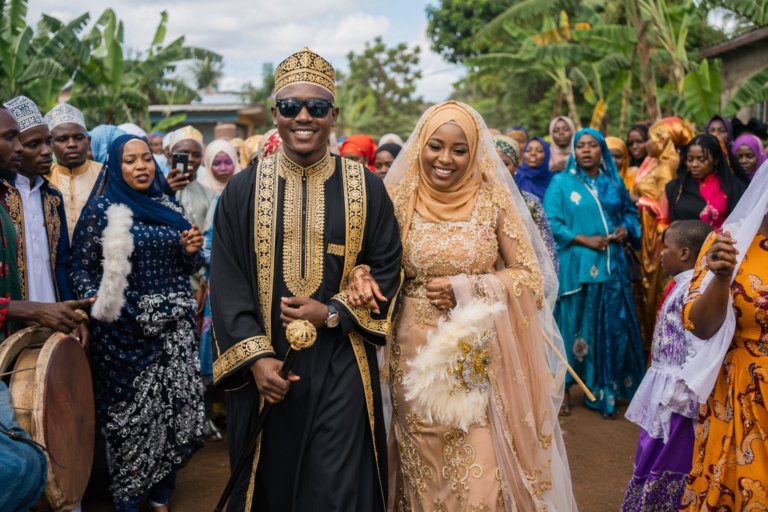
Tanzanian wedding fashion can be different between the wedding ceremony and the party after. At the wedding ceremony, women are expected to have two outfits. The first is a more traditional attire for the ceremony. The second is a party dress to wear for the reception. This shows that what you wear at a Tanzanian wedding depends on where you are and the feeling of the event.
For Tanzanian brides and guests, using traditional fabrics like kitenge is still very important. Men, like the groom, will usually go for a more Western look by wearing suits. But later, they might want to dress a bit more relaxed. In the sections below, you will see more about what a Tanzanian bride chooses to wear with her traditional attire, and what the men often pick for Tanzanian wedding fashion.
Bridal Outfits: Materials, Styles, and Meanings
Tanzanian brides often wear outfits for the wedding ceremony that show both modesty and a touch of elegance. These dresses also have a strong cultural significance. At the church wedding I saw, the bride walked in with her bridesmaid. There were women dancing around her. She kept her eyes on the ground and looked very quiet until the marriage was made official. The way she dressed and how she acted both told a story.
The use of traditional attire matters for everyone, not just the bride. Women who came to the wedding ceremony were meant to wear kitenge pieces for the main event. Later, they could change clothes for the reception. This keeps the tradition going and shows the value of traditional fabrics like kitenge in big moments.
Key ideas about bridal fashion for Tanzanian weddings include:
-
using traditional fabrics like kitenge for the wedding ceremony
-
modest ways of presenting yourself at the wedding
-
picking clothes that have cultural significance
-
often changing outfits before the reception
These details show how wedding ceremony traditions, traditional attire, and cultural significance play roles for Tanzanian brides who want to honour their culture by using traditional fabrics.
Groom’s Attire: Cultural Significance and Modern Twist
The groom’s clothes on the wedding day are not as fancy as what the women wear, but they still have cultural significance. Most men wear a suit for parts of the day that are formal. This gives the wedding an official look. You see this a lot in traditional weddings, especially if the ceremony is in a church or with a registrar.
There is a practical change after the main part of the wedding is done. Men often take off their suit jacket when the reception starts. This helps everyone feel more relaxed but keeps some formality too. It matches the way the day goes from a serious ceremony to a fun party.
So, when you picture what the groom is wearing, think about him looking formal at first and more comfortable later. The overall look mixes some new ideas with what people expect. This way, the ceremony still feels respectful, but things get easier for dancing and spending time with everyone after.
Key Elements of the Wedding Ceremony
The wedding ceremony in Tanzania can be a civil event or a religious one. Christian weddings and Muslim weddings have their own styles. But the bride’s family and groom’s family almost always show up. People watch the marriage happen in the open. Families join in with acts that show approval and say yes to the match.
On the wedding day, it can take place at different wedding venues. Some pick a church, some go for a registrar’s office, another approved spot, or the couple may use their own place if they have permission. For many families, religion is a big part of life. It’s good to know how Christian weddings and Islamic law play a role in the wedding ceremony.
Muslim Versus Christian Wedding Practices
Tanzania allows more than one route for a religious wedding. A couple may marry through church weddings, an imam, or a civil registrar, as long as the marriage is conducted under the national Marriage Act. The observed material also describes one couple who first had a Muslim service and later chose a Christian ceremony.
That example shows how islamic tradition and Christian practice can each shape marriage in Tanzania. Under islamic law, a licensed imam may conduct the marriage. In Christian settings, a licensed pastor or priest may lead the service. If the officiant is not state licensed, a separate civil step is still needed.
|
Practice |
Muslim wedding context |
Christian wedding context |
|---|---|---|
|
Religious basis |
Islamic tradition and islamic law |
Church-based religious wedding |
|
Officiant |
Licensed imam |
Licensed pastor or priest |
|
Legal standing |
Must comply with the Marriage Act |
Must comply with the Marriage Act |
|
Example from source |
A Muslim service was held first for one couple |
The same couple later had a Christian ceremony |
Special Rituals: The Bride Walking on Her Knees
The information put together does not say that the bride walks on her knees, so it would not be right to say this is something all Tanzanian people do at a wedding. But, it does show that some weddings have special things in them that mean a lot for the culture. These can be about modesty, showing respect, and what family wants.
At the wedding, the bride walked in with other women singing and dancing around her. She looked down and did not smile until they said the wedding was done. The information also says that brides can sometimes act shy or a bit scared with their new husband’s family. This helps explain why she might show signs of being humble or holding back.
There was another clear part of the wedding ceremony where people washed the couple’s hands with water and oil. When the rings were given, the bride’s hands and the groom’s hands were held up high for all to see. These things helped make the wedding important and full of meaning. They did not need long talks to show their cultural significance.
Symbolic Gestures and Unity Acts During the Ceremony
A Tanzanian wedding ceremony often has unity acts. These show the couple’s union to everyone there. The exchange of vows is important. But actions like washing hands, holding up rings, and letting both families speak their acceptance also matter on the wedding day.
These acts add extra meaning to the wedding day. They bring together faith, family, and approval from everyone watching. If you want to know how marriage works in Tanzania, you should know that these public actions are just as important as the vows.
Exchange of Vows and Rings
At the centre of the wedding ceremony is the exchange of vows. The delivery may not feel as polished as you might expect at a tightly rehearsed Aussie event. In the case I saw, there was no rehearsal. Some stumbles happened. But the meaning of the words still mattered. The promises were made public, and that made them binding.
Rings got careful attention too. During the exchange, the couple’s hands were held up high. This helped everyone see the moment. It turned a small step into a key act of unity on the wedding day. The exchange wasn’t private. It was shared with all the guests.
These moments are important because they show the couple’s union happening right in front of everyone. Even with some informal talk from the minister, the vows and rings mark the spot where the couple’s relationship gets recognised as a marriage by all watching.
Blessings from Elders and Community Members
Blessings from older people and those in the community are at the heart of the celebration. At the wedding, both families came forward. They said they would accept, love, and support the new person joining their family. That is a big thing to do in public.
It showed the couple is not left alone. The ceremony made it clear that marriage brings ongoing duties for others too. It was a direct show of family values. Community support should be seen and heard, not just hoped for.
These blessing rituals can be:
-
promises from both families to accept the new member
-
words of encouragement from elders and family
-
backing from community members at the ceremony for all to see
-
saying out loud that marriage links families together, not just two people
Tanzanian Wedding Receptions: Festivities and Feasts
The wedding reception is where lively celebrations happen and things open up more. Guests can come to the wedding reception, even if they were not at the ceremony. For Australians, this can feel different. Seating is often laid-back. Family introductions still matter. The event is more social and not rushed by a strict schedule.
At the wedding venue, plenty of food comes out later. It follows the dancing, the gifts, and the wedding cake ceremony. People hear both traditional music and popular tunes. You might not see a Western-style first dance, but the wedding reception stays festive. There is lots of energy and movement everywhere.
Food Traditions and Favourite Dishes
Food is important at receptions in Tanzania, but the timing might surprise people from Australia. At the event mentioned, there was plenty of food but it came towards the end, after everyone had danced, made introductions, given presents, and cut the wedding cake. This shows the meal is part of the whole day, not something that happens first.
The information doesn’t say what favourite dishes there are in dar es salaam or other cities, so it’s best to look at the common threads. People expect food, there is plenty of food, and generosity is on show. The wedding cake is a big event for everyone.
Some reliable things about what happens at these events:
-
there is plenty of food given out to guests
-
the wedding cake is a big deal at the party
-
the meal might happen later than Australian guests expect
-
traditional elements and friendly hosting stay a main part, even if the menu changes here and there
Traditional Music, Dance, and Celebratory Customs
Music and dancing set the mood for the wedding day reception. At the wedding that I saw, guests danced to pop tunes, some Gogo-style moves, and even did a line dance. This made the party lively, with heaps of energy and lots of people getting up and joining in. It was not just about the couple. Everyone was part of it and there was not just one main event.
A group of women can get involved too. On the wedding day, women danced and made loud happy sounds around the bride. In this wedding, the bride and groom did not have their own first dance, which is not what people in Australia often expect. Usually, that first dance gets all the attention.
Celebratory customs may include:
-
dancing to different styles across the event
-
traditional and modern music in the same reception
-
strong participation by a group of women
-
cake feeding and gift processions as part of the fun
Regional Diversity in Tanzanian Wedding Traditions
Tanzanian communities are made up of different ethnic groups, so people have different ways of celebrating weddings depending on where they live. The information said that not every wedding will look the same as the one described. That’s important to know if you want to get a good idea of what happens at weddings in these communities.
Still, you can see some patterns. Weddings near the coast may have Islamic traditions, while people inland or in the highlands may do things another way. In the cities, you will often find weddings where lots of customs mix together. Here, you’ll see formal steps, religion, and community all being a part of the day.
Distinctive Practices among Coastal, Inland, and Highlands Communities
It’s fair to say that marriage looks a bit different in the parts of the country. That’s because the ways people get married can change between ethnic groups, coastal towns, inland places, and those living in the highlands. So, there isn’t just one way everyone follows. This material talks about how life is diverse, but it doesn’t cover everything in detail. That means, if you want to know more, careful comparison is important.
What we do know is coastal weddings, so in places like Zanzibar, can be shaped a lot by Islamic traditions. In other areas, church events or local dancing, such as the Gogo dancing at a party, may be central. When you go to weddings in bigger cities, these ones often bring in ideas from different countries and people’s changing tastes.
The regional difference might show up by:
-
coastal weddings being shaped by Islamic ways
-
inland events having their own local styles
-
highlands communities going by family rules that aren’t the same as everywhere else
-
wedding styles that come from ethnic groups and religion
-
urban weddings mixing ideas from different countries as people move and meet each other
Adaptations and Blending of Traditions in Urban Areas
In cities, wedding traditions often show a mix, instead of being kept apart. Dar es Salaam is a place where you can see formal legal steps, church or Muslim events, committee planning, printed invites, spoken updates, and different reception styles all coming together.
Modern touches don’t take away the cultural significance. You see suits, fancy dresses, money gifts, and flexible timing, but they all go along with kitenge clothes, family promises, and special washing with water and oil. The mix helps city weddings have a smooth and practical flow, while still keeping strong community values.
Modern life also changes who organises things and how guests take part. Committees work out the details, guests chip in money, and you still hear news passed around by word of mouth. So, you do not see old customs thrown out, just a way of wedding traditions adapting to urban life.
Legal Requirements for Foreigners Marrying in Tanzania
If you are from Australia and want to get married in Tanzania, you need to know the legal side, not just the cultural parts. You have to follow the rules for foreigners who want to marry under Tanzanian law. The marriage contract has to be registered the right way. This is important so your marriage is seen as legal.
A civil marriage with a registrar is usually the easiest way to go. You can have a religious wedding, but the person in charge needs to have a licence from the state. You need some key papers for both marriage types. These include your passports, birth certificates, and a certificate of no impediment. The next bit will show you the steps and what kinds of legal marriage you can choose in Tanzania.
Documentation and Procedures for Australians
For Australians, getting married in Tanzania starts with the right documents. You and your partner both need to have a valid passport, a birth certificate, passport photos, a marriage application form, and proof that you got to the country. If either of you was married before, you will also have to show papers that prove it ended.
You will also need something called a certificate of no impediment. Some people call it an affidavit of single status or freedom to marry. It is a piece of paper that says you are allowed to get married. The time it takes to get this done depends, so it’s smart to start working on it early in your wedding plans.
The Marriage Act could mean you have to put in a notice of intention to marry. Sometimes you can skip the 21-day wait if you get a special licence. Both of you must show up, and you need two witnesses for the wedding. The official marriage certificate has to be signed and stamped by the registrar or another person who is allowed to do it.
Understanding Civil, Religious, and Customary Marriage Laws
Tanzania recognises more than one legal pathway to marriage. Foreigners can usually marry through a civil marriage, a religious wedding, or, less commonly, customary law if they are closely integrating into local custom. For most visiting couples, civil registration is the most direct option.
The Marriage Act is the framework behind all of these routes. A religious ceremony can be legally valid if the officiant is state licensed. If not, the couple still needs the civil paperwork completed separately. A certificate of no impediment remains one of the key documents for foreigners.
|
Marriage type |
Who conducts it |
Legal point to note |
|---|---|---|
|
Civil marriage |
District Marriage Registrar |
Straightforward official registration |
|
Religious wedding |
Licensed pastor, priest, or imam |
Must be state licensed under the Marriage Act |
|
Customary law |
Customary authority or family-based setting |
Rarely used by foreigners unless culturally integrated |
Conclusion
Tanzanian wedding traditions bring together many cultural ways that the people of Tanzania share. Family plays a big part, and the little things done at the wedding mean a lot. Each part helps make the day special, and helps everyone remember the event for a long time. Knowing these customs helps you feel part of it as a guest and makes you value the culture more. If you plan your own wedding, or if you go to one in Tanzania, take the time to be part of the wedding traditions. This will show respect for their strong history. If you want to get married in Tanzania, feel free to ask for help about what you need for the law and the local ways.
Frequently Asked Questions
How do marriage customs vary among different ethnic groups in Tanzania?
Wedding traditions in Tanzanian communities change from place to place. This is because different ethnic groups have their own ways for family, religion, and the area they live in. Some weddings follow Islamic customs, others focus on church events, and you can see mixed traditions in cities. The community, the couple, and their families shape what happens, so every wedding is a bit different.
What traditional attire should guests wear to a Tanzanian wedding?
For a wedding ceremony, people can wear traditional attire like kitenge, and you often see women in this. At the wedding I saw, many guests changed into party clothes for the reception later in the day. This shows the cultural significance of what you wear during a Tanzanian wedding day. It helps everyone match the vibe for each part of the wedding ceremony. Traditional attire is a big part of Tanzanian wedding fashion.
How have modern trends influenced Tanzanian wedding celebrations?
These days, wedding traditions often include suits, party dresses, money gifts, flexible invitations, and a mix of music styles. In the city, lively celebrations bring together modern trends with family rituals, religious customs, and traditional fabrics. This way, weddings stay fresh and up-to-date, but still hold on to their roots.