Key Highlights
-
Sri Lankan weddings often focus on deep wedding traditions, not just a short vow exchange.
-
The poruwa ceremony is a big part of the day. It takes place on a beautifully decorated wooden platform.
-
Betel leaves, holy water, milk rice, and the oil lamp each have a strong meaning at the wedding.
-
Many Sri Lankan families choose an auspicious time for the wedding date and pay great attention to it.
-
Traditional attire in Sri Lanka is shaped by regional, religious, and family choices.
-
If you are Australian, knowing about these rituals helps you join in and understand the ceremony the right way.
Introduction
If you are going to a wedding ceremony or planning one connected to Sri Lanka, it is good to know that Sri Lankan weddings have a series of rituals. These moments are more than just show. They hold family meaning, cultural significance, and give blessings for a new life. If you are in Australia, some things might seem different from the usual local wedding. But when you get to know how it all goes, Sri Lankan weddings are much easier to take in and you can enjoy them a lot more.
Key Features of Sri Lankan Wedding Traditions
Sri Lankan culture puts a lot of worth on things like ceremony, family being there, and acts that mean something. At many Sri Lankan weddings, the day goes by with wedding rituals that show a couple’s promise, give blessings, and help them step into married life.
You might see a poruwa ceremony, the offering of betel leaves, rings being swapped, sacred thread tied, holy water shared, milk rice, and oil lamp lighting. For Sri Lankan families, these wedding traditions are often the heart of the party. The next sections talk about how these customs happen.
Cultural Foundations of Sri Lankan Weddings
In Sri Lanka, weddings are usually made up of a series of rituals. It’s not just one short formal part. This way, the guests can see that marriage is a public event. The families stand together and support the couple as they start their life together. It also leaves space for blessings, offerings, and promises that mean something.
Many Sri Lankan weddings still stay close to sri lankan culture and bring in ancient rituals. These come from many years ago and have been taught and kept safe over time. People use the poruwa, saying a chant, giving an offering of betel leaves, and lighting an oil lamp. Each one of these has more meaning than just how it looks on the day. The acts bring the couple closer to family history and what people in sri lanka believe in together.
This is a big difference to notice for people from Australia. In sri lanka, weddings show connection that goes back. They show the couple has respect and belongs with their families. Each main old ritual at sri lankan weddings goes with the others. They all work together as one big meaningful experience, not just small extras.
Importance of Religion and Ethnicity in Ceremonies
Sri Lankan families do not all celebrate weddings in the same way. People in Sri Lanka come from different backgrounds, so the wedding rituals picked for the day can change. Even if a wedding looks new or modern, the family’s background still counts.
For example, the poruwa ceremony is shaped by Buddhist ways. An elder may lead the ceremony with special Sinhalese words. In other families, religious leaders and old family habits can also decide how the ceremony goes. So, a person’s background and faith can guide both what steps are in the ceremony and what symbols are used.
When you look at wedding rituals in Sri Lanka compared with Western ones, they can seem more layered and involve more people. It is not just about what the couple say to each other. Many parts of Sri Lankan weddings let parents, elders, blessings, and certain acts be important too. This style, where more people share in the moment, stands out for many sri lankan families.
Distinctive Pre-Wedding Rituals in Sri Lanka
Before the main wedding ceremony, there are pre-wedding rituals in Sri Lanka that help set the mood. These times often bring family members together. The planning for the wedding can include choosing how much of the day will be about old ways or about a shorter party.
One thing to think about is picking a good, or what is called an auspicious time. Another is making sure the key wedding rituals are clear to all who will be there. If you are from Australia and are going to a wedding in Sri Lanka, the next sections will show how timing, special wishes, and how the family gets ready are a big part of the lead up, even before the main wedding ceremony begins.
Astrology and Auspicious Timing
Auspicious timing is an important part of planning a wedding in Sri Lanka. The wedding date or a special moment in the event often comes from what astrology and the family trust. For Sri Lankan couples, this shapes when big rituals start.
But not every wedding is the same. Some families want to keep every part of the tradition, and some prefer a shorter ceremony but still honour their old customs. Even when the day is simple, the auspicious time can still be at the heart of it all. It shows care, thinking, and respect for old ways.
-
Families will often set up the event to match the right auspicious time, not just what fits best for them.
-
Astrology can help choose the wedding date or the most important time in the day for key events.
-
The timing is seen as a part of the blessing, not just part of the day’s plan.
When you see things start at a certain moment in sri lanka, know that this time has meaning. It’s not just about being formal – it carries a deeper respect for tradition for sri lankan couples in sri lankan weddings.
Pre-Wedding Blessings and Family Customs
Long before the main event starts, family members have a big say in how the day will go. In Sri Lanka, wedding rituals are not put together by just the couple. The parents, uncles, or other elders will help with the order, what is said, and all the cultural elements used at the ceremony.
A good example found is the bride’s mother giving the celebrant a full guide so the structure is clear. This helps with keeping all the blessings and custom, as family members know what is needed. They want everything to feel right and for the guests to understand what is happening.
-
Parents or elder relatives might take the time to explain the order of the wedding rituals.
-
Family members can help choose which blessings and cultural elements are added.
-
The ceremony may be explained or even translated, so every guest knows what is going on.
This strong role of family is one big reason that Sri lankan weddings feel shared by everyone, and not just about one couple.
The Poruwa Ceremony – Heart of Sinhalese Weddings
For lots of people, the poruwa ceremony is the part of Sri Lankan weddings they know best. This event is often called the heart of Sinhalese Buddhist weddings. The reason is it brings the main wedding rituals together in one spot.
The poruwa ceremony happens on a beautifully decorated wooden platform. That wooden platform is called the poruwa. It stands for the new home the couple will have and shows the start of their life together. If you want to know what the poruwa ceremony means in Sri Lankan weddings, that wooden platform is a good place to look at first.
Historical Significance of the Poruwa Ceremony
The poruwa ceremony is a big part of weddings in Sri Lanka and comes with a rich heritage. Even when you see big hotel weddings with a modern look, the poruwa stays at the centre. This shows how important it is in Sinhalese weddings. The ceremony helps tie the whole day to tradition, even if everything else looks new or different.
What really matters is what the poruwa stands for. It’s more than just a stage. The poruwa shows the house the couple are going to have, their marriage, and the start of their new life together. That’s why the most important parts of the ceremony are done at or near it.
For people in Australia, who are used to just walking down the aisle, saying vows, and having a kiss, the poruwa ceremony might seem a bit unusual. In Sri Lanka, the poruwa ceremony is big because it turns getting married into a series of lovely acts and blessings, with the family involved in each part, all inside a space that holds deep tradition.
Symbolic Practices Performed on the Poruwa
When the couple step onto the poruwa, a series of rituals start. These acts show their union, hope for good fortune, care, blessing, and respect for family. In Sri Lankan weddings, each step often follows a set order. That way, the meaning of each builds on the one before.
The steps involve betel leaves, rings, a necklace, holy water, and the sacred thread. People may offer and drop betel leaves seven times to honour all relatives over the years. Rings are exchanged to show their bond. A necklace is given to promise protection. Then, their little fingers are tied with a sacred thread. After that, they pour holy water over their fingers.
-
Betel leaves are a sign of offering, respect, and family ties.
-
Holy water stands as a witness to the marriage that will last.
-
The series of rituals is what gives the ceremony much of its meaning.
Taken all together, these rituals show in action what Sri Lankan weddings mean. The words matter, but it is what people do that really brings out the spirit of the day.
Tamil and Hindu Wedding Traditions in Sri Lanka
Sri Lanka has more than one wedding ceremony style. So, not every wedding event is the same. There are Sinhalese customs, but also Sri Lankan Tamil and Hindu wedding traditions. These are an important part of the county’s wedding culture.
For Australians, it’s good to know that a Hindu wedding can show different acts and family customs compared to a poruwa ceremony. The thaali ceremony is one example of this in wedding traditions. In the next sections, we talk about how meaning and ritual are still strong across the different Sri Lankan communities.
The Thaali Ceremony and Its Meaning
In Sri Lanka, brides and grooms follow different customs. Tamil weddings and Sinhalese weddings do not always use the same symbols. For example, the thaali ceremony is a part of Hindu weddings. It stands out in these events.
For people in Australia, the main thing to know is the overall pattern. Sri Lankan weddings often show marriage through acts the couple do. These acts are seen by family, religious leaders, or elders, and mean a lot to everyone. The thaali ceremony has real meaning, not just simple looks.
This ceremony, like the sacred thread in other sri lankan weddings, shows union and taking on responsibility. When you go to Tamil weddings in Sri Lanka, you will see the bride and groom get involved in different traditional acts. These acts show the importance of family, religion, and culture, which is even more than what words can say.
Unique Rituals in Tamil Hindu Weddings
A wedding ceremony in Sri Lanka often takes place with a series of rituals. These can be different between communities, but all show the big part that culture and family play. In Sri Lankan Tamil families, wedding rituals might look different from a poruwa ceremony. Still, they centre around blessing, cultural significance, and family.
The info collected says many couples want to honour their heritage. Some do this in full, while some might have a shorter version. This is why Sri Lankan traditions can still mean a lot, even if they are changed for a mix of guests or a modern wedding. The exact set of rituals might shift, but the meaning and symbolism stay strong.
-
Rituals are usually chosen to match family background and to highlight cultural significance.
-
A traditional wedding ceremony can be changed but still keeps its heritage value.
-
Elders and religious leaders often help guide which events and symbols are important.
That mix of sticking to old customs and being flexible is a big part of Sri Lankan wedding culture.
Muslim Wedding Customs in Sri Lanka
A Muslim wedding in Sri Lanka is also part of the country’s mix of different cultural and religious ways. Even though the information you find may talk more about the Sinhalese poruwa ceremony, it does show that Sri Lankan families can have their own special wedding customs, based on who they are and where they come from.
For Australians, this means you should not think there is just one way weddings happen across the nation. A nikah has its own style and comes from a different background than the poruwa ceremony, even if both are common in wedding life in Sri Lanka. In the next sections, the focus will stay on what the wedding means for the family, how the rituals go, and how to show respect at the event.
Nikah Ceremony Explained
In Sri Lanka, a nikah wedding ceremony is not the same as one centred around the poruwa. Both show the country’s different ways of doing things based on religion. Still, all the facts point to one clear idea: what the bride and groom do during the event often comes from old family ways, what the community expects, and what religious leaders say.
This is important for the people who come to the wedding, because the mood and the order of what happens might be different to what you see at most Western events. At these times, the groom’s family, the bride’s family, and religious leaders all can play a part in both doing and explaining rituals.
If you’re an Australian going to a wedding ceremony in Sri Lanka, just keep it simple. Watch what happens, follow what the family members do, and know there is a big focus on meaningful tradition over just a quick, plain event. That idea is part of many Sri Lankan events, and you’ll notice it right away.
Traditions Specific to Sri Lankan Muslim Marriages
Sri Lankan Muslim marriage customs are part of the country’s rich and varied wedding life. The facts show that different groups in Sri Lanka keep their own ways of doing things at a wedding, but family members still play a big role and the whole thing is full of meaning.
So, for people in Australia, it helps to know there is no single national way to do a wedding. It’s good to expect each sri lanka wedding to be a bit different. The symbols and reasons behind the wedding rituals often come from the couple’s religion and what their family members do, so these can change from one wedding to another but still feel just as important.
-
Family members usually help keep up with what the ceremony means and how things happen.
-
People value the wedding rituals that hold true meaning more than just putting on a show.
-
It helps the guests if the customs are explained or put into simple words during the event.
This is why it is good to stay open and interested when you go to any Sri Lankan Muslim wedding.
Essential Symbols and Meanings in Sri Lankan Weddings
One of the big parts of a Sri Lankan wedding ceremony is how the things used and everything people do all have strong meaning. Betel leaves, the oil lamp, holy water, thread, milk rice, and gifts are all there together, making up a series of rituals. They do not just sit there on their own.
In Sri Lanka, many of these items be about blessing, having good things, wisdom, life carrying on, and good fortune. For Australians, knowing what these things stand for can make the wedding ceremony much easier to follow. The next sections will take you through the best-known things you will see and show you why each of them is so important.
The Role of Betel Leaves, Oil Lamps, and Rice
Several items appear repeatedly in Sri Lankan wedding rituals because each one stands for something bigger than itself. The offering of betel leaves, the lighting of an oil lamp, and the sharing of milk rice are all tied to blessing and the couple’s new beginning.
In the compiled information, betel leaves are offered to the gods and dropped seven times to honour generations of relatives. The oil lamp is lit after the poruwa ceremony as a sign of wisdom and a bright future. Milk rice, offered by the mother, points to prosperity and a blessed start to married life.
|
Item |
Role in the wedding ceremony |
Meaning |
|---|---|---|
|
Betel leaves |
Offered and dropped onto the poruwa |
Respect, offering, family honour |
|
Oil lamp |
Lit after the ceremony |
Wisdom, good luck, bright future |
|
Milk rice |
Offered to the couple |
Prosperity, blessing, new life |
Together, these items help guests see the deeper logic behind the ceremony.
Offering Rituals and Sacred Items
In Sri Lanka, offering rituals at weddings are often simple, but their meaning is big. These small acts show respect, give blessings, and let everyone see what is happening. This is why having sacred items at weddings is so important. They help turn things people hope for into something you can actually see and do.
Here are some good examples that show how this works. One of them is the sacred thread, called pirith nool, which is tied around the little fingers of the couple. This thread stands for their union. After that, holy water is poured over their hands, which are tied together. People believe that water and earth are there as witnesses to the marriage and will keep it strong. Sometimes, a necklace is also given to the bride as a sign of care and a promise to protect.
For Australians, these rituals can answer some questions about why certain symbols and acts are done at a Sri Lankan wedding. The objects are not just there by chance. In Sri Lanka, things like the sacred thread and holy water are used to make the couple’s commitment clear and real, out in the open, with family and others watching. This is where everyone gets to see the couple join together through these wedding rituals.
Family Roles and Participation in Wedding Ceremonies
In Sri Lanka, family members do more than just show up at the wedding. They play a big part. The bride’s family and the groom’s family often help the couple onto the poruwa. They may also give special items, or join in the blessing rituals.
That strong family feel is part of what makes the whole day so special. This is also why giving gifts and different formal roles matter more here than they do in some Australian weddings. The next parts will show how elders, parents, and more relatives help make the marriage a family event in Sri Lanka.
Responsibilities of Family Elders
Family elders play a big part in Sri Lankan weddings. They do hands-on jobs and keep everything running as it should. In a typical poruwa wedding ceremony, the couple are led onto the wedding platform by their fathers or sometimes an uncle. This entrance makes it clear that the elders are doing more than watching—they are part of what is happening.
During the wedding rituals, elders have more to do. The fathers help the couple step down from the poruwa when it is time. Some older family members will look after important items or make sure the right steps are followed for the sri lankan weddings. Many times, an elder from the family will also use the correct words to run the ceremony.
All this helps us see how families join in for sri lanka weddings. Family elders there act as guides and witnesses. They help organise what goes on and keep old traditions alive. What they do gives the wedding structure. Elders also help the couple feel that they are part of a big family story, and that brings extra meaning to their special day.
Meaning and Symbolism Behind Gift Exchanges
Gift exchanges in Sri Lanka are often a part of the wedding rituals. They are not seen as something separate to do. The groom gives the bride a necklace. This is a promise to look after her and protect her. The bride also gets cloth for the sari she will wear at the Homecoming.
These exchanges are important because they have a purpose. They can show a change, support, blessing, or allow families to accept each other. The gift itself is just one part. What the gift means matters even more—it shows care, welcome, and duty.
For Sri Lankan families, this is also a symbol of joy. Giving gifts shows the whole family is there and happy for the marriage. That is why, even with a big crowd, these moments can feel very personal and special to the people involved.
Traditional Attire and Adornments for the Bride and Groom
Yes, there are special wedding outfit styles in Sri Lanka. These can change depending on where you live or what the family likes. The information pulled together shows that many couples go for high country style from Kandy, or low country style, which is more like Indian dress.
This shows how the traditional attire is a big thing in how the celebration looks. If you are in Australia, you might hear things like kandyan saree, groom’s national dress, or traditional bridal saree when talking about Sri Lankan weddings. In the next sections, we will look at the main style choices and the decorations that finish off the look.
Kandyan Saree and Groom’s National Dress
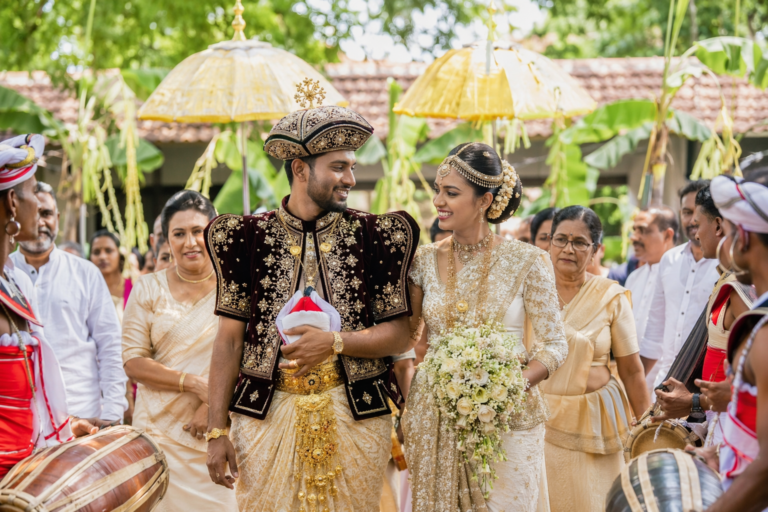
Sri Lankan weddings can show different clothing choices. These outfits often link to where people come from and what customs they follow. There are two main ways to dress. One is the high country style, which comes from Kandy in Sri Lanka’s central highlands. The other is the low country style, which is closer to Indian fashion.
For brides, the traditional bridal saree changes with the style chosen. If they go for a Kandy look, they wear a kandyan saree. Some other weddings use a different saree style. This means guests should not think every Sri Lankan bride dresses the same way.
The groom might wear the national dress in some wedding events. But you will also see men in Western suits. Sri Lankan weddings do not just stick to old customs. Families often mix old ways with newer fashion, depending on what they want the day to feel like.
Jewellery, Headpieces, and Ornamental Details
Wedding adornments in Sri Lanka can stand out just as much as the clothes. The list shows women in white and gold saris, shiny headpieces, and a necklace covered in jewels put around the bride’s neck at the wedding ceremony. These details help set the formal and happy mood.
They also tie in with what brides and grooms usually do. Jewellery isn’t always for looks. In the poruwa, the necklace is a sign of care and protection. The ornament here is part of the ceremony, not just to look nice.
This is something Australian guests should notice. In Sri Lanka, headpieces, jewellery, and other adornments are often where style and meaning meet. They can show family status, local tastes, or even mark a special meaning for the wedding ceremony itself.
Music, Dance, and Celebratory Elements
Music and movement play a big part in many Sri Lankan weddings. They are there for more than just fun. You will often hear traditional music, chanting, and see dance shows during entrances, blessings, and other big moments in the wedding ceremony.
The material shows drummers, singers, trumpeters, and dancers making each part in the wedding ceremony special in Sri Lanka. For people in Australia, this shows the way music and dance have a role in Sri Lankan weddings. They set the scene for the wedding ceremony, lift spirits, and help keep cultural ties strong in their sound and moves.
The Sounds of Drummers and Traditional Musicians
One of the fastest ways to feel the energy at a wedding ceremony in Sri Lanka is by hearing the sound. You hear drummers and traditional musicians a lot. They are there to welcome people in, add music to the important parts, and bring up the excitement when the couple comes in.
The examples given are clear. Men play drums and chant as the party gets going. Then, you have trumpeters and drummers come into the hall, making everything feel even more like a celebration. At one part, young women sing the Jayamangala Gatha for good luck. This brings a special touch to the music.
You can see music is important for big moments at weddings in Sri Lanka. The music helps when things are quiet and also when everyone is having fun. It doesn’t just fill the room. It tells people where to look, shows what matters, and lets the guests know if the ceremony is serious, happy, or turning into a big party.
Dance Performances and Entertainment During Weddings
Dance performances can turn a wedding ceremony in Sri Lanka into a real cultural event. The dancers from the central highlands of Kandy often welcome the groom with big spins and flips. This lively entrance brings excitement and is also part of the long-held tradition.
The wedding entertainment goes on after the main rituals. Singing, live bands, and fun moments with the crowd are usually part of the day. At this point, the mood changes. People move from focusing on the marriage ceremony to enjoying a time filled with joy and celebration once the important marriage rites are done.
For Australians, it is good to know that at Sri Lankan weddings, dance is often not kept separate from the ceremony. These dance performances can show where the couple comes from, make a special entrance for them, and help everyone come together. They help take people from the serious start of the day to a full celebration on the big day.
Contemporary Influences on Sri Lankan Weddings
Modern trends have changed the way some couples celebrate, but they have not taken out old customs from Sri Lankan weddings. In Sri Lanka, many weddings now mix cultural elements with some Western style, nicer venues, shorter formats, or civil ceremonies.
This mix stands out as one of the main things in wedding planning now. Couples might keep the poruwa ceremony, oil lamp lighting, or chanting. At the same time, they might choose a fancy hotel ballroom, English translation, or more modern entertainment. The next sections will show how old customs and new ideas can stay together in one event.
Fusion of Old Traditions with Modern Trends
Many Sri Lankan weddings today mix old customs with a new look. There are examples of celebrations at luxury hotels, couples in Western clothes for part of the day, and families who have a civil part after the poruwa ceremony.
But the important cultural elements are still there. The couple might add the offering of betel leaves, tie a sacred thread, use holy water, keep to traditional chants, or have oil lamp lighting. Some people want the full ceremony. Others keep just a few rituals for their heritage. The choice and flexibility is now a big part of what makes things modern.
How are Sri Lankan weddings in Sri Lanka and Australia bringing old and new together? They keep the heart of the way while changing how things look, when things happen, what words they use, and how big it all is. This way, couples can honour their family past through important rituals like the oil lamp or offering of betel leaves, but not feel stuck with just one way of doing things.
Popular Sri Lankan Wedding Venues and Decor Ideas
The information shows that there are a few main types of places used for Sri Lankan weddings, not just a list of well-known spots. In Sri Lanka, big hotel ballrooms are often chosen, mainly for large parties. Even in these fancy hotels, old customs, like the poruwa, still play a big part.
The style of the wedding can change, based on where you are. Musicians from the central highlands may set the feel for the day. Couples can use high country or low country styles for how they decorate and dress. Having a traditional wedding feast, live music, and special ceremony setups makes it feel true to Sri Lankan customs.
-
Luxury hotels are mostly used for big, fancy Sri Lankan weddings.
-
A poruwa setup gives a touch of old tradition in a modern venue.
-
Local style, music, and ceremony décor help make it feel like a real Sri Lankan wedding.
For Aussies, the takeaway is clear: in Sri Lanka, the venue might look fresh and new, but the rituals keep the culture strong.
Conclusion
To sum up, Sri Lankan wedding traditions are full of rich and special customs that can charm any guest in Australia. You will see the bright poruwa ceremony and other unique wedding traditions at Tamil Hindu and Muslim weddings. Each part has meaning to the people and the families. Knowing about these traditions will help make your time better and it will show respect for their different backgrounds. If you go to a Sri Lankan wedding, take the chance to join in and learn about these lovely events. With so much joy and strong family customs, you will get memories that stay with you. If you need help to get used to these wedding traditions, just ask for a free consultation!
Frequently Asked Questions
How do Sri Lankan wedding traditions compare to Western weddings for Australians?
Sri Lankan weddings usually show more ritual, with family playing a bigger part, and the whole ceremony can take longer than what you see at many western weddings. For people in Australia, the big difference is that sri lankan weddings often share their wedding traditions with lots of symbol actions, offerings, blessings, and helping out in the ceremony, not just by saying vows.
What should Australian guests expect when attending a Sri Lankan wedding?
Australian guests should know that a wedding ceremony in Sri Lanka will have a series of rituals. It is not just one big exchange between the couple. You might see the family take a big part, with customs, music, special objects, and moments that happen at set times. Explanations in English can really help to make Sri Lankan weddings simple to follow.
Can Australians incorporate Sri Lankan wedding customs into their own celebrations?
Yes, people in Australia can add sri lankan culture to their own special days, especially if they want to honour where their family comes from. The info shows that many couples pick few wedding traditions instead of doing all of them, so this lets them bring in sri lanka wedding rituals that mean a lot in a way that shows respect.