Key Highlights
-
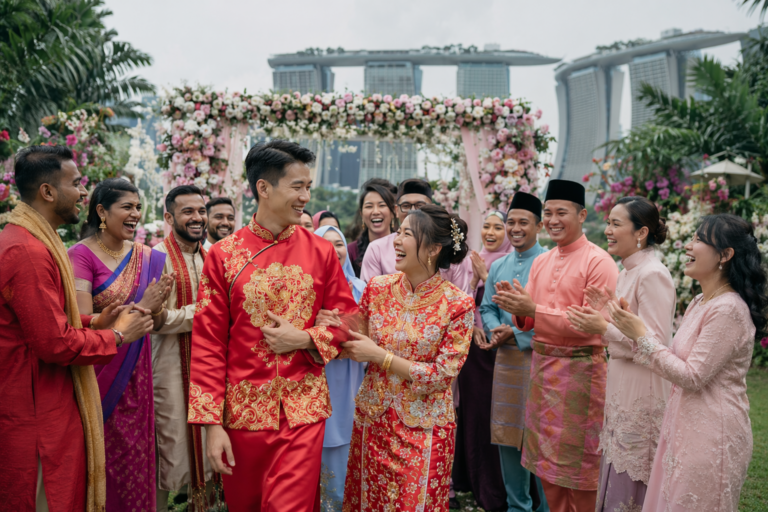
A singaporean wedding often brings together wedding traditions from the Chinese, Malay, Indian, and Peranakan communities.
-
Many multicultural couples shape their big day by mixing what their family wants with choices that work in real life.
-
Chinese wedding customs in Singapore often have guo da li, tea ceremonies, and gifts that mean something special.
-
Today, modern couples tend to keep the important rituals but drop things that do not fit with their time or money.
-
Family stays at the heart of things, and parents and elders help guide wedding customs, the time for events, and share their blessings.
Introduction
Every singapore wedding tells the love story of the couple, but it is about family, past, and what they believe in too. If you come from Australia and will go to a wedding day in Singapore, the way people celebrate can feel the same but also a bit different. At the wedding, there can be set steps to follow, special gifts that mean something, and family is always there in a big way. It all comes together to make a good time for everyone. This guide will help you see the main wedding day customs, so you can know what is going on and enjoy this singapore wedding more.
Multicultural Influence on Singaporean Wedding Traditions
Singaporean weddings today show a mix of the different communities that live in the country. You can still see Chinese, Malay, Indian, and Peranakan ways come through. Many families also like to keep traditions that honour parents, elders, and the family line.
If you have a multicultural couple, one good way to go is to find a plan both agree on early. They often hold onto customs that mean the most for both sides, and cut down on the rest. This has everyone feel good and lets contemporary elements sit beside family traditions, without taking away from what matters.
The Fusion of Heritage and Contemporary Practices
Across Singapore, many old customs are still kept, but people handle them in a simpler way now. Couples often keep symbolic rituals like guo da li or tea ceremonies. They may make the checklist shorter, change when things happen, or swap fewer items. This lets families stay organised without losing the meaning behind the event.
In lots of homes, people are open to new ways as long as both families agree. Red packet values, how many gifts to give, and even how the ceremony runs are often just seen as guides, not strict rules. This helps modern couples plan their day with less stress, while working around the venue, timing, and how much they can spend.
At the same time, each couple can add their own style to the day. You will see contemporary elements mixed in with old customs when the main purpose is clear: to show respect, say thanks, and start married life with family support.
The Role of Community and Family in Weddings
Family members have a big role in most Singaporean weddings. It’s not just about the pair who are getting married. Their parents often help pick the customs to keep, which gifts to get, and when things should happen. The thoughts from family members are heard because all the little acts show thanks and respect.
In Chinese ceremonies, the groom’s family will give betrothal gifts to the bride’s family. The bride’s family will take these and sometimes send a few back in return. This way, both sides show how much they care for the bride and all she has been through. Parents from both families also help work out the right time for things, especially when picking a lucky day.
Elders help set the tone for the whole wedding day. They might lead the prayers, take the tea, or help with things like the hair-combing. When it comes to these weddings, it’s clear they are not just for the couple. These moments bring all the family members together in a good and open way.
Common Ceremonial Elements Across Cultures
Even though people in Singapore come from different backgrounds, you can see many of the same wedding customs show up at each wedding. Most of these are about respect, giving blessings, and bringing the two families together. The details might change, but the reasons for these customs often stay the same in every group.
On this special day, families look for things that can bring good luck and start in a positive way. Many of these symbolic rituals happen before the wedding banquet. They might have an exchange of gifts, older family members giving blessings, or official things taking place in someone’s house.
Common things you might see are:
-
betrothal or exchange of gifts between families
-
tea or other ways to show respect to elders
-
using lucky dates and lots of even-numbered items
-
red packet giving as a sign of blessing and support
-
a wedding banquet where relatives and friends come together
These shared ways help us know why weddings in Singapore are both different and connected.
Chinese Wedding Customs in Singapore
Chinese wedding customs are still among the most well-known traditions in Singapore. Many couples in Singapore may have guo da li, a hair-combing ceremony, bride-fetching, tea ceremonies, and a wedding banquet in some way. The size of these customs often depends on what the family wants. Brides can also get si dian jin or other gold jewellery as a special part of these wedding customs.
On the morning of the chinese wedding, it is common to see the groom face a fun series of challenges at the bride’s door. These take place before he is allowed to go in. Later on, during the formal family parts of the day, there is the use of foods and tea that mean something special. Red dates, longans, and lotus seeds are often used because people believe they bring sweetness, children, and peace.
These chinese wedding customs are still important parts of many celebrations.
Guo Da Li Ceremony: Rituals and Symbolic Gifts
Guo da li is the traditional betrothal ceremony for many Singaporean Chinese weddings. This usually happens two to four weeks before the wedding date. It’s held on a lucky day picked by both families. On this day, the groom’s side brings betrothal gifts to the bride’s home to show respect and give thanks.
The items given can be different for each family or dialect. There’s not one fixed list. Still, some betrothal gifts are quite common and are bought in even numbers. Some families might add items for their dialect too, like si dian jin, gold bangles, or special sweets.
Common guo da li items are:
-
Mandarin oranges, wine or liquor, and wedding cakes
-
dragon and phoenix candles and lucky sweets
-
pin jin in a red packet
-
return gifts or a smaller return red packet from the bride’s side
Now, many couples make things simpler for guo da li, but they still give the main pieces their parents care about most.
The Chinese Tea Ceremony: Meaning and Importance
Tea ceremonies are a very important part of a chinese wedding in Singapore. It is the way for the couple to be seen as husband and wife by their families. The ceremony also lets the new couple show thanks and respect to parents, older family members, and ancestors.
Most of the time, the tea ceremonies will start at the groom’s side. The tea might be given first to the gods and ancestors. After that, the couple make tea for their parents, older family members, and any other elders. The couple often give the tea with both hands. They may kneel or bow, and this depends on what each family does.
The tea for a chinese wedding has special meaning. Many people will put in red dates, lotus seeds, and sometimes longans. These mean sweetness, have many children, and a good start for the couple’s new life together. The elders might give blessings, a red packet, or jewellery to welcome the marriage.
Differences Between Singaporean and Mainland Chinese Wedding Traditions
Chinese culture shapes weddings in both places, but Singapore has its own local pattern. One key reason is the influence of dialect groups such as Hokkien, Teochew, Cantonese, Hakka, and Hainanese. Their customs affect gift lists, jewellery choices, and family expectations in ways that are specific to Singapore.
Another difference is simplification. In Singapore, many traditional customs are still observed, but couples often shorten them. Horoscope matching and professional matchmakers are far less common today, while guo da li and tea ceremonies remain strong. Families also tend to agree on one practical checklist instead of following every older rule.
Here is a simple comparison:
|
Aspect |
Singaporean Chinese weddings |
Mainland China reference in the provided information |
|---|---|---|
|
Local variation |
Strong influence from dialect groups |
Not detailed in the provided information |
|
Gift lists |
Often family-agreed and simplified |
Not detailed in the provided information |
|
Core rites kept |
Guo da li, tea ceremony, bride-fetching |
Not detailed in the provided information |
|
Planning style |
Practical, schedule-aware, suited to a big celebration |
Not detailed in the provided information |
Malay Wedding Traditions in Singapore
Malay wedding traditions are a big part of Singapore’s mix of cultures. People know these weddings for how much the community and family members join in. The event is about happiness together, wishing the couple well, and showing hospitality to guests.
The wedding often features the bersanding ceremony. At this moment, the couple come forward and sit in a special place so all can see. You will see them in traditional garments, and people spend a lot of time on decoration. Big crowds often come, which makes it a lively time. The wedding banquet is another key part of the celebration. Families hold these in their homes, in halls, or at outdoor venues.
Key Stages of a Malay Wedding Celebration
Malay celebrations in Singapore have clear parts of the wedding, where family works together to plan every step. Details may change a bit, but the day usually has moments like the couple being shown to all, making sure guests are looked after, and the older family members giving their blessings.
For a lot of families, the special day is more than just two people getting married. It is a time when everyone in the community comes together. People come to give good wishes, eat with each other, and join in the happy gathering.
Common stages may include:
-
preparation with close family before the event
-
the bersanding ceremony as a central formal moment
-
greetings and blessings from relatives and guests
-
a meal or wedding banquet that brings everyone together
These wedding customs show how parts of the wedding and the community blend into each other in Malay weddings.
Cultural Significance of Attire and Decorations
In Malay weddings, traditional attire sets the mood. The clothing is not just for looks. It shows respect for heritage and makes the event feel special. For guests, this outfit is often what gets their attention first.
Bright colors and picked decorations help create the whole feel. These turn a hall, family home, or outside spot into a party space. The place feels special, but stays close to its cultural roots. The style makes sure the couple is seen as the centre of everything.
Unlike the Chinese bride-fetching series of challenges, Malay ceremonies are more about presentation, hospitality, and sharing happiness with everyone. That difference is good for Australians to notice. It lets people see that Singapore weddings are about family, but each tradition has its own way to show it.
Involvement of Parents, Elders, and Community
Parents and older family members play a big part in many Malay weddings in Singapore. Their being there gives the wedding a real sense of warmth. They help with wedding customs, greet all the guests, and help guide the couple through big moments on the day.
Like in other local ways, older people matter a lot because most folks see weddings as something the whole family is in, not just something for two people. The good wishes and blessings from elders really mean a lot for the couple. These blessings and support make it easier for them to start their new life together.
The community takes on a strong role too. Often, you will find friends, neighbours, and family helping out, coming along, or even co-hosting. For guests from Australia, you may notice the day feels more like a gathering for all, rather than a private thing. Hospitality and welcoming others are big parts of the experience.
Indian and Peranakan Wedding Traditions
Indian weddings and Peranakan weddings bring more depth to Singapore’s wedding culture. These include strong family ties, lots of signs and symbols, and respect for old rituals, even if the couple wants a simpler event. These things show how heritage keeps having a place in modern parties.
In Indian Singaporean ceremonies, you get family bonds, meaning in every ritual, bright colours, and gold jewellery. Peranakan weddings are different, showing their own mix of cultures. Both tell us how multicultural couples can blend customs and still keep who they are.
Popular Rituals in Indian Singaporean Ceremonies
Indian culture gives many wedding customs to weddings in Singapore. Even when things might change from one family to another, these events are well known for their plans, clear meaning, and how family members are a big part of it. Family members often help out a lot from the start to the end.
Just like many other local ways, the main point is not only about the couple. Symbolic rituals show how getting married is tied to family duty, blessings, and carrying on tradition. That’s why Indian weddings stand out as both spiritual and social.
Some things that often happen are:
-
formal rites with family members there
-
strong use of ceremonial dress and gold jewellery
-
elders and close relatives giving their blessings
-
a group meal or party that shows everyone the couple is married
For Australians, the key takeaway is easy to see: Indian weddings in Singapore put meaning, show, and family support right at the heart of the event.
The Unique Blend of Cultures in Peranakan Weddings
Peranakan weddings are special because they mix different ways of life. This makes them stand out in Singapore. The country is known for its mix of cultures, and peranakan weddings show that people can hold on to history without separating it.
Because of this, peranakan weddings often be open to change. Families stick to some customs that matter to them. They also bring in personal touches for the couple’s new life. This is like how folks in Singapore look after tradition but also move forward.
For couples from many backgrounds, this idea really helps. There is no need to use every tradition from the past. People can pick the customs that work for both families. So each wedding might look a bit different. Still, it feels real, caring, and full of meaning about who they are.
Incorporating Modern Elements into Traditional Practices
Many modern couples in Singapore change old ways to suit life today. They may make the ceremony shorter. They might cut down on the number of important items. Some use one simple checklist and this helps both families work together. This makes everything calmer and easier for everyone.
At the same time, adding contemporary elements does not take away from old customs. As long as the main acts of showing respect are there, the wedding still matters. Tea rituals, blessings, and gift exchanges usually stay. Smaller details can change and be flexible.
This lets couples celebrate in their own style. Some keep only traditions that their parents really want. Others make things simple because of time, money, or where the wedding will be. In every case, the core of the day is the same: family support, good wishes, and a solid start to married life.
Australian Guests Attending Singaporean Weddings
For aussies, a singapore wedding can feel busy, organised, and all about family. You may go through a few events in one day. Some can take place at home or be more formal like a reception. Some parts can be fun, while others are quiet and show respect.
It is good to know a bit about wedding etiquette before you go. Dress rules, how you give gifts, and timing can be different from what you are used to at home. Once you know the basics, it gets much easier to enjoy the special day and act in a respectful way.
What to Expect as an Australian Attendee
If you join a wedding for the first time, you will see a mix of family customs and fun moments. The big day can start early, mainly if Chinese ways like bride-fetching and tea ceremonies are part of it. After that, families and friends come together for a big feast.
You will find that wedding customs bring more family into each step than in many Australian weddings. Parents, elders, and close relatives take part at key times. Guests come not just to cheer but to see two families join together.
As a guest, you may see:
-
home-based rituals before the reception
-
formal blessings or tea ceremonies for elders
-
toasts on stage or visits to each table during the feast
-
the couple and their parents thanking guests at the door
This mix helps the big day feel warm and gives it clear steps. It shows everyone’s good wishes for a happy life.
Wedding Etiquette, Gifts, and Dress Codes
Good wedding manners start when you follow what the couple wants. The event could be very traditional, or keep things simple. If the family is sticking to customs, remember to show care during rituals. Let parents and elders take the lead during the important times.
The way you give gifts may also not be the same as what Australians are used to. In Chinese weddings, a red packet is common, especially if you are family. You may see jewellery given out during tea ceremonies as well. If you are a guest, the best thing is to ask what kind of gift is wanted, or see what others usually bring for that event.
Helpful points to remember:
-
confirm the venue type before choosing your outfit
-
follow any stated dress codes on the invitation
-
treat gifts and red packet customs with respect
-
arrive on time if rituals are scheduled around auspicious timing
Doing all these small things will help you blend in and show that you care.
Conclusion
In short, Singapore has many lively wedding traditions. You will see a mix of cultural influences at these ceremonies. There are long-held customs from Chinese, Malay and Indian weddings. You will also find the special Peranakan ways of doing things. All of this shows how mixed and rich life in Singapore really is.
If you are an Australian guest, it helps to know about the wedding traditions. This will let you enjoy the day even more. You will get to see what makes each ceremony matter for the couple and their families. Join in with the warmth and happiness you find there. Your being there, on their special day, is a real gift for them.
If you want to know more about indian weddings or need some help about the customs, just ask!
Frequently Asked Questions
How are Singaporean wedding traditions changing with modern lifestyles?
Wedding traditions in Singapore are starting to change. Now, a lot of modern couples keep the wedding parts that mean the most to them. But, they like to make things simpler, like gift lists, the time of events, or how the day goes. It has become normal to add some contemporary elements. Even with these updates, the aim is still the same: show respect to family, celebrate in their own style, and start their married life strong and happy.
What are the most meaningful wedding symbols in Singapore?
Some special symbolic rituals on the wedding day are tea serving to elders, giving betrothal gifts, and offering auspicious foods. People believe things that give good luck include gold jewellery, Mandarin oranges, and sweets. A red packet means blessing, appreciation, and support on the wedding day.
How do multicultural couples navigate different wedding customs?
Most multicultural couples talk with each other early to work out one plan for the wedding. They hold onto the wedding customs and wedding traditions that mean the most to both families. Then, they put in their own personal touches and leave out things that are not as important. This helps make the big day feel fair, simple, and right for everyone.