Key Highlights
-
In Saudi Arabia, wedding traditions mix faith, family, and parties in ways that mean a lot to the people there.
-
Many saudi weddings start with a formal proposal from the groom’s family to the bride’s family.
-
The marriage contract is an important part of the wedding ceremony and it shows both the law and the faith in Saudi Arabia.
-
On the wedding day, men and women often get together in different spaces.
-
Saudi weddings may have henna, arabic coffee, music, and big meals for everyone.
-
For Australians, knowing about these customs helps you enjoy the day and feel comfortable.
Introduction
If you get invited to a Saudi Arabia wedding, you might notice the wedding day feels both like what you know but also quite different. In Saudi Arabia, saudi weddings are shaped by family values, religious customs, and the way people love to welcome guests. For Australians, knowing a bit before the wedding day can help the day go well and make the time better. From what happens before the weddings to the main day itself, saudi weddings follow their own way of doing things.
The Foundations of Saudi Wedding Traditions
A Saudi wedding is based on Saudi culture and Arab heritage. The family is very involved at every stage. The process usually starts with a proposal, followed by engagement, pre-wedding rituals, the marriage contract, and ends with a big celebration. Each part has its own social and religious meaning.
Family plays a big part, right from the start to the very end. Elders help make choices, and a religious leader takes care of the sacred parts. These wedding traditions are more than just simple events. They stand for respect, commitment, and the values that everyone there shares.
The Influence of Religion, Family and Community
In a Saudi Arabian wedding, religion helps set up the whole event. Marriage is seen as a big social connection and as a promise under Islamic law. This law gives the wedding a clear way to be done and tells everyone its real meaning.
Family plays a large part too. The relatives often help make introductions, talk things through, agree on details, and help organise the plans. The bride’s guardian, who is usually her father, is key when it comes to the formal step of agreeing to the marriage. This shows how much people value family help and care in these traditions.
Community is also very important. A wedding is a big chance for all the relatives, friends, and leaders in the group to come together and celebrate as one. A religious leader will sometimes lead the prayers or give a blessing, so the couple has public support as they start their life together. For those invited, the close links between faith, family, and community are a main part of Saudi Arabian wedding traditions.
Customs That Make Saudi Weddings Unique
What really stands out in saudi weddings is that every part has its own meaning. In a traditional saudi wedding, you can see formal visits between families, gifts that stand for something, separate halls for men and women, and a big feeling of hospitality. All these things show saudi heritage. They help make the day set out in a way that is welcoming for everyone.
If it’s your first time, you might find some of the wedding traditions new, especially for Australian guests. The event is organised around things like family honour, modesty, and community coming together. Most of the time, there are separate halls for men and for women.
-
Al-Khitbah is when the groom’s family makes the formal proposal.
-
Mahr is a gift that the groom gives to the bride as part of the agreement.
-
Henna night is for the bride. This night is full of music, beauty steps, and friends giving support.
-
Coffee and dates are handed out often to make people feel welcome.
-
There are processions and lively traditional performances that let you see and join in saudi wedding traditions.
Arranged Marriages, Proposals and Engagements
Often, the road to marriage starts when the groom’s family gets the bride’s family involved. The groom’s family will go to the bride’s family with a formal proposal. They ask for their approval in a formal manner and do it with respect. They may also talk about the mahr and when the wedding will happen.
When both families agree, the next step is the engagement stage. This might mean giving an engagement ring, having the families get together, and sometimes making an official engagement announcement. For guests, this time is the beginning of the bigger wedding journey. It helps set what they can look forward to in the celebrations ahead.
The Role of Family in Matchmaking
In many homes, the groom’s family will start things by looking for a good match. They set up a visit with the bride’s family. This step is a formal request. It shows that the groom’s family has respect for the bride’s family.
When the families meet, the elders often talk first. Close relatives like to be there and support both sides. The male relatives may join in, mostly when they talk about customs, what each family hopes for, and when things will happen. The bride’s father has an important role in these talks.
This family-led way goes all the way up to signing the marriage contract. It’s not left up to just the couple. The families work together to give support and keep things steady. Australians should know that the wedding is not just about the bride and groom. It’s also about bringing two households together, with respect and understanding for both.
Key Engagement Rituals Aussies Should Know
The engagement stage is often more formal than a lot of Australians think. It starts with both families’ approval. This shows the couple are planning to get married. In some Arab families, the groom will ask for the bride’s hand when both families are there. Sometimes, the day is marked with sweets, tea, or sharing a meal together.
You might see engagement rings at this step. An engagement ring is often given before the wedding. In some groups, the couple will exchange rings and wear them on the right hand. Wedding guests are usually just close relatives and a few friends when this happens.
-
The formal start usually needs family approval.
-
The groom can ask for the bride’s hand in front of family elders.
-
There may be an official engagement announcement after everyone is together.
-
The couple might groom exchange rings while the families are gathered.
-
Rings are sometimes worn on the right hand before the wedding.
Pre-Wedding Celebrations and Rituals
Before the main wedding celebration, there are smaller events that help get everyone excited and ready. Both families take part in these gatherings like the shoufah, shabka, and the henna party. Each one has its own meaning. Some are for meeting each other, some are about giving gifts, and some are about beauty traditions.
Henna night is one of the easiest pre-wedding moments to spot. It is a social event for the bride and her close female friends and family. There is music and lots of fun. These traditions lead into the wedding reception. They also show how men and women might have their own ways to celebrate.
Shoufah, Shabka and the Henna Night
Pre-wedding rituals help organise the journey toward marriage. Shoufah is the early meeting stage, while shabka is linked to gifting, often jewellery or valuables from the groom. These moments are not random. They help mark progress before the wedding day.
Then comes the traditional henna party. Henna night is usually held with the bride’s female friends and relatives, who gather for songs, dancing, and intricate henna on the hands and feet. It is cheerful, symbolic, and focused on the bride’s beauty and happiness.
|
Ritual |
What it involves |
|---|---|
|
Shoufah |
An early meeting or viewing connected to the match |
|
Shabka |
A gift-giving stage, often involving jewellery or valuables |
|
Henna night |
A women-centred celebration with henna, music, and support |
|
Bride’s right |
Mahr and gifts reflect respect and the bride’s right within the process |
Traditional Celebrations for Men and Women
In many Saudi celebrations, men and women get together in separate groups before and during the wedding. This makes the event feel a bit different for Australian guests. Each group has its own way of doing things, its own reason for being there, and its own guest list.
A women’s celebration is like a bachelorette party in some ways, but it is still focused on family and has its own special cultural touch. The women might do beauty routines, sing, and share advice with the bride. The men’s party can be more open, with music, food, and a chance for close male relatives and friends to catch up.
-
The women’s celebration often has henna, dancing, and family or friends there to help and support the bride.
-
The men’s party usually has louder music and feels more open and social.
-
Close family members will usually come to both, just in their own separate spaces.
-
Close male relatives help set things up. They also look after practical things for the event.
The Saudi Wedding Ceremony – What Happens on the Day
On the wedding day, you get both the formal and the fun parts. The wedding ceremony is mostly about the marriage contract. This shows that the couple is married in both a legal and religious way. It is one of the biggest moments of the whole day.
There can be prayers or someone may do the recitation of the opening verse during the wedding ceremony too. After the islamic marriage contract is done, everyone starts to have a bigger party. The next parts will tell you what happens when the couple signs and all about the fun that comes after.
Marriage Contract Signing and Religious Blessings
A big part of the day is signing the marriage contract. This step makes the marriage official. It gives it legal standing, and is important for both the law and the faith. It is done with legal documents and the approval of a religious leader. So, the moment is official and also meaningful for everyone.
The islamic marriage contract may be completed while family and a religious leader watch. The bride’s father or her guardian usually takes part as well. He helps with giving consent and acts for the bride. In some ways, prayers are said, such as the recitation of the opening verse, to wish luck on the couple.
This step can happen before the big party starts or at the wedding venue itself. For many guests, this moment can be quieter than the rest of the day. But it is still very important. The couple is joined together at this time, before their bigger public party begins.
Festivities on the Wedding Night and Gender Roles
After the formalities, the wedding reception turns into the big event where everyone comes together. Depending on the family or spot, there can be separate events for men and women, or even just divided areas in the same place. This style is followed because of modesty and old family habits.
Female relatives and male relatives often celebrate with their own groups, but you’ll see the bride and groom come out together during certain parts of the night. What most guests remember is not just the food and music, but also how good it felt to be with everyone at such a big family get-together.
-
Some weddings choose to hold separate events in different rooms or even different halls.
-
The couple might show up together for a quick first dance or when they walk in.
-
Taking group photographs matters a lot and is something people enjoy.
-
During the night, you might watch family speeches, gift giving, and the cake cutting.
Dress Codes, Entertainment and Saudi Wedding Cuisine
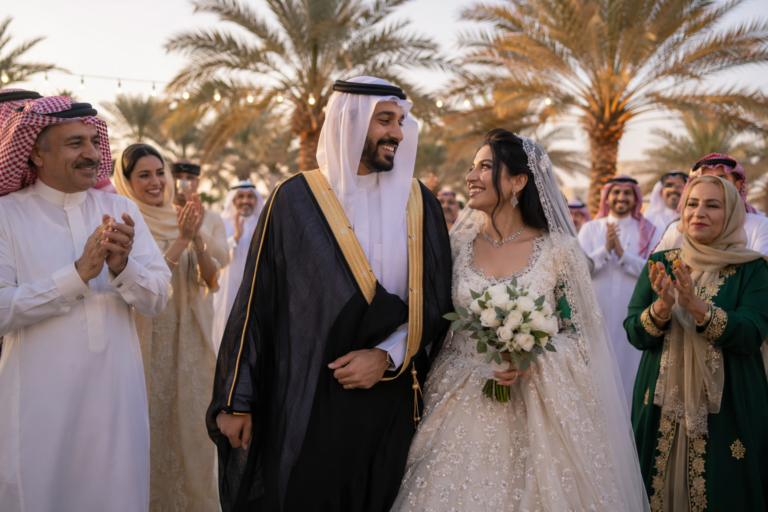
For many Australians, the things they notice most at a Saudi celebration are the clothes, the shows, and the food. Saudi wedding attire changes from family to family and depends on where the event is held, but you often see a mix of traditional garments and modern formal outfits. Wedding guests should know that looking neat and respectful is important.
Hospitality and fun are a big part of the day too. You might see sword dances or hear traditional music, and it’s common for people to enjoy arabic coffee while they’re there. The food is usually varied and generous, so having a good meal is a big part of the whole experience.
Traditional Saudi Wedding Attire for Brides, Grooms, and Guests
Clothing is important in a traditional saudi wedding. It shows status, looks good, and holds cultural meaning. The bride usually wears a detailed gown, like a thobe or sharara. This can have a lot of embroidery and beads. The groom may choose a traditional thobe with a ghutra and agal, or a formal suit.
The setting also affects what people will wear. In women’s areas, female guests often wear glamorous evening clothes. In men’s areas, male relatives normally wear traditional thobe as a formal dress. When the couple comes up on a beautifully decorated stage, what they wear adds to how good everything looks.
-
A bride may wear white or ivory with detailed embellishment.
-
The groom may wear a traditional thobe, ghutra, and sometimes a bisht.
-
Female guests usually dress formally for the celebration.
-
In some customs, jewellery or gestures linked to the bride’s hand symbolise commitment.
Popular Foods, Music & Dance at Saudi Weddings
Food and how people perform give a lot of energy to a wedding reception. In Saudi celebrations, people show warm hospitality. There are many dishes, lots of sweets, and many drinks given to everyone during the night. When guests first walk in, they get arabic coffee and dates.
Music and dance show saudi heritage. Often, there is traditional music played for processions or important entrances. Sword dances like the ardah bring strong culture to the wedding and can be a big highlight. At some weddings, there might also be a first dance for the couple, some short speeches, and special things done around dessert.
-
Guests might get rice dishes, meat, bread, salads and desserts.
-
To make guests feel welcome, arabic coffee and dates are handed out.
-
Traditional music can help make entrances feel grand and adds to the fun.
-
Sword dances let everyone see a great part of saudi heritage.
-
The wedding cake is often cut as part of the evening.
Conclusion
To sum up, it’s good for Australians to know about wedding traditions in Saudi culture if they want to join in and enjoy these big and lively events. Family plays a big part in finding a match, and the special customs at the wedding say a lot about this culture. Every part, from start to end, means something in Saudi culture. When you get ready to go to a Saudi wedding, try to respect the old ways and also join in the fun. If you want to know more about what happens or how to act at these events, you can get in touch and have a chat. There is so much to see and enjoy in the world of Saudi wedding traditions.
Frequently Asked Questions
How are Saudi wedding traditions different from other Arab countries?
Wedding traditions across the arab world have some things in common, but in saudi arabia, there’s often more focus on family. People see a lot more religious formality, and the events are usually split by gender. In saudi arabia, weddings might show unique customs too. This could include holding the party in separate halls, talking about mahr, and using certain ways to treat guests that you don’t always get at other arab weddings.
What should an Australian guest expect when attending a Saudi wedding?
At a wedding venue for Saudi weddings, wedding guests can expect a formal social event. The family will be closely involved, and there will be a lot of hospitality shown to all. There is also a strong cultural structure to follow.
In some saudi arabian weddings, there are different spaces for men and women. But sometimes, everyone will share moments together. This can happen during entrances, taking photos, having food, or enjoying performances.
How long do Saudi weddings usually last?
A wedding in Saudi Arabia isn’t just one big event. It usually happens in stages. These steps can include the proposal, engagement, henna, contract signing, and then the wedding day. In many parts of Saudi Arabia, people still follow this old tradition. This means the fun and gatherings go on for a while, and each time family and friends meet, it’s for a different reason.