Key Highlights
-
The polish wedding traditions usually kick off with a Catholic church ceremony and go on with a fun wedding reception.
-
At polish weddings, wedding guests from Australia should know that family members will have a big part to play on the wedding day.
-
When you get a bread and salt welcome, vodka, or see broken glasses, these are all seen as a sign of good luck for the married couple.
-
At the wedding celebration, there will be unique foods, a wedding cake, the “Sto Lat” song, and a lively first dance to enjoy.
-
The polish customs don’t end early; most wedding receptions run late and may even go into the next day.
Introduction
If you’re going to a Polish wedding, you’ll be part of much more than just a regular wedding day. Polish wedding traditions make it more than one simple event. The whole wedding celebration comes with close family, church customs, a lot of food, music, and things that go well into the night. For people in Australia, you might see some things that are like what you know, but many things will be new. It’s good to know what to expect, so you can have a good time, avoid any surprises, and see why these traditions are so important for people in Poland.
Understanding Polish Wedding Traditions as an Australian Guest
If you come to polish weddings as an Australian guest, you might get that they feel bigger and run longer than many of our local events. They are more about bringing the family together. Most of the time, the wedding ceremony will be in a catholic church. Rings are put on right hands. The day of the wedding sometimes kicks off with blessings at the bride’s family home.
After that, the wedding celebration will go on at a wedding hall or hotel. Here, wedding guests get to eat some special foods. The first dish is polish chicken soup. There can be a country table full of food, people singing Sto Lat, and even some disco polo music. The couple will do their first dance too. Then comes the wedding cake, more dancing, and fun. You might see elegant cocktail dresses on the guests and many customs for the new couple. The polish wedding traditions often carry on into the early evening and even later.
Key Differences Between Polish and Australian Weddings
For an Australian guest, the biggest surprise is usually the scale. Polish wedding traditions often involve 100 to 150 people, heavy involvement from family members, and a full wedding day that can continue until dawn. In many cases, the church ceremony starts early, then the wedding reception carries on for hours with food, toasts, and a packed dance floor.
Another clear difference is the structure of the event. Polish weddings usually include repeated hot meals, a country table, and customs linked to good luck. The new couple may be welcomed with bread, salt, vodka, and broken glasses, while guests sing and line up with gifts.
|
Feature |
Polish weddings |
Common Australian weddings |
|---|---|---|
|
Wedding ceremony |
Often a Catholic church ceremony |
More mixed in style and setting |
|
Rings |
Worn on right hands |
Usually worn on left hands |
|
Food |
Unique foods served through the night |
Fewer meal rounds |
|
Reception extras |
Country table, wedding cake, even flaming wild pig at some events |
Less common |
Cultural Significance of Marriage in Poland
Marriage in Poland is seen as a big moment for both the family and the community. It is not just about the married couple. This is why family members play a big part in polish wedding traditions. They help with the planning, and sometimes, they pay for things that happen on the wedding day. Parents may be very active from start to end.
The Catholic church is often part of the main event in a traditional setting. The ceremony is serious and is done with strong faith. There are signs that show things like marital fidelity, prayer, and getting a blessing. Once the church service ends, some couples stop to pray to Virgin Mary before they walk away together.
At the wedding party, there are customs that stand for hope and real life. For example, bread is a sign that people will not go hungry, and salt is a reminder that there will be life’s difficulties, but the couple will get through them together. These things make everyone smile and feel good cheer. People see these signs as showing good luck. They are a big part of wedding tradition and give deep meaning to the wedding celebration.
Essential Things to Know Before Attending a Polish Wedding
Before you go, make sure you read the wedding invitation closely. In polish weddings, it can have things about gifts, where to stay, and let you know if the fun goes past the wedding day. The polish customs can be pretty formal, so it is good to know all this ahead of time instead of guessing.
You will find the day can go for a long time. After the church ceremony, you might see people give wishes and gifts before heading to a full wedding reception. There will be more than one meal, music, and a big dance floor. It is smart to wear a proper wedding dress. Most women pick elegant cocktail dresses. This helps you fit in with family members, the wedding party, and shows you respect the married couple and their wedding plans.
Dress Code and What to Wear
If you want to know what to expect at a Polish wedding, get ready for something formal and neat. Polish wedding traditions ask for good clothes, especially when you go to the wedding ceremony. Many wedding guests get dressed up very well for this wedding day, as the time is one of the biggest days for family members, not just any party.
At a usual Polish wedding celebration, women often show up wearing elegant cocktail dresses and have their hair done nicely. Men are often in suits. If there is a church ceremony on the day, it is best to wear clothes that are simple and neat. You do this to show you care and show respect to the bride’s family, the wedding party, close friends, and older family members.
-
Choose a formal outfit right for a special wedding day.
-
Women can wear elegant cocktail dresses or another tidy option.
-
Men usually should go with a suit for the wedding ceremony.
-
Pick shoes that you can handle for hours, not just quick photos.
-
Make sure you look neat to fit in with the new couple and the wedding party.
Gifts, Wishes, and Guest Etiquette
One of the main polish wedding traditions is for guests to put money in a card or envelope. People often give this to the married couple during a receiving line right after the ceremony or when everyone is at the wedding reception. Sometimes, the wedding invitation might ask guests to bring other things as well, like wine or lottery scratch cards, instead of flowers.
Wishes are important too. At polish weddings, guests meet the married couple, say nice words, and help set a happy and warm feeling for the wedding celebration. If you are not sure what to say, just keep it warm, short, and polite. These polish wedding traditions are about support. They are not about getting everything perfect.
-
Bring a card with money for the married couple.
-
Check the wedding invitation to see if they ask for anything else.
-
Line up and give your wishes if the wedding party does this.
-
Go in with warmth and join the bride’s family and closest family members.
After all this, keep joining in. Step on the dance floor when asked, and see each part of the day as a sign of good luck and goodwill. Don’t just stand back from the fun with the family members. Get involved and help make it a great wedding celebration.
Beginner’s Guide: How to Prepare for a Polish Wedding
Getting ready for polish weddings starts with some good planning. The first thing to do is read the wedding invitation to see what is expected of you. Check if the place to stay will be given, and pick a wedding dress or smart clothes that work for a church ceremony and a long wedding reception. This is a special day for the new couple and families. A bit of planning now can really help you enjoy the day later.
It’s also good to come with the right attitude. At polish weddings, wedding guests should be ready to sing Sto Lat, eat lots of tasty new foods, and join in with the wedding party. polish wedding traditions often focus a lot on the bride’s family, closest family members, and of course, the new couple. So be ready for a warm, friendly, but well-planned wedding day where everyone has a part.
What You’ll Need as a Guest (Invitation, Attire, Polish Phrases)
A foreign guest should know that polish weddings are long, social, and well organised. You will want to bring things you need for both the church ceremony and the party. Be ready for the wedding ceremony, the first dance, the meal times, and a lot of chats with family members and wedding guests.
Simple planning will help you. You do not have to speak polish well, but a few polish phrases like sto lat sound good to the new couple and closest family members. Just knowing how to give some good wishes can go a long way.
-
Your wedding invitation and all the details about where you’ll stay
-
A formal wedding dress or suit to fit polish weddings
-
Comfortable shoes so you can last out on the dance floor
-
A card or an envelope for your gift
-
A few polish phrases, like sto lat and other easy good wishes
When you get there, try to relax and watch what the room is doing. Most times, people will show you what to do. You will likely follow the group from the church ceremony to enjoy some polish chicken soup, head to the country table, and feel the rhythm of the reception with all the other guests.
Important Pre-Wedding Customs to Be Aware Of
Some important things happen before the wedding day begins in Polish wedding traditions. In the past, a man had to ask the bride’s dad if he could marry her. That’s not as common these days, but families still get very involved. Parents often meet up to talk about the date, where the wedding will be, and all the big things for the day.
Another thing is that, for many years, most Polish weddings have happened in the bride’s hometown. This has a big effect on where people travel and where the church ceremony will be held. People can start planning well ahead of time, which is normal with big Polish weddings.
-
Parents can have a big role when organising the celebration.
-
The bride’s family usually gets to say where the wedding will be held.
-
Many weddings still happen in the bride’s hometown.
-
Family customs before the wedding show their support for the couple starting their new life.
Old stories about Polish wedding traditions talk about czarna polewka, a very special soup. If someone was given this at a meeting about marriage, it meant their match was not approved. You probably won’t come across this now, but it shows how much the family shaped marriages in past years.
Step-by-Step Guide to Experiencing a Polish Wedding
The best way to get to know polish wedding traditions is to look at the order of the day. Each part, from old family habits, to the church ceremony, and to the wedding reception, has its own spot. This lets wedding guests enjoy a full, well-put-together day that makes sense and never feels out of place.
On this special day, you will see how polish customs bring family members, food, music, and good luck together. The wedding invitation might show only the main facts, so here’s an easy step-by-step guide. This can help you join in on the wedding celebration, eat some wedding cake, join the first dance, sing Sto Lat, and be part of the late-night wedding tradition and feel sure about what to do.
Step 1: The Engagement and Family Involvement
One of the main things about polish wedding traditions is that family members get involved right from the start. In the past, a man would ask the bride’s father if he could marry her. That old engagement ceremony is not as popular now, but weddings are still about family.
These days, parents often help get everything organised for the wedding day and might even pay for most of it. The bride’s family and the groom’s side usually meet up to sort out things like where the special day will be, what date works best, and who gets an invite. For a lot of polish weddings, this kind of planning starts far ahead of the day.
The big day has also often taken place in the bride’s hometown, and you can still see this in some polish wedding traditions. By the time guests get a wedding invitation, the closest family members have already made nearly all the main choices.
Step 2: The Blessing of Parents
Many couples start the wedding day at the bride’s home, where they share a blessing with their parents. This is one of the most well-known polish wedding traditions. It keeps family members right at the centre of this special day and helps bring heritage into polish weddings.
When the blessing happens, the married couple might kneel or just stand. Their parents will make the sign of the cross on their foreheads and say a few words to wish them good luck in their new life together. Sometimes, they also kiss a cross and drink a glass of champagne.
This time is about faith, family, and wishing for good things before the wedding party heads to the church. For the couple, it is something both private and out in the open. And for people watching, they see the way polish wedding traditions bring together religion and simple, home events.
Step 3: The Wedding Ceremony (Church or Civil)
A traditional Polish wedding ceremony takes place in a Catholic church. It often starts in the early afternoon on a Saturday. The day feels formal and serious. Faith is a big part of the wedding as the married couple stands in front of their family members, the bride’s family, and the wedding party.
Some things can look different to Australians. For example, wedding rings are worn on the right hands instead of the left. The church service is close to the catholic church and speaks a lot about things like marital fidelity. This can make the wedding ceremony feel unlike some more personal, less religious events.
After the married couple says their vows and the Mass ends, a few couples stay in the church for a bit to pray to Virgin Mary. The guests wait until that is done, then everyone goes outside. From there, polish wedding traditions move from the church part to a big celebration. The group then joins for good wishes, then bring gifts, and head to the wedding reception.
Step 4: Reception Traditions – Food, Drinks, and Toasts
Yes, at polish weddings, there are many special foods and drinks. When the new couple gets to the wedding reception, people welcome them with bread, salt, and a shot of vodka. After that, everyone starts eating and doesn’t stop all night.
The usual plan is to begin with polish chicken soup as the first hot meal. Then, you have the second course and some dessert, like ice cream or cake. Every couple of hours, guests get more food. Most places also set up a country table with meats, bread, pierogi, and local favourites.
-
Bread and salt welcome at the start
-
Polish chicken soup as the first dish
-
Repeated hot meal service through the evening
-
Country table with unique foods
-
Wedding cake, and at some events, a flaming wild pig
Between meals, people make toasts and sing Sto Lat, which helps everyone feel good. The wedding party moves from the table to the dance floor all the time. At polish weddings, food is not just something extra or on the side. It is one of the biggest parts of the wedding celebration.
Step 5: Dancing, Music, and Celebratory Games
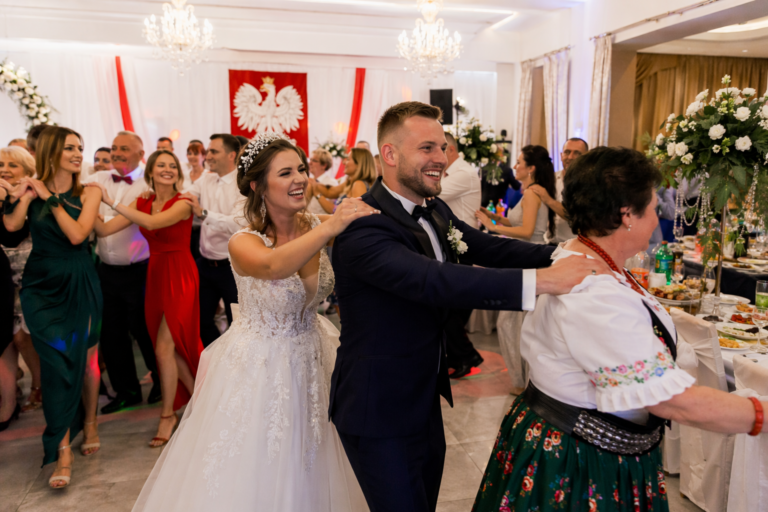
Music is the main force at polish weddings. It sets the mood at the wedding reception. It gives everyone something to do between meals and keeps the wedding guests active. After the married couple have their first dance, the dance floor becomes a big part of the wedding celebration.
Most of the time, a DJ or band will do much more than play music. They talk to the room, tell people what happens next, and run games for everyone to join in. Disco polo is popular at polish weddings. It really makes these parties feel bright and lively.
-
The first dance gets people started on the dance floor
-
Disco polo makes sure the mood is happy
-
Bands or DJs lead games and organise the fun
-
Family members and close friends join the action
-
Dancing goes on for hours, far into the night
Games can start about midnight, right when oczepiny kicks off. This is when the new couple and their guests move from formal to loose fun. It is all about good luck and sharing enjoyment with each other.
Unique and Memorable Polish Wedding Customs
What stands out about polish wedding traditions is just how many important moments are packed into the wedding day. These are not just random things they add in. Each wedding tradition brings its own meaning, a bit of fun, or even a sign of good luck for the married couple and their families.
From the salt ritual at the wedding reception to late-night customs with a flower crown or veil, polish customs make the wedding celebration much more deep and special. There is the first dance, the wedding cake, good food, and a dance floor that keeps moving—all these things and the polish wedding traditions help wedding guests feel like they are part of something much more than just a simple party.
Bread and Salt Ritual at the Reception
One of the most surprising things for outsiders in polish wedding traditions is the bread and salt welcome at the wedding reception. In many polish weddings, the parents of the new couple greet them before the wedding party starts. Wedding guests gather near them to watch it happen.
The salt ritual has a clear meaning. The bread means the new couple should never be hungry in their life together. The salt shows that life comes with hard times, but they will get the strength to face that together. Sometimes, the couple also gets vodka and then break glasses behind them.
For Australians, this can be both showy and touching at the same time. But in polish wedding traditions, it is taken very seriously. It’s seen as a symbol of good luck, support, and protection. Family members also get the chance to help open the wedding party in front of all the wedding guests in a way that is both public and hard to forget.
Throwing Coins or Rice for Luck
Another thing that might surprise people at polish weddings happens just after the wedding ceremony finishes. As the new couple steps out of the church, wedding guests might throw coins or rice at them. This is quick, loud, and full of fun and good luck.
People see this as a sign of good luck. The coins have to do with money and hope for a good life, and the rice means fertility and plenty. This is one of those polish customs that takes the simple moment when they leave the church and makes it mean even more as they start their life together.
At polish weddings, the meaning of the act is as important as what you do. Family members, the wedding party, and all the guests treat this as a happy way to send the new couple from the sacred part of the wedding day to the big party at the wedding reception.
Oczepiny and Poprawiny – Late-Night and Next-Day Festivities
A typical Polish wedding celebration often goes on much longer than what many Australians might expect. The main wedding reception may last until early morning. Polish wedding traditions often keep going the next day. That is why a lot of wedding guests and family members spend the night at the hotel or venue.
The big event late at night is oczepiny. It kicks off around midnight. At this time, the bride will throw her veil and the groom will toss his tie. After that, there are games and plenty of dancing with the band or DJ. Then on Sunday, the celebration moves into poprawiny. Things are more relaxed, but the polish customs and wedding celebration keep going for the new couple and their friends.
-
Oczepiny starts at midnight
-
There are games and dancing after the official parts finish
-
Poprawiny brings the party back the next day
-
The second day is shorter and wraps up in the afternoon or by early evening
These late-night moments show how a typical Polish wedding can turn a special day into a weekend shared by family members, wedding guests, and the new couple. The polish customs really make these memories last longer than just a day.
Conclusion
Going to a Polish wedding can be a once-in-a-lifetime experience. The day is full of colour, tasty food, and happy moments. If you know the differences between Polish and Australian weddings, and you learn the right customs, you will show respect for the couple and enjoy yourself more as a guest. There is a warm bread and salt ritual, lots of fun dancing, and games that get everyone involved. Every part means something to the family and the couple. Get ready because this is not like any other wedding you have been to—it is about friends, family, love, and making good times together, the way polish weddings do best. If you want to learn more, or you need help to feel ready for the big day, think about getting a free chat or guide that will help you join in with confidence.
Frequently Asked Questions
What should Australians expect at their first Polish wedding?
People in Australia should know that polish wedding traditions are usually longer. They are also more formal and focus more on family than a lot of weddings here. Polish weddings often start with a church ceremony. After that, everyone goes to a big wedding reception. There will be many meals, music, good luck customs, and wedding guests are always very active.
Which Polish wedding traditions are must-see experiences?
Some of the best polish wedding traditions to see are the bread and salt welcome, the first dance, late-night oczepiny, and having a big spread of food. There are also some special foods, a lovely wedding cake, and the dance floor full of people. These things give a polish wedding its fun feeling and really make the night one to remember.
Are there any special foods or drinks unique to Polish weddings?
Yes, at many polish weddings, the wedding reception often starts with polish chicken soup. This is usually followed by some meat dishes, sweets, and more hot meals served again and again. At a traditional polish wedding, there can also be a country table with breads, meats, pierogi, and local drinks. People also have vodka at the party to help with the celebration.
How long do Polish wedding celebrations usually last?
Polish wedding traditions are famous for lasting longer than one night. Many polish weddings go on until early morning. The wedding celebration can even continue the next day, which people call poprawiny. These polish customs help make the event a long get-together, not just a one-night party.