Key Highlights
-
Peruvian wedding traditions bring together family, faith, nature, and a big party all in one day.
-
If you are wedding guests from Australia, you should get ready to dress up, feel welcome, and stay out late.
-
Many Peruvian weddings start with a civil wedding. After that, there is often a larger wedding ceremony and party for everyone.
-
At the wedding ceremony, some symbolic elements can show up. These can be coca leaves, special gifts for Mother Earth, or the exchange of rings.
-
People always use music and dancing, and something called La Hora Loca makes Peruvian weddings feel even more fun.
-
Traditions can look different in each place, so regional customs also play a big part in Peruvian wedding traditions.
Introduction
If you get invited to a wedding ceremony in Peru, you will find it’s quite special. The Peruvian culture mixes family, fun, faith, and the local wedding traditions. This can feel like what you know from home, but there are also many new things for an Aussie to see. Some weddings are done in the Western style. Others have old ways that link back to nature and people coming together. If you know a few things before you go, you will feel much better on the day. You will also show respect and enjoy everything with confidence.
Understanding Peruvian Wedding Traditions as an Australian Guest
For people who will be wedding guests in Australia, it’s good to know that Peruvian weddings can be long. There is a lot of talking, dancing, and moving around. When the wedding ceremony is over, people like to spend hours eating, dancing, and chatting with family members and close friends.
You can expect things to be different at each wedding. Some Peruvian wedding traditions are Catholic and look formal. Others show local customs that you see mainly in Andean places. At many Peruvian weddings, the mood is warm and friendly. People are open, the feeling is generous, and it is all about enjoying the celebration.
Why Learn About Peruvian Wedding Customs?
Learning about Peruvian wedding traditions can make things much easier on the big day. You get to know what to wear, when you need to be there, and how things move from the start to the reception. This can make a difference since many of the celebrations go on for a long time.
It also shows a sign of respect. In Peruvian culture, weddings mean more than just two people. The day brings in family, the idea of religion, beliefs handed down, and even nature. When wedding guests know this, they can get involved in a way that feels right and they can feel sure about what they do.
Knowing about the customs is good for another reason too. You get to see the special wedding traditions which make Peru different. This could be La Hora Loca, having a civil wedding before everything else, using coca leaves in some parts, or family being a big part of how things go. For someone from Australia, this background makes the day much more than just a party. It turns the celebration into something full and rich with Peruvian wedding traditions and culture.
Overview of Peruvian Marriage Celebrations
Peruvian weddings are the kind of events that do not just last a short time. In many cases, the fun can start before the wedding day and keep going well into the night. Family members play a big part, especially before things begin and when it’s time to host guests.
A traditional wedding in Peru usually has a few different things that happen:
-
an engagement party so the couple can tell their friends and family the good news
-
la pedida, where the groom goes to the bride’s parents to ask for their okay, but you won’t always see this now
-
a civil wedding, which is sometimes before the big wedding ceremony
-
a wedding ceremony in a church, or sometimes just a more personal get-together with close friends and family
After all the main parts are over, it is time for the people to take over. Peruvian weddings often turn into long parties with a lot of food, drinks, talking and dancing. You will see family members stay involved at every stage, from planning to saying hello to guests and making sure everyone enjoys the whole night.
The Cultural Roots of Weddings in Peru
Peruvian wedding traditions come from more than one place. In Peru, you can find signs of Indigenous customs, Catholic practices, and social habits that have grown with time. This mix gives each wedding its own special feel.
For the most part, old Andean ways of doing things show up as nods to nature, offerings, and special symbols during the day. Weddings in cities may look more like what you see in the West. If you want to know about Peruvian culture and wedding traditions today, it’s helpful to think about both sides at the same time.
Ancient Andean Influences and Their Legacy
In the Andes, wedding traditions are often closely tied to nature. This is one big way an Andean wedding stands out from a city event. Here, nature is not just for show. It’s part of the wedding.
One good example is the despacho. This is an offering that comes from Indigenous groups in the mountains. People use things like food, flowers, and coca leaves. They put these on a cloth, wrap them up, and then either bury or burn the bundle. This sends blessings to Mother Earth. It also shows hope for the couple’s time to come.
This way of doing things is still strong today, especially in the Sacred Valley. Weddings there often feel linked to the land, the people nearby, and older ways of thinking. Along the coast or in big cities, weddings may look more Western and formal. But, Andean wedding customs still have a say in how lots of Peruvians see marriage and how to mark a big day.
Spanish Colonial Impact on Peruvian Wedding Rituals
Spanish colonial influence is clear in many wedding traditions across Peru. Catholicism is still important for much of the population, so a wedding ceremony in a church with blessings, vows, and the exchange of rings is very common. For lots of couples, this happens with local Peruvian tradition. It doesn’t take the place of it.
That mix means the wedding is made up of a few parts. The couple might get married at a town hall or town centre first. The next day, they often have a bigger church service. The way things are done can feel familiar to people from Australia, but the pace and social side are usually much bigger.
Symbolic acts show this mix too. A Catholic mass can be right beside local customs around good luck, family, or future happiness. Instead of one way being used over another, Peruvian weddings often bring both styles together. This gives every celebration a special identity.
Regional Wedding Variations Across Peru
Peru is not the same everywhere, so wedding traditions change a lot from one area to the next. An Andean wedding ceremony can bring in local ways, special fabric, and symbolic gifts, but in other places, people may go with a more city or Western-style wedding ceremony.
These differences matter for the guests. The clothes, the music, the way of the ceremony, and where it all happens can be different based on if it’s in the Andes, along the coast, or somewhere else in the country. This mix is one reason why Peruvian wedding traditions are so interesting.
Andean, Coastal, and Amazonian Differences
One of the best ways to understand Peruvian culture is to notice how place shapes celebration. In the Andes, a traditional wedding may focus more on nature, local symbolism, and textile-rich dress. In larger coastal cities, couples often adopt Western wedding styles more fully.
The compiled information gives the clearest detail on Andean and urban settings, while also showing that Peru includes different people and backgrounds. That means the kinds of events and customs can vary a lot by region and family.
|
Region or Setting |
Common Wedding Features |
|---|---|
|
Andes / Sacred Valley |
Andean wedding influences, despacho offerings, connection to Mother Earth, colourful dress, local textiles |
|
Coastal cities / larger urban areas |
White dress, suits, civil wedding, Catholic ceremony, more Western-style structure |
|
Mixed family backgrounds |
A blend of formal ceremony, local customs, big reception, music, and dancing |
For guests, the key point is simple: do not assume every Peruvian wedding looks the same. Regional identity can shape the tone, rituals, and pace of the day.
Indigenous Ceremonies and Symbolic Practices
Some of the most memorable bits of Peruvian weddings come from Indigenous ceremonies. These often show a link to the spiritual world and the land. For many guests, they feel deeply meaningful, even if the way they go is new.
The despacho is one clear tradition. Here, people place a variety of symbolic items together for the couple. This might be flowers, food, confetti, and coca leaves. Once it’s ready, the bundle gets buried or burned as an offering to Mother Earth.
There is also the doll burial. Two dolls stand for the couple. They get wrapped in coca leaves and buried with a tree seed. As time goes by and the tree grows, so does the marriage. These ceremonies show how marriage can be tied not just to family, but also to nature, blessing, and keeping things going.
Essential Elements for Experiencing a Peruvian Wedding (Beginner’s Guide)
If this is your first time at one of the many Peruvian weddings, just stick to the main things. Wedding guests should get ready for a big event. There will be smart wedding attire, and a fun, social vibe that starts with the ceremony and flows into the wedding reception.
After the couple shows up at the party, their first dance usually gets things started for the night. Then, the focus is on food, music, and dancing. If you know a few basic things, you can relax and enjoy the whole experience.
What You’ll Need to Get Started: Invitations, Attire, and Etiquette
Start with the wedding invitation. It will show you if the day is going to be formal or not. Most of the time, this means you need to dress up and not keep things too casual. In Peru, people often like bright and happy colours when they go as guests, but you still need to look neat and ready for the occasion.
When you choose your wedding attire, think about wearing formal dresses, suits, and nice accessories unless the couple tells you something different. Dressing the right way is a good sign of respect. You need to match what the day feels like, so look out for clues and follow them.
Here are a few simple things to remember:
-
check if there will be a civil wedding, a religious service, or both
-
do not wear clothes that are too relaxed, even if the party later feels easy-going
-
the day can be long, so pick shoes you can wear as you stand and dance
-
follow what the couple does for the timing, where you sit, and joining in customs
Key Expectations for Australian Guests
The first thing that many Australian wedding guests notice about Peruvian weddings is how long they go for. These parties can last ten hours or even more. People spend a lot of time talking, eating, dancing, and just moving around. If you are used to weddings that finish faster, this can feel pretty easy-going.
Another big thing is how important family members and close friends are at these weddings. There might not be an official bridal party, but the couple is always surrounded by a lot of family and mates. Everyone is ready to celebrate, not just stand on the side and watch.
You should get set for a fun reception, lots of good food and drinks, and heaps of dancing. The dance floor is for people of all ages to enjoy. If there is La Hora Loca, things really pick up. There are lots of props, loud sounds, and heaps of energy. If you jump in and join the fun with a smile, you will fit right in at peruvian weddings.
Step-by-Step Guide to Participating in a Peruvian Wedding
Going to a Peruvian wedding is simple when you know what happens during the day. The wedding ceremony, pre-wedding steps, and the wedding reception each have their own wedding traditions and mood.
For Australians, the good way is to keep an open mind, pay attention, and be polite. Some parts of the day will look like what you have seen before. But, other parts might be new and show unique Peruvian wedding traditions. The steps below will help you feel sure and enjoy the wedding ceremony and all of the celebration.
Step 1: Understanding the Pre-Wedding Rituals and Gatherings
Before the wedding ceremony, you might find there is more happening than you first think. In Peru, the celebrations often begin early, sometimes right when the couple gets engaged. This helps build excitement and brings close family members into it from the start.
A popular thing to do is have an engagement party. It is usually at a family home, where the news is shared with family and friends. Some families also have something called la pedida. This is a Peruvian tradition where the groom asks the bride’s parents for permission to marry. You see it less often these days, but many people still know about it.
These early get-togethers are important because they show the wedding is more of a family event, not just for the couple. If you hear words like these before you go, you will know what is coming, and you will see how much people value family’s approval, their being there, and time spent together.
Step 2: Dressing for the Occasion—Traditional Attire Tips
When you are choosing what to wear to a wedding, first ask where the wedding will be held. In big cities, the couple can follow Western styles. Usually, the bride will have a white dress, and the groom will have a suit. If you are going to this kind of event, it is best to wear formal clothes.
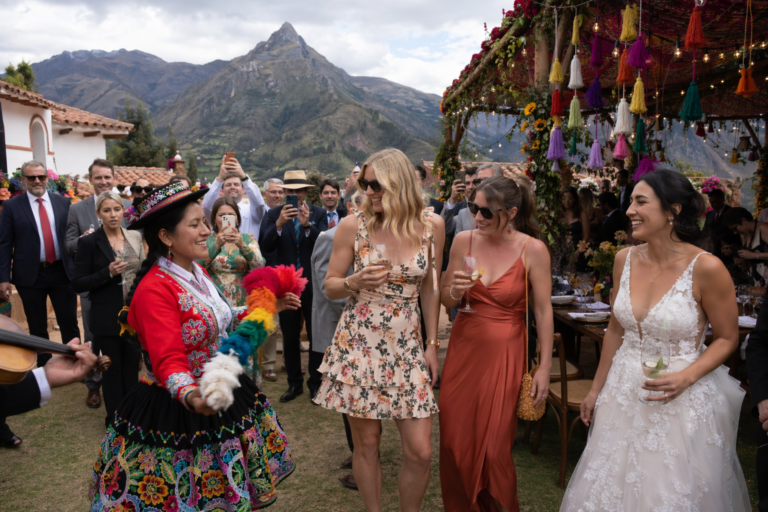
At a traditional wedding in the country, or where people want to focus on culture, the clothes can look very different. Brides often put on bright colours and long skirts that move and have bold patterns. Grooms may wear colourful ponchos made from the fabrics of the area.
The way clothes change at these events is one big part of what makes Peruvian wedding traditions so special. If you are going as a guest, you do not have to dress like the local people, but you should look neat and suit the mood of the event. If you are not sure, picking something more formal and showing respect is always better than being too casual.
These wedding traditions help show the many sides of Peru, from the white dress at a city wedding to colourful looks at a traditional wedding.
Step 3: Attending the Ceremony—Symbolic Acts and Family Roles
On the wedding day, the ceremony can be religious, civil, or made just for the couple. In a lot of Peruvian weddings, the couple has already done a civil wedding the day before. The bigger public wedding ceremony is usually the heart of the whole celebration.
At the wedding ceremony, couples may have different ways of showing what the day means. Some put on a Catholic service where they say their vows and give rings. Others do a despacho or use other local traditions in the ceremony. In some weddings, guests may be asked to give their own blessings or wishes right there at the ceremony.
Family members are a big part of these weddings. You may not always see bridesmaids or groomsmen, but family and close friends stand with the couple. These important people help make the wedding ceremony feel real and full of care. They watch the pair get married and give them their support. For guests, this way of doing the wedding makes it feel like everyone is part of it, not just watching from the side.
Step 4: Navigating the Reception—Music, Dance, and Festivities
Once the ceremony is over, the wedding reception turns into a big party. People often stand around the dance floor and wait for the couple. They start things off with their first dance, and then the party really begins. After that, music and dancing are a big part of the night.
This is one of the main things about Peruvian wedding traditions. Music and dancing are very important. You can hear traditional music, newer party tunes, or a bit of both, depending on who is there. No matter what, the dance floor is full for most of the night.
Keep an eye out for a few big moments:
-
the first dance, which starts the party at the wedding reception
-
La Hora Loca, or crazy hour, where you see dancers, props, costumes, and glow sticks everywhere
-
people of all ages get up to join in instead of staying at their tables
If you like dancing, you will have a good time with these wedding traditions. You’ll see people of all ages jump in to enjoy the fun.
Step 5: Enjoying Traditional Peruvian Wedding Cuisine
Food is a big part of many Peruvian weddings. Guests are well looked after when it comes to what they eat and drink. The menu can change from one wedding to another, but most have local dishes and lots of drinks. It is common to see an open bar or drinks like cocktails flowing all night.
At a traditional wedding or a big event, you might get the chance to try these favourites:
-
ceviche
-
lomo saltado
-
pisco sours
-
a late-night second meal or snack to keep the party going
Dessert can have its own meaning too. The wedding cake is used for the cake pull, which is called cintas de la torta. In this tradition for single women, one ribbon is hidden under the base of the wedding cake with a ring tied to it. The one who pulls out the ribbon with the ring can be the next to get engaged.
peruvian weddings, cake pull, wedding cake, cintas de la torta, traditional wedding, single women, open bar, base of the wedding cake
Traditional Wedding Attire in Peru
What people wear at a traditional wedding in Peru really depends on where the couple come from and where the wedding is held. Some weddings look like any other Western event. The bride will often wear a white dress, and the groom might have a suit on. Everything can look very formal. But other weddings show off the couple’s regional roots. You will see this in the mix of colour and the style of the fabric they use.
The difference in wedding attire is something that stands out in Peruvian wedding traditions. If you are a guest, you should know there is not one set way to dress. Wedding traditions in the Andes will not always be the same as weddings in the big cities.
Outfits for Brides and Grooms—Regional Styles
In lots of city Peruvian weddings, the bride and groom dress in ways that people from Australia would spot right away. Brides often wear a white dress, and grooms put on a suit. You see this most in bigger cities and at events with a Western look.
Things change a bit in other parts of the country. At an Andean wedding, the bride might pick bright colours and skirts with layers that move as she walks. The groom can wear a colourful poncho made using old weaving styles. You might also see headwear that comes from local traditions.
There is more to these outfits than looks. In Peruvian weddings, what the couple wears can say a lot about who they are, where they come from, and their family. If you go to something outside a big city, the wedding attire could tell you about the place and what the people value. That makes the day’s look stand out and be something to remember.
Accessories, Jewellery, and Symbolic Items Worn
Accessories and jewellery at Peruvian weddings can look elegant, be full of culture, or stand for special things. It often depends on the type of setting. In Western-style weddings, these items are usually formal and look like the usual things you see at such events. But in celebrations that focus on heritage, you will find the details mean a lot more, with each thing showing local pride.
Some of the most important symbolic elements are not worn the whole day. Still, they are a big part of the way everything looks. Headdresses shaped by Indigenous styles, traditional clothes, and special ceremony fabrics often change the look for the couple. These things help mark out the differences between one area or family and the next.
There is also a wide variety of symbolic items used in the wedding traditions and rituals. In a despacho, people set out flowers, food, coca leaves, and other blessed items together. Even when these things are not counted as accessories, they are still used to show what Peruvian wedding traditions are about. This includes showing who the people are, giving blessings, and hoping for a good future.
Key Rituals and Symbolism in Peruvian Weddings
Many of the most well-known Peruvian wedding traditions use simple acts that mean something special. You may see some traditions you know, like when the couple does an exchange of rings. But some things are only seen in Peru. These might share ideas of good luck, a blessing, or what the couple’s life will be after they get married.
These wedding traditions are there to show things like good luck, the hope for new life, and for the couple to have more together. For everyone at the wedding, knowing about these things can make the ceremony and party feel nicer and have more meaning. This helps, especially when these customs are not like what you might see in Australia.
The Exchange of Rings and Coins
The exchange of rings is a common part of most Peruvian weddings, especially when the wedding ceremony follows a Catholic or Western style. Because of this, it will likely feel familiar to plenty of guests coming from Australia. The rings sit by the vows and blessings, being part of the big moment for the couple.
The gathered details show there’s not really a set national rule on the exact way that wedding rings have to be swapped, except that they are part of the main event. The thing that stands out more is the wider meaning that comes with this. People treat it as a very important and public promise in front of those close to them.
Sometimes, you might also see an inexpensive ring show up as part of the cake pull rather than as part of the main marriage part of peruvian weddings. In the cintas de la torta tradition, one ribbon in the cake has a ring tied to it, and one guest will find it. That’s not linked to the vows, but it’s still used as a fun sign of respect for future love and marriage.
Unique Symbolic Acts and Their Meanings
Beyond the main wedding ceremony, people in Peru add special acts for luck and hope for the future. One of the most well-known is the cake pull, called cintas de la torta. It happens at the reception. This tradition gives people a fun and social time to enjoy.
Here’s how the cake pull works: there are ribbons that come out from under the base of the wedding cake. Single women each grab one ribbon and give it a pull. One ribbon has a ring on it. The lucky lady who finds it is thought to be the next one to get engaged. It’s a simple thing, but there is still a lot of meaning.
Other customs at Peruvian weddings can be about thoughts and spirit. The despacho offering is to ask for help and balance in life. The doll burial joins marriage to new life and growth by using a seed in the ground. You can see that these rituals bring joy, friendship, hope, and a sense of spirit to their big day.
Conclusion
To sum up, when you learn about and take part in the different wedding traditions in Peru, it can make your time as a guest from Australia much richer. Peruvian weddings have old Andean customs mixed with Spanish ways, and you can see and feel this blend at every turn. These weddings are full of colours, special clothes, and many strong rituals. If you understand these peruvian wedding traditions, it shows you respect the couple and their roots. It will also make the whole day better for you. You will enjoy seeing their ways, tasting good food, and getting into the real heart of the celebration. So, if you ever get asked to go to one of their big days, be ready to join in, have fun, and take in all the things that make peruvian weddings so special. Want to know more or need help getting ready? Get in touch with us for a free consultation and learn how to join your next celebration in style!
Frequently Asked Questions
What are the must-see traditions at a Peruvian wedding?
Some of the most memorable Peruvian wedding traditions are the wedding ceremony, special symbolic elements like a despacho, and La Hora Loca, the well-known crazy hour. Once the crazy hour starts, the dance floor gets packed fast with props, music, and people who are ready to have fun all night long.
How do wedding customs differ between regions in Peru?
Peruvian weddings can look very different in each part of the country. If you go to an Andean wedding ceremony, you will notice the use of local textiles and things from nature. There are also some Indigenous rituals in these weddings. In the city, most people follow Western wedding traditions. So, if you are a wedding guest, the dress code, the style of the wedding ceremony, and how the day feels can be different based on where the wedding is held.