Key Highlights
-
Norwegian wedding traditions bring together church practices, civil ceremony choices, and lively walks led by music.
-
A wedding ceremony can have fiddle or violin players, a ring bearer, and close family going in line.
-
The Norwegian bunad and bridal crown both add a deep meaning to the big day.
-
At the wedding reception, speeches and toasts are a big part for the new couple.
-
The wedding cake is often made up of kransekake, soft cake, or other old-time favourites.
-
Fun things that guests do help make Norwegian weddings warm, social, and something people will remember.
Introduction
A traditional norwegian wedding is about music, family, and good wishes. The wedding day can have a church service or a wedding ceremony at city hall. At these events, wedding guests get to take part in many customs. These feel warm and also a bit playful.
Norwegian tradition sees marriage as one of life’s important celebrations. You will see special clothes, long meals, and people giving speeches. If you are curious about it, these common traditions stand out. They are easy to notice and are full of charm.
Traditional Norwegian Wedding Attire
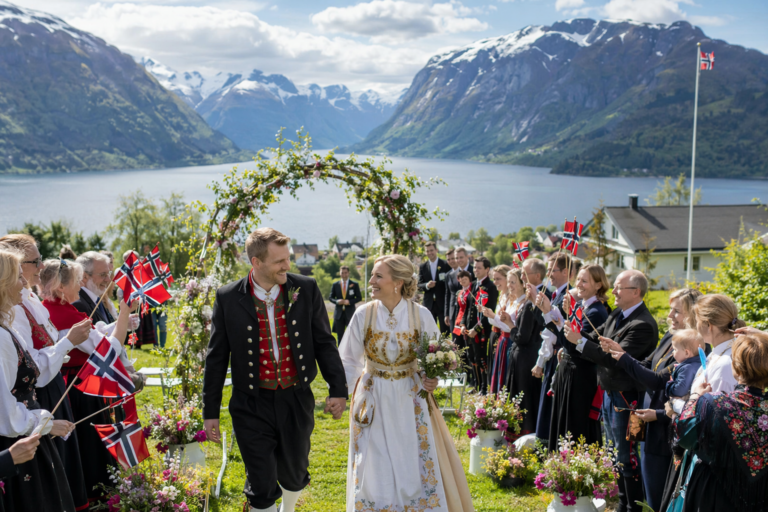
In norwegian tradition, what you wear shows a lot about who you are, your family, and where you come from. The groom might put on a norwegian bunad, which is a formal folk costume with special patterns. Some brides sometimes wear a special dress based on their local traditional clothing for the big day.
But more often, the bride will choose a wedding dress that is white or silver and tops it with a bridal crown. The bridal crown can be a treasured family heirloom. The main bridesmaid also dresses much like the bride for the wedding. Wedding rings finish the outfit, and people often wear them in a way that fits local custom.
The Bunad: Norway’s National Costume for Brides and Grooms
The norwegian bunad really stands out as a clear sign of heritage on a wedding day. This old folk costume is handmade, mostly with wool. It has bright colours and detailed designs. You will often see it on the groom and his mates.
A man’s bunad comes with a shirt, short pants, stockings, a vest, and a top coat. This look is quite different compared to the normal tuxedo you might see at an Australian wedding. It gives the whole event a strong regional feel.
For brides, there is sometimes a dress variation of the bunad. A lot of women still pick a white or silver wedding dress for their big day. You may also see other guests wear bunads during important celebrations. When people share clothes like this, it helps everyone feel closer to family and their country.
The Bridal Crown and Its Symbolism in Norwegian Weddings
One of the most special parts of a Norwegian wedding is the bridal crown. People would usually make it from silver, and the bride wears it with a long veil. Families often treat this crown as a treasured family heirloom, and it gets passed down over the years.
The bridal crown means a lot in these weddings. It has been tied to the Virgin Mary, and many see it as a sign of purity for the bride. That is why it holds an important place in both the ceremony and Norwegian culture.
You might notice some crowns with little dangling spoons on them. These pieces sometimes make a gentle sound as the bride walks or dances. Long ago, people thought this sound would bring good luck and also keep away evil spirits. Many believed that the crown helped look out for the bride on her big day, especially when she was dancing at the reception, so nothing could get in the way of her happiness.
The Norwegian Wedding Ceremony
A wedding ceremony in Norway can take place in a church or as a civil ceremony at city hall. For a traditional norwegian wedding, both choices are seen as normal. The way people mark the day can feel a bit different from weddings in other places.
The procession stands out when talking about a norwegian wedding. Often, fiddle or violin players walk in front of the couple. Parents, the maid of honor, the best man, the ring bearer, and flower girls follow. Wedding vows and rings are a key part of the day, but the music and flow of the event give it a special touch. What happens during the ceremony adds even more meaning for people there.
Meaningful Rituals and Unique Customs in Norwegian Ceremonies
What makes a norwegian wedding stand out is often the little things people do during the wedding ceremony. It’s not just about the wedding vows and wedding rings. The actions and unique traditions that happen all around this are what give the day a wonderful, local touch and help bring good luck to the couple.
Some couples still use things from old-style weddings while planning something modern. These traditions include music, group walks, symbols, and even throwing grain. Even though a handfasting ceremony isn’t mentioned, you can see that doing things for good luck stays important.
-
Violin players, or sometimes fiddle players, might walk in front in the procession.
-
The parents and all the people standing with the couple walk behind them in a certain order.
-
People throw barley grains or rye to bring good luck for the pair.
-
The bride tries her best to catch as many of these grains as she can.
-
The soft sound from the bridal crown is believed to keep away evil spirits.
Differences Between Norwegian and Australian Wedding Traditions
If you are comparing norwegian wedding traditions with australian weddings, a few clear differences appear. Both may include formal clothing, rings, and speeches, but the structure and social customs in Norway can feel more ceremonial and more interactive.
For example, civil weddings at city hall are a normal part of the wedding ceremony landscape in Norway, and music-led processions are far more noticeable. The wedding reception also leans heavily into toasts, songs, and guest participation.
|
Tradition Area |
Norwegian Weddings |
Australian Weddings |
|---|---|---|
|
Ceremony venue |
Church or city hall civil weddings are both common |
Often church, garden, beach, or celebrant-led venue |
|
Procession |
Often led by fiddle or violin players |
Usually less music-led during entry |
|
Reception style |
Long meal with many speeches and toasts throughout |
Speeches often grouped at one point |
|
Guest customs |
Kissing games and glass-clinking traditions |
Usually fewer formal interactive rituals |
Family Roles, Toasts, and Speeches at Norwegian Weddings
Family and friends do more than just sit back and watch. At a norwegian wedding, wedding speeches are an important aspect of any norwegian wedding. It’s usual for the father of the bride, best man, maid of honor, and guests of the newlyweds to have a go at speaking. These people set the feel of the day with what they say.
The speeches are not all squeezed in at the end, but spread out over the meal. This gives every speaker more time to share what they want—be it stories, humour, or love. To really get what the celebration is about, you have to look at the part that everyone, like the father of the bride, maid of honor, best man, and guests of the newlyweds, play in the day. This happens during both the ceremony and the reception.
Responsibilities of Family and Friends During the Ceremony and Reception
In Norway, close family and friends help with the wedding from the very start to the end. At the ceremony, people may see the parents, the ring bearer, flower girls, maid of honor, and the best man take part, with each one showing their support in a clear way.
At the wedding reception, they all stay involved through their speeches, songs, and simple traditions. The father of the bride is usually the first to speak. The bride, groom, main bridesmaid, best man, and father of the groom also often share a few words.
While there is no set job for the mother of the groom in the source, it is clear that family is a big part of the day. This shared help from loved ones brings a strong personal touch to the event. It helps make the wedding feel friendly and warm, instead of stiff or too planned. That is why most guests think back on Norwegian weddings as some of the nicest times they have had.
Traditional Toasts, Speeches, and Communal Celebrations
At many Norwegian weddings, the meal is about much more than just good food. It is the time when wedding speeches, toasts, heartfelt songs, and good wishes are shared by everyone, and this goes on for a few hours. This makes speaking an important aspect of any norwegian wedding, not just a quick job you get through at the start.
There is a toastmaster who helps things go along. This person says who will speak next. Often, this includes close family members and the bride and groom, but other guests can get up and say something too. That is why the wedding reception feels warm, personal, and opens up to everyone there.
People also enjoy a bit of fun during these gatherings. If someone hits a wine glass with a fork or knife, the couple get up on chairs and kiss. When people stomp their feet, the bride and groom go and kiss under the table. These fun things sit well with the wedding speeches and the happy feel of the day, bringing everyone together for a true celebration.
Traditional Norwegian Wedding Foods and Cakes
Food is a big part of any traditional norwegian wedding, and it really stands out after the formal things are done. The wedding cake often comes first, but there can also be coffee, drinks, and many other cakes that keep people around long after dinner.
At a traditional norwegian wedding, kransekake is one of the best known norwegian wedding cakes. You might also see a soft cake, which is actually a sponge cake with cream inside and fruit on top. As well as these traditional norwegian wedding cakes, you could find cheesecake or chocolate cakes on the table too.
Kransekake, Local Dishes, and Festive Treats for the Celebration
Norwegian wedding cakes are loved for their different styles, not just one set look. After dinner, the couple will usually cut the wedding cake. Then, the guests can enjoy coffee, drinks, and more sweets. This makes dessert feel like a bigger part of the celebration.
Kransekake stands out to a lot of people. It is an almond-type tower cake. You stack it in rings to look like a tall pyramid, so it’s different to a regular sponge cake. Icing helps the rings stick and you can finish it with small norwegian flags or more decorations for a fun look.
You can see other festive treats on the cake table as well. It depends on what the couple choose.
-
Kransekake is a well-known pick and is more like a cookie than a soft cake.
-
Bløtkake is a soft cake. It comes from sponge cake with cream, icing, and some fruit.
-
Some couples add cheesecake to their cake table for the norwegian wedding.
-
Chocolate cakes are another good option, next to the more classic cakes.
Conclusion
Wedding traditions in Norway are rich and special. The clothes people wear, called bunad, really show off their culture. The many customs and lively parties make good memories for couples and their families. When you learn how Norwegian weddings are different from Australian ones, you start to know more about both. If you plan to have your wedding in Norway or just want to know more, trying out these customs can help you feel close to your partner’s roots. If you want to find out more about these traditions, feel free to ask for help or tips!