Key Highlights
-
Nepali wedding traditions bring the bride’s family and the groom’s family together through a wedding ceremony that means a lot to both sides.
-
A traditional wedding will often start with steps for an arranged marriage, customs for engagement, and choosing the best date in the right seasons, called the auspicious seasons.
-
Before the wedding day, families might have Sagun, mehendi, and a gathering like a bridal shower where people give good wishes.
-
On the wedding day, each wedding ritual shows the family bonds, the importance of sacred symbols, and support from all family members.
-
After the wedding, there are customs to welcome the couple into married life, with delicious food and plenty of blessings for their new life.
-
Different ethnic groups in Nepali culture have the same values but show them in their own ways through local practices.
Introduction
A Nepali wedding is not just one event. It is a layered wedding ceremony. This is shaped by nepali culture, close family ties, and special customs passed down over the years. These weddings can look different for different ethnic groups. Still, most have an engagement, show colourful and symbolic clothing, do sacred acts, and share heartfelt goodbyes. Later, there is a warm welcome into the new family. If you are in Australia and want to know what really happens at each stage of these celebrations, you can read the sections below. They explain each part of the wedding ceremony, and give you a simple look at nepali weddings and their meaning.
Understanding Nepali Wedding Traditions from an Australian Perspective
For many Australians, a nepali wedding can look both the same and very different. There is always the wedding ceremony, joy, music, and food. But it is not just about the couple getting married. It is also about the groom’s family and bride’s family coming together. This plays a big part, even more than at most Australian weddings.
What many people first notice is marriage is seen as a big thing for all the family. In different cultures, the wedding might be just about the couple or it can be one short day. With a traditional wedding in Nepal, things go on for days and there is a lot of meaning. The wedding is not only about love but about family, what people believe, and the ways they live. Knowing this helps you understand the wedding ceremony and what happens during each part, especially if you see new things at nepali weddings.
The Cultural Significance of Marriage in Nepal
In Nepal, people think of marriage as much more than just a legal deal. It is the coming together of two souls. The wedding customs here have a special place in daily life. People do these rituals to respect nepali culture, bring hopes for the future, and to make family bonds for the new married couple even stronger.
Something else you should know is that, in Nepal, many still see marriage as a thing the whole family is part of. Lots of marriages are arranged by family, but what the couple wants does matter too. Families check things like background, character, and horoscopes before they say yes to the bond. The age of marriage must be 20, but you can get married at 18 if your parents agree.
There is a traditional way people go through marriage here. It starts with pre-wedding customs, then the main wedding day, and ends with some post-wedding rites. All of these steps mean something. They help show the move from two homes into shared married life, and they fit into what people do in nepali culture.
Family Roles and Community Involvement
Family involvement is at the heart of a Nepali wedding. The groom’s family and the bride’s family do not just be guests. They help to organise things, swap gifts, greet people, and make sure the couple knows what to do in every formal step that people have followed for a long time.
On the wedding day, the groom usually comes with his family and friends in a group called the Janti procession. When they arrive, the bride’s family is there to meet them, show kindness, and start the ceremony. The couple’s parents have clear roles, especially when carrying out traditions that stand for blessings, being accepted, and taking on new roles.
Community plays a huge part in these events as well. Weddings have singing, dancing, happy faces, and big meals everyone can share. These moments are more than just fun for people who have come to watch. They make it easier for the bride to get to know her new family. They also show that marriage builds a link between two families, not only between two people. With all the energy and life, that is what makes these celebrations so special and full.
Comparing Nepali and Australian Wedding Customs
Australians tend to think of the main part of the wedding as happening at one place, like a garden, beach, or hall. Everything goes from start to finish at this wedding venue. But with the nepali wedding, things can start at the bride’s house. The whole wedding process there may join both family homes with other important spaces. This means there is a strong family feeling throughout.
You will also find that nepali wedding traditions can stretch on for a few days. There is more happening than just vows. It all starts with engagement steps, then the group walks and processions, followed by sacred rituals, meals with everyone, and farewell moments. The whole thing shows that the wedding is a lot more than just one service and a party after.
Some obvious ways that different cultures handle weddings are:
-
The groom’s group goes to the bride’s house as a Janti procession, which is like a fun parade.
-
Sacred things and small acts that mean something special have a big part in the wedding process.
-
How the families say goodbye and welcome each other is just as big as saying the vows.
-
Family elders will often lead the important bits and help guide things, not just leave it all up to the couple.
These things make a nepali wedding different from other styles. It makes the experience feel warm and full for both families.
Popular Pre-Wedding Rituals in Nepali Culture
Before the main day, there are a few special customs in nepali culture that help get the couple and their families ready for what comes next. Every wedding ritual has a reason. It might show commitment, ask for blessings, or bring a good feeling before the wedding.
You might see an engagement ceremony, Sagun exchanges, mehendi parties, or see people choose the wedding date with astrology. The families usually pick a wedding date during auspicious seasons, which are often from April to June or from January to February. The next parts will show how these early parts make the wedding a bigger and more special day.
Engagement Ceremony and Sagun Ritual
The engagement ceremony is often the real start of the marriage journey. In Nepal, people may know it as Tika-Tala or Roka. This is the time when both families let everyone know they agree with the match, and set off towards the wedding.
On this day, the groom’s parents and family members go to the bride’s home. They take gifts, sweets, and items that hold meaning. Sometimes, the couple put rings on each other. The bride’s parents, groom’s parents, and other family members give their blessings. The custom of sagun is also important at this step. It helps turn what could be a simple deal into a real family event full of respect, good feeling, and good wishes.
Some typical things that happen at this stage are:
-
Gifts and sweets get passed between the two families.
-
The couple gets blessings from the elders, like the bride’s parents and the groom’s parents.
-
Family members give special items such as the sacred Kusha ring, which is linked to purity and keeping people safe.
Mehendi and Bridal Preparation
A few days before the wedding, the bride might have a mehendi party. This is getting more popular in Nepal now because of Bollywood. Now, it is something many families do when they get ready for a wedding.
People make nice designs on the bride’s hands and her feet with henna. Mehendi is connected to love, joy, and to keeping evil spirits away. Some people say, if the colour gets darker, then it shows stronger love between the couple. The mehendi party feels happy and social, so some families see it like a bridal shower.
You might see:
-
Young girls and female relatives come together to sing and celebrate.
-
Henna put carefully on the bride’s hands and feet.
-
A mehendi party usually happens the day before the wedding.
-
People wish the bride good luck as she gets ready for marriage.
Astrological Date Selection for Weddings
In many Nepali families, choosing the wedding date is not just about convenience. Astrology is often used to find the right time for the ceremony. Families may compare horoscopes and consult priests or astrologers before setting the final day.
This step matters because it connects the marriage to ideas of harmony and blessing. A carefully chosen date is believed to support a stable future for the couple. Once the timing is confirmed, the wider wedding process can move ahead with planning, invitations, and other rituals that may include sacred items such as holy water.
|
Element |
Role in the process |
|---|---|
|
Astrology |
Helps assess compatibility and timing for marriage |
|
Wedding date |
Chosen after consultation and family agreement |
|
Auspicious seasons |
Common periods include April to June and January to February |
|
Good wishes |
Families see the date as part of blessing the couple’s future |
Traditional Outfits and Jewellery at Nepali Weddings
Clothing is one of the simplest ways to see the meaning behind a Nepali wedding. People do not pick traditional attire just for looks. It shows status, meaning, and the hopes for the wedding day. The colours, fabric, and jewellery all have a cultural role.
For Australians going to a Nepali wedding, the bride’s clothes and the groom’s wear really stand out. You see red wedding attire, special necklaces, and the groom in formal dress. Each part shows the story of their commitment, who they are, and how family tradition matters. The next parts go into this in a clear way.
The Bride’s Attire – Saree, Tilhari, and Pote Necklace
On the wedding day, the bride will often wear a bright red saree, or sometimes a lehenga. In Nepali culture, red is not just a simple colour. It is full of meaning. It stands for good luck, love, a happy married life, pure thoughts, and strength. Many people also see it as a sign of new things coming.
The way the bride looks is not only eye-catching, but each colour has a meaning. Gold touches are used in the clothes, and green is sometimes there as well. Green shows peace, balance, and how close we are to nature. The mix of all these colours gives the bride a strong, special look that is both for the ceremony and also has deep ties to tradition.
Jewellery has a big role too. The tilhari and pote necklace are very important in Nepali culture when it comes to married life. The tilhari is a gold piece, and the pote is made of small red beads. Both are worn together. Just like a wedding ring, they are signs that a woman is married. These necklaces mean a lot to married women.
The Groom’s Traditional Wear
The groom’s outfit is made to be formal, match the culture, and show how special the wedding day is. A lot of men go for the Nepali national dress called Daura Suruwal with a Topi. Some may choose a coat and pants instead. It depends on what the family wants and what style they like.
It’s important that what he wears shows respect for both the event and for the people there. When the groom walks in with the groom’s family during the Janti, what he’s wearing can tell a lot about the day as soon as people see him.
You will often see these features:
-
Daura Suruwal with Topi for the true traditional look.
-
A coat and pants if you want a more modern and smart style.
-
Clothes picked out to fit the ceremony, the family, and being seen by everyone on the wedding day with the procession.
Symbolism Behind Wedding Jewellery and Accessories
Jewellery and the things used at ceremonies in Nepali weddings are about more than just looking good. They show protection, they show purity, and they show commitment and social identity. For Australians, it is normal to see a wedding ring as the main thing. But, there is a lot more to it with these items, and that makes it pretty interesting.
The kusha ring is a good example of this. People give it during the time of the engagement. It is made from special grass. People think it helps protect the couple from bad things or bad luck. The gold necklace, called tilhari, and the red beads called pote also mean more. These show the woman is married after the wedding and hold a strong meaning.
Other things in the wedding have their meaning too. A Diyo, this is an oil lamp, is often used. Lighting it helps to keep away evil spirits and also keep the area pure. There are also rituals, for example, when brides walk in circles. They may throw out flower petals or rice. This gives a clear sign of blessings, changes, and hope for everyone who is there.
Key Wedding Rituals and Ceremonies
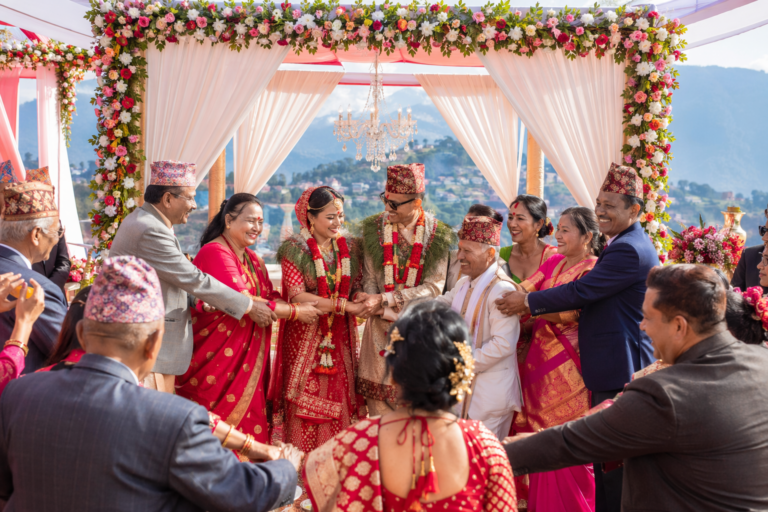
When the main wedding day comes, the wedding ceremony brings together the key parts of a Nepali marriage. These rituals usually start after the groom’s group gets to the bride’s house, and both families meet and welcome each other.
The most important parts of the wedding ceremony are acts that show the new relationship in front of everyone. These acts often have deep meaning for the families and tradition. Depending on the group, the wedding ceremony can have special exchange rituals, walking around a sacred fire or a special vessel, and wearing signs of being married after the couple leaves for the groom’s house.
These are the main moments in the wedding ceremony.
Swayambar – The Main Wedding Ceremony
Swayambar is the main part of the wedding day. At this time, the bride and groom swap rings and garlands. This often happens after the groom’s group gets to the wedding venue and is welcomed. It shows both sides agree and know about their union.
Next, people move to the decorated place for the ritual, called the Jaggey. There, you will find flowers and some important sacred items set up. All family members gather around closely, and some elders watch and guide what happens. The bride’s father and groom’s father often take part. They do special actions to show they give their blessing and accept the marriage.
Some main things you often see during swayambar are:
-
The bride and groom giving each other rings and garlands.
-
Going to the ritual area at the wedding venue for the main ceremony.
-
Close elders and family members being there to see and be part of the marriage.
Circling the Groom and Applying Sindoor
One memorable part of the wedding ceremony is when the bride walks around the groom three times. This shows that he will now be the most important person in her life. In some families, she might throw rice, drop flower petals, or even sprinkle water as she circles him.
The way this is done can be different from one region or community to another. Some weddings focus more on walking around the sacred fire instead. But no matter how it’s done, the meaning is always the same. It means removing any barriers and starting a new life together as one married couple.
After this, the groom places sindoor, which is a respected red powder, in the bride’s hair parting. This shows that she is now married. On top of this, the bride’s sisters like to add a bit of fun to the wedding ceremony. They might take the groom’s shoes, just to have a laugh and lighten things up on the groom’s side.
Exchange of Dubo Ko Mala (Sacred Garland)
In many Nepali weddings, the garlands are not always made of flowers. The dubo ko mala uses sacred grass instead. That makes this exchange feel special, especially for people who think flower decorations are always used.
Dubo grass is important because it does not dry out fast. This shows what the garland means during the wedding ritual. It is about being strong, staying pure, living long, and having a good connection in marriage. Because of that, the dubo ko mala is more than just a nice thing to wear. It shows what the families want the couple to have.
People see the meaning in things like:
-
Endurance, as the grass can stay green for a long time.
-
Purity, through its place in the wedding ritual.
-
Family bonds, because the garland is about wishing for a strong and lasting tie between households.
Important Post-Wedding Customs
The end of the ceremony does not mean the story of marriage is finished. There are still a lot of customs after the wedding. These help with the emotional and social change for a bride as she goes from her parents’ place to her new married life.
Two important ones are vidaai and ghar bhitrauni. The first is sad, with many tears. The other is happy, with welcome and acceptance. There are also gifts, blessings, and a lot of celebrations. All these things show good wishes for the married life of the couple and help connect them with their family.
Vidaai – Emotional Farewell
Vidaai is one of the most emotional moments in a Nepali wedding. At this time, the bride leaves her family home right after she gets married. In Nepal, many unmarried people stay with their parents, so this may be the first big time when the bride and her family are apart from each other.
This is why the feeling at Vidaai can be so strong. The bride’s parents, the rest of the family, and the bride will often have tears in their eyes. There’s sadness around, but also hope for her as she goes to start her new life. She leaves the home she grew up in, and now she will live with her husband’s family to begin her married life.
Vidaai feels so strong because:
-
There are deep family bonds that form over many years.
-
It is an emotional moment to leave the home where you were raised by your loved ones.
-
The bride gets blessings as she steps into her new life and begins her married life.
This moment is truly special for the bride, the bride’s parents, and others, as Vidaai brings together family bonds and feelings, and is one of the most emotional moments of a Nepali wedding.
Ghar Bhitrauni – Welcoming the Bride Home
After the bride leaves her house, the next big step is ghar bhitrauni. This is the welcome ceremony held when she comes to the groom’s home for the first time after the wedding. It marks the move from saying goodbye to starting to belong.
The reason for this custom is clear. In Nepal, marriage often means the bride will go to live in her husband’s house. So, her arrival is not just about moving places. It shows she is now part of a new family, with all the care, duties, and ties that come with it.
Ghar bhitrauni helps the bride feel wanted and accepted. It tells her that her place in the home is seen and that she is valued. This is how the ritual helps the start of married life. It brings some balance by mixing the sadness of leaving her own family with the warmth of being welcomed into her new one.
Gifts, Blessings, and Festive Celebrations
Even after the main ceremony, people keep the party going with gifts, blessings, and shared meals. These customs show the couple is not starting life on their own. They enter marriage with the help and love of parents, family members, and everyone who comes.
Family members might give jewellery, clothes, or money. These gifts are useful but also have a lot of feelings behind them. They show care, support, and trust in the couple’s future. When elders give blessings, this gives the marriage both social and spiritual approval.
Festive celebrations often include:
-
Gifts like jewellery, clothing, and money.
-
Blessings and good wishes from family members and elders.
-
Delicious food, music, and a lively get-together that keeps the joyful mood going.
Regional Differences and Ethnic Variations in Nepali Weddings
Nepal has lots of different cultures. Because of this, wedding traditions are not the same everywhere. Each ethnic group has the way they do things. Still, families are part of the day and many wedding traditions use symbols with special meanings.
If you look at Hindu, Newari, Buddhist, Gurung, and Magar wedding traditions, you can see there are real differences. The Kathmandu Valley also has its own customs, and these can change the wedding quite a bit. Seeing all these ways to get married helps people understand more about nepali culture. It shows not all weddings are just the same. There are different ethnic groups with different wedding traditions.
Hindu, Newari, and Buddhist Wedding Rituals
Hindu weddings in Nepal often follow Vedic customs and include widely recognised rites such as sindoor, pote, swayambar, and family-led blessings. These are the forms many people outside Nepal hear about first, but they are only one part of the national picture.
Newari weddings, common in the Kathmandu Valley, include their own well-known customs. One important example is the Supari exchange, where betel nuts symbolise acceptance and strengthen ties between the families. This gives newari weddings a distinct cultural identity within the larger tradition.
|
Wedding type |
Noted features from the compiled information |
|---|---|
|
Hindu weddings |
Vedic structure, red bridal dress, sindoor, pote, swayambar |
|
Newari weddings |
Supari ceremony, strong family symbolism, common in Kathmandu Valley |
|
Buddhist weddings |
Mentioned as a distinct community practice among different ethnic groups |
Together, these show that traditional marriage in Nepal is shaped by more than one wedding ritual system.
Unique Customs in Different Nepali Communities
Some of the most interesting things about nepali wedding traditions can be seen when you check out what different ethnic groups do. Even if the main wedding ceremony looks the same, there can be a special act or rule that makes one group stand out from another.
For example, there are some wedding traditions where Gurung people may let people marry their cross-cousins, but this is not allowed for many Hindu groups like the Brahmins. This shows that the rules for getting married can change between groups, even when everyone lives in the same country.
Some wedding ceremony customs that show these differences are:
-
The Newari Supari exchange where people use a betel nut.
-
Cross-cousin marriage is fine in some Gurung communities.
-
Different ways people do rituals in Hindu, Newari, Gurung, Magar, and a few other groups.
All of this means that nepali wedding traditions are not just one fixed thing. Instead, each wedding can be unique because of what people from different groups do.
Modern Adaptations and Influences on Traditional Weddings
Nepali weddings are changing, especially in the cities. The traditional wedding is still important, but now there is a mix of new ideas in the wedding process. Love marriages are happening more, and couples often get to pick who they want to marry.
You can see this change in the events before the wedding too. Take the mehendi party for example. It’s come from Indian customs, but movies and popular culture have helped to make it popular in Nepal. Now some brides in Nepal hold a mehendi party that looks a bit like what you see in different cultures, but it still suits a Nepali wedding.
Still, the main ideas stay strong. Family approval, what the couple wears, what happens after the wedding, and the meaning behind each step, all help to shape the celebration. That mix of old and new is what makes the Nepali wedding stand out. It moves forward, but does not lose its cultural heart.
Conclusion
To sum up, getting to know the rich world of Nepali wedding traditions gives Aussies a good look into a culture that values love, family, and community. The nepali wedding starts with lively pre-wedding rituals and goes through to caring post-wedding traditions. Every part has its own story, and it goes beyond borders. When you learn about these wedding traditions, you get a new way to look at life and build stronger ties with your friends and family. If you are going to a nepali wedding or just want to know more about these wedding traditions, let this guide help you see how special these celebrations are. If you’d like to know more or be a part of it, you can always get in touch for more information or help!
Frequently Asked Questions
What are the main stages of a Nepali wedding ceremony?
A wedding ceremony in nepali culture often happens in three stages. The first stage includes things before the wedding, like the engagement and picking the wedding date. Then, the main wedding process takes place with both the bride’s family and the groom’s family doing the rituals. After the wedding, there are end customs like vidaai and ghar bhitrauni.
Why do brides wear red and what does it symbolise?
In Nepali weddings, the bride wears red. People say red stands for things like luck, love, and a good future. It’s a colour that is about strength, purity, and new life too. On the wedding day, the bride puts on traditional attire along with a gold necklace, tilhari, and pote.
Can Australians attend or take part in Nepali weddings?
Yes, Australians can go to a Nepali wedding ceremony and join in as guests if they are invited. Many different cultures, like Nepali wedding traditions, are happy to have family members and friends as part of the special day. When the bride’s family or the groom’s side asks you, you can come along, enjoy the meals, join the music, and be part of the customs. Just remember to show respect during the wedding ceremony.