Key Highlights
-
Moroccan wedding traditions bring the family together and show faith, music and food at the heart of their wedding celebrations.
-
A traditional Moroccan wedding starts with engagement customs and then goes into special pre-wedding rituals.
-
Henna night is an event full of blessing, beauty and protection for the couple.
-
On the big day, what people wear, the processions and the gestures all help make the Moroccan wedding unique.
-
The wedding feast brings rich food, sweets and mint tea to the table which show the cultural heritage.
-
Music, dancing and doing rituals together make Moroccan wedding traditions fun and very memorable for everyone.
Introduction
If you are an Australian guest heading to Morocco, learning a bit about Moroccan wedding traditions will help you enjoy the big day even more. A traditional Moroccan wedding is not just a single event. It is made up of many parties, the kind that have music, lots of food, and plenty of vibrant colors. There are steps that start with the first talks about marriage and go all the way to the final big meal. Every part matters. If you know the basics, you will feel better about what is going on. You can show respect, have a good time, and leave with some great memories of a real Moroccan wedding.
The Rich Heritage of Moroccan Wedding Traditions
Moroccan wedding traditions are a big part of the country’s cultural heritage. These weddings show how important family, hospitality and community are to the people. A traditional Moroccan wedding has many rituals that people have kept alive for years. This makes the day feel both private and also shared with others.
Some common Moroccan wedding traditions are the engagement, the henna ceremony, a procession, special clothing, shared food, blessings and music. All these customs come together to make a joyful day. There is a lot of history in the event, but there is also plenty of room for new ideas.
How Moroccan Weddings Reflect Culture and History
A Moroccan wedding shows the country’s rich culture at every step. It’s not just about the couple. It brings in families, guests and everyone close. People honour the institution of marriage with care and by being there together.
There are many signs in wedding ceremonies that carry meaning. Henna is for beauty, good luck and to keep away evil spirits. Milk with almonds and honey means there will be more family, good things and purity. Sugar-covered almonds stand for a sweet start, and mint tea is a way to say welcome, to show friendship and to be a good host.
Clothes, the music, and food also help link the now with Morocco’s cultural heritage. Even as couples add new things these days, the heart of a Moroccan wedding stays with custom, blessing and being together in celebration.
Regional Differences Across Morocco’s Wedding Customs
Across the regions of Morocco, local customs can shape how a wedding looks and feels. While the core ideas of blessing, family support, music and shared meals remain familiar, the style of celebration may differ from one community to another.
The compiled details show a strong national pattern rather than a strict regional map. That means Australian guests should expect variation in music, dress, serving style and the mix of old and new elements, whether in the Atlas Mountains, the Moroccan Sahara region or larger cities.
|
Aspect |
What Guests May Notice |
|---|---|
|
Core rituals |
Engagement, henna night, procession, blessings, feast and dancing often stay central |
|
Local customs |
Different communities may highlight certain songs, attire or ceremonial moments more strongly |
|
Regional feel |
Celebrations in the Atlas Mountains or Moroccan Sahara region may present customs in distinct local styles |
|
Modern blend |
Some weddings mix traditional practices with newer features such as wedding cake or favours |
The Engagement (Khitbah) in Moroccan Weddings
The engagement is an important next step when it comes to Moroccan wedding traditions. It is the start of the couple’s journey to get married. It also shows that both families agree to the union. For all the guests, this step makes it clear why family stays so involved in the celebrations.
As the couple gets closer to the wedding, the engagement leads to the marriage contract and then to other rituals for good luck. This is not just a light promise. Instead, it makes things both serious and happy for everything that happens after.
The Role of Families in Arranging Engagements
In Moroccan wedding traditions, family members have a central role from the start. The engagement is not just about the two people getting married. Their relatives help with the match and show support in a way that is open and respectful.
Most of the time, the groom’s family goes to ask for the bride’s hand. This is important because the marriage is not just about two people, but about the joining of two families. Close family members are present in more moments after this too, like blessings, pre-wedding gatherings, and other important small rituals.
Family members stay close and active through the whole celebration. The women gather round the bride at the henna party. Relatives are near for the milk blessing. Guests give money or sweets to offer support. This shows that in Moroccan wedding traditions, getting married is something that all the family takes part in together.
Unique Engagement Rituals Australian Guests Should Know
If you go to a traditional Moroccan wedding, you should know that the engagement is a big deal. It is not just a simple step, but shows that the couple is set to move towards the marriage contract and follow a group of customs built around respect, support, and good fortune.
You will see people start to use words of blessing quite early. The families and guests treat the union like one that should begin with kindness, warmth, and a special blessing. This feeling does not stop after the ring – it goes on right up to the wedding day.
-
The engagement is seen as a serious commitment, not just an easy or informal step.
-
Family is involved right from the start, and their part in the wedding stays important.
-
After engagement, the couple is on the way to the marriage contract and then a bigger public celebration.
-
Good fortune is often wished for the couple from the time of engagement and goes with them into their marriage.
So, if you want to take part in a traditional Moroccan wedding, know that it is about the marriage contract, family, and a wish for a good future. Each step, from the start, is made special with kindness and a special blessing.
Important Pre-Wedding Ceremonies
Before the wedding day starts, pre-wedding customs help get the bride ready for marriage. They do this in both social and special ways. These moments are not just simple extras. They are a real and important part of the big day. Most of the time, the bride’s female family members and good friends join her.
Two of the main events to mention are the henna ceremony and the hammam ritual. The henna ceremony is there to give blessings and protect the bride from evil spirits. The hammam ritual is all about getting clean, feeling calm and getting ready for a new part of life.
The Traditional Henna Night and Its Symbolism
Henna night is one of the most loved parts of a Moroccan wedding. Before the big day, the Moroccan bride gets together with her female friends and family for a night full of music, dancing, and warm wishes. This is a happy time, but it also has deep meaning for all.
At henna night, the bride has intricate henna designs painted on her hands and feet. These designs are seen as a sign of beauty, luck, and protection. The event is also known as a symbol of fertility. This makes it very special for the Moroccan bride as she gets ready to start her new life.
For people from Australia who attend, henna night lets them see the real feelings behind the celebration. It’s a time that is close and full of joy. The event is a part of old customs. It is not just about looking good. It is a blessing for the bride’s future in her marriage.
The Purifying Hammam Ritual for the Bride
The hammam ritual is a key part of getting ready for a wedding. In Moroccan customs, this special cleansing helps the bride step into a new life. It shows that marriage should start with care and a fresh start, helping the bride get ready for what comes next.
This hammam ritual also goes along with other things you’ll see during these celebrations. Good luck, purity, and blessings are big things. You might notice this with henna, milk, sweets, and by having family members close by. The hammam ritual brings in that same hope for a good marriage.
For guests, what matters most is understanding why the ritual is there, not how it looks. It helps the bride get ready in a symbolic way, often with her close family members there, and shows hope for a peaceful life once the wedding is over.
Wedding Day Attire and Symbolic Accessories
On the wedding day, traditional attire is one of the most eye-catching things at the celebration. People will often remember what everyone wore just like they remember the music or food. Every look shows a bit of meaning and represents cultural pride.
The Moroccan bride might wear different outfits. Each one is full of colour and detail. The groom will wear formal traditional clothing to match the special event. These clothes aren’t just for show. They help tell the story of the ceremony, who is who, and where everyone comes from.
Traditional Outfits for Brides and Grooms
One thing that stands out at a Moroccan wedding is the couple’s traditional garb. On the wedding day, the bride’s dress is made to catch the eye. It has embroidery, beads, and shiny pieces. This makes her look formal and ready to celebrate.
The bride usually wears a caftan. It is a stylish and classic outfit that shows careful detail. The groom often has on a djellaba. This is a long robe that fits the special mood of the day. These clothes help make the couple the focus of all attention.
For Australian guests, the traditional garb can mean more than just fashion. It shows respect for old customs. It lifts the mood of the wedding day. It also links the couple to important cultural ways that many people still care about.
Signature Pieces like the Amazigh Jewellery and Wedding Blanket
Apart from the main clothes, symbolic items can really shape the look of a Moroccan wedding. Things like Amazigh jewellery or a wedding blanket bring in ideas of who people are, what they find beautiful, and just how rich the day feels. These items often show off vibrant colors and a high level of skill in how they are made. At a Moroccan wedding, what you wear or put on can say a lot. A Moroccan wedding blanket or a bit of jewellery isn’t just there to make the bride look good.
For people coming from Australia, it helps to see how these things add deeper meaning to the celebration. Like the way henna, milk and sweets are special, a wedding blanket or colourful accessory can also stand for blessing, heritage, and the hope that the couple steps into married life with a lot of honour and joy.
Key Rituals in the Moroccan Wedding Ceremony
The main rituals in Moroccan wedding ceremonies bring together people to celebrate and share simple moments. At a Moroccan wedding, you will see processions, blessings, special foods, music, and gestures. These welcome the couple and show hope, fertility, and good wishes for the future. Every step has meaning. It is not just done to fill time.
Religious parts play a big role, especially in Muslim weddings. Along with this, customs like drib sdak and eating special foods remind everyone at the wedding that marriage is about legal, social, and spiritual bonds coming together.
Religious Elements and Blessings
In Muslim weddings, you can see religious elements that help give the event its special meaning. The wedding ceremonies are not just big parties. They show that marriage is a serious and important union that the people should respect, talk about together and ask for a blessing on.
At these weddings, there can be a special blessing in different ways during the day. Families give all their good wishes, people share things like symbolic foods, and quiet important moments happen with lots of care. All of these things show that the couple want to begin their life together with hope, with people by their side, and with a sense of pride.
Australian guests might see that this is not like a businesslike event in front of a justice of the peace. In Moroccan weddings, the spiritual part is in everything, from the music and dress to the hospitality and the wedding feast.
Sharing Milk, Dates and the Meaning Behind Them
One of the most touching moments in a moroccan wedding is when the couple shares milk. Before they go into their wedding chamber, they drink milk mixed with almonds and honey. Their close family members are often with them.
This moment is known to be a sign of good luck, good fortune, and a pure start. So, sharing milk is not just about having a drink. It means much more for this new life. It shows the family’s hope for the couple’s happy or rich life together. That is why it’s one of the biggest symbols in the celebration.
Dates can also be there for guests as part of the sweet style found at the wedding feast. Many moroccan wedding symbols are about sweetness, good food, and blessings. These show the hope for married life to be a good one, with plenty and joy for all.
Festive Celebrations at the Wedding Reception
Once the formal parts are done, the reception turns into a fun and lively time full of wedding celebrations. The wedding guests get into the music, the dancing, and they share lots of joy together. The wedding feast keeps everyone happy and keeps the energy up right through the night.
The main band or other performers set the mood, and extended dancing is a big part of what people remember. In Australia, this is a time when it feels good to be there, because the guests don’t just watch. They get right into the action and help make the atmosphere special.
Traditional Moroccan Music, Dancing and the Famous Amariya
Music is a big part of every moroccan wedding celebration. It gets things moving, marks special moments, and helps people get up and dance. Traditional music brings life to the event, making the reception feel full of energy and togetherness.
At these weddings, traditional songs use instruments like the oud, darbuka, and bendir. Group dances make it lively, with guests jumping into styles such as Aissawa and Ahidous. For some moroccan wedding celebrations, you see the couple shown off in grand style, connected with the famous Amariya.
-
Musicians and drummers raise excitement right from the start of the procession.
-
Traditional instruments offer the special sound that guests often remember most from the day.
-
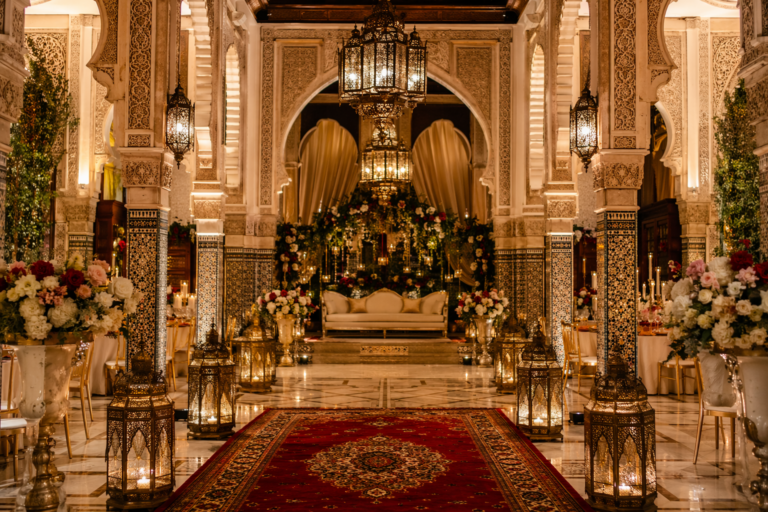
The couple might be shown off high up on an opulent tented platform or settle onto a decorated sofa.
Classic Wedding Dishes and Sweets Guests Enjoy
Food is one of the best things at a Moroccan wedding feast. The tables are piled high with big dishes that show off abundance and are full of hospitality. For people in Australia, the meal is a big highlight. It can stick in their minds just as much as the clothes and the music.
You see couscous, tagines, and lots of sweets and pastries served to everyone. Tea service is important, too. Mint tea means welcome and friendship in a Moroccan wedding. Eating together is not just about good food, it brings people close and helps everyone feel happy about being with the couple.
-
Moroccan pastries are served as a delicious dessert, often with tea.
-
Savoury foods like tagines and couscous sit at the heart of the moroccan wedding feast.
-
Some moroccan wedding celebrations have whole sheep cooked in a festive way.
-
Flavours such as saffron sauce and orange blossom water give many dishes more aroma and taste.
Conclusion
Understanding Moroccan wedding traditions helps Aussie guests enjoy the day more. It gives something special to the celebration. The bright engagement rituals, meaningful clothes, and lively receptions all show the deep culture behind a Moroccan wedding. Each part has its own story to tell.
When you join in on these customs, you start to value the event and get closer to the local culture. So, if you’re going to a wedding or just interested in these traditions, take the time to see the beauty and meaning of Moroccan weddings.
If you want to know more about how to plan a Moroccan wedding you’ll never forget, get in touch for a free chat today!
Frequently Asked Questions
How long does a Moroccan wedding celebration usually last?
A Moroccan wedding is not just a quick event. The wedding day lasts a long time. Most people fill the big day with music, food and dancing. Wedding guests stay, eat, and dance late into the night. The big day is a big celebration for all, not just a short ceremony.
Are there any etiquette tips for Australians attending a Moroccan wedding?
Yes. Show respect for local customs, and see how other wedding guests take part in things. Be open to a warm, lively family event. You do not have to wear traditional attire, but it is good to dress neat and modest. On the wedding day, it matters when you show your respect for Moroccan culture, just like your excitement.
What unique wedding gifts are popular in Moroccan culture?
In Moroccan traditions, guests often give envelopes with money. This is seen as a blessing and a way to help the couple. Sweets are important too, as they stand for a sweet beginning and good fortune. People may also bring symbolic things, like a wedding blanket, which fits well with the celebration that comes with signing the marriage contract.