Key Highlights
-
Kuwaiti weddings are big events that bring the couple, their extended family, and often the whole community together.
-
The Al-Melcha is when the marriage contract is signed for both the legal and religious parts of marriage.
-
The process often starts with formal meetings between families, talking about things like the dowry and getting everyone’s consent.
-
Before the main day, there’s a henna night filled with music, colour, and people getting intricate henna designs.
-
Gifts often include gold jewelry, rolls of cloth, and bed covers, as these are tied to special customs for weddings in Kuwait.
-
Modern Kuwaiti weddings mix old customs with new ideas, like holding them in hotels and bringing in planners and the latest styles.
Introduction
If you are an Aussie guest, knowing some things about kuwaiti weddings before the big day will help things feel less stressful and more special. The wedding isn’t just for the couple. It is also about the family, their faith, and values that have been there for a long time. There are many kuwaiti wedding traditions that start before the big day, each one helping to shape the way to marriage. When you know how it all works, you can better see what the customs are, understand the happy times, and enjoy the welcoming feeling that makes these events different.
Kuwait’s Wedding Culture at a Glance
In kuwaiti weddings, people follow a proper order from being engaged to having the big wedding ceremony. It all starts with a formal proposal. This comes before families say yes, then there is the signing of the marriage contract. Right after this, family and friends get together for some pre-wedding gatherings. These moments build up a lot of joy for the couple and the families.
Traditional kuwaiti weddings grow bigger after these steps. The next events often include a henna night, a big show of gifts, loud music, great food, and then a big wedding reception. Even if each family adds their own touch, the main order does not change that much. If you want to know more about traditional kuwaiti weddings, it helps to start with why getting married means so much to people in Kuwait.
The Importance of Marriage in Kuwaiti Society
In Kuwait, marriage is about more than just two people joining together. It brings two families together and is seen as a big social event. This is why the marriage contract is so important. It’s not only a legal step, but also a strong sign that both families agree and support the couple.
The extended family takes part right from the start. Parents, brothers, sisters, cousins, and older family members often help with decisions. Their help shows how much people in Kuwait value support from family and working together.
These special customs keep the older ways alive, but also give the couple a good start. From asking for marriage and being engaged, to signing the marriage contract and enjoying the celebration later, each part shows how much family respect, unity, and being part of a group matter. This bigger meaning shapes the whole wedding.
Social, Religious, and Family Roles in Weddings
A Kuwaiti wedding is made by what people expect, faith, and how close family members work together. One of the big parts is the religious signing of the islamic marriage contract. This step makes it clear the marriage is legal and recognised in both the faith and by law. This part often has the extended family and witnesses right there.
The extended family do more than just show up. They help guide the whole event. The bride’s guardian takes a special role during this process. Extended family members help to plan, welcome the guests, and make things work. This all shows that marriage isn’t just about two people. It’s something the whole family is in together.
Common roles often include:
-
The bride’s guardian giving the go ahead in the marriage contract process.
-
Fathers looking after big talks, main plans, and the money side of things.
-
Mothers and female relatives setting up women’s events and special get-togethers.
From Proposal to Engagement: Setting the Stage
In Kuwait, marriage often starts with careful family traditions. There is not a surprise proposal like you might see in Australia. The two families usually talk first and set things up with a clear plan. It is important for everyone to show respect right from the start.
When both families agree, the engagement is the first official step. This is when people talk about consent, make plans, and discuss gifts like the dowry. The next parts talk about how people make a proposal in Kuwait and how those first small parties set the mood for the rest of the wedding journey.
Traditions of Kuwaiti Marriage Proposals
In Kuwaiti culture, the marriage proposal is mostly about the family. The process often starts when the groom’s family tries to find a good match. The groom’s mother and older female relatives are usually the ones to reach out first. They will arrange a meeting at the bride’s house with her family.
If both families feel happy with each other, then things get more formal. This is when the groom’s father goes to the bride’s father to ask for the marriage. This talk between the fathers is a mark of respect. It shows the start of the engagement process.
At this time, or right after, talks about the dowry begin and some gifts may be given to the bride. Sometimes, vows happen early and the official papers are signed soon. This means the marriage contract can already be done before the main wedding party takes place. The timing around the official papers and contract often surprises Australians.
Engagement Celebrations and Pre-Wedding Gatherings
After you get engaged, the families often have a few smaller get-togethers before the wedding. These events make people happy and let both families spend more time together. They also give the couple a bit more support and make everything feel special for them. This helps make the engagement a bigger deal for everyone in the family.
One of the most popular things to do before a wedding is the henna night. The henna night is all about the bride and usually just for women. It’s often done at the bride’s house or at a family home. There is lots of music and dancing, some good food, and henna for the bride. You might also see the groom’s family giving gifts on this night.
You might notice these things at a henna night:
-
A fun henna night that the bride and her female relatives really enjoy.
-
The bride sits in a special spot while everyone else sings and has a good time.
-
The groom’s family giving gifts before the wedding day.
Family Involvement in Kuwaiti Wedding Planning
Planning kuwaiti weddings is often something the entire extended family helps with. They all take a big part at many stages. Even if a couple uses wedding planners, the family still makes a lot of the important choices. They help with things that are practical, social, and also have meaning.
Relatives usually share jobs, like picking the guest list, choosing the venue and running pre-wedding events. A guardian may help with the more formal sides, while parents and siblings often look after hosting jobs. If you look at each person’s role, you can see how planning a wedding works in kuwait.
Parental Roles and Community Participation
Parental roles are very important when it comes to planning Kuwaiti weddings. Fathers are often in charge of big decisions. This can be things like money, who to invite, and formal chats between families. Mothers usually look after the parties built around the bride. They take care of women’s events and handle much of the hosting.
But, it’s not just the parents who get involved. Siblings, cousins, and other close relatives often help out too. They give a hand at the bride’s home and the groom’s home with smaller jobs, looking after guests, and lending support during events. This team way of working keeps everything organised and helps everyone feel like they belong.
It’s bigger than the immediate family. The whole community can join in too. Friends, neighbours, and family links jump in to celebrate, help out, and offer plenty of support. This community spirit is a big reason why Kuwaiti weddings are so warm and welcoming.
Gift-Giving Etiquette for Engagement and Wedding
Gift-giving is a key part of weddings in Kuwait, especially at the time of engagement and the wedding itself. People see these gifts as both useful and full of meaning. The gifts from the groom’s family often show how much they care for the bride, want to help the couple, and show respect between both families.
The best-known gift is gold jewelry. The bride can get gold jewelry like necklaces, bracelets, and earrings from the groom’s family before or at the wedding. These special gifts show love, status, and kindness.
Other common gifts are:
-
Gold jewelry such as bracelets, necklaces, and earrings.
-
Rolls of cloth so the bride can make new clothing.
-
Household things like bed covers and linens for the bride’s new way of life.
Key Ceremonies of a Kuwaiti Wedding
There are a few key moments in a wedding ceremony in Kuwait, but the melcha is often the main step. This is the part when the marriage becomes legal and official under both law and faith. Once this is done, there is usually a bigger party with family, music, and plenty of food.
These different points show how kuwaiti wedding traditions are about faith, the law, and having a good time with everyone. For people from Australia, the order might feel a bit different, as the legal marriage can happen before the big public gathering. The following sections look at the contract and some wedding rituals in more detail.
The Al-Melcha: Legal and Religious Process
The Al-Melcha is the key legal step in many Kuwaiti weddings. It involves the marriage contract and the religious signing of the islamic marriage contract, which formally recognises the union. This may take place at a court, the Ministry of Justice, or a family home.
At this stage, the groom, the bride’s representative or guardian, and two male witnesses are present. The official papers are signed, and the couple becomes legally married in Kuwait. In some modern kuwaiti weddings, the later reception may feel more contemporary, but this formal step still remains central.
Here is a simple text table that explains the process:
|
Element |
Description |
|---|---|
|
Marriage contract |
The legal document that sets out the terms of the marriage. |
|
Witnesses |
Two male witnesses are required for the signing to be valid. |
|
Location |
Often held at a court, the Ministry of Justice, or the family home. |
|
Legal status |
Once the official papers are signed, the couple is legally married. |
Unique Rituals Before and After the Ceremony
Before the main party, there is a big ritual called the henna gathering for the bride. At this event, people have music, good food, dancing, and henna. The bride gets intricate henna designs put on her hands and sometimes on her feet. The henna makes the bride look pretty and shows that this is a special time for her.
At some of these gatherings, the bride might wear a green silk scarf. This green silk scarf stands for hope and good luck. She might sit in a spot where she is the centre of attention, while her female relatives gather and celebrate around her. This makes a strong picture for the night.
There is another custom called daza. Here, gifts and dowry items are shown to all, like bed covers, linens, perfumes, incense and other things the bride will need for her new home. These customs make the celebration feel full, personal, and full of tradition.
Traditional Outfits and Guest Dress Code
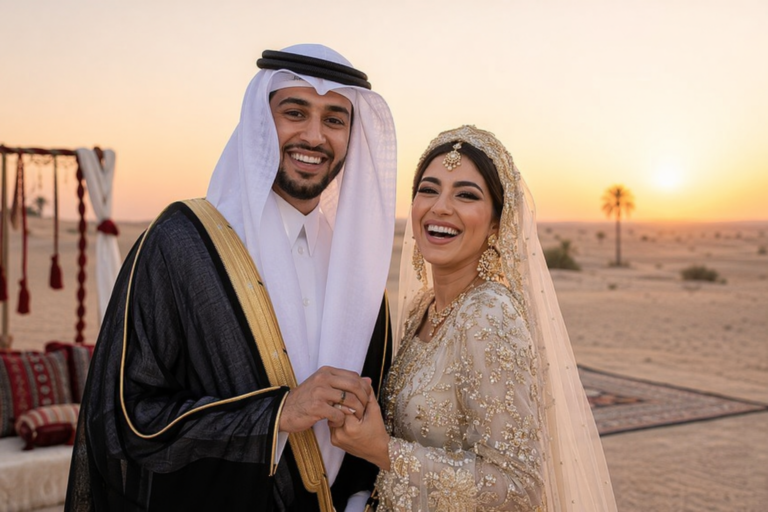
Clothing is important at Kuwaiti weddings. The couple’s outfits show status, happiness, and respect for this big day. Brides often wear fancy clothes with a lot of detail. Grooms dress in nice formal outfits, but these are more simple compared to what brides wear.
Guests also need to think about what to wear. It is best to look tidy and wear modest clothes, especially at traditional events. When you know what the couple and guests wear at kuwaiti weddings, you can feel good and enjoy the day more.
What Brides and Grooms Typically Wear
In traditional kuwaiti weddings, the bride gets most of the attention at the party. She often wears outfits made of rich fabric and pretty embroidery, and she has a lot of gold jewelry. This gold jewelry can be necklaces, bracelets, and other shiny pieces. Some of this jewelry might be gifts from her engagement or her wedding.
At some pre-wedding events, the bride sits on a special seat. Family members sing and celebrate around her. There is also a time when she puts on a green silk scarf for henna customs. This adds something extra to her look before the main wedding day.
The groom’s clothes in kuwaiti weddings are simple but still quite formal. He usually wears:
-
A white Dishdasha as the first layer.
-
A Bisht over the top to show it is a big day.
-
Gold trim that makes his clothes right for the event.
Dress Expectations for Australian Guests
If you are headed to kuwaiti weddings as an Australian guest, you should think about dressing in a neat, formal, and respectful way. Most guests are expected to have smart clothes, not something too casual. For women, it is best to wear a long dress or a modest evening outfit. Having a shawl can help too.
Men should wear a suit and tie, or they can wear formal traditional clothes. The big thing to remember from the dress code is not to pick anything too relaxed or too revealing. People care about being modest, even if the party is big and fancy.
Keep in mind that colour and style can still be fun, but it is better not to wear white, since that colour is for the bride. If you pick neat, polite clothes, you will fit in and make the family happy as everyone celebrates at kuwaiti weddings.
Wedding Day Celebrations and Festivities
The wedding day in Kuwait is full of life, big parties, and lots of generous hosting. A lot of the time, these special customs mean men and women will have their own rooms. There can be grand arrivals, music, and a large meal for all the guests.
Families will plan things in their own way, but most of the time, the events take the same path. People come in, there are hellos, then it’s all about music and food. These big parties can seem very different to what people see at a wedding in Australia. So, it’s good to know what goes on next if you get asked to one in Kuwait.
Sequence of Events on the Wedding Day
On the big day, the legal side of the marriage might be done already. This is sorted earlier with the contract part. Now the wedding is all about fun, how you look, and all the families coming together for the big day. People start to arrive, everyone gives a hello, and you see the crowd keeps growing as more people turn up.
Some weddings have the groom or the bride come in with a procession. This shows when they get to the place. Before the wedding, the families might hold a henna party. The henna party is good for getting people excited before the main event. Everyone plans the whole thing so every bit of the wedding, from start to end, stands out to the people there.
The usual order is like this:
-
Earlier start with things like a henna party.
-
Big entrance or a procession with music for the groom or the bride.
-
The big public event after the official contract, with the vows, happy cheers, and families coming over to say well done.
Music, Dance, and Traditional Entertainment
One thing many guests pick up on quickly is the sound. Traditional music plays a big part in Kuwaiti wedding celebrations, and it sets the mood as soon as people arrive. Live musicians might play right through the event. This makes a happy setting for the couple and their families.
Dance has its place too, especially at big parties and when people are making their grand entrances. Some weddings have a zaffa-style procession with drummers and musicians. These special customs turn walking in into a real show. They make the celebration feel even more special and stand out in people’s minds.
Traditional songs are also an important part. These songs can be to cheer on the couple, honour their families, or remind people of old cultural ideas that have been around for a long time. If you are visiting from Australia, you can expect a wedding that is lively, full of music, and truly linked to traditions.
Culinary Traditions at Kuwaiti Weddings
Food is an important part of kuwaiti weddings. People show they care by the way they welcome guests and how much food they serve. The meal is often big, with lots of different things to try.
There will be old favourites made with rice and meat. The food is full of flavour. There are also sweets that mark the happy time. For many, these dishes are about care, pride, and family giving. If you want to really get what kuwaiti weddings are like, you should see what food is on the table and know why it is there.
Classic Dishes and Sweets Served to Guests
Wedding meals in Kuwait are always big and full of taste. The main foods are usually rice and meat. People often cook large platters to serve many folks at once. These meals are a big part of the event and they help make the day feel special for all.
The favourite foods are mostly old classics and fill you up, not the light type of meal. Sweets show up too, and they help make the whole day feel more like a party. Sharing the meal is important. It is all about making sure guests feel welcome and happy.
Common foods to see are:
-
Machboos, which is rice with spices and meat or chicken.
-
Ghouzi, which is lamb cooked in the oven and served with rice, nuts, and spices.
-
Harees, a dish made with wheat and meat cooked slowly, and mostly served at big events.
There is also a nice tradition in Kuwait where food is sent to the newlyweds in their first week at their new home.
The Role of Food in Kuwaiti Hospitality
In kuwaiti weddings, the food is about more than just filling up guests. It is a way to show kindness and family generosity. When families serve a tasty meal, they make their guests feel special. This also tells people how important the event is. So, the wedding feasts are big and thought out well.
Families will often help sort out the food for the day, even if there is outside help. They choose what dishes to put on the table, how much to serve, and how to give it out. This is the family’s way to make everyone feel at home. It shows that kuwaiti weddings bring a lot of people together.
The care does not stop after the party ends. It is common to send food to the new home of the couple right after the wedding. This is because it helps the couple to feel loved in their early days of marriage. It is one more way that family support reaches into the couple’s new home as they begin life together.
Conclusion
When you know about Kuwaiti wedding traditions, it can make your time as an Australian guest much better. It also lets you join in on all the fun without any worries. There is a lot to it, from family being at the centre of everything, to the special food you will see at the table. Each part of a Kuwaiti wedding has history and meaning behind it. By taking part in these customs, you show respect for the family holding the wedding. You also get to enjoy the party more and make great memories. If you want more help or advice about going to a Kuwaiti wedding, you can get a free chat any time. Enjoy these traditions and make your day one to remember!
Frequently Asked Questions
How do modern Kuwaiti weddings differ from traditional ones?
Modern kuwaiti weddings still follow old customs. Family is involved, the kuwaiti wedding ceremony has its set structure, and couples sign official papers. The main thing that is different is the style. Many couples now pick hotel venues and use wedding planners. They try new ways to present the event, but the extended family is still at the heart of it all.
What gifts are considered appropriate for a Kuwaiti wedding?
In Kuwaiti weddings, people often give gold jewelry to the bride as a gift. It is a big part of the special customs there. Other nice gifts to give are rolls of cloth, earrings, bed covers, and perfumes. The best thing is to get a gift that has value and fits the importance of the day. Gifts should be thoughtful because that is what people remember the most in a Kuwaiti wedding.
What should an Australian guest expect when attending a Kuwaiti wedding?
Guest expectations at kuwaiti weddings are to wear formal clothes. People act polite and get ready for a fun party. At the big day, you will notice the groom’s family take part, with music and big meals. There is a modest way people dress.
You will find lots of warmth, ceremony, and family around.