Key Highlights
-
Greek wedding traditions mix faith, family, music, signs, and lively parties.
-
A Greek wedding ceremony will often have rings, stefana, a common cup, and the Dance of Isaiah.
-
Before the wedding, people do things like make the bed, play shoe games, and shave the groom for good luck.
-
In Greek culture, the koumbaros or koumbara has a big part to play all through the wedding day.
-
The party after shows off dancing, wedding foods, koufeta, and vibrant celebrations that honour the couple’s special day.
-
Traditions can change with different regions, so each Greek wedding feels personal and rooted in something special.
Introduction
Greek wedding traditions are rich with meaning, joy, and togetherness. That is why so many couples, in Greece and around the world, still hold on to them even now. If you are planning or going to a wedding with Greek roots here in Australia, you will want to know what is ahead. Some of the most loved traditions you will see today are the giving of rings, the use of wedding crowns, the sharing of the common cup, a special walk together, and big, happy dances at the reception. These greek wedding traditions help bring greek culture into your special day, whether the wedding is at home or you are travelling for destination weddings.
Wedding Traditions in Greece: What Australians Need to Know
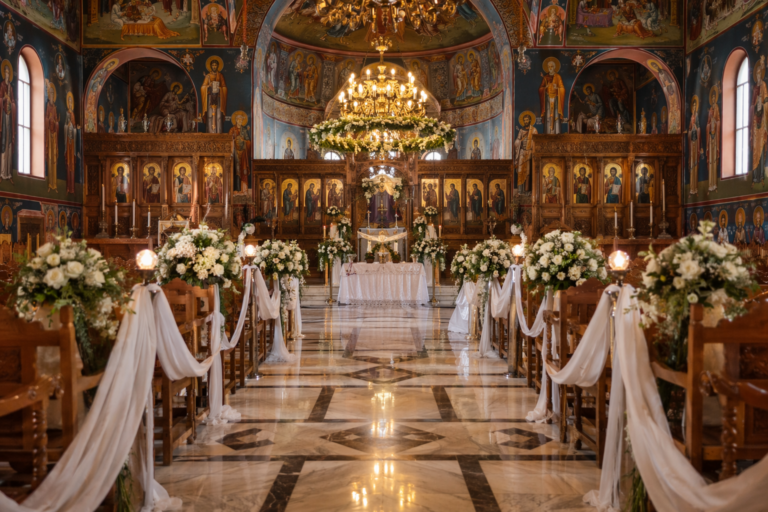
A traditional Greek wedding moves in a set order. There is greek tradition before the ceremony, special moments inside the church, and a big party after. Most greek wedding traditions come from greek orthodox ways. Some are from local places or family.
If you are in Australia, you should know every greek wedding tradition has symbolic meaning. Things like rings, crowns, wine, rice, petals, and processions all happen to mark the wedding day and the fresh start for the couple. The wedding traditions below will show how it all takes place.
1. Setting the Wedding Date: Lucky Days and Superstitions
In Greek wedding traditions, the date you choose means a lot. People can get married at many times of the year, but the wedding should not be during Orthodox fasting times. In the past, many chose Sunday for a wedding. But now, Saturday is a common day too, and some people have the wedding on a weekday.
Some families are still shaped by what they believe about good or bad luck. Getting married in a leap year was seen as bad luck, and the old ways say February was a time for the dead, so couples stayed away from that month. But if it rains on your wedding day, that can be seen as good luck, because it means there will be more fertility and more life in the new family.
These greek wedding traditions tell us that wedding day dates have strong feelings attached to them. Even now, with new ideas, people often think about signs, family wishes, and good luck before they set the date. People want the wedding to feel right for everyone who will be there.
2. Engagement and the Betrothal Ceremony
Before the wedding day, many couples show their promise by getting engaged. In the past, this was a strong public vow to get married, especially when the family’s honour was so important. The couple would swap rings and wear them on their left hand until the wedding.
In a Greek wedding, the betrothal ceremony happens before the crowning. The priest blesses the rings, and then the best man or sponsor gives them to the couple three times. This moment is a big part of the wedding party’s special role in the service.
After the ceremony, the couple starts to wear the same rings on their right hand. That change means the promise has turned into marriage. In many wedding traditions, this switch is one of the clearest signs the couple has stepped into a new chapter together.
3. Choosing the Koumbaros and Koumbara (Wedding Sponsors)
In Greek culture, the koumbaros or koumbara does more than just act as a best man or maid of honor. This person is a wedding sponsor and has a big role in the wedding. They are often a family member or a close friend the couple can trust a lot.
The sponsor is there to help with main rituals. They help give the rings and give support during the whole wedding. In some parts, the koumbaros will get more dancing and attention at the party. One story from a Santorini wedding shows the koumbaros walking with the bride all the way to the church, while the groom walks behind.
These wedding traditions make it clear the sponsor means a lot. The koumbaros or koumbara can also be chosen to be godparent to the first child of the couple. This creates an unbreakable bond that goes far beyond the wedding party and stays for life.
4. The Bed-Making Ceremony (To Krevati)
One of the best wedding traditions before the ceremony is To Krevati, or the bed-making ritual. Family and friends come to the couple’s new home to get the marital bed ready. In most cases, it’s done by the bride and her friends.
After the bed’s made, the guests toss money, coins, rice, and rose petals on it. This is done to wish the couple good luck, happiness, and a nice new life. In older custom, a child—usually a boy—rolls across the bed. This is meant to show hopes for fertility.
In some parts, the groom joins in for a bit of fun. The bed might be made and then unmade until he says it’s right. This makes the marital bed a sign of blessing, but also patience and teamwork.
5. Shaving the Groom: Brotherhood and Blessing
On the wedding day, the groom is not on his own. His mates come over, help him get dressed, and join in a tradition you still see in many greek wedding traditions. One important part of this is the shave, and it is often done by the best man.
This is a simple act, but it means a lot. It is about trust, loyalty, and how close the groom is with the man who stands by him. This moment shows the unbreakable bond they share. It can be a tense and full-on time before the wedding, but doing this together brings them even closer.
There is a fun side too. Friends get in to give a hand with the bow tie, the jacket, and any last touches. This makes getting ready a part of the celebration itself. For a lot of families who have greek wedding traditions, this scene is meant to bring good luck. It also reminds the groom that he is not on his own—he has support around him on his big day.
6. Bridal Preparation: Writing Names on Shoes and Good Luck Rituals
At the bride’s home, there is a lot to do, and the mood is light and fun. The bride’s friends get together to help her with the dress. In some places, people also sing traditional songs. One of the best-known wedding traditions happens when the bride writes the names of her single friends on the bottom of her wedding shoes.
By the end of the wedding day, the names that get rubbed off are the ones from friends who might get married next. Another custom is when men try to help the bride put her shoes on, and she acts like they don’t fit unless they add some money.
-
The names of her single friends go on the bottom of the shoes.
-
The erased names are believed to signal good luck in love.
-
Money placed in the shoes helps them “fit” and wishes prosperity.
7. The Bride’s Fashionably Late Arrival
A greek wedding is full of excitement even before the bride walks into the church. It is common for the bride to arrive late, which means the groom waits outside. Long ago, she would show up in a carriage covered with decorations. Now, most brides come in a fancy car.
There is often some playful drama when she gets there. The bridal car might drive around the church a few times before it stops. People will cheer, clap, and make a lot of noise. The feeling builds up and everyone senses she is making a grand entrance rather than just arriving.
This is not done for fun alone – there is a symbolic meaning here. It adds to the ceremony and makes people feel the moment even more. Guests stand close, hoping to see the bride before she finally makes her way to the groom. While you might notice a few western wedding traditions now, this late arrival is still one of the biggest parts of a greek wedding.
8. The Procession to the Church
In traditional weddings, going to the church is more than just a drive. It can turn into a whole event that people still remember today. The groom used to travel there with the sound of musicians playing local tunes, while friends and family sang, clapped, and danced. It brought everyone together on the wedding day.
The exact way people did this changed depending on where they lived. In Epirus, it was all about the clarinet. In Crete, you would hear the Cretan lyra. Each island and region had its own kind of music. This made the whole walk or ride to the church a celebration, starting the joy even before the service began.
Now, some modern couples have this part in their greek wedding, while others only do a little, or none at all. Still, it means a lot. The wedding party does not just quietly turn up. They come together, walk with you, and help you step into married life as one.
9. The Exchange of Rings: Three Times for Eternal Love
The exchange of the wedding ring is one of the most important parts of the service. In the betrothal, the priest blesses the rings. The sponsor then swaps them between the couple three times. This triple action stands for the holy trinity.
The ring shows eternal love. It has no start and no end, just like love that lasts for life. The ring also means respect, union, and a promise to keep being together. Sometimes, names and the wedding date are put inside the ring, so it feels more special.
After they get blessed, the rings are worn on the right hand instead of the left. In Greek tradition, this is a big change. It shows that the couple are not just engaged, but now married and starting their life in the church together.
10. The Crowning with Stefana (Wedding Crowns)
A wonderful part of a greek wedding ceremony is when the couple gets crowned with stefana. This moment shows their unbreakable bond. The wedding crowns, made from flowers and leaves twisted together, are put on their heads during the wedding ceremony. It marks their new life as husband and wife. The ritual makes them feel like the king and queen of their own kingdom as they step into married life. Family and friends cheer and send them good luck on their special day. They also wish them everlasting love for the years ahead.
11. Sharing the Common Cup
Another central part of the greek wedding ceremony is sharing the common cup. This cup has blessed wine in it. It’s often a sweet red wine, and is used in church. The bride and groom each drink from the cup three times.
The symbolic significance here is clear and strong. After this, they will share the same life. This includes all joy, burdens, blessings, and responsibilities. The common cup of wine shows the honest truth of a wedding ceremony, not just the romance in it.
This greek wedding ritual has a place in the wider meaning of the service. It’s not just about celebrating a feeling. The couple is starting a new home and walking a shared path. In some traditions, the last of the wine in the cup is drunk by the koumbaros or koumbara.
12. The Ceremonial Walk (Dance of Isaiah)
The Dance of Isaiah is not what most people think of as a dance. In the greek orthodox wedding ceremony, it is more like a special walk. The priest leads the couple around the holy table three times. The sponsor also comes along.
This is all about the couple taking their first steps as husband and wife. The walk is full of joy, full of prayer, and everyone at the wedding day can see it. While they walk, hymns are sung. Walking three times is important in the greek orthodox wedding ceremony.
Many people say this is a key part of a traditional ceremony. The Dance of Isaiah shows thanks, good wishes, and points the couple in the right direction. On their wedding day, the couple does not just stand there. Instead, they start married life by walking together, showing they will go forward as one.
13. Throwing Rice and Flower Petals
Rice and flower petals show up in a lot of greek wedding traditions. You often see these at the bed-making part and after the ceremony. Guests toss them to share blessings, good luck, and hope for the couple’s future.
Rice stands for plenty and the chance to have kids. Rose petals make it look nice and send out a wish for happiness. When thrown over the wedding area or around the couple, these things turn every move into a sign of support and good luck.
If you’re a guest from Australia, this might seem like something you know, but it has more meaning here. In Greek wedding traditions, these acts are not just decoration. They are how people wish for a great wedding day, a strong marriage, and a happy new life together.
14. Breaking Plates: Joy and Good Fortune
Breaking plates is one of the most well-known Greek images, but people need to know it’s part of a celebration, not a set church ritual. It comes with joy, noise, and letting go, usually at big parties.
In wedding traditions, breaking plates matches the music, dancing, and public happiness you often see. It shows how Greek celebrations can be out there and bold, with everyone getting involved. That energy is just as important as the action of smashing the plates.
When people talk about these traditions, they focus even more on music, dancing, and crowds feeling excited, especially at the reception. So while many know breaking plates as a sign of vibrant celebrations and good luck, some weddings leave it out, or do it a bit differently.
15. Traditional Greek Wedding Dances at the Reception
The wedding reception is very different to the ceremony. Inside the church, everything is serious and the priest leads things. But at the reception, there is music, movement, laughter and everyone gets to celebrate together.
A greek wedding usually gets everyone up on the dance floor. People join in circle dances, while there is folk music, sirtaki, zeibekiko and other songs from the area. The couple doesn’t just sit there quietly. People join in and bring energy to it.
For some Australian guests, this feels really different. The wedding reception goes for a long time. It’s lively and feels like everyone is part of it. In some greek villages and islands, people still pin money on the bride as she dances to make the party even better.
16. The Feast: Greek Wedding Foods and Drinks
Food is very important in greek culture, and the wedding reception is all about the big meal. What people eat and drink changes from one part of the country to another. You will see lots of sweets. These mean the couple will have a sweet life together.
Guests may get local snacks and sweets at different times of the wedding. Drinks like wine, raki, tsipouro, or sweet almond drinks are common. Families often make these treats by hand. That adds extra meaning and shows the spirit of where the wedding is held.
-
Pasteli, diples, xerotigana, and baklava are popular sweet foods.
-
You may also find kourampiedes, amugdalota, and special bread for the couple, such as kouloura.
-
Muscat wine, raki, tsipouro, or soumada are some drinks that people enjoy.
17. Giving and Receiving Koufeta (Sugared Almonds)
Koufeta are one of the most well-known wedding favors at a Greek wedding. These are jordan almonds with sugar coating. They are usually put inside bombonieres and given to guests, often by single girls.
Every bit has its own meaning. The hard almond shows the strength of marriage, and the sugar coating is there to show sweetness in the couple’s future. Their egg shape stands for the hope of having kids. White is the usual colour. It means purity.
The number is important too. Koufeta are handed out in odd numbers like five or seven. Odd numbers cannot be split in half, so it shows that the couple should stay together and not be divided. This simple gift is one of the most symbolic parts of a Greek wedding.
18. Pomegranates, Evil Eye, and Other Symbols of Good Luck
Greek weddings have a mix of beliefs from greek tradition and ancient traditions. These ideas are about protection, signs, and good luck. Not all of them are official parts of the wedding day, but they play a big role in how families see married life and the wedding.
One big belief is the groom should not see the bride the day before the wedding day. People say it brings bad luck. Another one is about the bride stepping into the new home. If she trips at the doorway, then married life could get rocky. That is why the groom carries her.
-
The groom carries his bride into their new home to stop evil spirits from coming in.
-
Rain on the wedding day is thought to bring good luck for the couple and help them have kids.
-
If rings or stefana fall during the wedding, many see it as a bad sign.
Regional and Modern Variations in Greek Wedding Traditions
Not every greek wedding is the same. Wedding traditions can change from one island to another, from towns on the mainland, mountain villages and all the way to communities overseas. The music, sweets, how people walk in a wedding, and the role of family can all be different. This gives greek culture its mix of wedding styles.
At the same time, the customs have changed as years go by. Some old practices, like dowry, are not used much now. Today, traditional weddings often join family heritage with new ways to make things easy. It helps to see that by looking at local wedding traditions and long-time influences on greek culture.
Island vs Mainland Customs and How Traditions Are Evolving
You can see the regional differences across Greece quite easily. On the islands, village customs are still very clear, especially in destination weddings where the families want it to feel local. Mainland weddings are usually traditional too, but each area has its own way.
Music is a big example. In Epirus, you get the clarinet. In Crete, they use the lyra. In Corfu, people play the violin. Sweets and drinks change too, with every place giving something of its own. These local touches make greek weddings stand out from each other.
-
In Amorgos and Kimolos, pasteli is an important part of wedding hospitality.
-
In Naxos, guests might get raki or tsipouro served with xerotigano.
-
In modern greek wedding planning, couples pick which parts to keep, make simple, or use in their own way.
Ancient Greek Influences and Unique Local Practices
Many traditions in greek weddings feel old. This is because they come from deep greek heritage. Even if no one can always point to where they started, the way people do them shows a long history. There are signs of family, beliefs about doors, things done over and over, and the need for public blessing.
There are some things people do in different places that stand out. In Cyprus, people use music for the blessings during the stolisma. They tie a red scarf around the waist to show hope for kids. They also use smoke from a censer for blessing. In Thrace, people may break bread over the bride’s head after they make the sign of the cross with basil leaves.
The greek wedding ceremony itself holds onto old religious ways. The service hasn’t changed much through the years. This makes what people do in the wedding full of symbolic significance. Even couples who don’t care about old things will often keep the main rituals in their wedding ceremony.
Conclusion
In short, Greek wedding traditions have a lot of meaning and history. These wedding traditions mix old ways with new ideas. The greek wedding often starts with a special engagement ceremony that shows love for family and friends. Then, the day moves to vibrant celebrations with lots of food, dancing, and unique rituals. Each part is a way to show love, joy, and a strong bond between people.
If you are in Australia and want to add greek wedding traditions to your own special day, taking time to learn about them can make it even more special and full of meaning. These wedding traditions help you feel close to others, no matter where you come from. Embracing them is a good way to honour heritage and create real moments together.
If you want more help or are curious about bringing these vibrant celebrations into your wedding, you can always reach out and ask!
Frequently Asked Questions
What is the significance of the wedding crowns (stefana) in Greek weddings?
In a Greek Orthodox wedding, wedding crowns or stefana show the couple’s blessed union. These crowns are tied together with a ribbon. The ribbon means the two people are joined as one. Their symbolic significance is about honour, a shared life, and eternal love in marriage.
How can Australian couples incorporate Greek wedding traditions into their celebration?
Australian couples can bring greek wedding traditions into their wedding by picking a few things that mean a lot to them. They do not need to add everything at once. Some people might use stefana, koufeta, greek music, wedding foods, or a greek orthodox wedding ceremony. This is a good way for couples to make both local events and destination weddings stand out. It also helps to keep their wedding ceremony and special day very personal.
What traditional Greek foods are served at wedding receptions?
At a greek wedding reception, you often see many sweet foods. People serve baklava, diples, xerotigana, pasteli, kourampiedes, and amugdalota. You might have Muscat wine, raki, tsipouro, or soumada to drink. All these foods and drinks show the couple want a sweet life. The meal is about sharing, plenty, and good times with everyone.