Key Highlights
-
A Ghanaian wedding will often have a traditional marriage ceremony and then a different wedding, which could be at a church or run by a local or government group.
-
Family members, especially the elders, play a big part in the wedding ceremony. They help with talks and make big choices on the day.
-
The knocking ceremony is the first official step. At this time, the groom’s family asks for the bride’s hand.
-
At a traditional Ghanaian wedding, the groom’s side usually brings gifts for the bride’s family. This is done using a marriage list.
-
You can really see Ghanaian culture in the kente cloth, in the music, in the food, and when the whole community comes together for these lively parties.
-
In Ghana, wedding traditions may be different from place to place and can change across the many ethnic groups.
Introduction
Ghanaian wedding traditions are bright, full of meaning, and linked to family life. If you are in Australia and want to know how a Ghanaian wedding ceremony goes, you will see the way Ghanaian culture values respect, community and symbolism. These wedding celebrations are not just about the couple. They bring all the families together, honour those who are older, and show the start of a new part of life. To help you be ready, this guide talks about the wedding ceremony customs, the ways things can be different in other places, and what you can expect at a Ghanaian wedding.
Understanding Ghanaian Wedding Traditions
Ghanaian wedding traditions go way beyond just one big day. In fact, the marriage ceremony often happens in a few stages. Each stage has its own deep meaning and reason for being there. For folks in Australia, some parts might seem strange or new compared to what you’re used to.
Right at the heart of a Ghanaian marriage are respect, family elders, and getting the green light from both families. These wedding traditions bring two whole families together, not just the couple. If you want to get what a Ghanaian wedding is really about, it helps to look at marriage, what families do, and the customs people share all across the country.
The Importance of Marriage in Ghanaian Culture
In Ghanaian culture, marriage joins not just two people, but also their families. This is why the marriage ceremony is so important and holds a special place in the community. It marks the start of a new life for the couple. It also shows that both families stand by the union.
In many traditional weddings, love is not the only focus. There is a lot of respect, support from the community, and a right way to do things. Some of the main traditions could be a family meeting, a knocking ceremony, formal talks with elders, giving and getting gifts, and a moment when the bride says yes in front of everyone.
For a lot of people, these steps mean a lot. They help give the marriage strength and make sure everyone is clear about what they want. Each part also honours what has been done for many years and brings the families and friends together. This is one reason why a Ghanaian wedding is not just seen as a party. It is a big family event and a milestone in life for all.
Family and Community Roles in Wedding Ceremonies
One of the most clear things about Ghanaian wedding traditions is the way family members are involved at every step. The groom’s family and the bride’s family do not just show up. They both help make plans right from the first formal visit all the way up to the big day.
Family elders are a key part. They often speak for the families, help in the talks, solve problems, and make sure traditions are right. At a lot of weddings, the groom might not talk much, as the elders talk for him out of respect.
The big part played by family is important because marriage in Ghana means two families coming together. When both families join in, they offer blessing, help, and a support network to the couple. Having the community join in also means the new marriage starts with lots of people around to help, not alone.
Common Wedding Customs Across Ghana
Weddings in Ghana have a lot of the same customs, even though some things can change depending on where you are. The wedding ceremony is more than just the main wedding day. It often begins well before with family meetings and special traditions where families ask for permission to marry.
Some traditional rituals happen again and again in many places. These steps show respect and let everyone know how serious things are. They also let both families agree on what they expect before the real party starts.
Some of the common wedding customs are:
-
A family introduction so both sides can meet and start the first talks
-
The knocking ceremony where the groom’s family asks for the bride’s hand
-
Giving out the engagement list or marriage list by the groom’s family
-
The bride saying yes in front of everyone during the traditional wedding ceremony
That is why a Ghanaian wedding ceremony feels so organised, shared with many people, and is full of meaning.
Regional Differences in Ghanaian Weddings
Not every Ghanaian wedding is the same. While there are many wedding customs that people share, the different ethnic groups each add their own style to Ghana weddings. The way things happen and the symbols they use can change as you move from one group to another. This mix of ideas and rituals makes the wedding customs in Ghana rich and interesting.
For example, the Ashanti, the Ewe, and the Ga families each have their own way of doing things at a wedding. You will also find other symbolic rituals in the north of Ghana. Seeing these changes from group to group helps you see how the old ways are still a part of new weddings right across the country.
Ashanti Wedding Practices
In the Ashanti culture, there is a set process and a lot of meaning in every step. The knocking ceremony and giving over the marriage list matter a lot on the way to getting married. These show the bride’s family that you care. They also prove that everything is being done right and with respect.
At Ashanti weddings, the looks of the day really stand out. You will see kente cloth as a big part of what people wear, and gold jewelry can also be seen a lot. These things are not just there to look good. They mean a lot for showing who the families are, their status, and where people come from.
The thing that really gets your attention is how much care they put in at each stage. Family elders stay close to the talks, and the groom’s side does all the things that are expected before people say yes to the marriage. If you are from Australia and go to an Ashanti wedding, you might first notice how everything has a strong way of being done.
Ewe and Ga Wedding Traditions
In some Ewe communities, the sharing of a pot of palm wine is a well-known custom. In this, the potential groom’s aunts from both his mother’s and father’s sides may send a pot of palm wine to the bride’s father. This is their way to ask for her hand in traditional marriage. It is the first step to start the formal process.
Next, the bride’s family may take some time to look into the man and think about the request. If the bride’s family agrees, the exchange goes on in a thoughtful and respectful way. This gives a clear meaning to the start of the marriage talks.
Ga traditions are not explained in as much detail but are still part of the different ways people in Ghana celebrate weddings. If you are a guest at a wedding party, remember that not all weddings will follow the same order or style.
Unique Rituals in Northern Ghana
In Northern Ghana, the start of some marriage customs is not a formal talk from elders but gifts given out. A man shows what he wants by giving items to the woman he would like to marry. If she takes the gifts, it means she is open to the idea and might go along with the proposal.
These symbolic rituals can also have gifts sent to her family, too. This step shows that the man is serious, ready, and a good person for this part of the wedding. In this place, when the gifts are taken, it means a lot.
Palm wine is used more in weddings in other regions, but Northern Ghana does things its own way with focus on what part of the wedding is about the share and say yes. For people in Australia, this shows that Ghanaian traditions keep the same heart but each spot has its own way.
Essential Elements of a Traditional Ghanaian Wedding
A traditional Ghanaian wedding has a few key steps that make the day special. None of these are random. Each aspect of the wedding gives families a way to show respect, prove their intentions, and stand by the couple.
The process starts with the marriage proposal. There are gifts, public events, and every step has a reason. If you want to know how things go in this event, learn about the knocking ceremony, the marriage list, and the roles people play. This is how you get to the heart of a Ghanaian wedding.
The ‘Knocking’ Ceremony: Purpose and Significance
The knocking ceremony, or kookoo ko, is the start of the marriage process. This is when the groom’s family comes to the bride’s home and asks for her hand in marriage. It’s the formal marriage proposal between the two families.
The groom, his father, and some family elders usually make this visit. They bring gifts, like drinks and schnapps, which are used for prayers. A spokesperson shares why they have come, sometimes saying they wish to “uproot” a beautiful flower from the house.
The knocking ceremony matters because it shows respect and clear plans. The bride’s family is asked the right way, not in a casual way, and elders handle the talk. With this, both sides show their support, and the marriage process starts with honour, not in secret.
The Marriage List (Dowry): Typical Items and Meaning
The marriage list, also called the engagement list, is a set of items the groom’s side gives to the bride’s family. People may refer to it as a dowry or bride price, but in this context it is better understood as a gesture of appreciation, not a purchase.
These gifts show respect to the family for raising the bride and suggest that the groom can care for his wife. The exact list can vary, but families usually agree on it before the marriage ceremony takes place.
|
Category |
Typical items and meaning |
|---|---|
|
Drinks |
Schnapps, palm wine, and other beverages used for prayers or presentation |
|
Money |
A sum for the bride’s father and brothers as part of the formal process |
|
Clothing |
Kente cloth, fabrics, or attire for the bride and her parents |
|
Practical goods |
Suitcases, kitchenware, and household items for the new home |
|
Jewellery |
Gold pieces for the bride, often symbolising value and honour |
Key Participants and Their Responsibilities
A Ghanaian wedding happens with everyone playing a role. Family members do much more than show up. They make sure things move ahead, like in formal visits, talks, prayers, and the big ceremony itself.
Family elders are very important. They speak for the couple and help keep things on track. You get that structure, calmness, and the right feel with them there. If they are missing, a big part of the ceremony is missing, too.
Here are some usual jobs at a Ghanaian wedding:
-
Family elders lead the talks and speak for both families
-
The groom’s family brings gifts and says what the gifts are for
-
The bride’s family checks the items and then agrees or says no
-
The couple comes out and says if they want to get married
This all shows why a Ghanaian wedding is done as a group. From the start to the end, all the family members and the whole community make it happen. The family elders and the bride’s family are a big part of the ceremony.
Wedding Attire and Symbolism
Wedding clothes in Ghana do more than make the day look good. They can show people their identity, joy, and how their family is seen. You will see bright colors, special fabrics, and things that mean a lot to people at the big day.
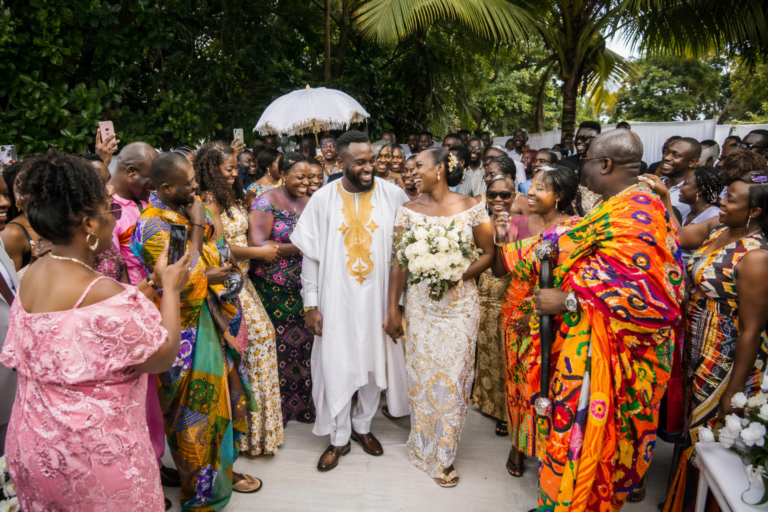
Kente outfits are one of the main things to wear at many old celebrations. You will often see a bride in a traditional headdress and the groom wearing clothes to match her. Outfits are one of the best ways you can really see the culture. The next parts will look at what some of these choices say about the people who wear them.
Traditional Bride’s Attire and Its Meaning
The bride’s outfit on the wedding day is often one of the things people remember the most. It is bright, carefully picked out, and has a lot of meaning for her and her family. Many times, the bride will wear kente cloth. She might wear it wrapped in the old way or made into a dress.
Kente cloth is not just for looks. The colours and designs can show where the bride comes from, what her family hopes for, and all the good feelings of the day. So, the outfit means a lot to her and fits the bigger tradition too.
Gold jewelry is often added to finish the look. Necklaces, earrings, and bracelets help to show off wealth and give the bride an air of honour or royalty. A lot of brides also put on a headpiece that matches the kente cloth. All these things together help the bride to be the focus on her wedding day.
Groom’s Attire and Cultural Significance
The groom’s clothes are a big part of Ghanaian wedding customs. He will often wear kente outfits that match with what the bride has on. This helps show that the two are together as one pair on their big day. The bright clothes bring in lots of colour, some pride, and make their culture easy to see.
When the event is more formal, the way the groom looks helps show how serious the day is. He might not say much during the first parts of the ceremony, but what he wears still tells everyone he respects the whole process and both families.
There is another meaning to his part in the ceremony. At the knocking ceremony, people who speak for the groom may call the bride a beautiful flower who they want to have join the family in marriage. The groom’s kente outfits, just like the words his people say, show what he plans to do, his honour, and that he is ready.
Find out more about Ghanaian wedding customs
Guest Attire and Dress Codes
If you are one of the wedding guests, what you wear is important too. Ghanaian weddings often stand out with a lively look, and guest clothing is a big part of that. In fact, the bright colors at these events can even seem bolder than what you might see in Australia.
Make sure to check before the day if there will be a dress code, a colour theme, or a type of fabric to use. Sometimes the couple wants everyone to wear something special, especially when they mix family custom with a new kind of party.
Here are a few things to keep in mind:
-
Ask if there is a dress code before you buy or pick your clothes
-
Be ready to see and wear bright colors, not just soft shades
-
Think about wearing clothes with a traditional touch if the couple likes it
-
Make sure you look neat and dressed right for both the wedding and the party
Doing these things lets you go along with the group and relax.
The Role of Music, Dance, and Food
A Ghanaian wedding is more than a formal or symbolic event. The day is warm, social, and has a lot of energy. There is traditional Ghanaian music, shared meals, and lots of dancing. These things help make it a real community party.
At the wedding party, things become lively during the reception. This is when food and fun take centre stage. There is jollof rice for people to eat, palm wine to drink, and local rhythms all around. The mix of these things gives the day an atmosphere people remember most.
Popular Music and Dance Styles at Ghanaian Weddings
Music and dance are a big part of any Ghanaian wedding. They are more than just background noise. The music and dancing help everyone show joy, bring all the guests together, and make the whole event feel like a big party right from the start.
At the reception, you get a mix of traditional Ghanaian music, some popular tunes, and afro beats. This works well for people of all ages and shows how a Ghanaian wedding can have both old and new bits together. It lets the day feel both lively and true to tradition.
Some common things you’ll see are:
-
Traditional Ghanaian music that links the big party back to culture
-
Popular music that keeps the mood high so everyone can enjoy it
-
Dance styles that let guests get up, move, and really celebrate
For Australians who know more low-key weddings, the energy and openness of a Ghanaian wedding might just be the most unforgettable bit.
Traditional Foods and Drinks Served
Food is really important at a Ghanaian wedding. It is a big part of the day, and shows how much people care for their guests. The food on the menu often shows the local pride. You will find a lot of traditional food at the party, especially once the main events are done.
You can see dishes like jollof rice, waakye, banku, and grilled tilapia on the tables. These foods make everyone feel like there is plenty for all, and they help bring people together. For many at a Ghanaian wedding, sharing food shows just how much the day is about the whole community.
Drinks are also a key part of the time. You might see palm wine in parts of the day that mean a lot, and sometimes, a pot of palm wine is a part of the customs before the party starts. At the wedding party, the guests often get fresh local fruit juices and some other drinks too.
The Celebration Atmosphere and Entertainment
After the formal parts finish, the wedding party starts to get very lively and social. This is the time when everyone joins in the celebration with music, laughs, food, and lots of dancing. It does not feel like a simple dinner. The day turns into a big event that feels open and fun for all.
The entertainment is what makes the day different. It is there for everyone to enjoy. The guests are asked to be part of the fun, not just watch. This makes the mood full of energy, friendly, and upbeat. You get to feel close to the couple and to their families.
If you are a first-time Australian guest, this kind of energy at a wedding party can be a great surprise. When you come ready to be part of it, have good food, and enjoy every bit, you make it more than just another wedding. It becomes an unforgettable experience.
Beginner’s Guide: How to Participate in a Ghanaian Wedding as an Australian
Going to a Ghanaian wedding for the first time can be exciting, but it might also feel a bit new or strange. The good thing is you do not have to know every little thing before you can have a good time at this event. If you show some respect, watch what the hosts do, and stay open to new things, people will welcome you. A Ghanaian wedding is all about being together, not making sure everything is perfect.
It’s also good to know that wedding traditions in Ghana may go on for more than just one day or event. You could go to a family introduction, the knocking ceremony, a traditional celebration, and there might also be a white wedding or a civic wedding. If you know a bit about how things go, the day will be easier and will make more sense. These next steps will help you get ready and feel good about being there.
What You’ll Need to Get Started
If this is your first time at a Ghanaian wedding ceremony, it will help to stick to the basics. Ask the couple what kind of wedding it will be, if there is any theme, and how fancy they want people to dress. Just talking about these things can clear up a lot for you later.
You do not need to know all about the traditional rituals, but you should be ready to watch and take part with respect. Some Ghanaian weddings mix old customs with new styles, so you will see moments with the families but also see a lively party.
Some things that are good to have ready:
-
Wedding clothes that suit the dress code or colours
-
A card with money, which is a good gift to give at a Ghanaian wedding
-
Enough time and patience, because the wedding ceremony can last longer than you think
-
The willing attitude to try new food, enjoy the music, and celebrate with everyone
That way, you will be ready for anything at the Ghanaian wedding.
Step-by-Step Guide to Attending a Ghanaian Wedding
A Ghanaian wedding usually happens in a few steps, not all at once. If you are a guest, it is good to know the order. This way, you can follow each aspect of the wedding process and really see what the families do for the new couple. This matters even more if the couple mixes tradition with new ways of celebrating.
Most times, the big day is part of a bigger process that might also have other family events before it. Some couples start with a traditional wedding ceremony, then have a white wedding in a church or go for a civic wedding. There is often a wedding reception after, where everyone eats, hears music, and dances.
Here’s a simple way to break it down:
-
Family introduction and early meetings
-
Knocking ceremony and the agreement made by the families
-
Traditional wedding ceremony with open rituals
-
Wedding reception with food, music, and dance
-
Sometimes there is also a religious or civic event that is separate
If you know this sequence, you can get behind the new couple with real confidence. It also helps you enjoy each aspect of the wedding, from the first steps all the way to the wedding reception and the white wedding or civic wedding if it happens.
Step 1: Preparing for the Family Introduction
The family introduction is usually the first formal thing that happens before the big celebrations. The meeting lets family members come together, talk, and start the marriage journey well. Most people from outside will think it is calm and simple. But it means a lot.
Family elders will often lead during this time. They bring people together, help with all the hellos, and make sure things are done the right way. The talk is respectful, not just there for show. It is there to help both sides understand each other better.
If you are there, you need to pay attention to how people speak and who is the most important in the room. The bride’s parents and older relatives may get the most respect. This is even more true if the family is meeting at the bride’s house or with her family around. This early step is very important for what comes next.
Step 2: Joining the Engagement and Knocking Ceremony
The knocking ceremony is a big sign that the marriage process is now getting real. At this time, the groom’s family comes to the bride’s family home. They ask for her hand in a way that is kind and has deep meaning. The talk is handled by the elders from both families.
On this day, the groom’s family may also bring gifts. The engagement list gets checked too. The bride’s family looks over everything to be sure that all is set before they say yes. That is why the knocking ceremony is so important. It shows that both sides mean what they say, are ready, and the families have given the green light.
If you are there as a guest, it is good to just watch what goes on and follow what the family does. The talking may come with jokes, a few speeches, some prayers, and at one point, someone may ask the bride herself in front of all. If she says yes, you will see the mood change. The whole room goes from careful talks to a real celebration with both families happy.
[groom’s family, bride’s family, engagement list, knocking ceremony]
Step 3: Experiencing the Main Wedding and Reception
The main wedding day is the big event when everyone comes together. This day is when the wedding ceremony takes place and is shown to all. You will see people wear special clothes, say blessings, make speeches, and give the last “yes” to the marriage. This can happen after other family events were held on other days, depending on what the couple wants.
There are some wedding customs that get everyone involved. At many weddings, there is a fun bit where the guests might see some decoys before the real bride walks in. When the real bride is found and she says who she has picked, the couple can swap rings and their marriage becomes official in front of everyone.
After all this, things turn into a big party. That is the wedding party. At this time, you get food, dancing, good music and a fun time with lots of people from the community. This shows that, in real life, a Ghanaian wedding is made up of many different events, not just one short wedding day. It can turn into one big party that lasts for a long time.
[wedding ceremony], [wedding day], [wedding customs], [real life], [wedding party], [big party], [traditional wedding ceremony]
Conclusion
To sum up, learning about Ghanaian wedding traditions can give Australians a special and rich experience. When you know what each custom means, such as the ‘Knocking’ ceremony or the bright clothes people wear, you can take part in these fun times in a real way. There is a lot to see and do, like finding out about local wedding traditions and the big part that music and dance play. Each part comes together to make a day you will remember. As you get ready to go to a Ghanaian wedding, know that it’s more than the one day—it’s about meeting new people and enjoying these amazing wedding traditions. If you want to find out more about how to enjoy a Ghanaian wedding, get in touch for tips made just for you!
Frequently Asked Questions
How are traditional and modern elements blended in Ghanaian weddings?
These days, many modern weddings in Ghana mix together traditional weddings and newer styles. The couple often begins with a wedding ceremony that follows Ghanaian tradition. After that, they add modern touches, like a church white wedding or a civic event. This way, they can honour family customs and still show their own style for today.
Are Ghanaian wedding ceremonies held over multiple days?
Yes, they can be. In real life, plenty of Ghanaian weddings have more than one event. There can be introductions, knocking, the traditional wedding ceremony, and from time to time a different religious or civic celebration. This means one aspect of the wedding might take place before the big day and the reception.
What should Australian guests expect at a Ghanaian wedding?
At a Ghanaian wedding ceremony, Australian guests will see strong family involvement. The music is lively, and the clothing is full of colour. There are many meaningful wedding customs too. Ghanaian wedding culture is the type where people come together. Every aspect of the wedding includes elders, speeches, food, and dancing. The new couple is celebrated by all who are there.
How do Ghanaian wedding traditions compare to Western weddings?
In Ghanaian wedding traditions, you will see more focus on elders, getting family approval, and giving gifts in a formal way. When you look at wedding customs in western countries, the main thing can be the couple. But in a Ghanaian marriage ceremony, it is about the two families coming together. Some couples still have a civic wedding as part of their big day. Even so, family and tradition keep on being very important in each Ghanaian wedding.