Key Highlights
-
A german wedding brings the groom and bride into fun wedding traditions. These customs are playful and are said to bring good luck.
-
One thing you often see at a german wedding is Polterabend. At this event, guests break porcelain for luck before the big day.
-
The groom and his partner may have some funny teamwork tasks. One common test is sawing a log of wood together.
-
Some places still use cheeky pranks in their traditions. This can be bride kidnapping or the veil dance where guests have fun.
-
The food, cake, family roles, and wedding rings worn on the right hand all make a german wedding feel different.
-
Australians enjoy warm festivities with lots of help and joy from their local community.
Introduction
If you will go to a german wedding in Germany, you will see the wedding traditions can be very different from what you find in Australia. The wedding day is shaped by the people, local customs, superstitions, and their love for family and community. There could be things like smashing porcelain and some fun reception games. All these german wedding traditions make the day full of meaning and add some fun too. If you know a bit about these things, you can feel more ready, show respect, and enjoy the wedding with everyone.
Key German Wedding Traditions Australians Should Know
Some of the main german wedding traditions are Polterabend, bachelor and bachelorette parties, sawing the tree trunk, and the veil dance. These wedding traditions are not only for fun or show. The main idea behind these is about teamwork, bringing good luck, and making sure the married couple starts their life strong with plenty of prosperity.
You might also notice things that can really surprise people from Australia, like smashing plates before the wedding. This german wedding custom makes a lot of noise to scare away bad spirits. It’s a way to say the couple gets protection and a clean start. To get a better feel for these moments, let’s talk about the most talked about traditions one at a time.
1. Polterabend – Smashing Porcelain for Good Luck
Before the wedding day, many German couples have a polterabend, or polter night. Friends and family come together to break porcelain dishes and china. There is a lot of noise here. People think this unusual custom brings good luck and keeps away evil spirits or bad luck before the wedding starts. They do not break glass.
What makes this special is the way the couple cleans up the mess as a team when it is all over. Cleaning together takes that mess and turns it into a lesson about working together and sharing the work.
-
Guests smash porcelain rather than glass.
-
The couple sweeps up the broken pieces together.
-
In some versions, people look for the largest piece, but the real focus is their shared task.
For guests, the polter night is one of the most unique parts of a german wedding.
2. Junggesellenabschied and Junggesellinnenabschied – Bachelor and Bachelorette Parties
Another thing you might see in Germany is the groom or the bride having a send-off from single life. This is a bit like a bachelor or bachelorette party in Australia. In Germany, they call it Junggesellenabschied for the men and Junggesellinnenabschied for the women. It means the end of bachelorhood. These don’t happen all the time, but when they do, the parties can be out in public.
The groom or the bride might go out to a bunch of bars and sell little things like shots on the street to people they don’t know. In north Germany, at a party called polter night, things can finish with the burning of the groom’s trousers or the bride’s bra. They will dig a hole and put the ashes beside a bottle of schnaps.
-
These festivities are a way to show the end of bachelorhood.
-
The event is full of street selling and fun public games.
3. Brautentführung – The Bride Kidnapping Prank
One of the more unexpected German pranks is called Brautentführung, or bride kidnapping. At the wedding, someone kidnaps the bride, often the best man or another guest, and then they take her to a pub or to a few bars. The groom is the one who needs to find her. He has to follow clues to track her down.
This tradition makes the party feel like a game. The groom will get to the place, and he has to pay the bill so he can take his bride back. It is all in good fun, but people who come from outside Germany might be confused if they are not told about it first.
-
The kidnapper takes the bride away during the celebrations.
-
The groom follows clues and often pays for the drinks.
In some villages, you will still hear people talk most about this wedding custom.
4. Baumstamm Sägen – Sawing the Log Together
Right after the ceremony, some newlyweds in Germany take part in Baumstamm Sägen. This means cutting a log of wood together. On the wedding day, a big tree trunk or log of wood goes in front of them. They have to use a saw, with both of them working together, to get through it. This may look easy, but you really need to have the right timing.
This custom is about wedding teamwork. It shows that marriage needs balance, time, and teamwork. If one person pulls the saw too hard or moves too quick, the saw will get stuck. The work slows right down.
-
The couple will use the same saw at the same time.
-
The action shows how they will be there for each other when challenges come up together.
For Australians, seeing this on a wedding day can be pretty surprising. But it is also seen as one of the most charming things about the event.
5. Bridal Shoe Penny – A Symbol of Prosperity
Some German customs are a lot quieter than breaking porcelain, but they still mean a lot. One good example is the bridal shoe penny tradition. The german bride pays for her bridal shoes using cent coins or pennies. It shows she is careful with money and likes to be smart when she buys things.
On the wedding day, the bride often keeps a penny and puts it in her left shoe. This small step is tied to the hope for prosperity and good fortune. It also stands for strong, lasting love. A simple pair of bridal shoes then gets a special, personal touch.
-
Paying with cent coins shows thrift and responsibility.
-
Keeping a penny in the shoe means prosperity and good fortune.
This is not a well-known custom, but it shows how german traditions like this one, connect marriage with being practical and wise about money.
6. The Veil Dance – Celebrating with Family and Friends
The veil dance, also called Schleiertanz, is one of the most fun times at some German weddings. The bride’s veil gets held above the couple while they are on the dance floor. This puts all eyes on them as they have their first dance together. It brings everyone in close and makes the first dance into a big, shared moment.
When the music stops, unmarried women get to run in and try to grab a piece of the veil. The tradition says the one who gets the largest piece might be the next to walk down the aisle. In another way to do it, people can toss money onto the veil instead. A lot of couples like this idea better.
-
Unmarried women are usually the ones who take part in this.
-
The custom might mean keeping a piece of the veil or tossing money on the bride’s veil.
Like the wedding bouquet toss, this part feels playful and adds good energy to the festivities on the dance floor.
Unique Elements of the German Wedding Ceremony
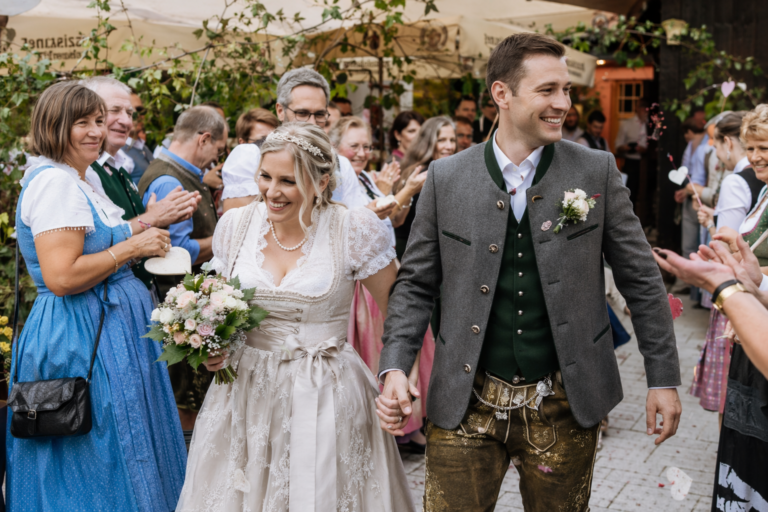
Beyond the reception games and pre-wedding customs, there are things about the ceremony that stand out. In a german wedding, you might see rings worn on a different hand, local clothes worn by some, and witnesses and family being quite important. These things show old german traditions.
For folks from Australia used to other types of wedding ceremonies, a german wedding may seem more set out, but it’s still friendly and warm. Friends and family do not just sit and watch. They take part, back the pair, and help keep german traditions going so everyone can see.
Exchange of Rings on the Right Hand
One main thing at a german wedding is where the couple wears the wedding rings. In germany, german couples put the wedding rings on the right hand. This is not like Australians and Americans, who wear them on the left hand. For them, that’s one of the first things they notice.
The engagement ring, if there is one, sits on the left hand before the couple gets married. After the ceremony, it changes to a wedding band on the right hand. This switch shows that the couple is now married.
This might seem small, but it means a lot to a married couple. So, if you join a german wedding, don’t be shocked if the rings are on the opposite hand to what you expect. It is just a normal part of german wedding ceremonies and tradition.
Wedding Attire and Traditional Outfits
Wedding clothes in Germany are usually smart but a bit more low-key than what some Aussies might think. A german bride mostly wears a white wedding dress. Big trains are not so common. The ballgown shape is popular and the bride often has a fingertip veil or, if it’s a church wedding, a longer one called a cathedral veil.
Some people wear old-style clothes that link to the local ways. In different parts of germany, a bride may hold things like bread, salt or grain. These are for good luck and to wish the couple plenty in life. It shows how old country customs are still part of weddings there.
There are some fun wedding moves with clothes too. In North Germany, people sometimes do the burning of the groom’s trousers. This is the way to show the end of bachelorhood. While the source doesn’t talk about a white ribbon, you can see how symbols and what people wear matter for the look and feel of the day.
Role of Witnesses and Family in the Ceremony
At a German wedding, family and close friends do far more than sit and clap. They often organise pranks, join pre-wedding events, and help guide the married couple through the day’s traditions. This strong involvement gives the celebration a communal feel.
The best man may even take part in bride kidnapping, while relatives and friends gather for Polterabend or join the couple on the dance floor. Witnesses and loved ones help turn formal moments into shared experiences.
|
Role |
Typical involvement |
|---|---|
|
Witnesses |
Support the couple during the ceremony and key formal moments |
|
Family |
Join customs, offer practical help, and uphold traditions |
|
Best man |
May help with pranks such as bride kidnapping |
|
Friends |
Take part in smashing porcelain, games, dancing, and festivities |
That active role helps explain why German couples often plan their traditions around the people closest to them.
Festive Wedding Receptions and Food Traditions
When the ceremony is over, the festivities keep going with lots of food, music, games, and long celebrations. A german wedding reception is not strict. It is usually generous, and there is plenty of room for people to talk and have fun. The wedding day in germany often keeps going late into the night.
Food is an important part of this day. The wedding cake, coffee, buffet-style food, and desserts all be there to help set the mood. As the guests eat, they might also get to watch or join in on games and traditions. These activities keep everyone upbeat from the afternoon until the very end of the wedding.
Iconic German Wedding Foods and Cakes
There isn’t just one menu for a german wedding in Germany. Most couples pick local foods and big buffets. This lets the guests have lots of different things, not just one set meal. The main idea is about plenty of food, feeling good, and making sure everyone has something they like.
The wedding cake is a big deal too. One type that’s talked about is a German butter cake with fresh fruit. When the couple cuts the cake, people watch who has their hand on top of the knife. That person is meant to be the one who is in charge in the marriage.
Some regular foods you might see are:
-
Butter wedding cake with fruit
-
Coffee and cake to celebrate
-
Roast beef, smoked salmon, and lots of salads
-
Chicken, fish, potato gratin, mousse, and cheese boards
So the answer is yes – at a german wedding, there should be much more than just a single piece of cake.
Popular Reception Activities and Games
Reception games play a big part in the fun. German couples love to make sure guests join in, not just sit back and watch. On the wedding day, everyone might get up for a dance, share funny or sweet guesses about what is next, or watch the newlyweds enjoy some light-hearted contests.
It’s common for the first waltz to kick off dancing. The couple steps onto the dance floor and opens things up for everyone. There’s also the bouquet toss. The groom often picks the wedding bouquet himself. Then, all the single guests gather, hoping to catch the bouquet and be the next to marry.
-
The first waltz opens the dance floor and shows the couple’s unity.
-
The bouquet toss brings excitement and gets guests involved in the festivities.
All these games help make German receptions lively. People get moving, socialise with others, and feel part of something big.
Conclusion
In the end, knowing and enjoying german wedding traditions can make things much better for Australians going to, or planning, a wedding in germany. The fun polterabend and the act of sawing a log together both show love and togetherness in fresh ways. These wedding traditions add something special to the day. Wearing traditional outfits, giving rings on the right hand, and having family and friends take part help make the ceremony one to remember. As you go through german wedding traditions, see how they fit into your own style and what matters to you. If you want to find out more about planning a wedding that mixes different cultures, you can always ask for help or book a chat.
Frequently Asked Questions
What makes German wedding traditions different from Australian weddings?
German wedding traditions usually have more symbolic rituals and funny pranks than you see at many Australian weddings. The bride and groom can smash some porcelain, saw wood, or follow customs that are set by their family or mates. These German wedding traditions make the day feel more traditional and bring everyone together.
Are there regional differences in German wedding customs?
Yes, there are different german wedding customs depending on where you are in Germany. In north germany, people often celebrate polter night in their own way. Sometimes, the burning of the groom’s trousers or the bride’s bra is part of it. Each area has its own german wedding traditions, especially in villages and at family gatherings.
How do guests participate in German wedding celebrations?
Guests at a German wedding day are often right in the middle of things and not just watching. You see them smash porcelain, join in on pranks, and often get up for the veil dance. Everyone likes to come together on the dance floor for the first waltz. After that, you’ll find people taking part in all sorts of festivities at the reception. German couples love to plan their big day so that everyone can join in and feel a part of it.