Key Highlights
-
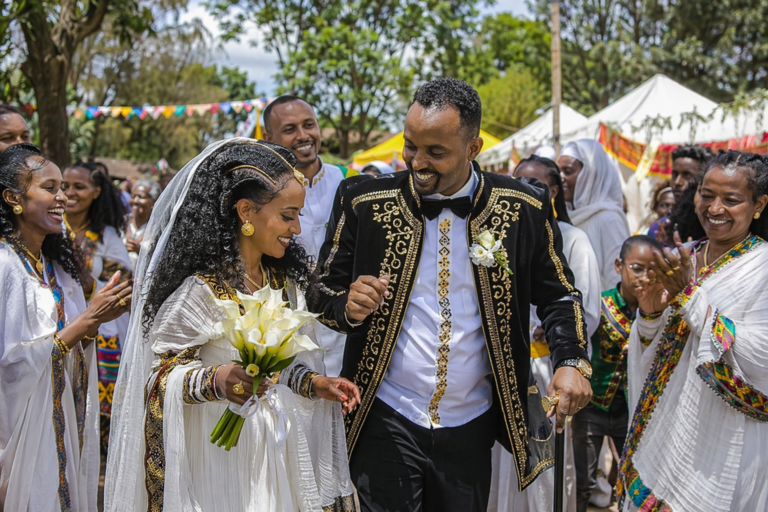
An ethiopian wedding brings together family members, elders, and neighbours for the main event. The day is lively and has lots of energy.
-
Many wedding traditions do not just start on the wedding day. First, the groom’s family and the bride’s parents meet and talk.
-
In the amhara region, family involvement and help from others shape every step of the wedding process.
-
Music, drumming, dancing, and loud calls make the bridal party and the guests get up and join the fun.
-
At the event reception, people remember the food, honey wine, and the coffee ceremony, as they are a big part of the day.
Introduction
An ethiopian wedding can be warm, busy, and full of meaning from start to finish. In Australia, these wedding traditions show you the heart of ethiopian culture. Here, family ties, community support, food, music, and blessings are very important. Most of what people know comes from the amhara region. At these weddings, there can be church elders, giving gifts, dancing, and big meals that all share together. If you want to know more about these customs, this guide is here to give you a clear and friendly overview.
Overview of Ethiopian Wedding Traditions for Australians
Across Ethiopia, you will find a real mix of customs when it comes to marriage. These wedding traditions are shaped by a long history, religion, and what the people in each local place do every day. Even in one country, there is not just one way when it comes to ethiopian wedding traditions.
For Australians, this is a big reason why these weddings stand out. The examples gathered show big, happy gatherings. There are drums, blessings, people sharing food, and families who play a strong part. The Amhara group is a big part of the ethiopian population, and the way they do their weddings gives a clear example. You can see how full of life and special these celebrations are, thanks to the wide diversity of customs.
Ethiopia’s Diverse Cultures and Marriage Customs
Ethiopia has more than one ethnic group, so wedding traditions change in different regions. The information here talks most about the Amhara region. That is in the northern and central highlands. Wedding traditions in this area are very important in the culture.
In Amhara customs, marriage can happen in different ways. There can be a church marriage with Eucharist, a civil marriage worked out by family, or a short-term marriage called damoz. So, there is variety even in just one group. Family upbringing plays a big part. Parents and older family members help guide the choices and talks before the wedding ceremony.
When Australians ask how Amhara customs are not the same as wedding traditions from other Ethiopian groups, the truth is that the detail is only about Amhara ways. But this does show one thing—the wedding ceremony in Ethiopia depends on local identity. There is not just one national way to do weddings.
Why Ethiopian Weddings Attract Global Interest
What makes these wedding ceremonies so special? It’s the energy in the room and the warmth you feel from everyone there. A wedding ceremony is about more than just the couple. The event brings music, blessings, movement, food, and family together for all to see.
This mix is what gets the world watching, because wedding traditions are local but also easy for anyone to get. Even if you are not from there, you can see the joy, respect, and everlasting love that come through in what they do.
-
Drumming, clapping, ululation, and dancing make the celebration lively and out in the open.
-
Elders bless the couple and the gifts. This gives more meaning to the wedding ceremony.
-
People share meals, coffee, and honey wine, so the day becomes a good social time for everyone.
Family Roles and Community Involvement in Ethiopian Weddings
In these examples, family members play a big part in nearly every step. Getting married is not just a private choice. The close family often helps plan, agree on, and celebrate the marriage.
This kind of family involvement is not just about parents. Elders, church leaders, neighbours, and others in the community can also join in. For Australians who know smaller weddings, this is often one of the key things that stands out. To really get what is going on, you need to look first at what parents do, and then see how elders and people who lead get involved.
Parental Blessings and Arrangements
In Amhara custom, the groom’s family and the bride’s family both take part in setting up the marriage. For a civil marriage arranged by kin, the children’s parents meet and talk things out before there is any ceremony.
This means the bride’s parents are not just there as guests on the wedding day. They become important people in the process from early on. There is also a ritual described, where the groom’s father and some church elders bow down in front of the bride’s parents to ask for their OK.
This really shows what marriage is like in Ethiopian culture, at least for the Amhara. The marriage is handled with respect, and the families’ agreement means a lot before anyone comes together to celebrate in public.
The Importance of Elders and Community Leaders
Elders have real authority at these celebrations. On the wedding day, church elders in white robes stood with the groom. They gave blessings and helped lead key times in the day. Their being there showed that marriage is part of community life, not outside of it.
Community leaders link the new couple’s life to shared values. In these families, where family upbringing means a lot, elders stand for keeping things going, doing the right thing, and having public support. They are there for a reason. They show how serious the wedding is.
The bigger group also plays a big role. Neighbours, people who wish them well, and church folks all join in. They walk with the group and enjoy the day together. This wide support can make the wedding feel bigger, louder, and more about everyone than most weddings in Australia.
The Engagement Process and Shimagelay Tradition
The information that’s been put together does not give the name shimagelay for the tradition, but it does talk about a way to marriage where families sit down and talk things out first. This opens the door for a formal engagement. In the Amhara example, both families have a chat and make key decisions before the wedding day arrives.
So, if you want to know how an engagement ceremony goes, the main thing is that the two families have honest talks, someone makes a request, and then there’s acceptance. This helps people see the shimagelay tradition as a real and thoughtful way to propose and to show respect. Over the next two sections, these steps are made even clearer.
How the Shimagelay Negotiation Unfolds
You can understand the shimagelay tradition by looking at the way the families plan the wedding. The families talk to each other for the couple before the wedding happens. The future groom does not do everything by himself. His family joins in, talks things over, and makes a formal request.
This shows the engagement ceremony is about respect and getting the okay from everyone, not just a private offer. Later, there is a special moment at the bride’s home. Here, approval is asked for in public, and there is symbolic meaning before the bride comes out.
-
The future groom’s side starts things off with family talks and sorting things out together.
-
Getting a “yes” from the bride’s family is an important, formal part.
-
A blessing in front of everyone helps take the couple toward the wedding ceremony.
Even if it does not list all the steps by name, you can see there is a clear way from talking about it, to getting approval, then to the celebration.
Symbolic Gifts and Dowry Exchange Customs
One thing that stands out here is the use of symbolic gifts. Before the bride comes out, the groom gives gifts through the open door of her house. He gives her a wedding dress, jewellery, and perfume. Church elders bless these things first.
The source does not talk about a dowry system or show there is a gift of sweets in this Amhara case. So, it is good not to think there is only one custom for all. But, you can see that symbolic gifts play a big part. They show what people want, respect, and being ready to get married.
-
Gifts can get a public blessing before they are given to the bride.
-
The bride takes the dress and comes out to show she agrees.
-
Things like jewellery and perfume give more meaning to the day. They do more than just look nice or smell good.
For Australians, this event stands out. These gifts become part of the story that people will talk about for years.
Prewedding Rituals Across Ethiopian Regions
Before the main event, the wedding process needs planning, requests, and getting the okay from others. In what we have put together, wedding traditions have the family talking things over, asking for blessings, and getting together as a community before the bride is shown.
The source here talks mostly about the Amhara region, so it does not compare all Ethiopian communities. But you can still see that customs change with the place, the way people live, and what people usually do in that area. Below, you can see an easy snapshot of the region and a look at what engagement customs are like in the city versus the country.
Unique Practices Among Amhara, Oromo, and Tigray Communities
The compiled information gives detailed material for the Amhara ethnic group but not for Oromo or Tigray communities. For accuracy, it is important to say that clearly. Still, that contrast itself tells Australians something useful about different regions: practices are likely to differ, and broad assumptions can be misleading.
Here is a text table based only on what was provided:
|
Community |
Wedding ceremony details in compiled information |
|---|---|
|
Amhara |
Three forms are mentioned: Eucharist church marriage, kin-negotiated civil marriage, and temporary damoz marriage. Family negotiation, priestly blessing, gifts, drumming, and community celebration appear strongly. |
|
Oromo |
No specific wedding ceremony details were provided in the source material. |
|
Tigray |
No specific wedding ceremony details were provided in the source material. |
So, what cultural differences exist? The safest conclusion is that Ethiopian weddings vary by community, but the available evidence here only describes Amhara customs in detail.
Comparing Urban and Rural Engagement Traditions
The clearest example in the information is from rural Abdurafi. In this place, engagement customs and wedding parties really include everyone. The whole town seemed to know when it was wedding season. Invitations were easy. Goats were prepared. Neighbours joined in with the rest.
This rural story shows strong family involvement. It also shows how open the whole community is about taking part. The source talks about goods brought in from Addis Ababa. This makes you think the city is different, though the source does not tell us much about how marriage works in the city.
-
Rural engagement customs can be very open, with lots of public celebrating and the whole village joining in.
-
Family involvement is clear, hands-on, and everyone knows about it.
-
There may be more diversity of customs in the city compared to the country, even when what we see here is from a rural view.
For Australians, this means where you are can change how formal or relaxed the lead-up to marriage will feel, and who will be part of it.
Traditional Attire and Wedding Dress Codes
What people wear is the first thing guests see at an Ethiopian event. The facts show that there is both formal wedding wear and well-known traditional habesha clothes linked to being Ethiopian.
The info does not go into detail about every style. It talks about Ethiopian traditional wedding outfits and a satin bridal dress with a veil. This is good as a starting point if you are in Australia and want to know about habesha kemis and what to wear at weddings there. The next parts go over what is clear so far and also point out where things look a bit different in other areas.
The Habesha Kemis and Men’s Gabbi
The information talked about Ethiopian wedding clothes for men and women. But it did not give much detail about the habesha kemis or the men’s gabbi. It also left out things like the silver trimmings on the clothes. To be clear, it’s important to point out what is missing for anyone wanting full details.
The source did show that Ethiopian wedding clothes mean a lot at the wedding. The bride was given a wedding dress from the groom, and after she took the gifts, she dressed for the big day in a satin bridal gown and a veil. So, the clothes were not just for looks. They showed this was the time to start a new life and that she accepted it.
So, what type of traditional attire do people wear at an ethiopian wedding? From what we get in the material, we see that the formal bridal clothes are important for the day. And, even though full details are not in the text, we know that traditional ethiopian wedding clothes, like the habesha kemis with silver trimmings, are a big part of the wedding and everyone’s memories.
Regional Variations in Wedding Attire
The dress code for weddings can change from place to place, but the info here does not cover everything. It talks about the Amhara way and points you to some Ethiopian traditional wedding clothes. It does not give a full list of outfits for each of the different regions.
This is important because Ethiopia has a big and different ethiopian population. What people wear can show who they are, where they come from, what they believe, and what the day is about. Even at one wedding, you can get different outfits, like clothes for the big part of the day, new fashion styles, and looks from the local area.
-
In the Amhara example, what the bride wears is part of giving gifts at the wedding.
-
The people coming to the wedding and the man getting married wear special clothes that fit the event, too.
-
The material hints there are lots of styles in different regions, even though it does not list each one.
If you are a guest from Australia, remember this: what people wear matters, other people notice it, and it often matches how the day plays out.
The Ethiopian Wedding Ceremony Step by Step
If you want to know the key steps in a traditional Ethiopian wedding ceremony, you can look at this lively Amhara example. On the day of the wedding, people come together, give blessings, walk in a procession, give gifts, accept gifts, and enjoy a meal together.
This wedding process is not quiet at all. The moments in it are big and open, with drums, elders, moving to the bride’s home, and signs of approval from both families. For people in Australia, this day can seem more like a group event and full of more tradition than you might think. The next parts talk about the faith behind it and those special parts that make this wedding stand out.
Orthodox Christian, Muslim, and Interfaith Ceremonies
The compiled source mainly shows a traditional Christian setting. In the Amhara region, Christianity is the main religion. The wedding story in the source has priests, church elders, blessings, and a special church marriage called Qurban. These things play a big part in the main event.
The material does not talk about a Muslim wedding or weddings between people of different faiths. Since we must follow what is in the source, we should not make up those details. We can say that Ethiopian weddings can be different, based on faith. In this material, the focus is on Christian customs.
For Australians, the best-known steps are those linked to church blessings, parents’ approval, and how the community takes part. If you go to a wedding from a different faith background, what you see could be different from this Amhara region example.
Rituals Such as the Crowning and Blessings
The source does not talk about crowning, but it does focus on blessings. Church elders give blessings to the groom, the gifts for the bride, and to the marriage itself. The blessings happen more than once. This shows that getting spiritual approval in this event matters just as much as having family approval.
Family members also join the ceremony in important ways. The groom’s father stands with the elders and asks the bride’s parents if it is okay. Everyone around them joins in by cheering and making sounds of joy. The bride comes out after she takes the gifts, and this shows everyone that things are going well with the marriage.
-
Blessings from elders give the ceremony both religious and social meaning.
-
Acceptance by family members shows up through ritual words and the things they do.
-
Giving gifts and how the bride reacts make for a special and memorable part of the ceremony.
These rituals give this celebration its own special look and feel.
Festivities and Customs at Ethiopian Wedding Receptions
After the official parts are over, the wedding reception really turns into a big party. People join in for food, drinks, music, and plenty of moving around. There is a lot of mixing among the guests, the hosts, and those coming to wish the couple well.
The information does not show that there is a formal first dance, but it is clear that people love to dance during the wedding festivities. People also clap, sing, bang on drums, and answer each other in groups. They do not just sit still at this event.
If you want to know what Australian guests might get at the wedding reception, you should check out the food, music, and what happens after the wedding is over.
Traditional Food, Music, and Dances Like Eskista
Food and music both play a big part in the wedding day. The collected info talks about traditional food like injera and stewed goat meat. You will also find many dishes made with spicy meat and veggies. People often serve lamb, chicken, and beef too. So you get chicken stew as a well-known meal that is part of the big menu for the day.
You can’t miss the music at these weddings. There are drums that kick off the party. Many guests clap along, sing, and dance in a big circle. You see a lot of people bring real energy to the dance floor, and this movement helps shape the feel of the day.
-
Honey wine, like tej, is poured at most Amhara weddings.
-
Ethiopian coffee and the coffee ceremony bring a sense of ritual. They give people time to visit and share some hospitality.
-
Drumming, dancing, and ululation make the party bright and bring people together.
That’s one of the main reasons these weddings look and feel so lively and unique.
Mels and Postwedding Celebrations
The gathered info doesn’t bring up mels by name, so it’s best to leave that just up top in the heading. The main thing it shows is that after the wedding, people can keep celebrations going late into the night. The wedding party will still be eating, drinking, and mingling long after the main event has passed.
Food is in the spotlight through these late hours. Guests keep getting served more than once, and goat meat is a real favourite in country wedding stories. There’s also word that lamb is common at Amhara weddings, so lamb stew is a good fit for the style, even if each menu is a bit different.
-
Postwedding celebrations can go for hours after the main part is over.
-
Food and drink keep coming out to keep the wedding party happy.
-
Local brews, goat meat, and time with people in the community bring the fun for these late gatherings.
For Australians, this can mean the wedding reception feels more like an all-night get-together with everyone, not just a short part at the end.
Conclusion
To sum up, Ethiopian wedding traditions are full of colour and meaning. They are shaped by many deep customs that give people in Australia a real look into joyful ways of coming together. From detailed engagement steps to big events after, these wedding traditions put a strong focus on family, community, and love. If you are going to an Ethiopian wedding, take this time to join in with these lovely ways and see a culture that puts great value on being together and sharing. If you want to know more about how to follow these ethiopian wedding traditions, or if you want to talk about your own ethiopian wedding story, you can reach out for a chat!
Frequently Asked Questions
What makes Ethiopian wedding celebrations unique?
An ethiopian wedding is special because the main event is about much more than just sharing vows. In a traditional ethiopian wedding, the wedding festivities can have drums, lots of ululation, blessings, symbolic gifts, meals everyone shares, and a lively dance floor that gets everyone going. The whole community will often feel like they are part of the celebration.
How have Ethiopian wedding traditions changed over time?
The material shows that Ethiopian wedding traditions are still strong. Some details have changed, though. These days, cooked meat is often served instead of raw meat at some weddings. In different regions, the diversity of customs is still important. So, each engagement ceremony and big day may not look the same. There can be changes, but old customs and the feel of an Ethiopian wedding stay part of these special days.
What should Australian guests expect when attending an Ethiopian wedding?
Australian guests can expect a lot of warmth, noise, and movement at an Ethiopian wedding reception. Strong family roles are clear, as many family members may take part in the event. At the wedding reception, food, drinks, blessings, and dancing often come around more than once. For many people, one of the favorite parts of the wedding is seeing how Ethiopian culture makes hospitality a true celebration.