Key Highlights
-
Bangladeshi wedding traditions often happen over a few days. It is not just all about one wedding day.
-
There can be events like Adan Pradan, Aiburo Bhaat, Gaye Holud, the wedding ceremony, and Bou Bhaat.
-
Family members from each side guide the bengali wedding customs. They help everything run well and keep everyone happy.
-
Gaye holud is a bright turmeric ceremony. There is lots of music, sweets, and many blessings that people share on this day.
-
The main wedding day is about the Biye or Nikah. After this, there is a big party with all the guests.
-
All these bangladeshi wedding traditions show community, kindness, and strong family bonds.
Introduction
A Bangladeshi wedding is not just one event. It goes on for a few days and is full of family, food, music, and the culture of Bengal. For Australians who are going to a Bangladeshi wedding for the first time, all the colour, the sound, and many rituals can feel fun and very different. This guide will help you understand wedding traditions by showing what happens, why it matters, and how these moments bring both families together.
Understanding Bangladeshi Wedding Traditions for Australians
If you are new to bangladeshi wedding traditions, you will see that the celebration can last for a few days. It is not just one formal event. There will be pre-wedding events, the main ceremony, and post-wedding rituals. Each one has its own place and reason.
For Australians, this makes the whole experience full and something you will not forget. The wedding traditions be a big part of bengali culture. You will get to see family, shared meals, good music, and nice welcomes from everyone. All these customs show the way the community lives and comes together. The next sections will tell you why people follow these wedding rituals and what makes them special in their everyday life.
Why Learn About Bangladeshi Wedding Customs?
Learning about Bengali wedding customs can help you feel more at home when you join a celebration. You won’t miss what is happening at a ritual, during a meal, or when someone gives a formal hello. This is really important because the day means a lot for the new couple and their families.
It helps you join in the right way. Bangladeshi wedding traditions have many different steps, and each one has its own meaning for the people there, as well as being fun for everyone.
-
You get to see why so many events happen before and after the wedding day.
-
You start to understand how elders, guests, and close relatives help the new couple feel special.
-
You enjoy the wedding traditions without feeling lost about what is going on.
For Australians, knowing more about these things makes the day even more special. You stop just watching and begin to see how every part is about marriage, family, and people coming together.
How Bangladeshi Weddings Reflect Culture and Community
Bengali weddings show that marriage is very tied to being part of a group. These weddings are not just for the couple. Family, friends, and others take part with things like meeting each other, giving blessings, eating food, enjoying music, and dancing.
This big group feeling matches with bengali culture. A wedding is more than a legal or religious thing. It is a time for making new links between families and also building strong family bonds with shared rituals and fun times.
You can see this through Adan Pradan, Gaye Holud, Biye, and Bou Bhaat. Each helps people meet for another reason. Some of these events are for getting ready. Some are for the wedding itself, and others help to settle the bride into her new life. All of them show belonging, give support, and make everyone happy together.
The Cultural Importance of Weddings in Bangladesh
In a Bangladeshi wedding, the marriage is a big family and social event. The day is full of special customs, big parties, and you will see many family members from both sides joining in. That is why these weddings do not finish in just one day but go on for a few days.
In many bengali wedding customs, family members play a big role. They help bring the two families together, put on lovely dinners, welcome everyone, and show the couple what to do next. If you want to know about the event, you need to look at who is there and what they do, and also see how a bangladeshi wedding is different from weddings in other South Asian places.
Role of Family and Community in Celebrations
Family members have a big part to play right from the start of the wedding. At Adan Pradan, the elders from both sides get together, say hello, and talk about the plans. This is important because it shows the coming together of families, not just two people getting married.
As things go on, close family members look after and set up all parts of the special day. The bride and the groom are looked after at Aiburo Bhaat. Then, during Gaye Holud, their relatives put turmeric paste on them, give blessings, and get into songs, dancing, and sharing food with everyone.
The community is important as well. Friends, more relatives, and all the guests walk in the processions, greet each other, and go to the big welcome parties. This makes the wedding bigger than just a small family thing. Because of this, the close family still leads all the main parts, while the wider community brings lots of fun, support, and real excitement around the couple.
Comparing Bangladeshi and Other South Asian Wedding Traditions
Bangladeshi wedding traditions share a lot with other South Asian celebrations. Like indian weddings and events in nearby countries, they often run across several days and include separate pre-wedding, wedding, and reception stages. Music, colour, food, and large guest lists are common across the region.
At the same time, the culture of Bengal gives Bangladeshi events a distinct structure and feel. Names such as Gaye Holud, Biye, and Bou Bhaat are widely used, and the sequence of introductions, blessings, and home-based rituals stands out clearly.
|
Aspect |
Bangladeshi weddings |
Other South Asian weddings |
|---|---|---|
|
Pre-wedding event |
Gaye Holud with turmeric paste |
Often similar to a Haldi ceremony |
|
Main wedding |
Biye or Nikah |
Varies by region and religion |
|
Reception |
Walima or Bou Bhaat |
Reception names and hosting customs vary |
|
Overall style |
Strong Bengali identity |
Shared South Asian features with local variation |
Key Pre-Wedding Ceremonies in Bangladesh
Before the main wedding day, there are a few events that help both the families and the couple get ready. These wedding rituals are more than just nice touches. They help plan the celebrations, show the change in life for the couple, and build up the excitement.
For most guests, this part is often the most fun. It’s a good time for family members to meet, share food, enjoy music, take part in turmeric ceremonies, and have moments with henna designs. The next parts will talk about the most popular pre-wedding events and what each one brings to the whole experience.
Engagement Rituals and Formal Introductions
A typical Bangladeshi wedding usually starts with family contact, not just one big engagement party like you might see in Australia. One of the first steps is called adan pradan. Here, elders from both families sit down, share greetings, and talk about the wedding plans.
This part is important because it means both households have accepted each other. It makes a good start and lets the bride’s family and the groom’s side get to know one another before the big events begin. It also helps everyone understand what comes next and sets the way things will go for the rest of the wedding.
After this, other pre-wedding events keep things moving. The couple might be the guests of honour at meals with family on both sides. Both families also start to get ready for gaye holud and the main ceremony. So, if someone in Australia asks how these celebrations go, it’s easy to say: it begins with introductions, agreement, and planning led by the families.
Gaye Holud: Meaning, Rituals, and Significance
Gaye Holud is one of the most well-known pre-wedding rituals in Bangladesh. This is a turmeric ceremony that is full of joy, blessings, and a big show of happiness. The word holud means yellow. That is why people wear yellow clothes and use bright decorations. It all helps make the event feel very warm and lively.
At this ceremony, you see the use of turmeric a lot. Family and guests put turmeric paste on the bride and groom. The use of turmeric paste is thought to clean the skin, and to bring a nice glow right before the wedding day. People have a good time with music, dancing, sweets, and lots of laughing.
-
Guests get to put turmeric paste on the couple while giving blessings.
-
The family often feeds the bride and groom some sweets during the event.
-
Songs and dancing keep this Gaye Holud full of life and help everyone feel closer.
For most people, the gaye holud is the biggest and most exciting part of all the wedding rituals.
Aiburo Bhaat and Other Festive Events
Aiburo Bhaat is a special meal the bride and groom get in their own homes before they marry. It is their last meal as single people. The meaning is both touching and happy, as it marks the moment they move from single to married life.
In bengali wedding customs, this moment is unique. It happens in a small family setting, so it feels close-knit but still has the feel of a celebration. There is not as much show as the big gatherings. It is more about taking some time to respect the bride or the groom with their family. That sets it apart from bigger wedding events.
There can be other celebrations too, like a Mehndi night for the bride and her close female friends and family. Henna gets put on her hands and feet. Music, food, and a bit of dancing help everyone relax and enjoy the time together. These smaller events bring fun, add warmth, and show different sides of the bengali wedding customs.
Wedding Day Traditions and Ceremonies
The wedding day is the most formal and public part of this celebration. By now, the families have finished the earlier events, so everyone can focus on the wedding ceremony and the special rituals that make the marriage official.
On the wedding day, there can be more than one main event. There might be a walk-in, a formal hello, swapping gifts, religious parts, and open good wishes. The following sections go into the main ceremony, the important customs, and the roles family members have to play throughout the day.
The Nikah: Religious and Legal Aspects
In Bangladesh, the Nikah is the main moment in a traditional muslim wedding. This is the part of the day when the marriage is made official through a formal event. A Qazi often leads the ceremony, and it follows Islamic way and faith.
Think of the Nikah as the point when both people agree through a key step, as it acts like an islamic marriage contract. It is the time when the marriage is made clear and set, not just to both families but also in their religion. For many, this event happens during the larger Biye celebration.
On the same day as the Nikah, there can be other parts too. The groom might show up with the Bor Jatri group. The bride’s family could host the bigger part of the day. Both families get together for nice words, taking photos, and a happy meal where everyone celebrates. The Nikah is the main rite for the day, and the rest of the wedding day centres around this step.
Symbolic Rituals and Customs on the Wedding Day
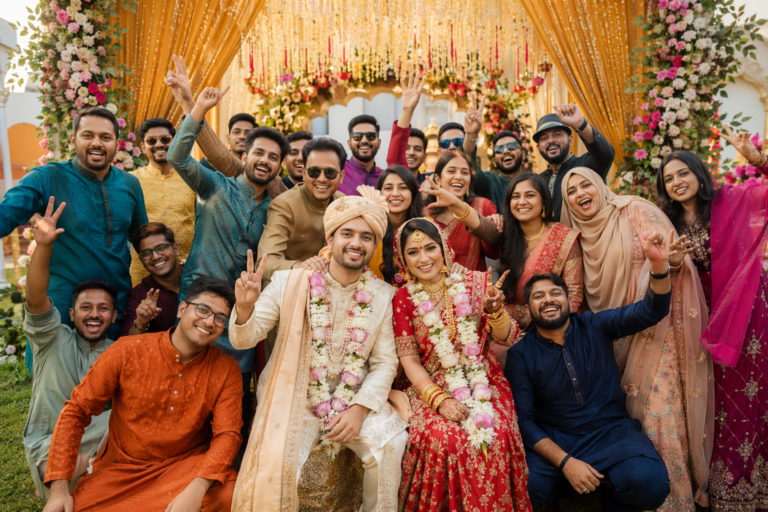
A Bengali wedding ceremony on the main day has some special wedding rituals that show welcome, acceptance, and everyone coming together to celebrate. One usual custom is mala badal. In mala badal, the bride and groom swap flower garlands. This shows they accept each other and are ready to start a life together.
One more big moment is Bor Boron. That’s when the bride’s mother greets the groom and his friends or family after they arrive. The bride’s family does things like aarti and throws flower petals. This is their way to show respect and make the groom feel at home. These wedding rituals set the tone for the wedding ceremony and continue both before and after the main wedding act.
-
Bor Jatri is where the groom comes to the wedding with a happy crowd and music.
-
Bor Boron is when the bride’s family gives a formal welcome to the groom.
-
Mala badal is when the couple puts flower garlands on each other in front of others.
What wedding customs you see might change by religion or where people live. You may hear about things like the sacred fire at some Bengali weddings. Still, most of the ceremony is about being welcoming, making a new family, and enjoying the big day together.
Special Roles for Family Members
On the wedding day, family members do a lot. They do not just stand on the side. They host, welcome people, get things ready, and watch all the key moments. The bride’s family is usually the one to host most of the Biye. The groom’s families then come as a formal group called the Bor Jatri.
When everyone arrives, the bride’s family does something called Bor Boron. It is a way to say hello and greet the groom and his family. After this, both families swap gifts and say cheers in front of everyone. These steps show the families have respect for each other and remind everyone of how important the wedding is.
After the main ceremony, the groom’s families are still busy. They help out when it is time for the reception and other things after the wedding. If you are in Australia and going to one of these weddings for the first time, you will notice how much the families are involved. The day is about the couple, but both families help the whole way through.
Exploring Post-Wedding Rituals
The celebrations do not stop once the wedding is finished. In Bangladesh, there are post-wedding rituals like bou bhaat that help the couple start their life together in their new home. These moments are softer, but they still mean a lot for everyone.
For the guests and their relatives, this is the time to see how the bride goes into her new home and how all the family keeps the happiness going. Some of the well-known wedding rituals at this stage are Bou Bhaat and Bashor Ghor. These mark the change, welcome everyone, and show the emotional moments when people say goodbye.
Bou Bhat: Welcoming the Bride
Bou Bhaat, or Bou Bhat, is one of the big wedding rituals in Bangladesh. This event is known as the first meal that the bride and groom share after their wedding. It also acts as the official welcome for the bride when she moves into the groom’s family home.
During this time, the focus goes from the big wedding to the start of life as a couple. The bride gets her first welcome from her new family. She has a good meal with them. She also starts to meet more people in her new family and spends time in her new home.
Many times, Bou Bhaat is also part of the big party that the groom’s family might host, which is sometimes called Walima. Because of that, Bou Bhaat can feel both close and big. People say it shows the bride is starting a new journey, and it lets everyone keep celebrating with family and friends.
https://www.wikihow.com/Celebrate-Bou-Bhaat
Bashor Ghor and Bidaai Farewells
Bashor Ghor is the name for the bride’s first night in her new home with her husband. This moment shows the start of their life as a married pair, and it is one of the most private parts of the whole wedding celebrations. After there have been many public events, this is a calm step into married life.
At the same time, there is bidaai. This is when the bride says goodbye to her family. In these traditions, the bride’s leaving is seen as full of feeling, with blessings and good wishes from her loved ones. This moment matters a lot because it marks both happiness and change.
So, if you want to know how the full wedding celebrations happen, things often start with pre-wedding fun, then move into the main ceremony, and end with welcome and farewell steps. Bashor Ghor and bidaai come near the finish of this time, giving an emotional close to everything public.
Unique Customs and Regional Variations
Not every Bangladeshi wedding is the same. Wedding traditions in Bangladesh can be different based on religion, what a family wants, and what people in that area usually do. You might see the same main events at every Bangladeshi wedding, but the smaller things often change from place to place.
So, it’s good to think of bangladeshi wedding customs more like a base or plan, not something where every step is set in stone. Some weddings show a lot of Islamic traditions, while other weddings use Hindu ways. Things also change if the wedding is in a city or in the countryside, because where people live can affect how they run the day, mix the events together, or make them bigger.
Muslim vs Hindu Bangladeshi Wedding Traditions
Yes, Bangladeshi wedding ceremonies can differ for a muslim wedding and a hindu wedding, even though both may share a broader Bengali festive style. The compiled information notes that some Bangladeshi weddings are Muslim, while others are Hindu or Christian, and customs vary by religion.
In Muslim settings, the Nikah and the Qazi are central to the marriage rite. In Hindu settings, the ceremony is led by a priest rather than a Qazi. Across both, families still gather for multi-day celebration, shared meals, formal welcomes, and public blessing of the couple.
|
Feature |
Muslim wedding |
Hindu wedding |
|---|---|---|
|
Main officiant |
Qazi |
Priest |
|
Core marriage focus |
Nikah and Islamic practice |
Priest-led religious ceremony |
|
Shared Bengali features |
Family gathering, festivities, reception |
Family gathering, festivities, reception |
|
Variation level |
Depends on family and region |
Depends on family and region |
So, the structure may feel similar, but the religious centre of the day changes.
Urban and Rural Differences in Customs
Urban traditions and rural customs shape how Bengali people celebrate weddings. Even when the main rituals stay the same, things such as big city parties and Dhaka’s busy venues stand out. In these cities, it is normal for weddings to have hundreds of guests, and the spots are always being used.
In the city, some families work with décor companies. They want a neat and special look for their day. Often, they also decide to have a joint event for the bride and groom. In the countryside, people keep things close to home and those who live nearby, with the same core meaning. The style might be simple, but it is full of meaning for bengali people.
-
City weddings may be bigger and more focused on show.
-
Some families combine bride and groom events into one joint event.
-
Home-based customs can feel more close even among large families.
These changes in city and country weddings affect the style and how big the parties are, but not what is important about these bengali people’s traditions.
Traditional Attire and Iconic Accessories
At a Bangladeshi wedding, the first thing many guests notice is the traditional attire. What people wear helps to show what event is taking place. For example, at Gaye Holud, you will often see folks in bright yellow. At the main wedding and reception, the style is more formal.
Accessories play a big part too. They add meaning and make everything look more joyful. Different families might follow different wedding traditions, but dress, jewellery, henna, and flowers all help set the festive mood. To really get a feel for the celebration, you need to look at both the clothes people wear and the special details they use at each event.
Bridal and Groom Outfits: Styles and Symbolism
At Bangladeshi weddings, what the bride and groom wear will often change at each event. For the Gaye Holud, the outfits are usually yellow. This matches the colour of the turmeric ceremony. On the main wedding day, what everyone wears becomes much more formal and special.
The material here doesn’t go into every piece of clothing, but you can see people care a lot about how they look. During Paka Dekha, the groom’s family might give the bride her wedding saree and some bridal accessories. This gift is not just about looks. It also plays a big role in how people connect with each other.
These days, families try to keep old customs. Some things, like scale or style, can change and get a more modern twist. People often use words like patta bastra or salwar kameez when talking about what to wear, but the main thing is easy to spot: clothing helps set apart each part of the wedding and shows what it means for everyone.
Jewellery, Henna, and Important Accessories
Accessories are important for the look of a Bangladeshi wedding. The information brings out things like flower garlands, gold jewelry, bridal accessories, mehndi gatherings, and what happens at the main ceremony. All of these come together to make every wedding celebration bright and special.
Henna has a big place in pre-wedding celebrations. During a Mehndi event, the bride can sit for hours while people put designs on her hands and feet. Family and friends sit with her. They play music, have snacks, and dance with the bride. That’s how body art turns into something nice everyone enjoys together.
-
Henna brings extra colour and sets a happy, calm feeling before the wedding.
-
In mala badal, flower garlands are exchanged to show both people accept one another.
-
Gold jewelry and other accessories are used for the look of the bride and as gifts too.
Modern wedding celebrations use all these pieces. That’s because it is easy to add them, even when the main ceremony looks and feels more new.
Festive Foods and Wedding Feasts
Food is a big part of any wedding feast. At weddings, you see it at pre-wedding meals, henna parties, the main party, and even after the big day. These special foods help people feel they belong. When you look at how much food there is, it tells you a lot—sometimes more than the decorations.
The wedding feast is important. It’s not just something extra. It is at the heart of the fun, how people are looked after, and what they remember. Even if the talks focus more on old meals and less on what’s on the menu, you still see that eating together is key at every step.
Popular Dishes and Sweets at Bangladeshi Weddings
The info gathered does not show a full menu. But it does make one thing clear: food is so important at Bangladeshi weddings. You will see a wedding feast more than once, from Aiburo Bhaat to the big reception and that first meal at Bou Bhaat.
Sweets also stand out. During gaye holud, people feed sweets to the bride and groom. This happens while they put turmeric paste on the happy couple and give blessings. This small moment turns food into a real part of the event, not just something you eat later.
-
Aiburo Bhaat is about a big meal before the wedding for the bride or groom.
-
Bou Bhaat is a meal that welcomes the bride to her new family.
-
Sweets get used a lot in blessing rituals.
Words like mishti doi or sweet yogurt go with party food, and you might see in Australia how closely party time and being good hosts go together.
Hospitality and Guest Etiquette
Hospitality is a big part of the Bangladeshi wedding. Guests do not just come to watch a ceremony. They are invited to enjoy meals, music, meeting people, and taking part in a public party. At a large wedding reception, the event can feel like a whole community coming together.
Good guest manners start when you know that the family may have set up more than one event. You might go to a party before the wedding, the main wedding, and then a wedding reception with the groom’s side. Each one has its own feel, but all are about making people feel welcome.
For Australians, the best thing to do is easy. Get there on time, follow what the hosts do, and be ready to eat, be in photos, and join in with the group. These weddings have a lot of people, so a friendly way, a bit of patience, and an open mind will help you fit in and have a good time at a Bangladeshi wedding.
A Beginner’s Guide: How to Experience Bangladeshi Wedding Traditions
If you get asked to your first Bangladeshi celebration, you do not need to know each ritual before you go. You only need to remember a few things, like when to get there, what to wear, and the family-led customs. These will help you enjoy the special day and show you care about the new couple.
The good thing is, many wedding traditions are simple once you know the order. From getting the wedding ceremony invitation to going to the reception, each part has its own place. The next steps will make it easy for you and help you know what to do.
What You’ll Need to Get Started (Attire, Gifts, Etiquette)
Before you go, think about three simple things: what you wear, what gift to take, and how to act as a guest. Bangladeshi weddings can have more than one event, and each one may feel a bit different. The gaye holud is bright and happy so it is good to wear something fun and colourful there. The main ceremony often needs a more neat or smart look.
It is good to know that many couples today keep old ways in their wedding, even if it looks new or modern. Big places, nice decoration, and having events together do not change the fact that family manners and being polite still matter.
-
Check if you will go to the gaye holud, the main ceremony, or the reception.
-
Put on nice clothes and get ready for colour, taking photos, and joining in with others.
-
Watch what the hosts do for things like saying hello, where to sit, and when to eat.
This easy plan will help you have a good first time there.
Step-by-Step Guide to Participating in a Bangladeshi Wedding
A bengali wedding tradition often happens in different steps. It will be easier for you to join in if you look at it as a series, not just one long party. It starts with small meets. These might be when families meet for the first time, share meals, have a bit of fun with henna, or get together for Gaye Holud.
The main ceremony is next. This is the big part. You will see the most important wedding rituals here, like wedding arrival walks, warm family welcomes, garland swaps, and words of good wishes out in the open. For a muslim wedding, this is when the Nikah takes place. That is the religious heart of it all.
After the main ceremony, the wedding fun goes on with more steps like a reception and Bou Bhaat. This is for after the wedding is official. So, it is easy if you think about it in three bits: meeting up before, the main ceremony itself, and finally, all the goodbye events and hellos after. When you know the right order for these events, it helps the wedding to make more sense for everyone.
Step 1: Understanding the Invitation and Dress Code
Start by looking at the wedding invitation. In Bangladesh, a wedding can have a few linked events. The invitation may show more than one date or event. This is so you know if you are being asked to a turmeric ceremony, the main ceremony, a reception, or maybe all of them.
How you dress should match the event. The fun events before the main ceremony are often brighter and more relaxed. The main ceremony is usually more formal. If you are not sure what to wear, going with traditional clothes or clean, festive outfits is a good idea.
Some new weddings can use hotels, lots of decor, and even personalised touches. But the old traditions are still there. This is why the invitation is important. It tells you where the event is, and which part of this wedding journey you will join.
Step 2: Joining the Gaye Holud and Pre-Wedding Events
If you get asked to a Gaye Holud, you can expect one of the most lively pre-wedding events. This turmeric ceremony stands out for being bright, full of people, and nice to look at. People come together around the bride or groom, say some kind words, put on turmeric paste, and then enjoy sweets, music, and a bit of dancing.
The meaning of Gaye Holud comes from both what the turmeric stands for and the happy energy around it. The turmeric paste is thought to clean the skin and help the bride or groom look good for the big day. At the same time, it gives family and friends a way to take part in getting the couple ready for marriage.
If you are from Australia, the best way to join is to just go with what the hosts do. Watch to see when it’s your turn, have a good time with the dancing and music, and get ready to sit with everyone in a relaxed group. There is not much formality in a Gaye Holud. It is about coming together to wish the couple well and to celebrate with them.
Step 3: Attending the Main Ceremony and Key Rituals
When you go to the main ceremony, you’ll see both formal parts and a lively mood. A Bengali wedding ceremony often has the groom arriving with a group, the families meeting, the main wedding rite, the exchange of flower garlands called mala badal, and some time where guests go on stage to wish the couple well.
The religious rituals done at the wedding can change based on the family’s background. In a Muslim wedding, the Nikah is the key part, and there is a Qazi to lead it. In other weddings, a priest handles the main ceremony. But, in both, you will find family being a big part and honour given to public blessings for the couple.
-
Watch for Bor Jatri, when the groom comes in a special way.
-
Notice Bor Boron, when the bride’s family welcomes the groom.
-
Look for mala badal, where the bride and groom swap flower garlands.
If you focus on these important moments, it will help you understand the main ceremony more easily.
Step 4: Enjoying the Reception and Post-Wedding Customs
After the wedding takes place, things usually move on to a big wedding reception. The groom’s family can host this part, and sometimes it’s called a Walima or linked with Bou Bhaat. At this event, guests come along to eat, say their good wishes to the couple, and get group photos.
These wedding rituals are important because they help the couple go from just being married to joining each other’s family for real. Bou Bhaat is the time when the bride is welcomed by her new family. Events like Bashor Ghor and the farewell keep this time deeply emotional. So, even when the main wedding is done, these celebrations still go on.
In modern times, some people have these celebrations in big halls with fancy decorations, but the reason behind these traditions stays the same. The wedding reception is not only a party. It is a way to show hospitality, welcome the couple into the family, and share happiness with everyone through bou bhaat and other wedding rituals.
Modern Changes in Bangladeshi Wedding Celebrations
Bangladeshi wedding celebrations are still based in tradition. Over time, how people celebrate these weddings can change. Some families now like to join events together. Others choose big venues. Many will spend a lot on décor and photography. But they all keep doing the same rituals that have been used for years.
These new trends do not remove the older customs. They just change how the wedding feels and looks. From sharing celebrations to decorating big reception halls, these new ideas show one thing. Bangladeshi weddings can hold on to tradition, even when the place or style is new and bigger.
How Contemporary Trends Influence Traditional Customs
Modern trends often change how things look instead of what they mean. In Bangladeshi wedding traditions, you still see Gaye Holud, the main marriage ceremony, and Bou Bhaat or Walima. But families might hold events together or make them look more grand than they did before.
You can see this in the way people plan weddings now. In the past, Gaye Holud could happen on separate days for the bride and the groom. Now, some well-off families like to have a joint event. They do this to bring everyone together and make the day bigger by sharing what they have. This move is modern, but it still holds to the old traditions.
You see the same thing in the way venues look, how photos are taken, and how the day is set up. Today, big parties can be planned in detail, right down to small touches. Still, the main rituals in bangladeshi wedding traditions are clear to see. So, modern bangladeshi weddings might change in style, but the heart of the culture is still strong.
gaye holud, bou bhaat, wedding traditions, bangladeshi wedding, bangladeshi wedding traditions, joint event
Influence of Global Cultures and Diaspora Communities
People in many parts of the world get to know bengali wedding customs now, thanks to global cultures and diaspora communities. There is more about this from places like Melbourne and the United States. Folks there now host, take photos, and share what happens at a bangladeshi wedding, even when it is not in the Bengal region.
The wide reach means style might shift a bit. Families living overseas often use local places for their events, change the timing a little, or do things in ways that fit them better. Still, they keep the main order of things: Holud, Biye, and the reception all take place. So, even if the look and place are a bit new, the basic parts of these traditions do not get lost.
This helps people in Australia. It means a bangladeshi wedding can still feel very real in the way it is done. The music is there, so is the food, the colours, and all those family moments that matter. Even when a wedding takes place a long way from home, like in Australia, these things help everyone feel that strong link to this culture packed with life.
Conclusion
To sum up, knowing about Bangladeshi wedding traditions really lets you see the deep meaning and strong sense of togetherness in the community. The bright and lively Gaye Holud and the important parts that family members play help show just how colourful and varied these weddings can be. If you are an Australian and you get to go to a Bangladeshi wedding, or you just want to know more, learning about these traditions can make your day much better and help you feel closer to everyone. When you get ready for such a happy time, try to look at what each wedding ritual means. If you want to get into it even more or need help, feel free to reach out for a hand on how to join in these amazing celebrations of Bangladeshi wedding traditions!
Frequently Asked Questions
What are the main wedding traditions followed in Bangladesh?
Bangladeshi wedding traditions often have a few main steps. These are Adan Pradan, Aiburo Bhaat, Gaye Holud, the big Biye or Nikah, and after the wedding, Bou Bhaat. These marriage rituals show how Bengali wedding customs always get family members to help at each stage, starting from meeting the two sides, right through to the bride joining her new family.
What is the significance of the Gaye Holud ceremony?
Gaye Holud is a happy turmeric ceremony that happens before the main ceremony. In this bengali wedding tradition, family and guests put turmeric paste on the couple. They also give sweets and give their blessings to the couple. Out of all the pre-wedding events, this one stands out. The bright yellow theme, music, dancing, and time spent together make it special. There is a real feeling of everyone getting ready for what is to come.
Are Bangladeshi wedding ceremonies different for Hindus and Muslims?
Yes. A muslim wedding in Bangladesh will often centre on the Nikah. This is led by a Qazi. A hindu wedding is run by a priest. Even with that, many wedding rituals and wedding traditions show bengali culture. You see this in family gatherings, big meals, and a few days of celebration.
How do modern Bangladeshi weddings incorporate traditional elements?
These days, many couples still follow the main bangladeshi wedding traditions, but the setting is now more modern. You will see things like joint Holud events, new venue styles, and big receptions. Even with these changes, the wedding ceremony, after-wedding rituals, and the big part that family members play are still at the heart of bangladeshi weddings. These key wedding traditions help make the day special for everyone.