Key Highlights
-
Afghan wedding traditions focus on family, bright colours, music, and some special rituals.
-
The night before the wedding day, there is henna night. This is a time that sets the mood and brings people together.
-
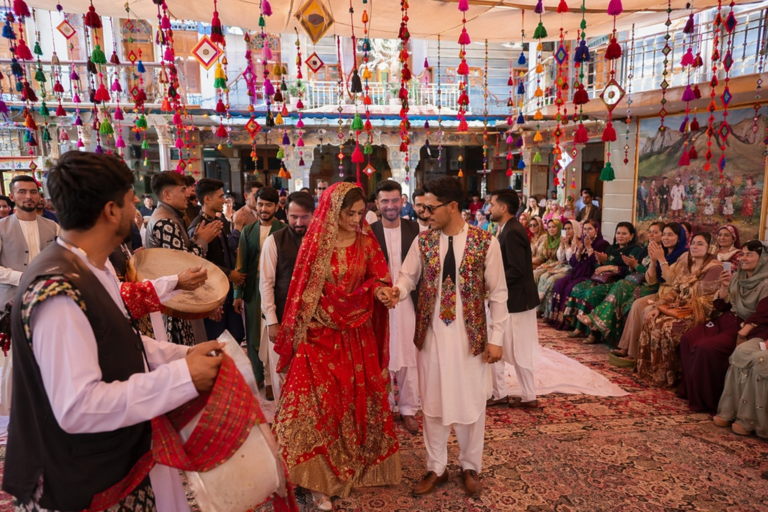
When the celebration starts, people see traditional Afghan dress. This helps give the event a strong feel of culture.
-
The reception gets fun fast, with Afghan dancing and people sharing joy. Everyone joins in.
-
Cake cutting is part of the wedding day. It is linked to Afghan custom as well.
-
Words like attan dance and green cloth belt come up in this overview, but the example is more about the feeling at an Afghan wedding than each and every ritual.
Introduction
An Afghan wedding shows a lot of feeling, meaning, and the love of family. You can see Afghan culture come to life in the wedding traditions, the clothes, the use of henna, and the way people all join in. There are many strong traditions and moments that mean a lot, and everyone takes part in the fun together. Even when details like the marriage contract are not talked about much, it is easy to see what is happening. An Afghan wedding is much more than just a party. These wedding traditions are about people coming together, sharing who they are, and starting a new part of life as a group. It’s very personal but also shared with all.
The Heart of Afghan Wedding Traditions
In an afghan wedding, you get to see how afghan tradition brings meaning to everything. In the example given, the day starts with quiet time to get ready. People wear traditional clothes and put henna on, then go to a special place by the water for the ceremony.
This flow is important. Old customs fit in well with a modern party. There are special moments, plenty of dancing, and the cake cutting even has an afghan style. It all adds up to one big day that everyone shares. The next parts talk more about the values, the people there, and the history that helps make the day what it is.
Faith, Family, and Hospitality at the Centre
One thing you see in these wedding traditions is how close the family members are. The bride gets ready with a lot of people around her. There is colour, noise, and plenty of movement. This brings warmth to the morning before the formal part starts. Even when things are quiet, they are not alone. People share those calm moments with their loved ones.
The religious ceremony is said to be simple, yet full of meaning. There are real feelings shown during the stops in the ceremony. No one tries to rush through it. While certain details are left out, you can tell there is respect, patience, and care for the new couple.
Hospitality is easy to notice, too. When the formal part is over, everyone feels welcome at the reception. The whole community joins in. The dance floor gets busy early, and everyone stays interested and involved. The feeling is warm and open. People do not feel far away from each other. There is a mix of support and good times. Because of that, these wedding traditions and celebrations are special, and people remember them for a long time.
Cultural Values Reflected in Marriage Customs
Afghan culture shines in the way people use symbols, wear clothes, and share moments with care. The bride’s traditional Afghan wedding attire is more than just a pretty outfit for the day. It shows the bride her own place, where she comes from, and the respect she has for her background, right from the start.
You can see wedding traditions touch on the start of a new life. Things like henna, leaving the house for the last time, and putting on a white dress later are about big changes. These are not just small things. They help guide people through the emotions of the day.
The information we get about the marriage contract may be brief. Even so, it still shows the meaning of support and staying true to each other. The couple are together, but also get noticed and celebrated by all the people. This shows marriage in Afghan culture is not just between two–it’s a big step that everyone sees and honours.
Historical Influences and Where They Came From
The example shows how old Afghan customs are still part of a modern event. At the wedding, people wear traditional Afghan attire, they put on henna, and there’s Afghan dancing. You can also see there is an outdoor place, a sand ceremony, and a mixed cultural reception.
This blend of tradition tells us that the past is still strong even when things change. Old Afghan customs don’t just fade away. They move with people and change a bit, but they are still there. Because of this, the wedding feels connected to its roots, even though it takes place in Budapest and includes more than one culture.
Modern things show up too. The way people dress has changed, the venue is fresh, and there is a mix of customs. But the Afghan side is always there through the clothes, the music, and the special moments. This blend of tradition helps it stay true to itself while letting in new places, people, and ways to celebrate.
Matchmaking and Engagement Rituals
The material given does not go into detail about the matchmaking stage. So, there is not much direct information about how the bride’s family or close family members take those first time formal steps toward marriage. This part is mostly not talked about here and stays in the background.
What is clear is that there is a strong focus on family members before the celebration. The preparation, special moments, and the way people show culture are already there even before the ceremony and reception happen. Keeping that in mind, the next sections look at the words used for proposal and engagement in Afghan tradition. But the information is still based on the few details that were given.
Family Roles in the Matchmaking Process
The material we have shows just part of what goes on at this stage. We can’t see everything about how family members handle early matchmaking. Still, it looks clear that afghan tradition keeps people, like the bride’s family and others, close to her during the important times, not apart from her while she gets ready.
You can pick up on this support in the morning part of the day. The bride is not alone. There’s colour everywhere, lots of movement, and some quieter times that really mean a lot. This helps you see that her family and others in their group make the day what it is. They set the tone and help shape what happens from early on.
Here’s what you can see about these family patterns:
-
The group of women is part of the day. You see this when the bride gets ready and in those moments where she has henna with them.
-
Family members help make the mood before everything kicks off.
-
The afghan tradition is kept alive by the people around the couple, not just by the couple themselves.
The Traditional Afghan Proposal
There is no clear talk about a proposal in the source. So, it would not be right to use this part as a full look at old Afghan customs. What we have starts much later, with people getting ready for the wedding, not with the choice to get married in the first place.
But still, you can feel how important the earlier steps might be. People stop to let things sink in, care about each small ritual, and show many strong signs from their culture. This tells us that the proposal and the engagement party would also be taken seriously. These would not just be small or quick moments.
The idea of a special place stands out too. In the example, the place changes the mood, either at home as people get ready, or by the water for the big day. This shows that Afghan celebrations often link feeling to setting—even if we do not see much about the proposal custom in the notes.
Shirini Khori – Sharing Sweets at Engagement
The source you’ve got doesn’t talk straight about shirini khori or the eating of sweets at an engagement party. So, this summary can’t tell a clear, step-by-step story of how the ritual goes, unless it leaves the info you’ve given.
What is clear is that afghan tradition, as shown through weddings, values everyone coming together. When people cut cake and stand with the couple, you see that shared feeling. Food isn’t just something on the side. It’s a real part of what you feel and remember.
With what’s provided, shirini khori can only be touched on in a broad way:
-
It is spoken about as a tradition in afghan culture that has to do with the engagement party.
-
The example makes clear that eating sweets with others suits the feel of the celebration.
-
The way everyone joins in when there’s food and happiness is an important thing for these moments.
Bride Price (Mehriah) and Its Significance
The information here does not go into detail about the bride price, or Mehriah. It also does not say how it is written down in the marriage contract at an afghan wedding. Because of this, the next part can only talk about its place in a general way and with care.
But what the example shows is that marriage is seen as a big move into a new role. The things people do with clothes, the act of leaving, and the support from the community all show that afghan wedding traditions mean a lot. This bigger picture helps people see why things like the bride price are often thought to be important.
Cultural Importance and Symbolism
Because the source material is limited, it does not define the bride price directly or explain its symbolism in full. Still, the wedding example shows that old traditions are treated as meaningful, with family members closely involved in key moments.
That matters because formal customs usually gain significance from the same setting: shared respect, visible support, and emotional care. In this overview, the symbolism around marriage is clearer than the legal detail. The event frames marriage as a serious social and personal step.
Here is a text table based only on the information supplied and the limits of that information:
|
Aspect |
What the provided material shows |
|---|---|
|
bride price |
Not described directly in the example |
|
symbolism |
Marriage is treated as important and ceremonial |
|
old traditions |
Henna, traditional dress, and Afghan cake cutting are visible |
|
family members |
Their presence shapes preparation and the emotional tone |
|
overall meaning |
Customs appear to mark transition, identity, and support |
How the Bride Price Is Agreed and Celebrated
The source material doesn’t say how the bride’s family and the groom’s side come to an agreement about bride price. So, there isn’t much detail about talks or any formal step for that part. This part of afghan marriage isn’t included in the example here.
But the celebration for marriage is easy to see. The day starts with close family getting ready, then moves to the main ceremony, and later on to special events at the reception. At these events, the culture and what it means to the people really stands out. This makes it clear that the more formal parts, if they do happen, are just one part of a bigger group of public moments where everyone feels meaning.
The vibe at the wedding feast also shows this idea. The guests do not just sit or stand by. They come out to dance, watch, and join in all the joy with the couple. Even though details about bride price are missing, the example shows the way afghan marriage traditions are celebrated. It is about people coming together and making the day full of life.
Modern Perspectives on Bride Price in Australia
For people in Australia who see this as part of the afghan diaspora, the main message is about how people adapt. The wedding in the example does not happen in Afghanistan. But you can still see signs of culture, like the way people dress, use henna, dance, and cut the cake in a certain way.
This shows that a blend of tradition is possible, even if things like the marriage contract or the bride price do not get talked about up front. Families can keep the things that mean the most to them while getting used to a new way of living, different rules, and everyday life in another country.
How everyone feels stays the same. Getting married still marks a new life. The wedding still brings people together to support the couple and share the moment. So, even if the material does not clearly say what people now think about the bride price in Australia, it does show that Afghan customs can move to a new place, change, and still keep their special feeling.
Pre-Wedding Rituals and Customs
The clearest pre-wedding steps in the material are the close moments that happen before the ceremony starts. Henna stands out as one of the old customs. It helps set the mood early and gives the day a cultural and thoughtful start.
You can see there is a shared sense of getting ready. The bride is with a group of women, close by lots of colour and movement, as she puts on her traditional dress. These pre-wedding steps are not just things to do. They get the couple and everyone around them ready for the big feelings and excitement that will come.
Henna Night (Khina Night) Traditions
Henna night, which is also called khina night, is one of the most clear wedding rituals shown in the stories. You see it happen when the bride gets ready. This time helps set the mood before all the big, public wedding moments start. Even if it’s just a quick look, you can feel that it is personal and not easy to forget.
Where it takes place matters a lot. The bride is with a group of women. There are colours, people moving, and times when things get quiet. You can tell the women are there to support her and share the moment. All that makes henna night very special. It’s not only about looks or design. It shines a light on the bride and puts her at the centre, so everyone sees her.
In this way, she becomes the queen of the night. This part of the ritual gets her ready for what’s coming next and also ties it to Afghan culture. For a lot of people reading, this is the one ritual that stands out most in the stories.
Khimcha: Gift-Giving Between Families
The source material does not explain what khimcha is. It does not talk about a decorative shawl or formal gift-giving between families. Because of this, we cannot give a clear idea of this custom without using facts that are not in the example.
What is clear is that how things look is very important. The bride wears her traditional Afghan dress. She later has a white gown. The care that goes into her look shows best clothes are a big deal. They help people show respect for the day. They let the culture be seen at the wedding.
So, while khimcha is not explained, the example helps us see more about giving gifts and how things are done:
-
Clothing and how things look are not just extra. They are meaningful.
-
When families work together to get ready, it shows everyone is part of the event.
-
A decorative shawl would fit right into a day that is about colour, looks, and what these things mean.
Preparing the Couple and the Community
Getting ready in this example is not just about being practical. It is also about how you feel. Before the big day moves from the ceremony to the reception, there are quiet moments. People get dressed with care. There are times before leaving the house that help everyone see the change about to happen.
The whole thing does not feel private in a small way. There are family members there, and you can feel how they help carry the new couple into their big day. This support comes from how the day rolls out, starting from the morning rituals right up to the public parts of the celebration later.
When you get to the reception, the whole community spirit is clear. The dance floor is full early on and it stays busy. This shows that getting prepared is not just for the new couple to look ready. It is also for everyone else to be happy and ready to watch, share, and enjoy the big day together.
Wedding Day Ceremonies and Key Events
On the wedding day, you can see the shift as everyone moves from getting ready in private to joining together in the ceremony and then enjoying the full celebration. The outdoor spot by the water gives a peaceful start to the day. During the ceremony, people stop for emotional moments, and this helps make everything feel real and honest.
The source does not talk much about the religious ceremony, the nikah ceremony, or the green cloth belt being used. But, these names still point out the important things you often see at Afghan weddings. Next, the main focus is on what the example shows and what is mentioned only a little bit.
The Green Belt Tradition and Blessings
The material talks about the green cloth belt, but it does not say much about what happens with it in the ceremony. It also does not say if blessings from islamic clergy happen at that time. So, we cannot say for sure what the belt does without more facts.
But, the example makes it clear that these acts mean a lot. The event takes its time, with long, emotional pauses. People do things with care. They are not rushing. This shows that blessings and things like the green cloth belt mean something on this day.
The ceremony also mentions a decorative shawl as well. Both the green cloth belt and the shawl are important because they show big moments. Things like clothes and henna show who you are. In the same way, a special belt or shawl might show love, support, or change. While the text does not give all details, it makes this idea clear.
Nikah – The Religious Marriage Contract
The source does not tell us much about the nikah ceremony. There is not much straight-up detail about how the marriage contract is said out loud, signed, or witnessed. It also does not call out islamic clergy in the scene where the ceremony happens.
Still, the way the day goes shows that there is a real step taken for the married couple. This is at the heart of everything. People see the ceremony as something serious. It is plain but never feels empty. The quiet and emotional moments show just how big a deal this is for everyone there.
For people in Australia who are looking at this, the main thing to know is this: the nikah ceremony is said to be a key part of Afghan weddings. The example given mostly brings out the feeling of it. Respect, care, and having all the people around help everyone see when the couple start their life as married together.
Rukhsati and Ahesta Boro – Farewells and Send-Offs
One of the clearest emotional moments in the source is the time just before leaving the house. The text does not go into detail about rukhsati and ahesta boro, but you can see these moments are really important in Afghan wedding customs, especially when moving to a new home.
These goodbyes matter because they help people give meaning to what is happening. Leaving one place and going to your new home is not just travel. This is a moment full of feeling, and close family members are there. They know what it means for the bride and her family.
From the example, these linked ideas are easy to see:
-
Rukhsati is about saying goodbye and leaving the family home.
-
Ahesta boro is a soft and emotional send-off.
-
The source backs up how important these send-offs are by shining a light on the bride as she gets ready to leave the house with her family members nearby for this big change.
Festivities, Reception, and Celebration
When the formal ceremony is over, the next part of the wedding starts to pick up fast. The dance floor fills up early and stays busy the whole time. This shows that music and moving around are right at the heart of the day.
This time at the wedding is open, friendly, and lively. Afghan dancing mixes in with Hungarian styles, but it does not feel odd. The wedding cake is made part of an Afghan tradition—it is not just a new extra on its own. The next parts will look at the sound, food, and setting that help shape this lively time of the wedding.
Music, Dance (Attan), and Joyful Gatherings
If you want to get the feel for an Afghan wedding, start with the dance floor. At the party in the example, people get up to dance early and keep going. This tells you that dance is not just something extra. It is a big way guests show their happiness for the couple.
Afghan dancing is talked about. This helps you see the cultural parts of the celebration. The text does not explain each attan dance move, but the word fits in here. The attan dance is often known as the national dance of Afghanistan, and you can see the strong energy when people celebrate together.
Traditional music also helps set the mood. At the reception, things do not start slow—they go up right away. This sudden energy from the music, the beats, and everyone moving together can take an Afghan wedding from a heartfelt ceremony straight into a fun, shared party.
Culinary Highlights and Signature Afghan Dishes
The material here gives just a quick look at food, so you won’t find a list of main dishes at the wedding feast. Because of that, this summary is not able to show the full Afghan menu unless you add more outside details. But you can see that food is an important part of the reception.
The best example is the wedding cake. It’s not thrown in like a random Western thing. Instead, cake cutting is a part of Afghan tradition. It happens while all the guests are there, watching and enjoying the moment together. This makes it just as much about Afghan culture as it is about celebrating.
From what’s written, here’s what you can be sure about:
-
The wedding cake is clearly a part of the Afghan wedding reception here.
-
Cake cutting goes with Afghan tradition, it’s not kept apart from it.
-
The wedding feast is all about being together, with everyone joining in for this event.
Decoration, Venues, and Atmosphere
The venue in this example is a big part of the wedding day. The ceremony happens outside at Öbölház by the water. This makes the event feel calm and steady. It is simple, but not empty.
There is not a big list of decoration. Still, you can see the look of the day. The bride is in her traditional dress with gentle colour around her. She later changes into a white dress. These things all help to shape the day. The style also comes from what people do, where they move, and the setting, not only from things you see.
A special place like this sets the right emotional tone. The outdoor ceremony lets people stop, think, and share quiet moments. Later, the reception has a dance floor that fills up fast and lifts the energy. Both spaces show how the feeling of a wedding day can change as time goes on. But the heart of the celebration does not get lost.
Regional Variations Within Afghanistan
The source material does not mention regional differences across Afghanistan. So, it cannot help with a province-by-province guide. That means any big claims about local old afghan customs are not backed up by this information.
What is clear, though, is that afghan culture can be seen across many settings. You can spot it through traditional afghan attire, the use of henna, dancing, and special moments. While this overview cannot go into detail about differences in each region, it does show that their cultural identity is easy to notice at a wedding, even if it is held far from Afghanistan.
Unique Traditions from Different Provinces
There is no clear information in the material about the different provinces, so this part can’t really compare old traditions from one area to another. The material does not split Afghan weddings up by different regions.
Still, the example gives us a good look at old traditions and how people move from place to place. It shows there can be a blend of tradition that still feels strong even in a mix of cultures outside Afghanistan. This means that customs might change a bit depending on where they are, but they still keep those key emotional and cultural parts.
From what’s given, we can say these things for sure:
-
The source does not talk about different provinces or customs from specific regions.
-
Old traditions are shown more through family things than by where people come from.
-
A blend of tradition stands out when Afghan ways get mixed with another culture and still stay strong.
Attire, Cuisine, and Local Wedding Practices
Traditional afghan attire is one of the biggest parts of afghan tradition. At the start of the day, the bride wears this colourful Afghan dress, which is full of movement. Later, she changes into a white gown. That change really shows how what you wear can show both where you come from and what kind of celebration it is.
When it comes to food, there is not much detail. The source tells us that cake cutting is part of the afghan tradition, but it does not go into a full wedding feast or link the food to any special area or tradition. Because of this, what we know about the food is small but still important.
With local wedding practices, the clearest moments are things like getting ready, moments before the bride leaves home, dancing, and families coming together to celebrate. These details do not explain what makes one place different from another. Still, they do show how different customs give the wedding its feeling, even if they are not explained in full.
Conclusion
To sum up, getting to know Afghan wedding traditions lets you see a lot about a culture full of faith, family, and care for others. Every part of an Afghan wedding, from first meetings to the big celebrations, comes with history and meaning. If you go to an Afghan wedding or take part as an Australian, it helps to follow the customs and see the values shared at these events. This will make your time better and bring you closer to everyone there. Keep in mind, weddings are not only for the couple. They bring together love, family background, and unity for all involved. If you want to know more about afghan wedding traditions, or need some help, feel free to ask for a free consultation.
Frequently Asked Questions
What should Australians know before attending an Afghan wedding?
If you go to an Afghan wedding, you will see some special rituals and a big role for family members. Close family members help make the main moments happen. There will be lots of feelings in the air, and music too, when the party starts. People join together for a wedding feast and everyone is welcome to be part of the big celebration.
How have modern trends influenced traditional Afghan weddings?
The example here shows that afghan culture is changing to fit new places, not just going away. In the afghan diaspora, there is a blend of tradition. People still have old traditions like henna and Afghan dancing. These are now mixed with modern venues and wedding attire. This mix feels flexible, but it is still easy to see the afghan culture and what it means for people.