

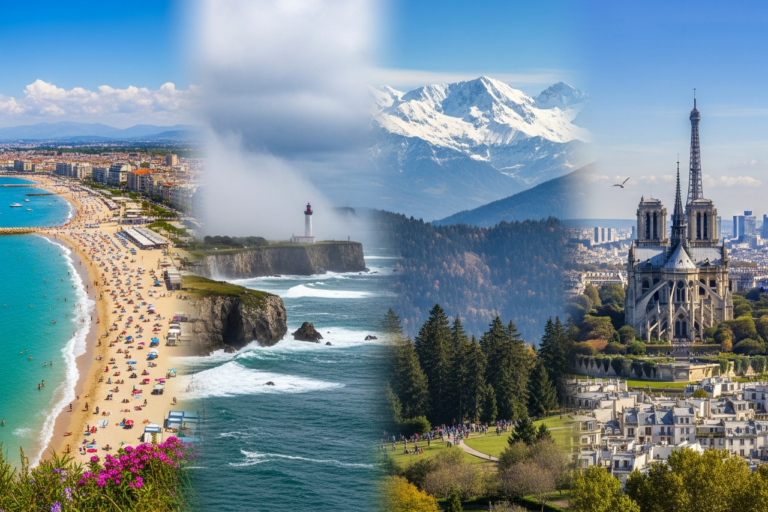
Key Highlights
-
Metropolitan France has a mild climate, but the weather can be very different depending on the season and where you are.
-
In the west part of France, there is an oceanic climate. Winters are not too cold, but they are damp and have a lot of precipitation.
-
In the south, you will get a Mediterranean climate where summers are hot and winters are mild and dry.
-
If you are in eastern France, you will find a continental climate. Summers are warm and there may be thunderstorms, while winters are cold.
-
High temperatures in the summer, even in the south, do not often go over 35 degrees Celsius (95°F).
-
Always look up the weather forecasts before you go on your trip, so you know what to pack for all types of weather conditions.
Introduction
If you are planning to go to France, it helps to know about the weather and climate. France is a big country in western Europe. It has many types of weather. People often say the climate is mild, but you will see a lot of changes in different parts of France and at different times of the year. This guide will show you what you can expect from the weather in France. The tips here can help you pack the right clothes and plan your trip in the best way, wherever or whenever you go in France.
Understanding France’s Climate and Weather Differences
When you talk about conditions in France, it helps to know the difference between weather and climate. Many people use these words to mean the same thing, but they are not the same. To really get the feel of France, you must know this difference.
You can see big temperature differences and changes in precipitation in different parts of France. Some coasts get a lot of rain. The south gets many sunny days. The climate in each area is what shapes the weather you get every day. Here, we will look at what makes weather and climate different. Then, we will go over the main climate zones in France.
Weather vs. Climate: What’s the Difference in France?
So, what makes weather and climate different in France? When you think about “weather,” it’s about what’s going on in the air right now or coming up soon. The weather is the changes you see each day, like rain, sun, wind, or humidity. These are the things you check on your phone before you leave the house. If it’s sunny in Paris today, that is the weather.
But “climate” is not the same. Climate is about the weather patterns over a long time in one place. It is like looking at the average weather after many years. For example, southern France is known for its hot and dry summers. This is the climate of that area.
So, the climate is what you plan for, and weather is what you face every day. The climate can tell you to take light clothes for your summer visit in Marseille, but you will still need to look at the day’s weather forecast to see if you should also bring an umbrella.
Overview of France’s Main Climate Zones
Metropolitan France has three main climate zones, and each gives you a different experience. First, there is the oceanic climate in the west. This part includes the Atlantic seaboard. Here, you will see that winters are mild and damp. The days often bring precipitation in all seasons. The changes in temperature between one season and the next are not big.
In the east of France, near Germany and Switzerland, you will find a continental climate. This place gets warmer summers, along with thunderstorms sometimes. Winters in this area get cold. The temperature can drop below freezing, and the mountains see snow.
If you go south, the Mediterranean climate is what you get. Here, summers are hot and dry, with high temperatures that many people like for a beach day. In winter, it does not get too cold and there is not much rain. But during autumn, heavy rain can come with thunderstorms. Sometimes, this heavy rain can cause flooding.
Regional Weather Patterns Across France
France is pretty big, and it has many different places when it comes to weather. You can see different weather across western Europe, and that is true in France too. The climate zones here create a mix of weather from the coast to the inland mountains. You will find big temperature differences and lots of changes in rainfall as you move from north to south.
These things make it clear that what you feel in Paris may not be the same as in Marseille, even if it’s the same day. Let’s look at some main areas in France so you can know what to expect when you travel there.
Comparing Paris, the Mediterranean, and Atlantic Regions
The weather you’ll encounter can vary dramatically between France’s major cities. Paris, located inland, has a climate that is a mix of oceanic and continental influences. This means you can expect moderately warm summers and cool, damp winters, with rainfall possible any time of year.
Cities on the Atlantic coast, like Nantes, experience a true oceanic climate. Winters are mild but wet, and summers are pleasant but not overly hot. In contrast, Marseille on the Mediterranean coast enjoys hot, dry summers and mild, drier winters, making it a popular destination for sun-seekers. The autumn season is when the Mediterranean region sees its heaviest rainfall.
To illustrate, here’s a general comparison of weather characteristics in these cities:
|
City |
Region |
Typical Summer |
Typical Winter |
Rainfall |
|---|---|---|---|---|
|
Paris |
Inland |
Warm, some rain |
Cool and damp |
Moderate year-round |
|
Nantes |
Atlantic |
Pleasant, mild |
Mild and wet |
Frequent year-round |
|
Marseille |
Mediterranean |
Hot and dry |
Mild and dry |
Heaviest in autumn |
Mountain and Inland Climate Characteristics
When you go farther from the coasts, you see that France’s inland and mountain regions have their own types of weather. Cities like Lyon, Dijon, and Poitiers are not close to the sea. This means the temperatures and seasons here stand out more. In the summer, these places often get warm days. Severe storms and thunderstorms can also happen at this time. The winters are colder than what you feel by the coast.
The mountains, like the Alps and Pyrenees, have what people call a mountain climate. When you go up higher in the mountains, it gets much colder. Winters can be cold and full of snow. This is good news if you like winter sports. But, you should know that the weather can change fast up there. It’s always smart to check for local alerts or weather warnings before you plan a trip or go on a hike.
The continental part of France means the range of temperatures changes a lot. A summer day in Lyon can be very hot. Then in winter, it can go below 0°C (32°F). The change between hot and cold is bigger here than in places near the Atlantic coast.
Conclusion
To sum it up, it’s good to know about the weather in France before you travel. This helps you plan your trip and enjoy it more. The summers are bright and lively in the south near the Mediterranean. The Alps get a lot of snow during winter. Every area has the own special weather and different seasons. If you are walking around the old streets in Paris or relaxing at the sunny beaches in Nice, it helps to know what weather you can expect. This way, you can pack the right things and get the best out of your trip. When you get ready for your visit, think about these tips to have a great time in France. If you want to know more about the weather in France or Paris, you can always ask for more help.
Frequently Asked Questions
How does the weather in Paris differ from other major cities in France?
The weather in Paris is usually softer than in Lyon. But Paris is not as sunny or warm as Marseille. Paris has a bit more clear seasons than Nantes, which is on the Atlantic coast. Also, Paris gets less rain all year than Nantes. Each city shows the kind of weather that is common in its area, like ocean weather, Mediterranean, or what you find far from the sea.
Keywords: paris, precipitation, nantes, lyon, marseille
What should travelers expect for summer weather in France?
From June to September, the weather in France is warm or even hot. In the south, you will see high temperatures and a lot of sun. Places with an oceanic climate are not as hot, but still nice. This is a good time to go to France, but make sure you take light clothes and sunscreen.
How often does it rain in France throughout the year?
Rainfall in France is not the same in every area. The western and ocean sides get rain a lot, but it is often light and happens all through the year. The south part near the Mediterranean is the driest, and it gets most of its rainfall in autumn. If you want to know more about local weather, it is smart to look at precipitation forecasts on AccuWeather before you go on your trip.



