

Key Highlights
-
Australia’s climate is very different from place to place. There are tropical parts up in the north, and the south is more cool and mild.
-
There is a wet season and a dry season found in the north. In other areas, you get summer months and winter months.
-
During the summer months, you can expect high temperatures and lots of sunny days. Then, in the winter months, the weather will get cooler.
-
The weather conditions change a lot based on where you are. If you are on the east coast, it will not be the same as the west.
-
The seasons here are not the same as in the northern hemisphere. Summer is from December to February.
-
Australia’s climate has desert areas, and you can even see snowy mountains, so there is a wide range of weather experiences.
Introduction
Are you planning a trip to Australia? The weather is one of the first things you need to think about. Australia is a huge place and it sits in the southern hemisphere. You will see many kinds of weather there. The east coast has sunny beaches. In the north, it is humid and tropical. The outback is dry and hot. The kind of weather you get will depend on where you go and when you visit. It is good to know the climate in the different parts of Australia. This will help you plan your adventure the right way.
Australia’s Climate Overview
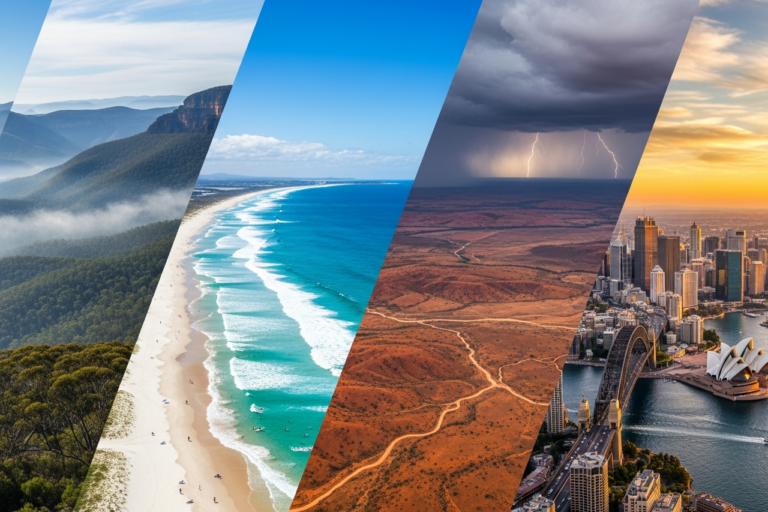
Australia is often called “the sunburnt country” because it gets a lot of sun and has some of the driest land where people live. It is known for high temperatures and sunshine. The land is so big that the weather conditions are not the same everywhere. The average temperature can change a lot in different parts of Australia.
You will see many kinds of weather in the country. Some parts of Australia have high temperatures and are dry. Others have cooler weather with four distinct seasons. Some regions also have a tropical climate with wet and dry times of the year. This mix of climates is a big part of what makes Australia’s weather special.
Key Climate Zones Across the Country
Australia has more than one main climate zone, and that is why the country gets so many kinds of weather. In the far north, you can see a tropical climate. There is a wet season with lots of rain and high humidity. Then, there is a dry season that has clear skies and nice warmth. This part of the country covers Darwin and Tropical North Queensland.
When you move in toward the center, you find many desert areas. These desert places have high temperatures during the day, but they can get cold at night. The rain in this area is minimal for most of the year. The arid or dry lands are a big part of the whole continent.
On the other hand, the south and east near the coast have a temperate zone with more distinct seasons. Here you get cities like Sydney and Melbourne. In these parts, people get warm summers and winters that are mild or cool. Because of all these different climate zones, you might see a wet season storm in the tropical north, feel desert heat, and later enjoy a cool coastal breeze—all on one trip.
Year-Round Weather Patterns
All year, the weather conditions in Australia are shaped by big climate drivers. High-pressure systems often stay over the inland parts of the country. This makes the area have long dry weather and minimal rainfall. There are also many sunny days, especially in the middle and west of Australia.
When the summer months start, the north of Australia moves into its wet season. Monsoonal troughs come in and bring heavy rainfall and storms to the area. At the same time, southern Australia gets to have sunny days, with dry and warm weather during summer months. The wet season and dry season change as the year goes by.
In winter, cold fronts move over the south, bringing cooler temperatures and some rain. The maximum temperature can drop a lot, with the southeast part feeling it the most. Sometimes, snow will fall in the alpine areas of New South Wales and Victoria. In the north, the dry season means mild days and lots of sun.
Comparing Seasons in Australia and the United States
Because Australia is in the Southern Hemisphere, its seasons are the direct opposite of those in the Northern Hemisphere, like the United States. When it’s summer in New York, it’s winter in Sydney. This is a crucial detail to remember when planning your travel for a specific time of year.
The summer months in Australia are December, January, and February, which correspond to the winter months in the US. Conversely, Australia’s winter months of June, July, and August are when the US experiences its summer heat.
This reversal applies to all four seasons. Understanding this difference is key to packing correctly and planning activities that suit the weather you’ll encounter.
|
Australian Season |
Australian Months |
US Season |
|---|---|---|
|
Summer |
December–February |
Winter |
|
Autumn |
March–May |
Spring |
|
Winter |
June–August |
Summer |
|
Spring |
September–November |
Autumn |
Understanding Australia’s Four Seasons
While the top parts of Australia have wet and dry times, the rest of the country gets four distinct seasons. These are summer, autumn, winter, and spring. You will notice these seasons most in the south and east parts of Australia. They shape the climate and what people do at that time of year in many popular spots.
Each time of year gives people something different. Summer is hot and many have holidays. Autumn feels mild, and the leaves turn nice colors. Winter is cooler, and snow falls in the mountains. When it is spring, you will see wildflowers come up and feel the air get warmer. Now we will talk about what you can expect during each of these seasons.
Summer (December–February) Highlights
Summer in Australia is known for long, sunny days and high temperatures. During the summer months from December to February, many parts of Australia get hot. This is a good time for you and others to go to the beach or have fun outside. But these months can also bring strong heatwaves, especially in the interior and southern australia.
In the tropical north, the summer months match the wet season. The weather there is hot and there is high humidity. You can expect a lot of heavy rainfall, too. The southern parts, like Perth and Adelaide, get the dry season. There is little rain, and most days are dry. The east coast will have warm nights and the air can feel humid and subtropical.
Here’s what you can expect in the summer:
-
High Temperatures: You can see daytime temperatures often go up over 30°C (86°F) in many areas.
-
Varying Humidity: Places in southern australia are usually dry, but the northern and east coast have high humidity.
Autumn (March–May) Typical Weather
As summer ends, autumn brings in nice, mild weather to much of Australia. From March to May, you will notice cooler temperatures and less humidity. This time of year is great for going to different places around the country. The days are usually sunny and feel good, but evenings start to feel cool and crisp.
In southern Australia, autumn is really pretty. In places like Victoria’s High Country and Tasmania, the leaves turn bright red and gold. Rain may go up a little bit compared to summer, but this does not usually cause any big problems.
The average temperature is nice for hiking, wine tasting, and seeing cities. You do not get the strong heat from summer. In recent years, May has been very warm in southeastern Australia, with record high temperatures in Tasmania and Sydney.
Winter (June–August) Conditions
Winter in Australia lasts from June to August. During this time, you see the dry season and lots of sunny days in the north. These places have mild weather, and it’s not too cold. In the south, things are different. You get cooler and wetter weather. There are many days and nights with low temperatures. At night, minimum temperatures go into single digits, making it feel cold.
But in most cities, don’t expect a really cold winter. The season is pretty mild in Sydney and Brisbane. If you go to the alpine areas of New South Wales or Victoria, the Snowy Mountains are today white with snow. People all over enjoy skiing and snowboarding there.
Tasmania and parts of Victoria often deal with cooler nights and crisp days. It can get cold. For example, in Cooma, New South Wales, the temperature dropped to -4.5°C on the very first day of winter. That shows just how low temperatures can get in some parts of Australia.
Spring (September–November) Features
Spring in Australia happens from September to November. During this time, the weather gets warmer, and the land is full of new life. The country gets over winter, the days get nice and sunny, and it’s a great time to travel. The air is not too hot and not too cold.
One of the good things about spring is seeing wildflowers bloom. In Western Australia, you can find big fields filled with color from these flowers. Across the country, sunny days are common, and they are perfect for walking in national parks or along the coast. Sometimes it will rain, but this often means you get bright, clear skies after.
A lot of people say that these months are the best time to visit Australia. The weather during spring is good for many activities before the hotter summer days come in. Spring is one of the four distinct seasons you can find in many parts of the country. It brings a nice balance of warm air and comfort, so you can enjoy your time outside.
Regional Weather Differences
Australia is a big country, and the weather can change a lot from one place to the next. For example, the climate in western australia is very different from the east coast. Also, northern australia has weather that is not like the other areas. It is important to know about these changes when you make travel plans.
If you want to see the wine areas in south australia or take a trip to queensland’s rainforests, the weather will be key for how you plan your days. The parts below will tell you more about weather conditions in each main region of australia. You will get an idea of what to expect, from the east coast to the west, and from the north down to the south.
Eastern Australia – New South Wales & Queensland
Eastern Australia, which includes new south wales and queensland, has a lot of different weather types. The coast has a climate that is between temperate and subtropical. The wind and rain here are shaped a lot by the Pacific Ocean and the great dividing range.
In new south wales, Sydney gets warm summers with high humidity. The winters are mild and a bit cooler. If you go farther north, the gold coast and Brisbane also get a subtropical climate. Summers are hot and have heavy rainfall. Winters are dry and sunny. This means that this part of australia is good to visit in any season. But, be ready for big storms and rain in summer.
The great dividing range runs close to the coast. It creates many smaller weather zones. The area near the ocean gets more rain, and west of the mountains it is much drier. The great dividing range has a big impact on what the weather will be like in this part of australia.
Southern Australia – Victoria & South Australia
Southern Australia covers places like Victoria and South Australia. This part of Australia has a temperate climate with distinct seasons. You will find warm or hot and dry summers. Winters are cool and mild. The weather here is much like what you get in the Mediterranean. It is also great for growing wine.
Victoria, with Melbourne, has very changeable weather. It is common to get “four seasons in one day.” Summers be warm. But winters get cool and sometimes damp. South Australia is much the same. Adelaide, in South Australia, has hot and dry summers. Winters there are mild and get some rain.
Inland parts of South Australia be much hotter and drier than places near the coast. The Flinders Ranges is one area like that. Most of the rain for this part of Australia comes in winter months. The rain moves in from the west. Because of this, landscapes turn green in winter. That green goes golden brown in dry summers.
Northern Australia – Northern Territory & Top End
Northern Australia, which includes the Northern Territory and the “Top End,” has a different weather system than most of the country. The area is known for having two main times of year: the wet season and the dry season. This place is warm and has a true tropical climate.
The wet season goes from about November to April. In this time, you will get high humidity, lots of rain, and sometimes strong tropical storms. The air is hot, and everything looks green. During the dry season, which is from May to October, you get sunny days, cooler nights, and very little rain. This is when most people like to visit northern Australia.
Cities in the Northern Territory, like Darwin, feel these big changes in weather every year. If you are there during the dry season, you get nice weather for travel. If you come in the wet season, you will see beautiful lightning, full rivers, and big waterfalls thanks to all the rain.
Western Australia – Perth and Surrounds
Western Australia is very large, and the weather changes a lot from north to south. Still, the southwest, where most people live and the city of Perth is found, has a Mediterranean climate. In this area, summer is hot and dry. Winter is mild and wet.
Perth is one of the sunniest big cities in Australia. There is minimal rainfall in the summer months. The maximum temperature can get pretty high, but the air is dry. An afternoon sea breeze called the “Fremantle Doctor” helps cool things down when the days get too hot.
Winter months are cooler and bring most of the rain for the year. This kind of weather lets people enjoy outdoor fun in the dry summers. And it is perfect for relaxing indoors when the winter is wet and cooler.
Tasmania – Island Climate
Tasmania is an island in Australia. It has a climate that is different from the mainland. The weather here is called temperate maritime. This means there are four distinct seasons. The temperatures stay mild most of the year. There is reliable rainfall all year long. Tasmania is cooler and wetter than Kangaroo Island, which has more of a Mediterranean climate.
The weather in Tasmania can be unpredictable. Summer days are pleasantly warm but do not get very hot. Winter days are cool, with the chance of snow in the highlands. Heavy rainfall is common here, especially on the west coast. The “Roaring Forties” winds bring a lot of rain to this area.
Tasmania just had its warmest May ever. This is surprising for the island’s cooler temperatures. Because of the cool weather and consistent rain, the land is lush and green. Ancient rainforests grow here. All this makes Tasmania special for people who love nature.
Weather in Australia’s Major Cities
The weather in every part of Australia is different, and that shows in its main cities. This means Sydney’s weather conditions are not the same as those in Perth. And people often say Melbourne has its own kind of climate. The major cities in the country sit near the ocean, so this location makes the weather change with the sea.
If you get to know the average temperature and weather conditions for each city, it will help you when you pack and plan what to do on your trip. The weather spans from the warm subtropics of Brisbane, all the way to the nice, Mediterranean style temperatures in Adelaide. Here is what you can look forward to in each big city in this part of Australia.
Sydney – Coastal Climate
Sydney gets a lot of sunny days and has mild weather, which makes it a good place to visit any time of year. The city sits on the east coast of New South Wales. The Pacific Ocean keeps the air steady and smooth. Summer here is warm or hot with high humidity. Many days, you get afternoon storms.
Rain falls through all times of the year, but the first half is a bit wetter. Even though there is rain, there are plenty of sunny days. You can get out to famous spots like Bondi Beach or Manly Beach.
Winter does not get very cold. It is mild and cool, and most days, the temperature does not drop much. Sydney just had its second warmest May ever, so things are warming up now. The weather in the city is comfortable. Still, it is smart to have something for rain, as showers can pop up fast.
Melbourne – Four-Season Weather
Melbourne is known for having weather that can change fast. People often say the city gets four different seasons in just one day. Melbourne is in Victoria, down in the south of Australia. The climate there is famous for being unpredictable. You could see the sun in the morning, get rain in the afternoon, and have cool, windy air by night.
This happens because Melbourne sits where cold air from the south meets warm air from the north. Sometimes, high-pressure systems help keep the weather steady for a while. But most of the time, cold fronts move in and everything changes quickly. The winters are cool and there are lots of clouds. It does not snow much in the city, but the mountains nearby get lots of snow.
Summers in Melbourne can be warm or even hot. Still, heatwaves do not last long, since cool wind can change things fast. Minimum temperatures can drop a lot at night. So, even after a hot day, the nights can feel cool. If you want to visit Melbourne, it is smart to take lots of layers, so you are ready for anything.
Brisbane – Subtropical Conditions
Brisbane is in Queensland and is the capital city. It has a humid subtropical climate. This means the weather is warm or hot for most of the year. Summers bring high temperatures. They are hot, sticky, and wet. There are frequent thunderstorms. These storms can bring heavy rainfall.
One thing you will notice in the summer months is the warm nights. That is a key feature in the summer there. When winter comes, the city changes a lot. The weather is usually dry. There are sunny days, and the air is mild. You can see clear blue skies. The weather in winter is good if you want to get out and see more of the city and other places close by.
Because of the subtropical weather, Brisbane is a good spot to start your trip to see Queensland’s lovely beaches and tropical places. But, if you come during the summer months, be ready for high humidity. It gets pretty intense.
Perth – Mediterranean Climate
Perth is on the west coast of Australia. The city is known for its classic Mediterranean weather. This means there are hot and dry summers. The winters are mild and wet. Perth is also known for being the sunniest big city in Australia. So, you will see many blue skies, especially in summer.
During summer, the high temperatures are easier to handle because the air doesn’t have much humidity. There is also a cool sea wind in the afternoon called the “Fremantle Doctor.” There is only minimal rainfall from December to February. This makes it a good time to go to the beach or eat outside.
During the winter months, most of the city’s yearly rain comes. This happens between June and August. The days are cooler but they still feel nice. There is a lot of sunshine along with some rainy days. These dry summers and wetter winters make it easy to plan what to do in Perth.
Adelaide – Mild Winters, Warm Summers
Adelaide is in South Australia. The city has a Mediterranean climate much like Perth. You will find warm and dry summers here along with mild winters. This kind of weather is good for growing grapes. That is why there are many top wine regions around the city.
During summer, the maximum temperature in Adelaide can get very high. The heat is mainly dry, not sticky, because there is low humidity. This is also the dry season. There are many sunny days and it hardly ever rains.
Winter in Adelaide is cool and brings most of the rain for the year. These mild winters give people a break from the warm summers. The rain helps fill up the Warren Reservoir and other water spots. With warm summers, dry summers, many sunny days, and gentle winters, Adelaide is a good place for people to live or visit.
Extreme Weather Events in Australia
Australia is known for its sunny days and winters that are not too cold. But the weather here can also be very rough. The country gets bushfires, heatwaves, floods, times with little rain, and cyclones. These are normal weather events in Australia, but they can be very bad for people and places.
It is a good idea to know about these weather risks, especially if you want to go to small towns or far away places. In recent years, people have talked a lot about how often and how strong some of these events are. Many say these things happen more now than before because of bigger changes in the climate.
Bushfires and Heatwaves
Bushfires are a big danger in Australia, especially in the dry season when it is hot. There are many things that make bushfires start. High temperatures, strong winds, dry air, and lots of dry plants make the fires easy to start and spread. For most of southern and eastern Australia, the top bushfire times are summer months and the start of autumn.
There are often big heatwaves before or with bushfires. A heatwave is a time when there is heat for many days in a row. It can hurt people and also make trouble for roads and power. In the summer months, there is minimal rainfall. This dries out the land, so it is easy for the fires to start, either from lightning or people.
Over recent years, Australia has seen many bad bushfire seasons. People around the world have seen how bad these fires can be. On the hottest and driest days, the fire danger is very high. Sometimes there will be a total fire ban. If you are in an area where fires happen a lot, make sure you stay up to date on the news and what the fire ratings are.
Tropical Cyclones and Severe Storms
Tropical cyclones are strong storms that spin and start over warm waters. In Australia, you will see most of these storms in northern Australia during the wet season, which lasts from November to April. The Top End of the Northern Territory, northern Queensland, and the north coast of Western Australia are the parts of Australia that face the most danger.
These storms can bring very strong winds, heavy rainfall, and high waves to the coast. They often lead to flooding and bad damage to homes, roads, and other things people use. Sometimes, other kinds of storms, like thunderstorms with big hail and strong winds, will hit other parts of Australia during the year too. These usually happen when it gets warmer.
The Bureau of Meteorology watches for cyclones all the time. They send out warnings to get people ready. If you travel in northern Australia while it is the wet season, you need to look out for any cyclone watches or warnings.
Floods and Droughts
Australia’s climate often has a mix of drought and heavy rainfall. The country can face dry times with little or no rain, and then get hit by strong rains that cause big floods.
Droughts can go on for many years. They can hurt farming and the water people use in many areas. These dry spells are often tied to the dry season and some bigger weather patterns. In other times, floods can happen because of tropical storms, slow storms, or a lot of rain at once. There has been major flooding in eastern Australia in recent years.
The Bureau of Meteorology offers a lot of information and updates about rain and river conditions. This helps people in Australia deal with these hard weather events. The dry times and flooding both come and go a lot in Australia. They change the land and the way people live there.
Conclusion
To sum it up, knowing about the different weather conditions in Australia helps you plan your trip better and enjoy more of what you do. The hot summers in Queensland and the cooler winters in Tasmania show that there is a lot for people to see and do in this country. It’s good to know how, in some spots, the weather can be very different. Sometimes there are sudden, strong weather changes too. If you know about these things, you can be ready for what may come your way.
Try not to let the weather surprise you. Stay up to date and make the most out of what Australia gives you. Before you travel, check the latest news about weather conditions from trusted places. Have a great time during your trip down under!
Frequently Asked Questions
What is the best month to visit Australia for mild weather?
If you want mild weather, the best time of year to visit is in spring, from September to November, or autumn, from March to May. These seasons give you sunny days and nice, warm weather. You will not have the hot summer or cold winter that other parts of the country get.
How different is the weather in Sydney versus Perth?
The weather in each city is not the same. Sydney gets rainfall all year and has humid summers because it has a temperate coastal climate. Perth, on the other hand, has hot and dry summers, which matches its Mediterranean climate. Winters in Perth are mild and wet. Rain in Sydney happens more regularly throughout the year. In Perth, most of the rainfall comes in winter.
Where can travelers find reliable updates on current weather in Australia?
For the best and current weather updates, you should go to the Bureau of Meteorology. This is the official place for weather in Australia. You can use their website or their app to get forecasts and radar pictures. The Bureau of Meteorology gives weather warnings and details for each part of Australia. This helps you stay ready for any change in the weather conditions.



