

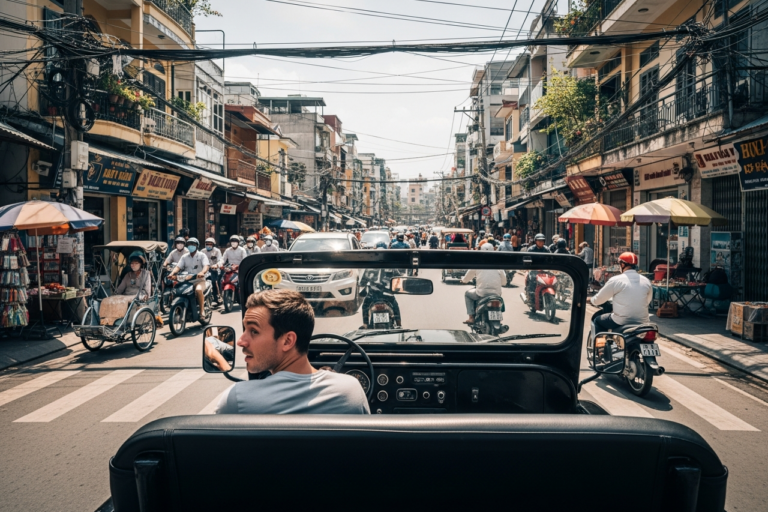
Key Highlights
Thinking about driving in Vietnam? It’s a good way to see the country, and many people want to try it. But you have to follow some rules. You need to know these things whether you are in busy Ho Chi Minh City or traveling along nice coastal roads. Here’s what you should know about a driving license and driving as a foreign tourist.
-
You can not drive in Vietnam with only a driving license from your home country.
-
You need an International Driver’s License (IDL) or International Driving Permit (IDP) if your country is under the 1968 Vienna Convention.
-
As a foreign tourist, you can change your foreign driving license for a temporary Vietnamese one.
-
You must give papers to the Department of Transportation for this change.
-
You have to be 18 years of age or older and have a visa that is good for at least three months.
-
You need a Vietnamese driving license if you want to ride a motorbike with an engine over 50cc.
Introduction
Exploring the lively streets of Ho Chi Minh or seeing the beautiful parts of Vietnam in your own car or on a scooter is a trip you won’t forget. But before you get out on the road, you might ask, “Can I drive here by law?” Many people do not know the rules about using a foreign driving license. This guide will help you. It shows what you need to know—from things you must do, how to use or change your license, to how to rent a car or bike. These tips will help you drive in Vietnam in a safe and easy way.
Legal Requirements for Foreigners to Drive in Vietnam
To drive in Vietnam, you need to follow Vietnam’s law. You cannot just use your driver’s license from your home country and get on the road. You have to get an International Driving Permit, or you need to change your license to a Vietnamese one at the Department of Transportation.
It is important to know these rules, especially in busy places like Ho Chi Minh City, because there is a lot of traffic. If you understand these legal points before you drive, you can stay out of trouble with the local authorities and be ready for your trip. The next sections will talk more about how different licenses and permits work in Vietnam.
Validity of Home Country Driver’s License
Many travelers want to know if their driving license from their home country is valid in Vietnam. The simple answer is no. Vietnam does not have deals with places like the United States, Australia, or Canada for the recognition of domestic driving licences. So, your normal driving license from home will not be enough to drive in Vietnam.
If you are stopped by the police and do not have a valid Vietnamese driving license or a recognized International Driving Permit (IDP), you may get a fine or have more problems with the law. Many rental shops might not ask for the right papers, but this leaves you open to risks.
To drive legally in Vietnam, you will need either an IDP from a country that signed the 1968 Vienna Convention or you need to change your present driving license into a Vietnamese one. This will help you follow the law and keep your insurance active.
Need for an International Driving Permit (IDP)
Having an International Driving Permit (IDP), sometimes called an international driver’s license, might make things a bit easier. But, it is not always the answer for everyone. Vietnamese law says you can use an IDP if it is from a home country that signed the 1968 Vienna Convention on Road Traffic. If your IDP was given out under this Vienna convention, then you can drive in Vietnam and it will be legal.
But, you need to look and see if your home country signed this Vienna convention. For example, if you are from Australia, the United Kingdom, or the United States, you need to know these countries did not sign the 1968 Vienna Convention. That means an IDP from these places is not okay under Vietnamese law. Always make sure to have your driver’s license from your home country with your valid IDP when you are in Vietnam.
Here are the main things you need to remember about using an IDP to drive in Vietnam:
-
Your IDP must be issued by a home country that signed the 1968 Vienna Convention.
-
You need to have both your valid IDP and your regular driver’s license from your home country with you.
-
If your country is not a part of the Vienna convention, you have to change your license to a Vietnamese one.
Vehicle Categories Foreigners Are Allowed to Drive
The type of vehicle you are allowed to drive in Vietnam depends on the license you hold. Once you have a valid Vietnamese license or a recognized IDP, you can operate specific vehicle categories. For many, the focus is on getting a motorbike license, as it’s the most common way to get around.
A crucial rule in Vietnamese road traffic is that anyone driving a motorbike with an engine capacity over 50cc must have a valid license. This is a legal requirement and is strictly enforced. If you plan to rent a scooter or motorcycle, which is a popular choice for tourists, securing the correct license is essential.
The license categories are specific, so it’s important to know what you’re applying for. For instance, a Category A1 license covers most common motorbikes.
|
License Category |
Vehicle Type |
|---|---|
|
A1 |
Motorbikes with engine capacity from 50cc to under 175cc |
|
B1 |
Cars with up to 9 seats; trucks under 3,500 kg |
How to Convert a Foreign Driver’s License in Vietnam
If you do not have a valid IDP, the next step is to change your foreign driving license. This lets you get a temporary Vietnamese driving license. It makes your driving legal in Vietnam. To do this, you need to give an application form and the needed papers to the local authorities.
The Department of Transportation is in charge of changing your driving license. The Ministry of Public Security does not manage this process. The steps are clear, but you must make sure your paperwork is ready. This helps have a good result. The next parts will show you the steps and documents you have to use.
Step-by-Step Conversion Process
Converting your driver’s license in Vietnam can be simple if you know what to do. You have to visit the Department of Transportation office for this. The process may feel hard, especially because people use the Vietnamese language, but if you plan well, it gets easier.
First, you must get all your documents ready and go to the right office. There, you will ask for an application form. It’s a good idea to bring a friend who speaks Vietnamese or a translator, because most of the forms and directions will be in the Vietnamese language. After you fill out and turn in the application form, they will start working on your request.
Here is a short guide on how to change your driver’s license:
-
Obtain and fill out the official application form from the Department of Transportation.
-
Get a notarized translation of your driver’s license.
-
Submit the form along with all needed documents and passport photos.
-
Wait for about seven days for them to give you your new Vietnamese driver’s license.
Documents Required for License Conversion
Having the right documentation is the most important part of the license conversion process. If you miss even one necessary document, your application can be delayed, or it might be rejected. You must have a valid Vietnamese residence permit or a visa that is good for at least three months to apply.
You need your passport and your original driver’s license, but bringing copies and translations is also needed. Make a few copies of everything before you go to the office. If all your paperwork is ready, the process will go much better for you.
Here are the key documents you will need:
-
A completed application form.
-
Your original passport and a copy of the photo page and visa page.
-
Your original home country driver’s license, plus a notarized Vietnamese translation.
-
Passport-sized photos (bring a few extra, since the number can change).
Common Challenges & Tips for Smooth Conversion
Foreigners often find the conversion process easy, but there are common problems. The language barrier is a big issue. All forms and instructions can be in Vietnamese. Also, rules sometimes change fast without warning. So, what worked for others before may not work for you now.
To make things go well, you need to be ready. It is important to go to the right place. For example, if you are in Hanoi, use the office on Cao Ba Quat Street. Offices in major cities are usually busy. It is smart to get there early. If your documents are arranged well, you will save time and avoid stress.
Try these tips for a smooth process:
-
Bring someone who speaks Vietnamese with you, or hire a translator, to help you with the department of transportation.
-
Always check with the department of transportation in your city about what documents you need before you leave home.
-
Be patient. These steps may take more time than you think.
Renting and Driving Cars or Motorbikes in Vietnam
Renting a car is a good way for foreign tourists to see the place and visit spots in their own time. It is not like using your own vehicle, but you get more freedom and can go to many places. You must have the right legal documentation to drive, even if the rental shop does not ask you for it.
There are a lot of choices when it comes to renting. You can go to small shops in town, or pick big companies that are well-known. The steps are easy, but you need to check the car well and make sure you understand the agreement. In the next parts, you will find info about the rental choices and needed insurance.
Major Rental Options for Tourists
If you want to rent a vehicle in Vietnam, the top pick is a motorbike. Motorcycles and scooters work really well for getting around the busy streets in places like Ho Chi Minh City and the winding rural roads. You will see rental shops in almost every area. They have lots of choices. You can get an easy automatic scooter or a strong manual motorcycle.
You can rent a car too, but most tourists do not drive themselves. That is because the traffic can be hard and the rules for licenses are tough. Many people get a car with a driver. It is a calmer way to move between cities for a longer distance.
When picking a rental, look at these things:
-
Motorbike and Scooter Rentals: easy to find and cheap. great for going around the city and short trips.
-
Car Rentals: many times they include a driver, good for families or groups.
-
Reputation: go with a trusted rental place with good reviews to keep away from scams or bad vehicles.
Insurance and Documentation Needed
Driving a motor vehicle in Vietnam without the right insurance and papers can be a big problem. By law, all drivers in Vietnam must have third-party liability insurance for their motor vehicles. Many times, this is included in a rental deal, but you should always check with the rental company. Make sure you know what your motor vehicle insurance covers.
When you go out on the road, you have to carry all the necessary documents with you. If the police stop you, you have to show them these documents. You need to show your license, the motor vehicle registration papers, and proof of insurance. If you pick a rental place that does not ask for these, you might end up in trouble and it could cost you a lot.
Always keep these documents with you:
-
Your temporary Vietnamese driver’s license or a valid IDP and your original license.
-
The motor vehicle’s registration papers (Blue Card).
-
Proof that you have valid third-party liability insurance.
Conclusion
In the end, driving in Vietnam as a foreigner can be a good and exciting time if you know the rules and what documents you need. You should understand how to use your home country license or get an International Driving Permit. It’s also important to know how to change your license and what rental choices you have. This will help make your trip better and help you feel more at ease. Always put safety first. Follow local traffic laws, make sure you have the right insurance, and keep your paperwork ready. If you use these tips, you will enjoy your travel more and get to see many beautiful places in Vietnam with confidence. If you want to get going, start planning your trip now!
Frequently Asked Questions
Can I use my U.S. driver’s license to drive in Vietnam?
No, you can’t use a standard driving license from the United States of America to drive in Vietnam. Vietnamese law does not let people from the United States use their regular driving license in Vietnam. You have to change your license or show an International Driving Permit from a country in the 1968 Vienna Convention.
Is special insurance required for foreigners driving in Vietnam?
All drivers in Vietnam, even those from other countries, need to have third-party liability insurance for their motor vehicle. This is not called “special” insurance. Still, you have to get it if you want to drive. Always check the documentation for insurance before you use a rental vehicle, especially in major cities with busy road traffic.
What are the key traffic rules foreigners should know?
Some of the main traffic rules are to drive on the right side of the road. You should follow all traffic lights and road signs. Always give right of way to pedestrians at crosswalks. The traffic can be messy, so you need to drive in a careful way. People use their horns a lot here. They do it to let others know they are there, not to be rude.



