

Key Highlights
Here’s a quick look at what you need to know about driving in Peru:
-
You can drive in Peru if you have a valid driver’s license from your home country for a short time.
-
It is a good idea to get an International Driving Permit, and that helps with rental companies and talking to police.
-
Peruvian law says tourists can drive for up to 183 days, but you should always check current rules.
-
Rental companies usually have their own rules. These can be about age and how long you have had your driver’s license.
-
Road conditions change depending on where you go. Most main roads are paved, but many roads in the hills or countryside are not.
Introduction
Are you thinking about going to Peru? Do you want to know if you can drive when you get there? The answer is yes, you can drive in Peru as a foreigner. This guide will show you what you need to know. You will learn about rules like having a valid driver’s license and an international driving permit. It will help you find out how to deal with local traffic, too. Driving is a good way to see Peru’s land and enjoy everything at your speed. Let’s get you ready for the trip.
Legal Requirements for Foreigners Driving in Peru
Knowing about Peruvian law is the first thing to do for a smooth drive. If you visit as a tourist, your driver’s license from your home country will work for a set time. Still, it is a good idea to get an International Driving Permit as a backup.
The International Driving Permit is a translated copy of your license. It helps a lot if you get stopped by police or need to rent a car. Let’s see how long your license from your home country stays valid and why the International Driving Permit can make things easier.
Validity of Foreign Driver’s Licenses
Yes, foreigners can drive in Peru with their home country’s driver’s license. Peruvian law lets you use your valid license for the whole time you are a tourist, which is usually up to 183 days. This helps people who want to rent a car and travel their own way.
You must carry your physical driver’s license when driving. A digital copy or a picture will not work with the traffic police or rental places. Make sure your license is not expired and is in good condition.
This important information helps you follow the rules and not get fines or problems. Your home country license is usually enough, but having other papers with you can help make things easier with the authorities. We will talk more about this next.
International Driving Permit (IDP) Necessity
Having an International Driving Permit (IDP) is not always required by law for short visits, but it is still a good idea. Do you need an International Driving Permit to drive in Peru as a tourist? The short answer is yes, it really helps. The IDP acts as a translation of your home country driver’s license. It comes in many languages and people use it all around the world.
This document is helpful in a few big ways:
-
Police Stops: It helps you talk with traffic officers, which is good if there are language barriers.
-
Rental Car Agencies: Some rental companies will ask that you have an IDP.
-
Accidents or Insurance Claims: The IDP shows important, easy-to-read information.
You have to get your International Drivers License in your home country before you get to Peru. It can’t be made after you go. This small step can help you a lot on your trip. It is extra useful if you want to rent a car with any of the rental companies, talk to traffic officers, or deal with any language barriers as an international driver.
Time Limits for Driving on Foreign Licenses
So, how long can you legally drive in Peru on your foreign license? According to Peruvian law, tourists can use their home country license for the duration of their authorized stay. This is typically tied to your tourist visa, which can be up to 183 days. After this period, you would need to obtain a Peruvian license to continue driving legally.
It’s essential to be aware of these time limits to avoid legal complications. The clock starts from the date you enter Peru, which is stamped in your passport. If you plan on staying longer, you’ll need to go through the process of getting a local license.
Here’s a simple breakdown of the time limits:
|
Visitor Status |
Driving Period Allowed on Foreign License |
|---|---|
|
Tourist |
Up to 183 days (or length of visa) |
|
Resident |
Must apply for a Peruvian license |
Always keep an eye on your entry date to ensure you remain within the legal driving period.
Required Documents for Tourists and Foreign Residents
When you drive in Peru, you have to keep certain papers with you all the time. This is true if you use your own car or a rental. If you have the required documents, it helps you deal with police stops and rental companies. You need your passport, driver’s license, and proof of insurance.
If you are renting a car, you must also carry the rental agreement. Here is what you need to keep with you to follow local laws and rental policies.
Passport and Entry Stamp Requirements
Your passport is more than a travel document. In Peru, it is your main form of identification. You must have the original passport with you when you drive. The police usually do not take a photocopy at official checks. Your passport is how you show you came into the country the right way and that you have the right legal status to be there.
The entry stamp inside your passport is one of the most important required documents. This stamp shows the day you came to Peru. It also proves you have a touristic visa. The police might check to make sure you are still allowed to drive with your foreign license.
If you do not have your passport and this entry stamp, you could get into a lot of trouble if the authorities stop you. Make sure your passport is safe but easy to get to when you drive. It is the clear proof of your identity and legal right to be on the road in Peru.
Vehicle Registration and Insurance Papers
If you are driving a rental car, you need to keep the vehicle registration papers that the rental agency gives you. These papers show that the car is legal and registered in Peru. The police will want to see these documents if they stop you, so always have them with your other important papers.
Proof of insurance is also a must. Peruvian law says every car has to have third-party liability insurance, called SOAT (Seguro Obligatorio de Accidentes de Tránsito). When you rent a car, the company will give you the proof of insurance you need.
Here’s a quick list of the required documents you must have for your rental car:
-
Vehicle Registration Card: You get this from the rental company.
-
Proof of Insurance (SOAT): This must be included with your rental car.
-
Rental Agreement: This shows you are allowed to drive the vehicle.
Before you head out, always check that you have all these required documents from the rental agency. This will help you avoid problems on the road.
Rental Car Agreements and Conditions
When you get your rental car, you will get a rental agreement. This paper tells you what you can and cannot do with the car. Take time to read it before you sign. Always keep it with you. It shows that you are the person allowed to drive the rental car.
Car rental companies in Peru offer extra insurance, not just the needed SOAT. You might get options like collision damage waivers and theft protection. Be sure to know what is included in each plan. Many people choose to get more coverage for peace of mind. This is because road conditions in Peru can change, and you want to be protected.
Rental companies will ask you for a credit card when you rent a car. They use your card for a security deposit, and this amount can be high. Make sure your card has enough limit for this hold. When you bring the car back safe and sound, they release the hold. This is how most car rental companies work, whether you are in Peru or somewhere else.
Rules of the Road for Foreign Drivers in Peru
Driving in a new country can be hard because you have to learn new rules. In Peru, people drive on the right side of the road. But that is not the only thing you need to know. You have to follow all the local laws, and you will see many road signs that may not be like the ones you know. You also need to get used to how Peruvian drivers act on the road.
There are speed limits in urban areas and special things you need to watch for on rural roads. If you want to stay safe and not get in trouble, it is good to know as much as you can. When you know the traffic rules and the customs here, you will deal with problems much better. Let’s talk about what you will see about traffic laws and habits in Peru.
Road Signs and Their Meanings
Many road signs in Peru look like those you see in other countries. But some signs can be hard to understand because of language barriers or their different looks. If you take time to know some common road signs before you go, it can really help you. Signs for speed limits are round. They have a red outline and show the top speed in kilometers per hour.
Knowing about the right of way can be hard, since what people do on the road can matter more than what the sign says. Still, rules you know, like giving way at roundabouts, will count. Some signs you really need to follow for your safety. These include regulatory signs, like “Pare” for Stop, and “Ceda el Paso” for Yield.
Here are some road signs in Peru you should know:
-
“No Adelantar”: No Overtaking
-
“Desvío”: Detour
-
“Zona Urbana”: Shows you are going into a city or town. You will often see lower speed limits and have to slow down for speed bumps ahead.
If you do not speak Spanish, learning these basic road signs is helpful. It is almost like a small driving test. This will give you more confidence as you drive on the roads in Peru.
Common Traffic Regulations in Peru
Peruvian law has some important traffic rules that you need to know. The law says everyone in the car has to wear seat belts, no matter where they sit. This is not just a suggestion, it is a strict rule. If people do not wear seat belts, it could lead to fines. Before you drive, make sure that everyone puts on their seat belt.
There are a lot of speed bumps on roads in Peru, mostly in urban areas. Many of these speed bumps do not have a mark, so they can surprise you. Watch for signs that say “Zona Urbana.” They usually mean that speed bumps are ahead. If you do not slow down, you could break your car by hitting one at a high speed.
Speed limits in Peru also matter on the road. The speed limits are between 20 to 40 km/h in most urban areas. In rural areas and on big highways, you may see the limit at 60 km/h or even higher. Still, you may need to go slower if there is a lot of road traffic or when the road is not good.
[tag: speed limits, peruvian law, urban areas, road traffic, speed bumps, rural areas, seat belts]
Alcohol Limits and Overtaking Rules
Peru has very strict rules when it comes to drinking and driving. The blood alcohol limit is quite low, and the punishment for driving after drinking is harsh. It is best to not have any alcohol at all if you are going to drive. Traffic officers can often stop drivers at random to check for alcohol, so it is not worth taking a chance.
Trying to pass another car can be very risky in Peru. You may see local drivers get restless and try to pass even on sharp turns or when cars are coming from the other side. Be very careful every time you want to go around another car. Always look in your mirrors for cars coming up fast from behind. They could try to get past you even while you are trying to pass someone else.
Here are a few key rules to remember:
-
Overtaking: Only go around another car if you can see a long stretch of open road ahead. Watch out for other drivers too.
-
Alcohol: The allowed amount is very low. The safest way is to avoid all alcohol if you are going to drive.
-
Police: If you face any problem, the police emergency number can be helpful to have ready.
Safety Tips for Driving in Peru as a Foreigner
Is it safe for tourists to drive in Peru? If you take the right steps, it can be safe. There are always some unique parts of the drive, like local drivers who can be aggressive. The road conditions can also change fast. If you want a safe trip, be ready, stay focused, and drive with care.
Driving on mountain roads is common in many parts of the country. You need to be careful, especially during the rainy season since weather can change without warning. It’s good to watch out at night too. These tips will help you deal with these things so you can enjoy your road trip and stay safe.
Navigating Mountain Roads and Altitude Considerations
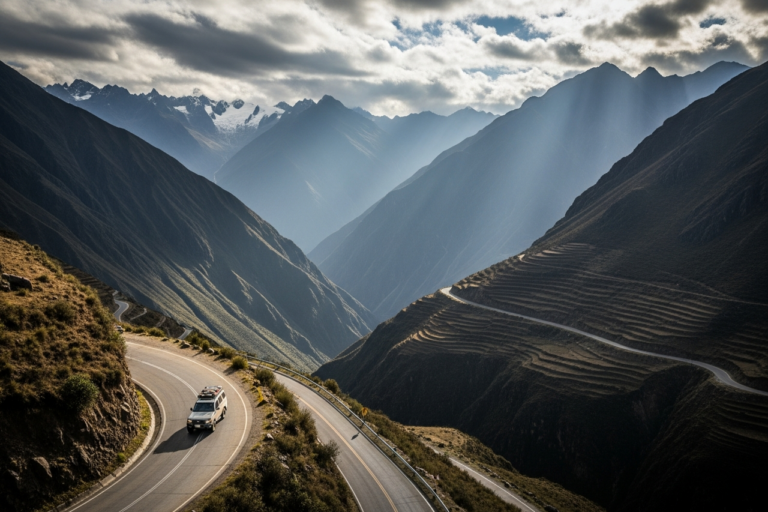
In Peru, the Andean mountains have many steep and winding mountain roads. Many of these are rural roads without pavement or safety barriers, and some have big drop-offs. When you drive here, go slow. Honk your horn at blind corners to let other people know you are there. Be ready for very narrow spots where it is hard for two cars to pass.
The high altitude is also important to keep in mind. Driving at high places can make both you and your car not work as well. You may get signs of altitude sickness, like feeling dizzy or tired. This can affect how you drive. Take time to get used to the height before you go for long drives in the mountains.
Here are some tips for mountain driving:
-
Don’t go against traffic flow: On busy mountain roads that lead to popular places, don’t drive up when tour buses are coming down.
-
Be prepared: Bring a first aid kit and know what to do if you have an emergency.
-
Watch for Peruvian drivers: They know these rural roads very well and may drive in ways that you might not be used to.
Night Driving Precautions
Driving at night is possible, but it is more risky, especially if you are in rural areas. The road conditions can be hard to see. There could be potholes, speed bumps that are not marked, or even animals on the road. Outside major cities, there often is not much street lighting or sometimes none at all.
Dealing with other local drivers is another challenge while night driving. Many of them use high beams a lot and do not think about the other people on the road. This can blind you. It is common, but risky, to flash your own high beams to ask them to turn theirs down. Be ready for this on the road, as it becomes a bit of a headlight “game of chicken.”
If you need to drive at night, stay on main highways when you can. You should lower your speed by a good amount. Before you go, make sure your headlights work well. Also, after dark, emergency services may not get to you fast or may be harder to reach, especially in remote places. It is best to plan your trip so you get to your stop before sunset.
Dealing with Weather and Seasonal Hazards
The weather in Peru can change fast, especially in the mountains. During the rainy season, from November to April, driving gets tough. Heavy rain can cause landslides and wash out roads. Some unpaved roads may not be safe to use at all. Always check the local weather forecast and road conditions before you go on a long trip.
Rainy season makes mountain roads slippery. Fog can cut visibility down a lot. Road traffic might slow to a crawl or even stop if roads are blocked. If you travel at this time, a 4WD vehicle helps you get better grip on the road and go over obstacles.
This important information can help you plan better for your trip. If you can, try to drive during the dry season from May to October for safer and more predictable road conditions. No matter what time of year, be ready for weather to change fast in the Andes.
Renting a Car in Peru: What Foreigners Should Know
Renting a car gives you the freedom to travel around Peru your way. It is easy to rent a car since there are many international and local car rental companies in the country. You will need to meet some age rules and license rules to rent a car. Having an international driving permit can help, too.
Most tourists find renting a car safe in Peru. You should know what the rental companies want when it comes to payments, insurance, and the type of car you get. This will help things go well for you. Here is what you need to know before you book your car.
Licenses and Age Requirements at Rental Agencies
To rent a car in Peru, you will need a valid driver’s license from your home country. Most rental companies require you to have held your license for at least one year. While a Peruvian driver’s license isn’t necessary for tourists, an International Drivers License (IDP) is often recommended and sometimes required by specific agencies.
Age is another important factor. The minimum age to rent a car is typically between 21 and 25 years of age, depending on the rental company and the type of vehicle. Drivers under 25 may face a “young driver” surcharge, which can significantly increase the cost of the rental car.
Here’s a general overview of what to expect from rental companies:
|
Requirement |
Details |
|---|---|
|
Minimum Age |
Typically 21-25 years old |
|
Driver’s License |
Valid license from home country, held for at least 1 year |
|
IDP |
Recommended, and sometimes required |
|
Young Driver Fee |
Often applies to renters under 25 |
Always check the specific policies of the company you plan to rent from before booking.
Payment Methods and Deposits
When you want to rent a car in Peru, you will almost always need to have a credit card. Rental companies need a credit card not only to take the payment for the rental car, but also for the security deposit. In most cases, you cannot use a debit card or cash for the deposit.
The security deposit can be large. It may be from $1,000 up to $2,500 USD. The rental company will put a hold on your credit card for this amount. Your card’s limit has to be big enough to cover this. Once you bring the car back without damage, they will remove the hold.
Here are some things you should know about payments and deposits:
-
Credit Card: You will need a major credit card in the main driver’s name.
-
Security Deposit: Make sure you are ready for the hold on your card.
-
Final Payment: You can often pay for your rental car with the same credit card.
Always check with your rental company in advance to see what payment methods they accept. You also want to know the exact deposit amount before you go to pick up your car. This way you will not get any surprises when you arrive at the rental counter.
Insurance Options and Recommendations
Knowing insurance rules is an important part of renting a car. By Peruvian law, every car must have third-party liability insurance called SOAT. It is included in the rental fee. This insurance pays for injuries to other people if there is an accident. But it will not pay for damage to your rental car or other property.
Because of this, car rental companies give more insurance choices. Some options are Collision Damage Waiver (CDW) and Theft Protection. These plans help lower the amount you will need to pay if your rental car is stolen or damaged. They do make the daily price go up, but you get more peace of mind.
We really suggest getting extra insurance. You have two ways to get this. You can buy it from the rental companies. Or, you can get a policy from another provider in your home country. The second choice is often cheaper. This extra insurance helps cover the high amount you would need to pay if you make a claim.
Types of Vehicles Foreigners Can Drive in Peru
If you are a foreigner and have a standard driver’s license with an international driving permit, you can drive most rental cars in Peru. You can pick from sedans, SUVs, and some 4WDs. Car rental companies will have many different options. These cars can be good for city trips or for more rough roads up in the mountains.
Most of the time, there are not many limits on what types of cars you can drive if your license allows it. But what car you pick can depend on how you feel about different gear systems or the roads you want to go on.
Make sure to ask the local car rental companies for help with picking the best car for your trip. The international driving permit will make this much easier for you.
Manual vs Automatic Transmissions
When you pick a rental car in Peru, you will see that most cars have manual transmission. These cars are also often cheaper than automatic ones. If you know how to use a stick shift, you will get more choices and may save some money too.
But if you do not know how to drive a manual, it’s better to go with an automatic car. Mountain roads and hills in the cities can be tough, so not having to work a clutch can help a lot. Big rental companies do have automatic options, but people book them fast. It’s a good idea to go and book early.
Make sure your driving licence lets you drive the type of car you choose. Most of the time, a standard license will be fine for both types. Still, take a moment to check. When you book your rental car, let the rental companies know what you want so you get a car that fits you well.
SUVs, 4WDs, and Special Restrictions
A normal sedan works okay for main roads, but you may want to get an SUV or a 4WD if you plan to take some rough or adventurous roads. These vehicles are higher off the ground, so they help you go over potholes and speed bumps better.
When you try to get to places like Rainbow Mountain or Humantay Lake, a 4WD handles rough mountain roads well. This is even more true during the rainy season because you get better grip and better handling. But even in the dry season, having some extra height in your car is good. Many people do manage with a Toyota Yaris or another 2WD sedan on most roads, but you need to feel sure of your driving.
Think about these tips before picking your rental car:
-
Dry Season: A 2WD with a bit of ground clearance often works for bumpy roads.
-
Rainy Season: Go with a 4WD, especially if are heading up mountain roads.
-
Comfort: SUVs give a better ride when the road conditions get bad.
At the end of the day, the top rental car is the one that fits your road plans and how confident you are driving in these places.
Motorcycles and Other Vehicle Types
If you have a motorcycle added to your driver’s license, you can rent a motorbike to see Peru in a more fun way. There are many rental shops made for people who love adventure. These shops have bikes for driving on roads and also trails that are rough and off the main roads. You will need your license, passport, and the right insurance for this, just like with any other rental.
Peruvian law says that every vehicle must have up-to-date registration and SOAT insurance. Your rental company should give you all the papers you need. You must wear a helmet and safe clothing when you ride. This is the law and a key way to keep you safe.
Before you take the bike, look at it well. Check if the tires, brakes, and lights are working. Make sure the size and strength of the bike are right for you, mostly if you plan to go to mountain areas. Riding in Peru takes good skills, and you have to always watch out for more things around you.
Handling Police Stops and Checkpoints as a Foreigner
Encounters with police officers in Peru can happen often, mostly at stops on main roads. Peruvian police set up these points to check documents. When they stop foreign drivers, they are usually friendly and act with care. Still, it is good to know what to do and what you should have with you.
Stay calm, speak in a polite way, and have your papers ready. This will help make the stop quick with no trouble. If you know the process and your rights, you can handle any meeting with police officers in Peru with more confidence.
Necessary Conduct and Required Documentation
If police officers stop you, find a safe place to pull your car over. Turn off the engine, and stay inside your car unless they tell you to do something else. Keep both hands where they can see them, like on the steering wheel. The best way is to be calm and work with them.
Be ready to show your required documents. They will ask for your driver’s license from your home country, your passport as a form of identification, the vehicle registration, and proof of insurance (SOAT). If you have an international driving permit, it will help them understand your information.
Here’s what to have with you if police officers stop you:
-
Your valid driver’s license from your home country.
-
Your original passport with the entry stamp.
-
The rental car agreement and vehicle registration.
-
An international driving permit (IDP).
If you keep your required documents easy to get, the police stop should be quick and simple.
What to Expect During Inspections
When police officers stop you, they will walk up to your car and ask for your required documents. This is usually just a quick check to make sure you have the needed papers and that they are all valid. The Peruvian police we met were friendly. The talks with them were good and easy.
If you break any traffic rules, the officer will tell you what you did wrong. If you have to pay a fine, you will get a written ticket. Do not give cash to the officer as this is not the right way for fines. You should pay your fine at a bank or the right office.
The police might take a quick look at your vehicle to check that it works well. They can look at things like your headlights and your tires. Be polite and do what they ask. If your documents are right and you followed the law, the inspection by the police officers will be done in a few minutes.
Tips for Resolving Issues with Law Enforcement
If you are in a tough spot with the police, try to stay calm and be polite. Sometimes, language barriers can make things confusing. So, it helps to speak slowly and clearly. You can use a translation app on your phone if you do not speak Spanish.
If the officer says you broke any local laws, and you do not agree, do not shout or fight. Ask for a written ticket that explains what they say you did wrong and how much the fine will be. You should never pay cash to someone at the scene. Ask for a formal written ticket, so you can pay in the right way.
Here are some tips if you run into trouble:
-
Stay Calm: Being polite and showing respect is helpful.
-
Request a Ticket: Ask for a written ticket if they say you violated local laws.
-
Contact for Help: If you feel you are not being treated right, you can call your embassy or the tourist police. Keep the police emergency number saved on your phone.
Scenic Drives and Famous Road Trips for Visitors
One of the best things about driving in Peru is the beautiful scenery you get to see. The country has some of the best road trips in the world. You can travel from dry places by the coast all the way to high mountains in the Andes. These drives help you get away from busy urban areas and big cities, so you can enjoy the natural beauty of Peru.
You might want to see the old Sacred Valley or drive along the famous Pan-American Highway. No matter what, you will have an amazing trip. Here are some of the best routes for your adventure in Peru.
Lima to Cusco by Road
The road trip from Lima to Cusco is a big adventure. On this drive, you get to see how different the landscapes of Peru are. The distance is over 1,100 kilometers, so it takes a long time. You need at least 20 to 24 hours of driving, but most people do this over a few days. The route starts at sea level and goes up into the high Andes. You will see great views on the way.
You pass through dry deserts along the coast. Later, you climb winding mountain roads. There are many small Andean towns you will drive through. The drive can be hard, with sharp curves, high places, and changing road conditions. But all the challenges are worth it. This trip lets you travel between two major cities in Peru, which are also big cultural hubs.
It is important to plan well before you leave. You need extra time to get used to the high altitude as you get higher. The whole journey is a big part of the adventure, not just getting to Cusco. Cusco is the place that leads you to the famous Machu Picchu. This drive is a trip you will remember for a long time.
The Pan-American Highway in Peru
The Pan-American Highway runs all the way along the coast of Peru. It gives you one of the most easy and beautiful drives by the sea in South America. Driving on this road is the best way to see the desert coastline of the country. You will find old archaeological sites, nice beaches, and unusual animals in this area.
The stretch through southern Peru is very well-liked. You can drive from Lima all the way to the Nazca Lines, see the amazing Paracas National Reserve, and visit Arequipa. The road conditions on the Pan-American Highway are usually good. This is because it is one of Peru’s most important roads and they take good care of it.
This trip lets you see a side of Peru that is not like what you get in the Andes. Here, you can look at big sand dunes that touch the Pacific Ocean and get to know the special way of life of people living on the coast. It is an easy drive for most people, and there is a lot to see and do along the way.
The Sacred Valley and Andean Routes
Driving in the Sacred Valley takes you back to the center of the Inca Empire. This area sits in the Andes close to Cusco. It is full of old ruins, small villages, and amazing views. Having a car lets you see places like Pisac and Ollantaytambo in your own time.
The mountain roads here are some of the most lovely in the world. As you drive, you look at snowy mountains, steps made into hills, and deep valleys with rivers. Most big roads are paved. Some smaller paths to certain spots are dirt and mountain roads, which can make your trip feel more fun.
This place is where you start your way to Machu Picchu. Driving here also lets you find sites that many tour buses don’t get to. The mix of old stories, local life, and beauty means a trip to the Sacred Valley is something all people should do in Peru.
Special Considerations and Local Customs for Foreign Drivers
Knowing more than just the local laws is important when you drive in Peru. You need to learn the unwritten rules and customs of the road for a safe time. Driving can feel tough, especially in cities, as many local drivers act aggressive. You have to pick up their habits fast. The problems you face in cities are not the same as on rural roads, so what you do on one will not always work on the other.
It helps to understand how things like parking and toll roads work. It’s smart to have good navigation tools with you. That little bit of local knowledge can really help. We will show you what you need to know. This way, you can fit in more, handle your car better, and feel sure while you travel.
City Driving vs Rural Road Challenges
Driving in Peru’s urban areas, like Lima, can be tough and stressful. There is a lot of road traffic in these places. Many drivers act in a rough way. They often do not stay in their lane and may cut in front of you. In the city, the biggest car or truck seems to have the most power on the road. All of this can make even skilled drivers feel out of control.
On rural roads, you will feel the drive is easier and less busy. There are fewer cars. The main thing to look out for is road conditions. On these roads, you might find many spots with no pavement, large potholes, and narrow passes through mountain areas. There may be animals walking on the road as well, which is risky.
Here’s a look at what you might face on Peru’s roads:
-
City Driving: Drivers who act without care, heavy road traffic, people moving between lanes.
-
Rural Driving: Bad road conditions, roads with poor or no signs, small chances of land coming down in slides.
-
Both: Not knowing where speed bumps will show up can give you a surprise in both city and on rural roads.
If you know these road conditions before you go, you will be more ready for what comes in both urban areas and on rural roads.
Parking and Toll Roads
Parking in Peruvian cities can be hard. The streets are often narrow. There is not much on-street parking, especially in old city areas. It is usually better and safer to use paid parking lots, called “estacionamientos.” Another good idea is to park your rental car at your hotel and use taxis when you want to go into the city center.
You will see toll roads, or “peajes,” on a lot of the main highways in Peru. Make sure you have some small bills in the local money, Soles, because many toll booths do not take credit cards. There are times when toll booths may be broken or no one is working there, especially after times of unrest. But it is best to always have money ready to pay.
A few key points on parking and tolls:
-
Parking: Find safe, paid lots in cities instead of using street parking.
-
Tolls: Always keep cash with you for toll roads on big highways.
-
Rental Car: Read your rental car agreement to see if there are any special rules about parking or toll roads.
These tips can help you avoid fines and make your trip less stressful.
Navigating with Maps and GPS
A good GPS will help you a lot when you drive in Peru. The big highways have signs. But there can be small roads with confusing signs or even no signs at all. Using a navigation app like Google Maps on your phone can make things much easier.
The phone signal might not be good in some country or mountain areas. This is why it is a good idea to download your maps before you go. Your GPS will keep working even if you are not online. In Google Maps, you just pick where you are going and press “Download.”
Having a trusty navigation tool helps with language barriers you may find with road signs. It also lets you pay attention and stay safe. Taking this small step is like giving yourself a driving test before you go. This way, you know where you will be and can watch the road.
Conclusion
To sum up, driving in Peru as a foreigner can be a good way to see the country. You will find lots of great mountain roads and get a taste of the local life. But, it is important to know about the laws, safety tips, and customs in the area. Before you go, make sure you have the right papers and learn the rules for driving there. These steps will help you have a safe trip.
If you plan to drive on the mountain roads or check out the busy cities, having the right information will help you travel well. Be sure to think about your choices for a car. It’s also smart to know what could happen if the police stop you.
If you want to get going and see what Peru has waiting for you, contact us to get more details and start planning your adventure!
Frequently Asked Questions
Do American citizens need an IDP to drive in Peru?
Peruvian law says you can use a valid driver’s license from the United States. But, it is a good idea for people from the United States to get an international driving permit. The IDP helps when you drive in Peru because it gives a translation of your license. Rental car places ask for it, and it can make things go more smoothly if you ever need to talk to police and there are language barriers.
How long can tourists use their home country’s license in Peru?
Peruvian law says that you can use the driver’s license from your home country while you visit. You can do this for as long as you can legally stay, which is usually up to 183 days. This is the time most tourists can stay with a regular visa. After this time, you will need to get a Peruvian license.
Is it safe for foreigners to rent a car and drive across Peru?
It can be safe for foreigners to rent a car and drive in Peru if you feel sure about your driving. Be ready for drivers who may be aggressive in cities and watch out for tough road conditions in rural areas. If you drive carefully and do not drive at night, your safety will be better.



